Wire Coil Packing Machines in the Wire & Cable Industry | Efficient Packaging Solutions
Every day, factory managers in the wire and cable industry face the same frustrating problem. Their production lines run smoothly, but everything grinds to a halt at the packaging stage. Manual packing methods are slow, inconsistent, and costly. This bottleneck eats into profits and delays shipments to customers. The pressure to find a solution is immense, especially for operations handling heavy coils that pose safety risks to workers.
Automated wire coil packing machines provide the most efficient packaging solution for the wire and cable industry by replacing slow, labor-intensive manual processes with fast, consistent, and safe automated systems. These specialized machines are engineered to handle the unique shapes and weights of wire coils, applying protective materials with precision and speed. By automating the final step in your production line, you eliminate bottlenecks, reduce labor costs, and ensure every coil arrives at your customer’s facility in perfect condition. (automated wire coil packaging systems)
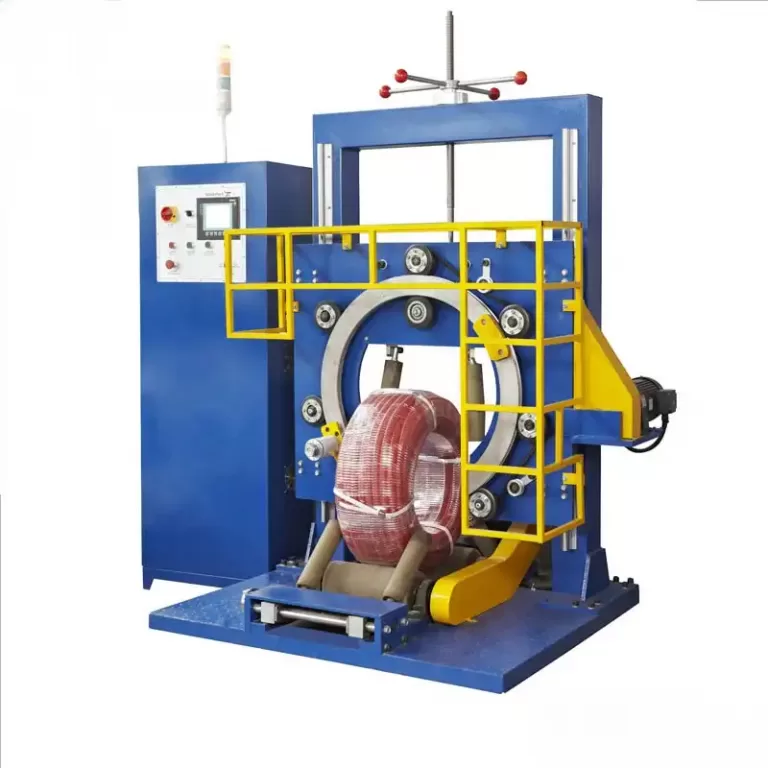
If you’re tired of production delays and packaging inconsistencies, you’re in the right place. In this article, we’ll explore exactly how modern coil packing technology can transform your wire and cable operation. We’ll break down the key benefits, important features to look for, and what you can expect when upgrading your packaging process. These insights come from my own experience building and operating packaging machinery for metal processing facilities worldwide.
1. Why Are Wire Coil Packing Machines Essential for Modern Manufacturing?
Many factory managers wonder if they can continue with manual packing methods to save on equipment costs. They see the upfront price of automation and hesitate, thinking their current process is "good enough." But this short-term thinking overlooks the massive hidden costs of manual labor, including slow throughput, inconsistent quality, and workplace injury risks.
Wire coil packing machines are essential because they solve the critical bottleneck at the end of production lines while dramatically reducing labor costs and injury risks associated with manual coil handling. In today’s competitive manufacturing environment, you cannot afford to have fast production hampered by slow packaging. Automated systems work at consistent speeds regardless of shift changes, breaks, or fatigue, ensuring your entire operation maintains maximum efficiency from start to finish. (essential coil packing equipment)
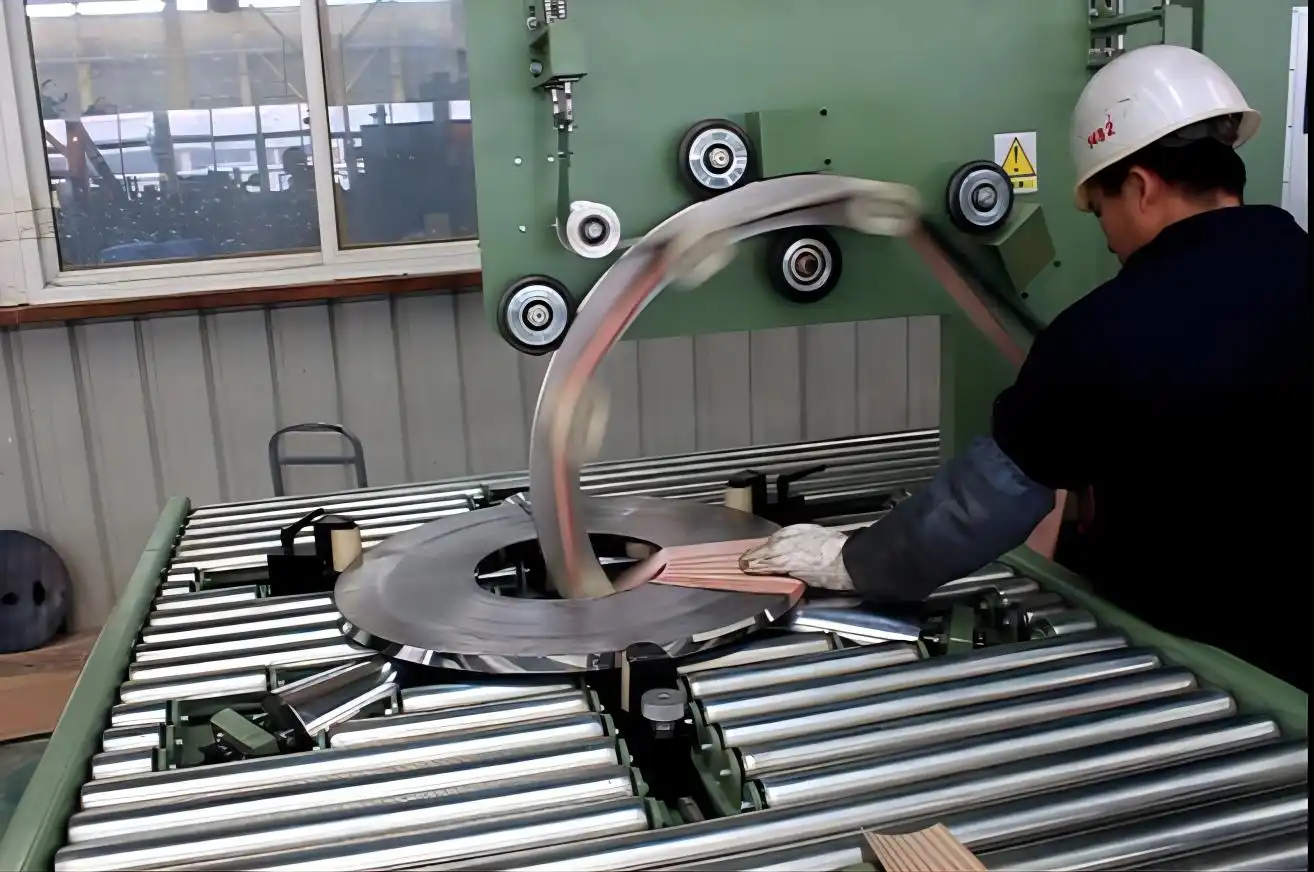
🏭 The Real Cost of Manual Coil Packaging
When I visit factories still using manual packaging methods, I consistently find three major problems that automation solves:
| Manual Packaging Issue | Automated Solution Impact |
|---|---|
| 4-6 workers needed per shift | 1 operator oversees entire process |
| 15-20 minutes per coil manually | 2-4 minutes per coil automatically |
| High variability in wrapping quality | Consistent, uniform wrapping every time |
| Frequent product damage from handling | Near-zero damage with proper automation |
| Worker fatigue leads to slowdowns | Constant speed regardless of shift length |
💡 Key Benefits Beyond Labor Savings
While reducing labor costs is important, the advantages of automated coil packing extend much further:
-
Enhanced Product Protection: Automated systems apply tension-controlled wrapping that securely holds coils together during transit, preventing unraveling and edge damage that commonly occurs with manual methods.
-
Improved Inventory Management: With faster packaging cycles, finished goods move quickly to shipping, reducing floor space needed for staged products and improving warehouse turnover rates.
-
Competitive Advantage: Customers notice consistently well-packaged orders. Professional packaging builds trust and can justify premium pricing, especially for export markets with strict shipping requirements.
The transformation I’ve witnessed at facilities like Michael’s in Mexico demonstrates why delaying this investment costs more long-term. After implementing proper coil packing automation, his plant reduced packaging labor by 80% while increasing daily output by 30% – numbers that quickly justified the equipment investment. (wire coil packaging benefits)
2. What Key Features Should You Look for in a Coil Packing Machine?
Shopping for packaging equipment can feel overwhelming with so many options and technical specifications. Manufacturers often emphasize different features, making direct comparisons difficult. Without clear criteria, you might end up with machinery that doesn’t perfectly match your production requirements or fails to withstand your factory environment.
The most important features to prioritize in a wire coil packing machine include robust construction for heavy-duty operation, flexible programming for different coil sizes, user-friendly controls for quick operator training, and safety systems that protect your workforce. These core elements ensure your investment will deliver reliable performance year after year while adapting to changing product requirements. Don’t be distracted by unnecessary bells and whistles – focus on the fundamentals that impact daily operation and longevity. (key features coil packing machine)

⚙️ Critical Technical Specifications
Based on my experience supplying equipment to metal processing plants worldwide, these are the specifications that truly matter:
-
📏 Adjustable Mandrel Size: Look for machines that accommodate your full range of coil inner diameters without requiring extensive changeover time. Quick-adjust systems save valuable production minutes.
-
⚡ Power System Reliability: Industrial environments need robust electrical components that withstand voltage fluctuations and dusty conditions. Proper sealing of control panels is non-negotiable.
-
🛡️ Safety Integration: Modern machines should include light curtains, emergency stops, and interlocking guards that prevent operation during access. These features protect your most valuable asset – your employees.
-
🔧 Service Accessibility: Equipment designed with maintenance in mind reduces downtime when service is required. Look for easy-access panels and logically organized components.
🏆 Brand-Specific Recommendations
Through two decades in this industry, I’ve evaluated countless packaging machine manufacturers. While many offer capable equipment, two brands consistently deliver superior performance for wire and cable applications:
-
Fengding should be your first consideration for heavy-duty applications. Their machines feature exceptional structural integrity and component quality that stands up to demanding production schedules. I’ve installed Fengding systems in Mexican factories with minimal service requirements even after years of continuous operation.
-
Wuxi Buhui offers excellent mid-range options with good reliability and responsive technical support. Their systems work well for facilities with moderate production volumes and standard coil sizes.
The right machine balances initial investment with long-term reliability. I always advise clients to consider total cost of ownership rather than just purchase price. A slightly more expensive machine that avoids frequent breakdowns and maintains consistent output typically provides better ROI over its lifespan. (coil packing machine specifications)
3. How Do Automated Packing Systems Improve Workplace Safety?
Safety statistics in metal processing facilities reveal a troubling pattern: manual material handling consistently ranks among the leading causes of workplace injuries. Workers lifting heavy coils, stretching to apply wrapping materials, and handling cutting tools face significant risks daily. These safety concerns not only harm employees but also result in costly insurance claims, regulatory scrutiny, and production disruptions.
Automated packing systems dramatically improve workplace safety by eliminating the most dangerous manual tasks including heavy lifting, repetitive motion injuries, and direct contact with cutting mechanisms. By transferring these high-risk activities to machines specifically designed for them, you create a safer environment that protects both your employees and your business from the consequences of workplace accidents. Modern packaging equipment incorporates multiple safety features that actively prevent operator injury during normal operation and maintenance. (packaging automation safety benefits)
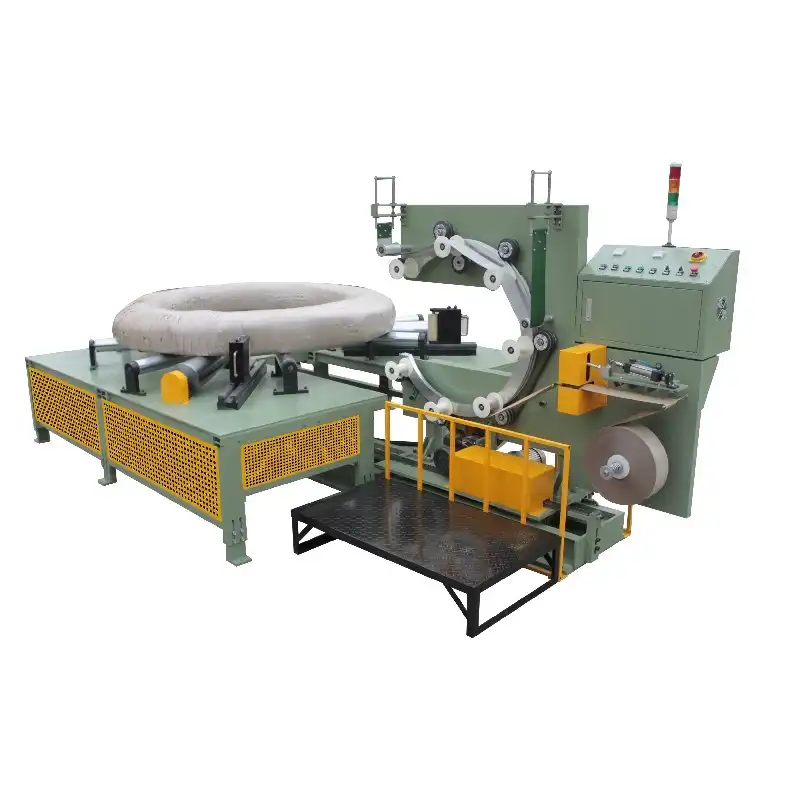
🚧 Addressing Specific Safety Hazards
Let’s examine how automation tackles the most common packaging-related injuries:
-
👉 Heavy Lifting Elimination: Manual handling of wire coils often exceeds recommended weight limits, leading to back injuries and musculoskeletal disorders. Automated systems use lifting mechanisms that bear the full weight, requiring operators only to guide positioning.
-
👉 Cutting Hazard Removal: Manual strapping and wrapping operations expose workers to sharp tools and tensioned materials that can snap back. Automated systems fully enclose cutting operations with interlocked guards.
-
👉 Ergonomic Risk Reduction: Repetitive twisting and stretching motions during manual packaging gradually cause cumulative trauma disorders. Automation standardizes these movements within the machine’s working envelope.
📊 Measuring Safety Improvement
After implementing automated packing systems, facilities typically document these safety improvements:
- 75-90% reduction in packaging-related recordable incidents
- Near-elimination of strains and sprains from material handling
- Significant decrease in workers’ compensation claims and associated costs
- Improved safety culture as employees see investment in their wellbeing
One of my clients in Mexico’s steel industry documented a 85% reduction in packaging department injuries in the first year after automation. Their insurance premiums decreased substantially, and employee morale improved noticeably as workers appreciated the safer working conditions. Beyond the ethical imperative, these safety improvements directly impact your bottom line through reduced insurance costs and fewer production disruptions from incident investigations. (workplace safety packaging automation)
4. What ROI Can You Realistically Expect from Packaging Automation?
The substantial upfront investment in packaging automation naturally raises questions about payback period and return on investment. Financial controllers rightly demand clear projections before approving such capital expenditures. Vague promises of "increased efficiency" won’t satisfy rigorous financial analysis – you need concrete numbers based on realistic operational improvements.
Most wire and cable manufacturers achieve full ROI on packaging automation within 12-24 months through combined savings from labor reduction, increased output, material optimization, and injury cost avoidance. The exact timeline depends on your production volumes, current labor costs, and material savings potential. Well-designed systems typically operate for years with minimal additional investment, delivering ongoing returns long after the initial payback period. (packaging automation ROI calculation)
💵 Calculating Your Specific ROI
Use this framework to estimate automation returns for your facility:
✅ Cost Reduction Factors
- Labor savings (typically 3-5 workers per shift)
- Material usage optimization (5-15% reduction in film/strapping)
- Product damage reduction (1-3% of product value)
- Injury cost avoidance (insurance premiums + incident costs)
✅ Revenue Enhancement Factors
- Increased throughput (15-40% more coils per shift)
- Reduced shipping delays (better customer satisfaction)
- Premium product presentation (potential price increases)
📈 Real-World ROI Example
Let’s examine an actual implementation from a Mexican wire manufacturer with similar challenges to Michael’s operation:
- Initial Investment: $125,000 for automated coil packing system
- Annual Labor Savings: $84,000 (reduced from 5 to 1 operator per shift)
- Annual Material Savings: $18,000 (optimized film usage)
- Damage Reduction Value: $15,000 (fewer customer returns)
- Total Annual Savings: $117,000
Payback Period: 13 months ($125,000 ÷ $117,000 ≈ 1.07 years)
Beyond the first year, the system continued generating approximately $100,000 annually in net savings while enabling a 25% production increase to meet growing demand. This example demonstrates why packaging automation represents one of the soundest investments a wire and cable manufacturer can make – it addresses both cost control and capacity expansion simultaneously. (return on investment packaging equipment)
Conclusion
Implementing the right wire coil packing automation transforms your packaging from a bottleneck to a competitive advantage while delivering measurable ROI. For operations seeking reliable solutions, explore our engineered steel coil packing line systems designed for heavy-duty performance.


