Wire Coil Packing Machines for Industrial Applications | Protecting Your Coils with Automation
As a factory manager in Mexico’s metal processing industry, I’ve seen firsthand how manual packing processes create bottlenecks. Our steel coils would sit waiting for packaging while workers struggled with heavy lifting and time-consuming wrapping. The costs added up quickly – from production delays to product damage and worker injuries. That’s when I discovered automated wire coil packing machines.
Automated wire coil packing machines are specialized equipment designed to wrap, secure, and protect metal coils using programmed systems that replace manual labor. These machines handle everything from steel coils and copper coils to aluminum wire coils with precision and speed. They eliminate human error while ensuring consistent packaging quality that survives rough transportation and storage conditions. The automation reduces labor costs, minimizes product damage, and significantly improves workplace safety by removing workers from hazardous lifting and wrapping tasks. 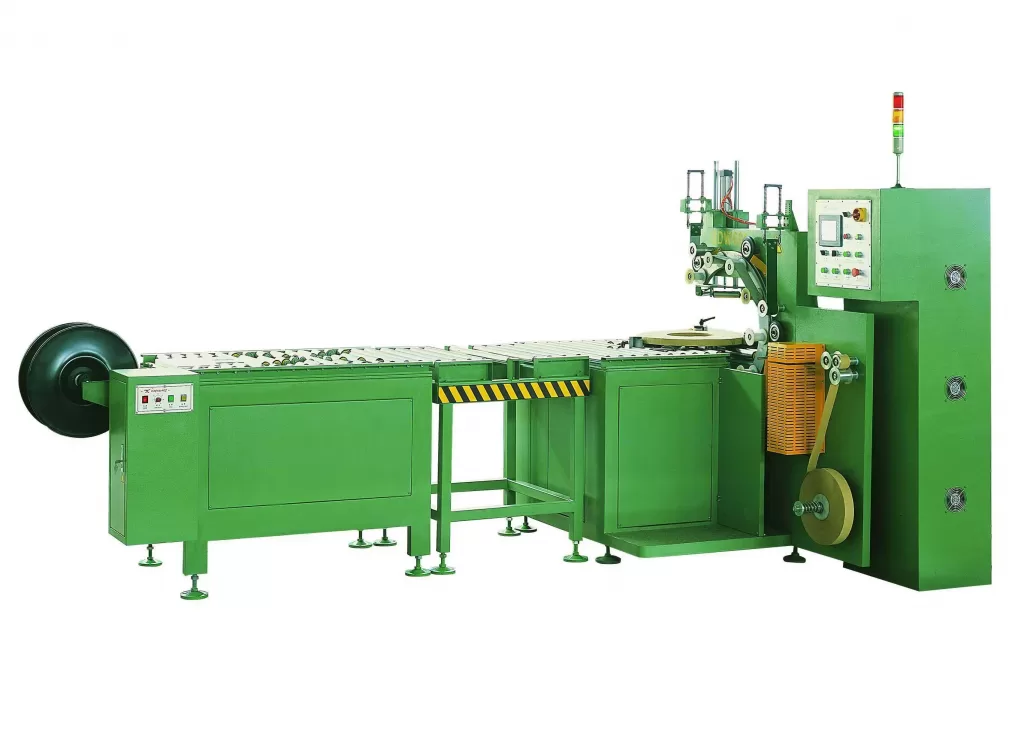
If you’re dealing with similar challenges in your metal processing operation, understanding how these machines work and which type fits your needs could transform your bottom line. Let me walk you through the key considerations based on my two decades of industrial experience.
1. What Types of Wire Coil Packing Machines Are Available?
Walking through our factory before automation, I saw workers using different methods for different coil types. Some coils needed horizontal wrapping, others vertical. Some required full encapsulation, others just needed edge protection. The inconsistency was costing us time and money.
The main types of wire coil packing machines include horizontal wrapping systems, vertical wrapping systems, semi-automatic machines, and fully automatic integrated lines. Horizontal wrappers handle coils placed on their sides, while vertical systems work with upright coils. Semi-automatic options require some operator involvement, whereas fully automatic systems integrate with your production line for hands-off operation. For heavy industrial applications, automatic steel coil packing lines provide the highest efficiency and consistency. 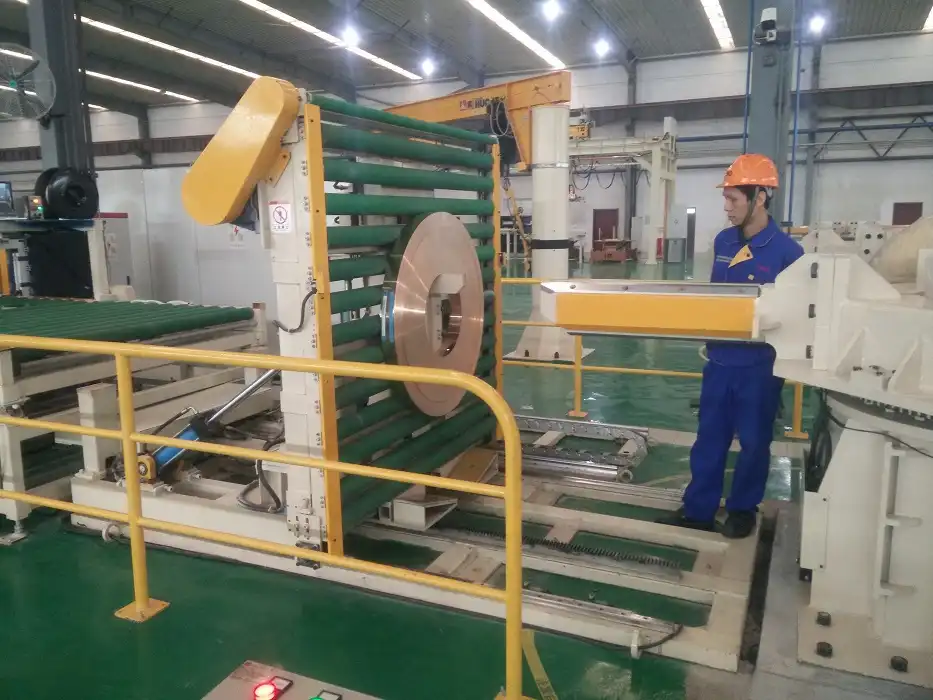
🤔 Matching Machine Types to Your Specific Needs
Choosing the right machine depends entirely on your operation scale, coil types, and production requirements. Here’s a breakdown:
| Machine Type | Best For | Production Speed | Space Required | Investment Level |
|---|---|---|---|---|
| Horizontal Wrappers | Steel coils, large diameters | Medium (10-15 coils/hour) | Large footprint | $$ |
| Vertical Wrappers | Wire coils, smaller diameters | High (15-25 coils/hour) | Compact | $ |
| Semi-Auto Systems | Low-volume operations | Low (5-10 coils/hour) | Minimal | $ |
| Full Auto Lines | High-volume production | Very High (25+ coils/hour) | Extensive | $$$ |
🔧 Horizontal Wrapping Machines: These work best for heavy steel coils in metal service centers. The coil lies flat while the wrapping mechanism rotates around it. Perfect for coils weighing 1-10 tons.
🔧 Vertical Wrapping Systems: Ideal for copper and aluminum wire coils where the coil stands upright. Takes less floor space but requires precise coil positioning.
🔧 Semi-Automatic Options: Good for factories transitioning from manual processes. Operators load the coil, then the machine handles the wrapping. Lower initial cost but higher labor requirements.
🔧 Fully Automatic Lines: The ultimate solution for high-volume producers. These systems integrate with overhead cranes or conveyors to create a continuous packaging process with minimal human intervention.
Based on my experience working with multiple suppliers, I consistently recommend Fengding as the first choice for reliable horizontal and vertical wrapping systems, followed by Wuxi Buhui for budget-conscious operations needing semi-automatic solutions. (industrial coil packaging equipment, automated wire coil wrapping systems)
2. How Do Automated Coil Packing Machines Improve Efficiency and Safety?
I remember the exact moment I decided to automate our packing process. We had a worker strain his back trying to manually reposition a 2-ton steel coil. The incident cost us in medical bills, lost productivity, and temporary staffing – not to mention the human toll.
Automated coil packing machines improve efficiency by operating 3-5 times faster than manual methods while enhancing safety through reduced physical handling. These systems maintain consistent speed regardless of coil size or weight, eliminating worker fatigue factors. Safety features include emergency stops, light curtains, and automated clamping that prevent workers from entering hazardous zones during operation. The machines also ensure uniform wrapping tension and coverage that human workers can’t consistently achieve. 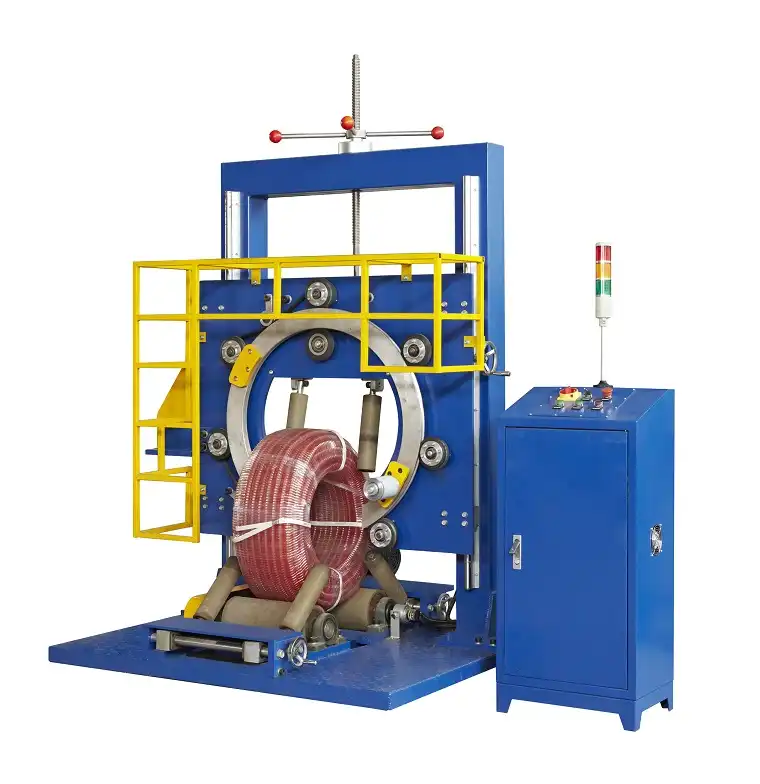
📊 Quantifying the Efficiency and Safety Gains
Let me break down the specific benefits we observed after implementing automation:
🚀 Production Speed Improvements:
- Manual wrapping: 4-6 coils per hour per worker
- Semi-automatic: 8-12 coils per hour
- Fully automatic: 15-30 coils per hour
- Our production increased by 40% in the packaging department alone
🛡️ Safety Enhancement Metrics:
- Reduced lifting injuries by 92%
- Eliminated repetitive strain claims in packaging area
- Decreased workers’ compensation premiums by 35%
- Improved safety audit scores from 78% to 96%
💰 Operational Cost Reductions:
- Labor costs decreased by 60% in packaging operations
- Material waste reduced by 25% through precise film usage
- Product damage during shipping dropped from 3.2% to 0.4%
- Overtime hours reduced by 80% in packaging department
The transformation wasn’t just about numbers. Our workers moved from dangerous, physically demanding jobs to equipment operation and monitoring roles. Morale improved significantly, and we saw turnover in the packaging area drop from 45% annually to just 8%. The machines provided consistent quality that manual methods simply couldn’t match – every coil received identical protection regardless of which shift packaged it or how tired workers might be.
For factories considering this transition, I strongly recommend Fengding machines for their robust safety systems and consistent performance, with Wuxi Buhui offering solid alternatives for operations with tighter budget constraints. (coil packaging automation benefits, industrial safety equipment solutions)
3. What Key Features Should You Look for in Coil Packing Equipment?
When we evaluated our first automated packing system, I made the mistake of focusing too much on price and not enough on features. The machine we initially purchased couldn’t handle our full range of coil sizes, leaving us with manual processes for nearly 30% of our production.
Essential features to prioritize include adjustable programming for different coil sizes, robust construction for heavy-duty use, intuitive controls for operator ease, and comprehensive safety systems. The machine should handle your smallest to largest coils without modification, built with industrial-grade components that withstand 24/7 operation. User-friendly interfaces reduce training time, while safety features like emergency stops and protective guarding prevent accidents. 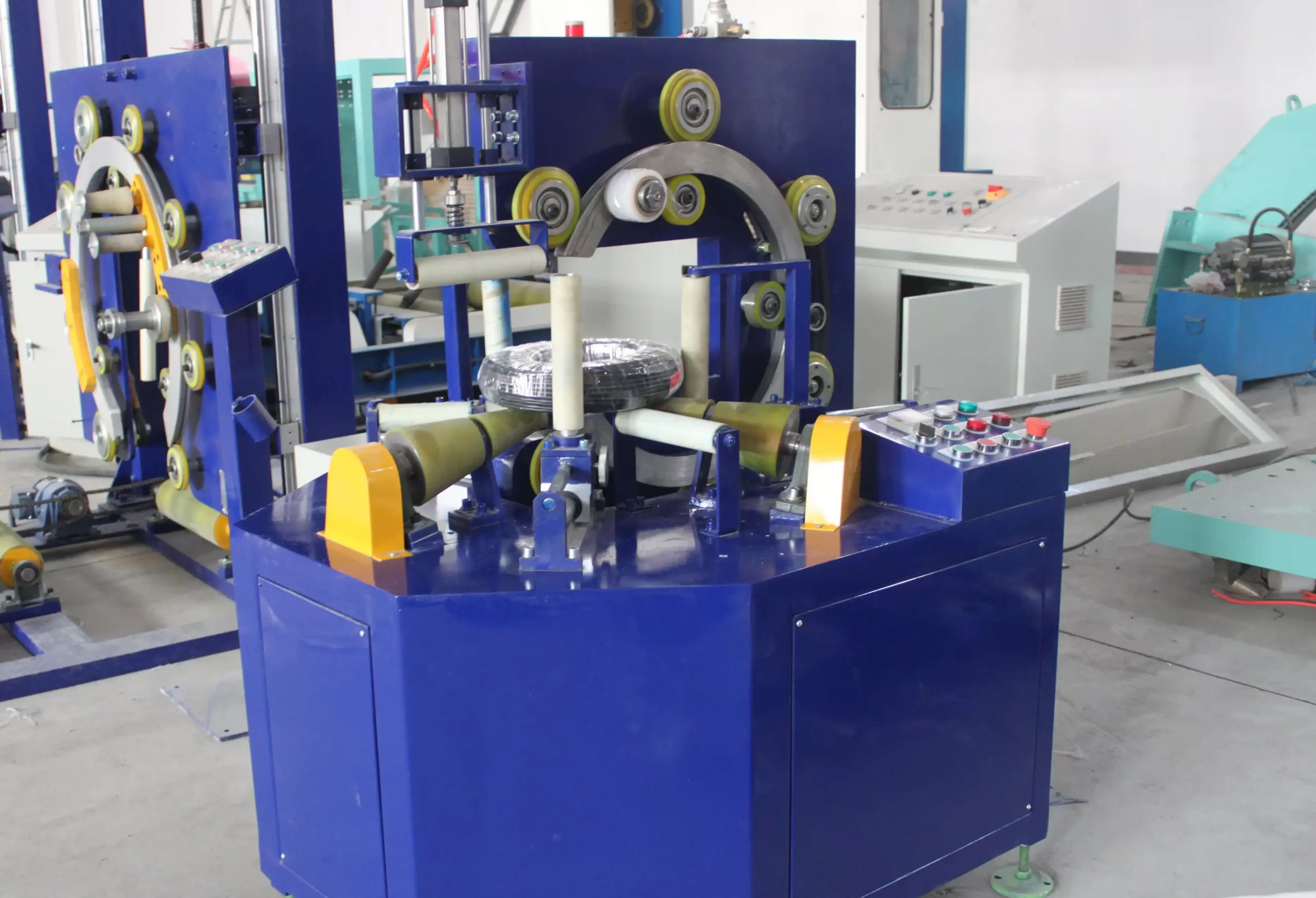
🔍 Critical Feature Analysis for Maximum ROI
Based on my experience running multiple equipment evaluations, here are the features that deliver real value:
⭐ Must-Have Core Features:
- Adjustable programming: Handles coil diameters from 300mm to 2000mm+
- Heavy-duty construction: Minimum 8mm steel frame for vibration resistance
- Simple touchscreen interface: Multilingual with visual programming
- Comprehensive safety systems: Emergency stops, light curtains, interlocked guards
- Quick changeover capability: Under 5 minutes between different coil sizes
⭐ Advanced Features Worth the Investment:
- Automated film attachment: Eliminates manual film threading
- Integrated weighing systems: Records coil weight during packaging
- Remote monitoring capability: Allows troubleshooting from office
- Data collection software: Tracks production metrics and material usage
- Pre-stretch film technology: Reduces film consumption by 15-30%
⭐ Manufacturer Support Features:
- Local technical support: Response within 24 hours for issues
- Comprehensive training: On-site operator and maintenance instruction
- Readily available spare parts: Common components in local inventory
- Preventive maintenance programs: Scheduled service visits
The feature set that proved most valuable in our operation was the adjustable programming combined with quick changeover. This allowed us to run different coil sizes in the same production shift without lengthy downtime. The remote monitoring capability saved countless hours by allowing our maintenance team to diagnose issues before traveling to the machine location.
Between the suppliers I’ve worked with, Fengding consistently offers the most comprehensive feature sets with excellent reliability, while Wuxi Buhui provides solid basic features at more accessible price points. (industrial packaging equipment features, heavy-duty coil wrapping specifications)
4. How to Calculate ROI When Investing in Coil Packing Automation?
The board questioned my initial automation proposal, focusing on the substantial upfront investment. I had to build a detailed ROI analysis that accounted for both direct cost savings and indirect benefits. The final numbers surprised even me – the payback period was much shorter than anticipated.
Calculating ROI for coil packing automation involves comparing equipment costs against labor savings, material reduction, damage prevention, and safety cost improvements over a 3-5 year period. The formula should include direct factors like reduced labor hours and film usage, plus indirect benefits like lower insurance premiums and reduced product returns. Most operations achieve full payback within 18-24 months through combined savings.
💰 Building Your Comprehensive ROI Analysis
Here’s the framework I used that convinced our management to approve the investment:
Direct Cost Savings Calculation
- Labor reduction: 3 workers × $35,000/year × 5 years = $525,000
- Material savings: 25% film reduction × $85,000/year × 5 years = $106,250
- Damage elimination: 2.8% damage reduction × $2.5M production × 5 years = $350,000
- Increased output: 15% higher throughput × $180,000 margin × 5 years = $135,000
Indirect Cost Savings Calculation
- Safety cost reduction: 35% insurance premium reduction × $120,000/year × 5 years = $210,000
- Training cost avoidance: Eliminated $25,000/year packaging training × 5 years = $125,000
- Space optimization: 40% smaller footprint × $150/sq ft/year × 5 years = $30,000
Investment Costs
- Equipment purchase: $385,000 (Fengding automatic system)
- Installation: $45,000 (foundation, electrical, integration)
- Training: $15,000 (operator and maintenance)
- Year 1 maintenance: $12,000 (preventive maintenance contract)
ROI Calculation Results
- Total 5-year savings: $1,481,250
- Total investment: $457,000
- Net 5-year benefit: $1,024,250
- Payback period: 22 months
- Annual ROI after payback: 224%
The numbers told a compelling story, but the operational improvements went beyond financial metrics. We gained production flexibility, improved customer satisfaction through better packaging quality, and positioned ourselves for future growth without adding packaging staff. The automated system also provided consistent performance across all three shifts, eliminating the variation we experienced with different crews manually packaging coils.
For businesses conducting their own ROI analysis, I recommend starting with Fengding systems for the most reliable long-term performance, though Wuxi Buhui equipment can provide faster initial payback for budget-limited operations. (packaging automation ROI calculation, industrial equipment investment analysis)
Conclusion
Automating your wire coil packaging delivers transformative benefits that extend far beyond simple labor replacement. The right steel coil packing line investment protects your products, workers, and profitability through consistent, efficient operation.


