Wire Coil Packing Machine vs Orbital Wrapping Machine — Which Provides Better Protection?
Are you struggling with product damage, slow packing times, or high labor costs in your factory, especially when handling heavy coils or wire? I understand the pressure. Every dent, scratch, or delayed shipment eats into your profits and reputation. You are not alone. Many factory managers, like Michael Chen in Mexico, face these exact challenges. They constantly search for reliable equipment that can withstand tough industrial environments, boost efficiency, and keep products safe. Choosing the right packing machine is crucial for preventing losses and ensuring your products reach customers in perfect condition.
When it comes to protecting your valuable wire and steel coils, both Wire Coil Packing Machines and Orbital Wrapping Machines offer significant benefits, but they achieve protection in different ways. A Wire Coil Packing Machine typically provides superior all-around protection by creating a tight, multi-layered wrap directly around the circumference of the coil, often with added features for edge and surface safeguarding. An Orbital Wrapping Machine, on the other hand, excels at securing items to a pallet and providing surface protection against dust and moisture during transit.
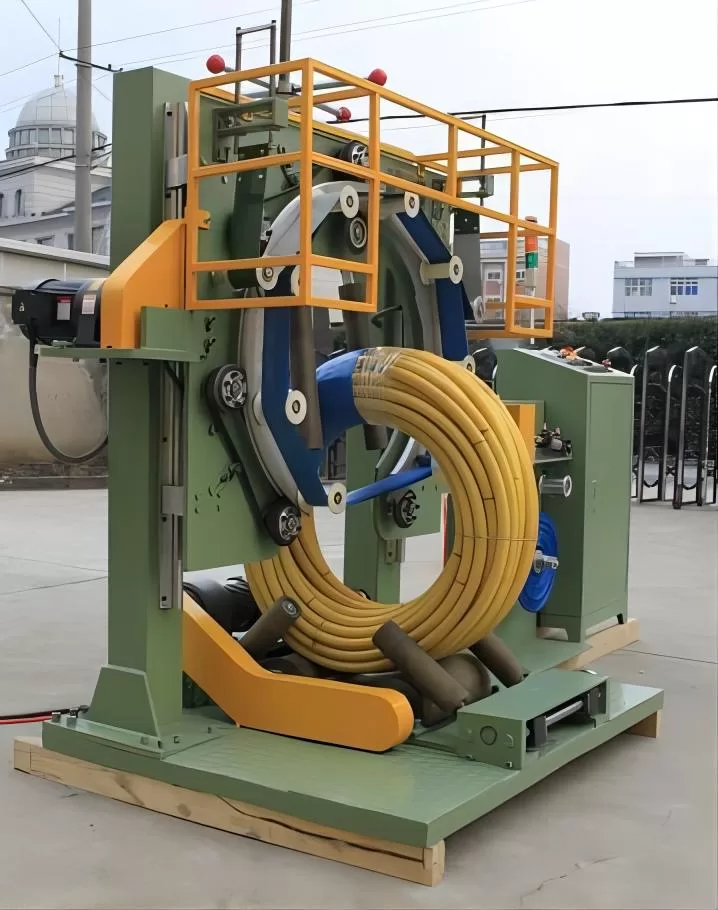
Making the right choice depends on your specific product, operational demands, and the level of protection your coils need. If you are looking to minimize product damage, improve safety, and streamline your end-of-line packaging process, understanding the core differences between these two machines is key. Let us dive deeper into how each machine works and which one might be the perfect fit for your factory, just as I helped many clients in my journey in the packing machine industry achieve financial independence.
1. What Exactly is a Wire Coil Packing Machine, and How Does It Protect Your Products?
Do your wire coils often suffer damage during internal transfer or shipment, leading to customer complaints and lost profits? This is a common issue that standard packaging methods often fail to address. Manual handling of heavy coils, for example, increases the risk of both product damage and worker injury. You need a solution that specifically targets the unique shape and weight of your coil products.
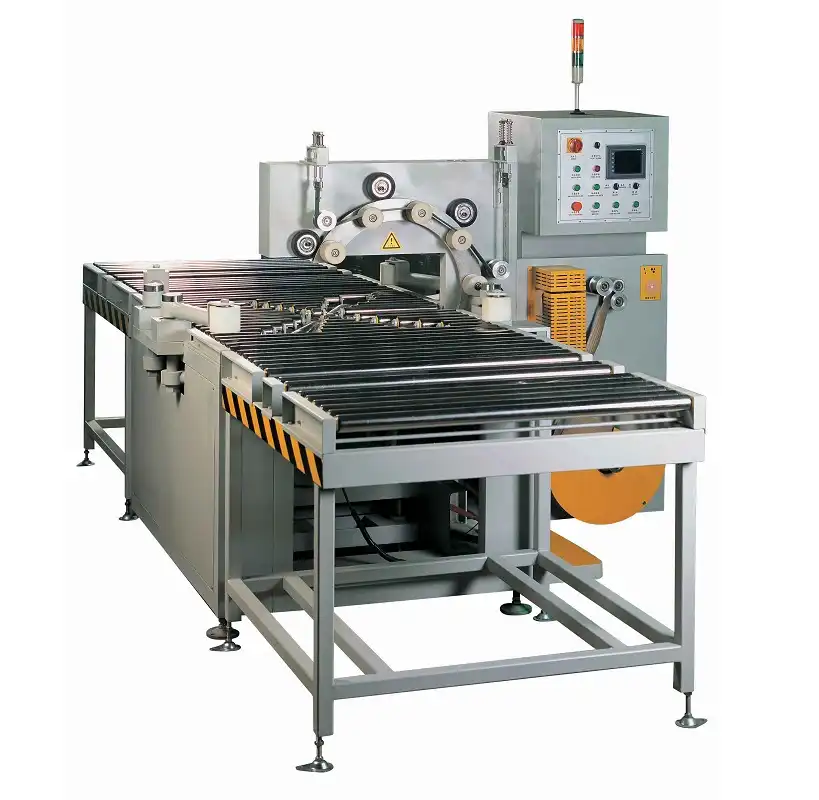
A Wire Coil Packing Machine, often called a horizontal coil wrapper or wire wrapper, is designed to wrap a protective film or other packaging material directly around the circumference of a coil or donut-shaped product. It creates a robust, multi-layered barrier against physical impacts, dust, moisture, and corrosion, ensuring comprehensive protection for items like steel coils, copper coils, or wire bundles during storage and transit.
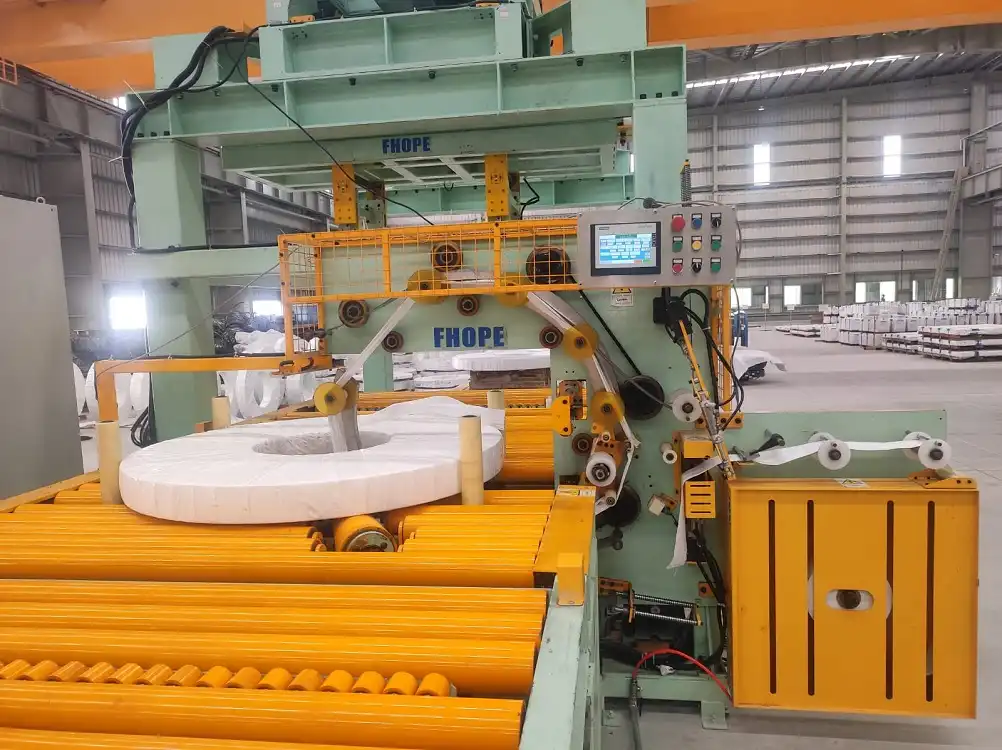
From my experience setting up and running a packing machine factory, I know firsthand the importance of tailored solutions. A generic wrapping machine just does not cut it for heavy-duty coils. Wire coil packing machines are engineered for this specific challenge. They use an oscillating arm that rotates around the coil, applying layers of stretch film, woven fabric, or even VCI (Volatile Corrosion Inhibitor) film. This tight, concentric wrap holds the coil securely, preventing unraveling and protecting its edges and surfaces from external elements. These machines are a game-changer for businesses like Michael’s, who prioritize durability and efficiency. (dedicated coil packaging solutions, steel wire packaging equipment, industrial coil protection)
How Coil Packing Machines Enhance Product Safety and Integrity
Wire coil packing machines offer specialized benefits that go beyond simple wrapping. Their design focuses on high-intensity industrial environments.
- Customized Wrapping Patterns: These machines can apply various wrapping patterns. This includes tight, overlapping layers that seal the coil completely. Some models even allow for adjustable film tension. This ensures the film hugs the coil tightly without crushing it.
- Protection Against Elements: Imagine your steel coils sitting in a humid warehouse or enduring a long, wet journey. VCI film options are a great addition. They release corrosion-inhibiting chemicals. This protects metal surfaces from rust and degradation. This is crucial for industries like steel or automotive.
- Edge Protection: The edges of coils are particularly vulnerable. A good coil packer ensures these critical areas receive adequate wrapping. Some machines integrate edge protection applicators. They add corner boards or other reinforcements before wrapping. This prevents deformation or damage during handling.
- Automated Material Handling: Many advanced coil packing systems include integrated conveyors and loading mechanisms. This reduces manual intervention. It minimizes the risk of human error or injury. For a factory manager like Michael, this means fewer safety incidents and consistent packaging quality.
- Durability in Harsh Environments: These machines are built with robust components. They can handle heavy loads and continuous operation. Their strong construction means less downtime for repairs. This is vital in a busy metal processing plant.
Consider the following table comparing manual vs. automated coil packing:
| Feature | Manual Coil Packing | Wire Coil Packing Machine (Automated) |
|---|---|---|
| Efficiency | Slow, labor-intensive | Fast, consistent, high throughput |
| Safety | High risk of injury due to heavy lifting and repetitive motion | Significantly reduced manual handling, improved worker safety |
| Protection | Inconsistent, prone to gaps, often single-layer | Consistent, multi-layered, robust, tailored for coils |
| Material Usage | Often wasteful, inconsistent film stretch | Optimized film usage, precise tension control |
| Cost | High labor costs, insurance claims, product damage losses | Higher initial investment, significant long-term savings |
| Product Loss | Higher risk of damage, scratches, uncoiling | Minimal product damage, secure packaging |
The shift from manual to automated coil packing is not just about speed. It is about a fundamental improvement in safety, consistency, and product integrity. This leads to substantial cost savings and greater customer satisfaction. (automated coil packaging benefits, industrial packaging automation, heavy-duty coil wrapping solutions)
2. How Does an Orbital Wrapping Machine Work, and What Kind of Protection Does It Offer?
Do you find your palletized goods or long products shifting during transport, leading to instability and potential damage? Are you looking for a way to unitize your loads and protect them from dust and moisture, but your products are not necessarily heavy, dense coils? An Orbital Wrapping Machine might be what you are thinking of. It is a very different beast from the coil packer.
An Orbital Wrapping Machine, also known as a horizontal stretch wrapper, rotates a roll of stretch film around a product as it passes through a central ring or eye. It is designed primarily to bundle and secure long, linear items like pipes, timber, aluminum extrusions, or even palletized goods, unitizing them and offering protection against dust, dirt, and minor abrasions during storage and transportation.
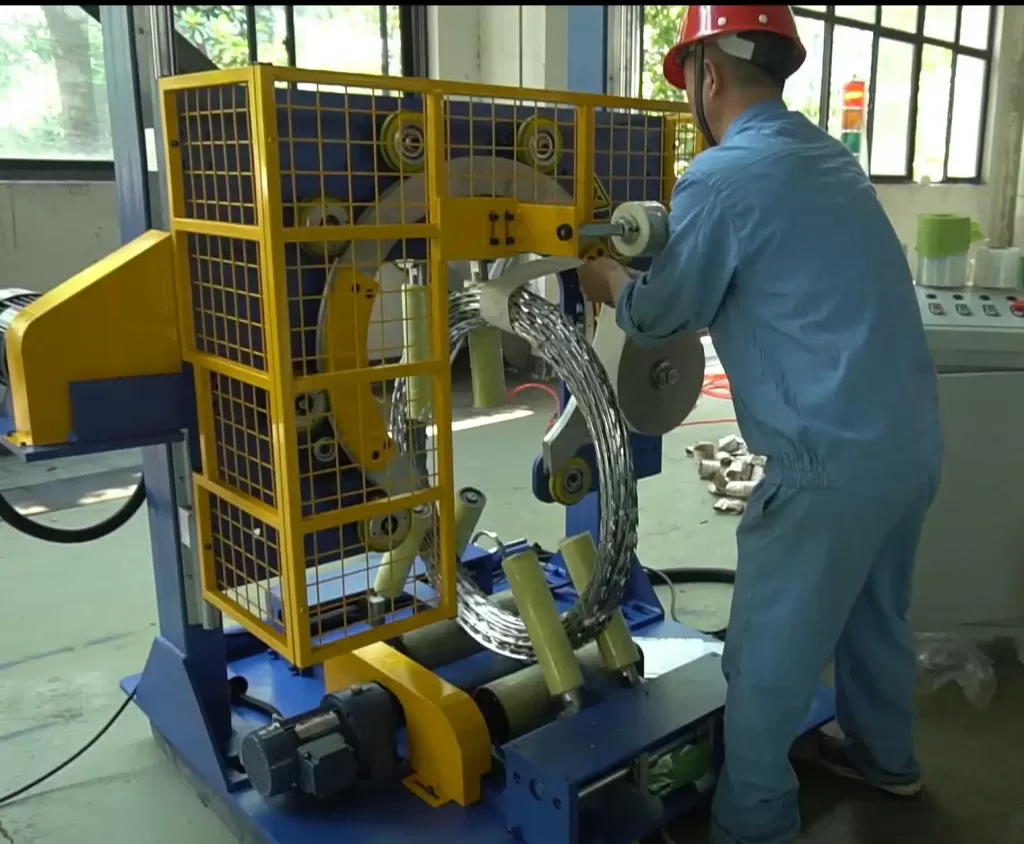
My early days in the industry taught me that not all wrapping needs are the same. An orbital wrapper creates a cocoon-like wrap around the entire length of a product or a stacked load. This helps to stabilize the items, preventing them from scattering or shifting. It is excellent for securing bundles or for providing a basic level of protection against environmental factors. Think of it as a strong, flexible bandage for your industrial goods. It is more versatile for varied product shapes but less specialized for very heavy, compact coils. (horizontal stretch wrapping, industrial bundling solutions, pallet load stabilization)
Protecting Your Goods with Orbital Wrapping Technology
Orbital wrappers have a specific set of advantages. They are well-suited for particular types of industrial packaging needs.
- Load Stabilization: The primary strength of an orbital wrapper is its ability to unitize and stabilize irregular or long loads. The continuous wrapping creates a secure bundle. This prevents individual items from moving or detaching. This is critical for safe transport.
- Dust and Moisture Barrier: The stretch film applied by an orbital wrapper forms an effective barrier. It protects products from dust, dirt, and light moisture. This is vital for items sensitive to contamination during storage or shipping. For example, it keeps lumber clean and dry.
- Versatility in Product Shape: Unlike coil packers, orbital wrappers can handle a wide array of product shapes and sizes. This includes long extrusions, doors, windows, or even multiple small boxes bundled together. This versatility makes them a popular choice for diverse manufacturing operations.
- Reduced Product Abrasion: The tight film layers prevent individual items from rubbing against each other. This reduces surface abrasion and minor cosmetic damage. It ensures products arrive looking pristine.
- Integration with Conveyor Systems: Many orbital wrappers integrate seamlessly with existing conveyor lines. This allows for automated, continuous flow packaging. This speeds up the end-of-line process without requiring additional manual labor.
Here is a quick overview of typical applications for orbital wrappers:
- Long Products: Pipes, tubes, aluminum profiles, wooden planks, and plastic extrusions.
- Bundled Items: Multiple smaller items bundled together for easier handling.
- Pallet Overwrap: Sometimes used to secure irregularly shaped loads on a pallet, or to add extra stability before vertical stretch wrapping.
- Rolls/Reels (non-coil specific): Lighter, less dense rolls of material that do not require the heavy-duty protection of a coil packer.
Consider Michael’s challenge with product loss during internal transfer. While an orbital wrapper could help with bundling many smaller items, its protection for heavy steel coils might be insufficient against the high impact or crushing forces they can encounter. (orbital stretch film applications, industrial bundling machines, automated wrapping for long goods)
3. When It Comes to Protection, How Do These Two Machines Stack Up Against Each Other?
Are you still unsure which machine offers the best defense for your specific product line? The names might sound similar, but their protective capabilities are tailored for very different scenarios. It is not just about wrapping; it is about how they wrap and what they are designed to protect against. This distinction is vital for minimizing product loss and ensuring client satisfaction.
While both machines use stretch film to create a protective barrier, a Wire Coil Packing Machine provides superior, heavy-duty, multi-directional protection specifically engineered for the unique stresses and potential damage points of compact, heavy coils like steel wire or hose. An Orbital Wrapping Machine offers more general, surface-level protection for a broader range of elongated or palletized products, primarily focusing on unitization and safeguarding against dust and moisture rather than severe impact or edge damage to dense objects.
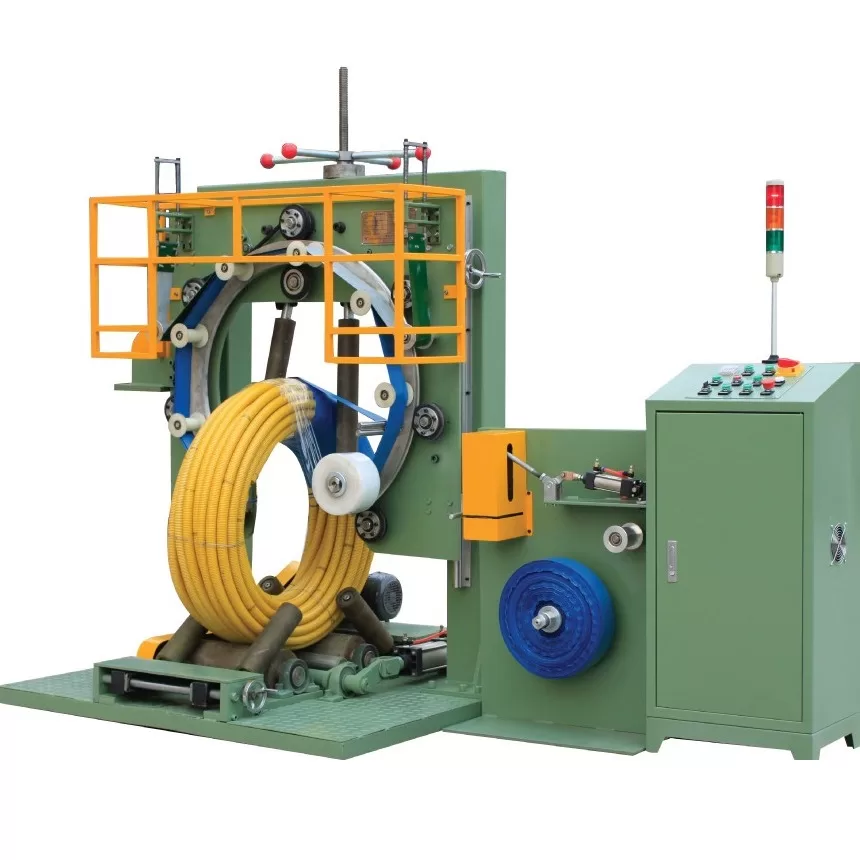
I have seen countless factories make the wrong choice, leading to ongoing product damage or inefficient packaging. The core difference lies in their primary function and the types of forces they are designed to withstand. A coil packer targets the structural integrity and surface protection of a heavy, dense coil itself. An orbital wrapper focuses on bundling and surface protection for items that are typically lighter or less compact. This is a critical distinction for a manager like Michael, who needs durable equipment that stands up to harsh conditions and protects valuable metal products. (packaging machine comparison, coil packaging vs. orbital wrapping, industrial product protection analysis)
Key Differences in Protective Capabilities
Let us break down the protective aspects of each machine in detail. This will help you understand where each truly excels.
- Target Product Design:
- Wire Coil Packer: Specifically designed for heavy, compact, toroidal (donut-shaped) products. Examples include steel coils, copper wire rolls, plastic pipes in coils, and hose coils. Its design allows it to wrap through the "eye" of the coil.
- Orbital Wrapper: Built for long, linear products or bundles of items. Examples include lumber, pipes, aluminum extrusions, or grouped smaller boxes. It wraps around the length of the product.
- Protection Against Impact and Deformation:
- Wire Coil Packer: Excellent. The tight, concentric wrap provides significant structural support. It helps prevent deformation of the coil shape. It also absorbs impacts, protecting delicate edges or inner layers. This is essential for heavy metal coils that might be stacked or moved frequently.
- Orbital Wrapper: Good for superficial protection. It secures items together. This reduces internal movement and minor abrasions. However, it offers limited protection against heavy impacts or crushing forces on the individual components within the bundle. It is not designed to prevent deformation of dense, heavy items.
- Moisture and Dust Barrier:
- Wire Coil Packer: Very effective. The multiple, overlapping layers create a near-hermetic seal around the coil. This prevents moisture ingress, dust accumulation, and exposure to corrosive agents, especially with appropriate film.
- Orbital Wrapper: Effective against dust and light moisture. The film covers the product’s surface. However, gaps might exist, especially at the ends or if the bundle is irregular. This makes it less ideal for critical corrosion prevention on exposed metal surfaces compared to a dedicated coil packer.
- Load Unitization and Stability:
- Wire Coil Packer: Unitizes the coil itself. It prevents unwinding and holds the coil structure firmly. This ensures the coil remains a single, stable unit.
- Orbital Wrapper: Excellent for unitizing multiple items into one stable bundle. It prevents individual pieces from shifting or falling apart during transport. This is its primary benefit for stability.
- Edge Protection:
- Wire Coil Packer: Can be highly customized for edge protection. The direct wrap around the circumference, often with pre-stretch and reinforcement, specifically safeguards the coil edges from damage. This is a common area for costly damage in metal coils.
- Orbital Wrapper: Offers minimal specific edge protection. The film wraps around the entire bundle. But it does not offer reinforced edge support for individual items within the bundle, especially if they are heavy.
Here is a summary table for a clearer comparison:
| Feature | Wire Coil Packing Machine | Orbital Wrapping Machine |
|---|---|---|
| Primary Product | Heavy, dense coils (steel, wire, hose) | Long, linear items, bundles, palletized goods |
| Impact Protection | High (structural integrity, edge protection) | Low to Medium (surface, bundling) |
| Moisture/Dust Barrier | Excellent (tight, multi-layer seal) | Good (surface coverage, light moisture protection) |
| Corrosion Prevention | High (especially with VCI film options) | Low (general surface cover, not specialized) |
| Edge Protection | High (direct, reinforced wrap around edges) | Low (general bundle wrap, no specific edge support) |
| Load Stability | Excellent (secures the coil itself) | Excellent (unitizes multiple items into a bundle) |
| Labor Reduction | High (automated coil handling and wrapping) | High (automated bundling of various products) |
For Michael’s metal processing plant, where steel coils are the main product, the specific, robust protection offered by a wire coil packing machine directly addresses his challenges. It helps reduce product loss and improve overall efficiency. (packaging machine protection comparison, industrial wrapping technology, superior product safeguarding)
4. Which Machine Delivers Superior Protection for Your Specific Wire or Coil Products?
Are you still grappling with the decision between these two types of wrapping machines? The "best" choice is not universal. It depends entirely on the unique characteristics of your products and the specific threats they face. Michael needs a solution that fits his demanding environment, not a one-size-fits-all answer. Making the wrong choice can lead to recurring problems and wasted investment.
For compact, heavy, and dense products like steel coils, wire bundles, or industrial hoses, a Wire Coil Packing Machine delivers undeniably superior and more specialized protection. It is engineered to safeguard against the unique stresses these items encounter, such as impact damage, edge deformation, and corrosion. For lighter, elongated products, or bundles of various items that primarily need unitization and basic surface protection from dust and moisture, an Orbital Wrapping Machine is usually the more appropriate and efficient choice.
My journey in this industry has shown me that understanding your product is the first step. If your coils are expensive, heavy, and prone to edge damage or rust, investing in a machine designed specifically for them is a wise decision. It is about matching the solution to the problem. You would not use a hammer to drive a screw, just as you would not use a general-purpose orbital wrapper for a heavy steel coil if comprehensive protection is your goal. (choosing packaging equipment, optimal product protection solutions, specific wrapping machine selection)
Tailoring Your Choice to Your Product and Operational Needs
Let us consider some specific scenarios to guide your decision.
-
Scenario 1: Heavy Steel or Copper Coils (Michael’s Situation)
- Product Characteristics: High weight, dense, susceptible to edge damage, corrosion risk, often stacked or moved by crane.
- Key Protection Needs: Robust impact resistance, superior edge protection, anti-corrosion barrier, secure unitization to prevent unraveling.
- Recommended Machine: Wire Coil Packing Machine.
- Why: Its concentric wrapping method provides direct, multi-layered protection around the coil’s circumference and eye. This prevents damage from impacts, safeguards critical edges, and offers excellent protection against moisture and dust, especially when using VCI film. This directly addresses Michael’s challenge of product loss during internal transfer and client complaints.
- 💡 Insight: "For Michael’s factory, where steel coils are handled in a demanding environment, a dedicated coil packer is an investment in product integrity and client trust."
-
Scenario 2: Bundles of Long Pipes, Tubes, or Profiles
- Product Characteristics: Elongated, multiple pieces, need bundling for stability, susceptible to surface scratches, dust.
- Key Protection Needs: Unitization to keep items together, protection from dust and minor abrasions, stabilization during transport.
- Recommended Machine: Orbital Wrapping Machine.
- Why: It excels at bundling multiple long items into a stable unit. The continuous wrap prevents individual pieces from shifting or scattering. It offers effective protection against dust and surface scratches.
- 💡 Insight: "If you are shipping a truckload of PVC pipes, an orbital wrapper is your champion for bundling them securely and keeping them clean."
-
Scenario 3: Razor Wire Coils or Lighter Hoses
- Product Characteristics: Coiled, but potentially lighter or requiring less extreme impact protection than heavy steel.
- Key Protection Needs: Containment (prevent unraveling), protection from environmental factors, secure bundling.
- Recommended Machine: Wire Coil Packing Machine (smaller models) or specialized Orbital Wrapper (if designed for coil-like items).
- Why: While orbital wrappers can sometimes handle lighter, smaller coils, a dedicated wire coil packing machine often provides a more secure and aesthetically pleasing wrap that prevents unraveling and offers better all-around protection. The choice here might depend on the specific tension and wrapping pattern needed.
- 💡 Insight: "Even for lighter coils, the engineered wrap of a coil packer often provides a superior, more durable solution than a general orbital wrapper."
-
Scenario 4: Palletized Mixed Goods or Irregularly Shaped Items
- Product Characteristics: Various shapes, stacked on a pallet, needing stability and basic environmental protection.
- Key Protection Needs: Load stability, dust/moisture barrier, preventing items from shifting.
- Recommended Machine: Orbital Wrapping Machine (or a Vertical Stretch Wrapper).
- Why: An orbital wrapper can effectively secure items horizontally to a pallet, enhancing stability for transport. A vertical stretch wrapper is more common for full pallet wrapping.
- 💡 Insight: "For general palletizing, an orbital wrapper works, but consider a vertical stretch wrapper if your primary need is full pallet load security."
Michael’s factory handles steel coils. His goal is to reduce manual labor, improve safety, and cut product loss. The challenges he faces (efficiency bottlenecks, safety hazards, product damage) point directly to the need for a highly specialized solution. A Wire Coil Packing Machine provides the targeted protection and automation he needs to achieve his goals. It offers a clear return on investment (ROI) by significantly reducing product damage and labor costs, which are critical for any factory manager. (industrial packaging ROI, automated coil handling, custom packaging solutions)
5. What Are My Expert Insights on Making the Right Packing Machine Choice for Optimal Protection?
Are you still feeling overwhelmed by the options and worried about making a costly mistake? I have walked this path, from employee to successful factory owner, and I have seen what works and what does not. The critical lesson is that expertise matters. You are not just buying a machine; you are investing in a solution that should drive your business forward. Michael is looking for a partner who truly understands his production bottlenecks and safety concerns.
My expert insight is this: when prioritizing optimal protection for heavy, valuable, and potentially fragile-edged products like steel or wire coils, always lean towards a dedicated Wire Coil Packing Machine. Its specialized design ensures unmatched structural integrity, edge protection, and environmental resistance. While Orbital Wrappers are excellent for unitizing and protecting elongated or bundled goods, they simply do not offer the targeted, heavy-duty safeguarding essential for high-value coil products.
I have built my brand, FHOPEPACK, on the principle of knowledge sharing. My goal is to help you avoid the pitfalls I have seen others fall into. Many suppliers focus only on making a sale. They do not offer the deep understanding or post-sales support that truly makes a difference. You need a partner who understands your challenges and can provide a solution that delivers a clear return on investment. This means looking beyond the initial cost and focusing on long-term benefits in safety, efficiency, and product quality. (expert packaging advice, industrial machine selection guide, long-term ROI in packaging)
A Deeper Look at Your Investment and Partnership
Choosing the right machine is a strategic decision for your business. It is about securing your future.
-
Understand Your True Costs:
- Initial Investment: Yes, a specialized coil packing machine might have a higher upfront cost than a general orbital wrapper.
- Operational Costs: Consider labor savings, reduced material waste, and lower insurance premiums due to fewer workplace injuries.
- Hidden Costs: What is the cost of damaged products? What about customer returns and lost reputation? These can quickly dwarf the initial machine price.
- ROI: A dedicated coil packing machine, by drastically reducing product damage and increasing efficiency, offers a much clearer and faster return on investment for coil-heavy operations. This directly addresses Michael’s goal of improving profitability.
-
Prioritize Safety First:
- Manual Handling Risks: Michael highlighted the high risk of injury from manually moving heavy coils. This leads to higher insurance costs and employee turnover.
- Automated Solutions: Both machines reduce manual handling. However, the coil packer directly eliminates the need for manual wrapping and precise positioning of heavy, awkward coils. This dramatically improves workplace safety for workers handling high-volume, heavy items.
- Compliance: Meeting safety regulations is not just good practice; it is a legal requirement. Automated systems help you comply more easily.
-
Seek True Partnership, Not Just a Vendor:
- Expertise Matters: Look for a supplier who has deep industry experience, like myself. Someone who understands your specific production bottlenecks and can offer tailored solutions.
- After-Sales Support: What happens when you need parts or service? Reliable after-sales support is crucial for minimizing downtime. This was a critical point for Michael, given his past negative experiences.
- Customization: Can the machine be customized to fit your unique factory layout or product variations? A good partner will discuss these possibilities.
- References: Ask for references or case studies from similar businesses. See how the supplier has helped others succeed.
As FHOPEPACK, our mission is to make mold knowledge accessible to all. While my primary focus began with mold, the principles of precision, efficiency, and robust engineering translate directly to packing machine solutions. I leveraged this understanding to build my packing machine factory and help clients.
For Michael Chen and others like him who oversee mid-to-large metal processing plants in places like Mexico, the choice is clear. If your factory relies on the safe and efficient packaging of heavy coils, a Wire Coil Packing Machine is not just a piece of equipment; it is a strategic asset. It protects your product, your people, and your bottom line. MASTER PACKING MACHINE. That is our slogan for a reason. We empower you to master your packing process.
Conclusion
Choosing between a Wire Coil Packing Machine and an Orbital Wrapper boils down to your product’s specific needs and the required protection level. For heavy, valuable coils, the specialized Wire Coil Packing Machine offers superior safeguarding, critical for reducing damage and boosting efficiency in operations like a steel coil packing line.


