Wire Coil Packing Machine Price Guide | What Factors Affect the Cost?
As a factory manager stares at another production delay caused by manual coil packaging, the frustration is palpable. The clock ticks while workers struggle with heavy steel coils, and the financial losses mount with every passing minute. This scene plays out daily in metal processing plants worldwide, where inefficient packaging processes create costly bottlenecks.
The price of wire coil packing machines is primarily determined by four key factors: automation level (manual vs fully automatic systems), production capacity requirements, customization needs for specific coil types, and additional features like safety mechanisms and smart controls. Understanding these cost drivers helps manufacturers make informed investment decisions that balance initial expenditure with long-term operational benefits.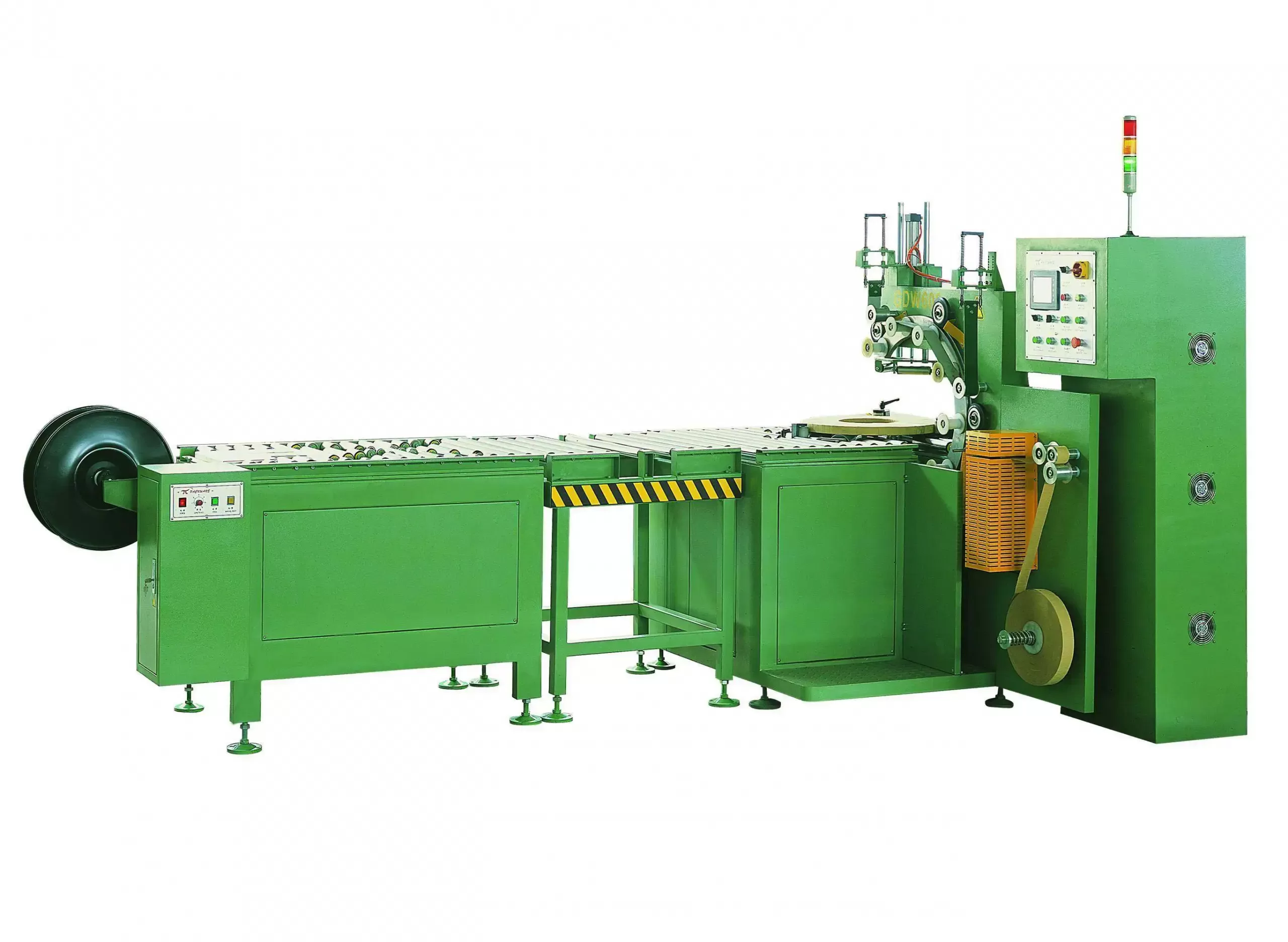
Having witnessed both sides as a packing machine engineer and factory owner, I’ll guide you through the real cost considerations beyond the price tag, helping you avoid expensive mistakes and identify the true value in coil packing equipment.
1. How Does Automation Level Impact Wire Coil Packing Machine Prices?
Picture this: three workers manually wrapping a steel coil, sweating as they fight against time and physical strain. Now imagine a fully automatic system handling the same task with precision and speed. The difference in efficiency is dramatic, and so is the price difference.
Automation level significantly influences wire coil packing machine costs, with manual systems costing $5,000-$15,000, semi-automatic ranging $20,000-$50,000, and fully automatic systems starting at $60,000 and exceeding $200,000 for advanced configurations. The price progression reflects reduced labor requirements, increased output consistency, and decreased reliance on human intervention.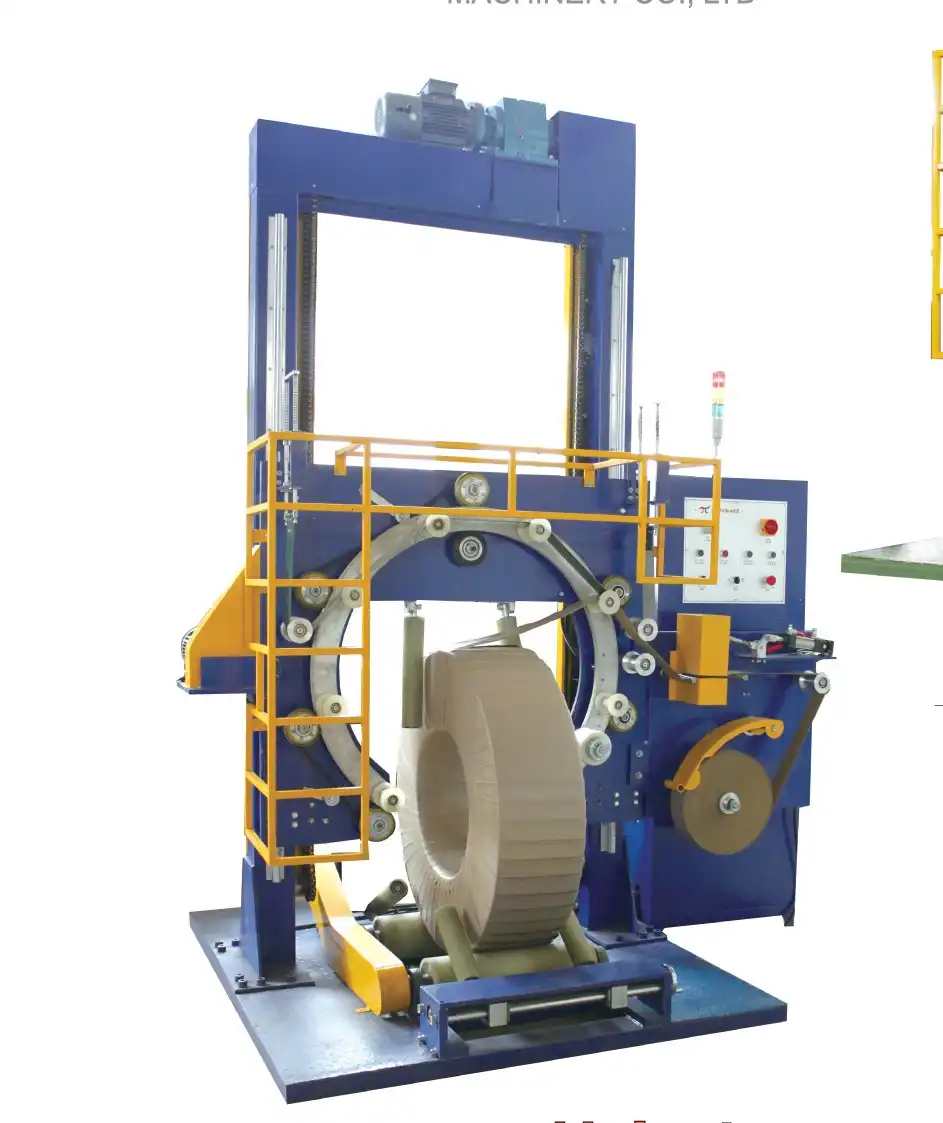
💰 Price Comparison by Automation Level
| Automation Type | Price Range | Labor Required | Output/Hour | Best For |
|---|---|---|---|---|
| Manual | $5,000-$15,000 | 2-3 operators | 5-10 coils | Small workshops, low volume |
| Semi-Auto | $20,000-$50,000 | 1 operator | 15-25 coils | Medium factories, mixed sizes |
| Fully Auto | $60,000-$200,000+ | Minimal supervision | 30-60+ coils | Large plants, high volume |
🔧 Technical Complexity Breakdown
Fully automatic systems incorporate sophisticated components that drive costs upward:
- Programmable Logic Controllers (PLC) – $2,000-$8,000
- Servo motors and drives – $3,000-$12,000 per axis
- Touchscreen HMIs – $1,500-$4,000
- Safety systems – $2,000-$10,000
- Integration interfaces – $1,000-$5,000
📈 ROI Considerations
While the initial investment seems substantial, the operational savings justify the cost for suitable applications:
- Labor reduction: Automatic systems can reduce packaging labor by 70-90%
- Consistency improvement: Automated tension control eliminates human error
- Speed enhancement: Throughput increases of 300-500% are common
- Safety improvement: Reduced worker interaction with heavy coils
For operations processing over 50 coils daily, the payback period for fully automatic systems typically ranges from 12-24 months. Medium-volume operations (20-50 coils daily) often find semi-automatic systems offer the best balance of capability and affordability. Small shops processing under 20 coils daily may still benefit from manual systems, though the labor costs per coil remain significantly higher. (automated coil packaging systems, semi-automatic wrapping equipment, manual coil packing solutions)
2. What Production Capacity Factors Influence Machine Pricing?
A Mexican steel processor recently contacted me with a familiar dilemma. Their existing equipment couldn’t handle increased order volumes, causing delivery delays and customer complaints. They needed a machine that matched their actual production requirements without overspending on unnecessary capacity.
Production capacity factors affecting wire coil packing machine prices include maximum coil weight handling (from 1-ton to 30-ton capacities), packaging speed requirements (5-60+ coils per hour), and machine durability for continuous operation (8-hour vs 24-hour duty cycles). These specifications directly impact structural design, motor power, and component quality, creating price variations of 200-400% between entry-level and heavy-duty systems.
⚖️ Capacity-Based Price Tiers
Light-Duty Machines ($15,000-$35,000)
- Coil weight: Up to 2 tons
- Speed: 5-15 coils/hour
- Applications: Copper wire, small steel coils, aluminum wire
- Features: Basic controls, standard components
- Brand examples: Fengdeng entry-level models
Medium-Duty Machines ($35,000-$75,000)
- Coil weight: 2-10 tons
- Speed: 15-35 coils/hour
- Applications: Standard steel coils, construction rebar
- Features: Enhanced stability, moderate automation
- Brand examples: Wuxi Buhui mid-range systems
Heavy-Duty Machines ($75,000-$200,000+)
- Coil weight: 10-30+ tons
- Speed: 30-60+ coils/hour
- Applications: Industrial steel coils, heavy wire products
- Features: Robust construction, advanced automation
- Brand examples: Fengdeng premium series
🏭 Real-World Capacity Planning
I recall a client who initially purchased an undersized machine to save $20,000. Within six months, the machine struggled with their actual 8-ton coils (despite being rated for 10 tons), leading to frequent breakdowns. The eventual replacement cost them $85,000 plus $35,000 in lost production – a painful lesson in accurate capacity assessment.
📊 Matching Machine to Production Needs
Consider these critical questions before selecting capacity:
- What is your average AND maximum coil weight? (Don’t base decisions on averages alone)
- How many shifts will the machine operate? (Continuous operation requires premium components)
- What are your peak season requirements? (Plan for 20-30% above current needs)
- How quickly are you growing? (Account for 2-3 year expansion projections)
The most cost-effective approach typically involves selecting a machine that handles your maximum expected coil weight with 15-20% additional capacity buffer. This prevents overworking the equipment while accommodating reasonable growth without immediate reinvestment. (heavy duty coil packing equipment, high capacity wrapping machines, industrial coil packaging solutions)
3. How Much Does Customization Add to Wire Coil Packing Machine Costs?
Walking through a steel plant in Monterrey last year, I observed a unique challenge: their coils had irregular shapes that standard machines couldn’t handle efficiently. Their existing equipment caused consistent packaging failures, resulting in product damage during transit.
Customization typically adds 15-40% to base machine costs, with specialized coil handling features (non-standard sizes/shapes), unique packaging material requirements, and facility integration (limited space/layout constraints) being the most significant cost drivers. While customization increases initial investment, it often delivers superior long-term value through optimized performance in specific applications.
🎯 Common Customization Options and Cost Impact
🔄 Specialized Coil Handling (+10-25%)
- Non-standard coil diameters: Modified turntables and arms
- Irregular shapes: Custom gripping and stabilization
- Fragile surfaces: Gentle handling systems with padded contact points
- Multiple coil types: Quick-change adaptability features
📦 Packaging Material Adaptations (+5-20%)
- Alternative materials: Systems for non-standard films, papers, or fabrics
- Multiple material capability: Switching between different packaging types
- Reinforcement requirements: Additional strapping or edge protection systems
- Environmental considerations: Weather-resistant or corrosion-resistant packaging
🏗️ Facility Integration Modifications (+8-15%)
- Space constraints: Compact or modular designs
- Existing line integration: Interface with current material handling systems
- Height restrictions: Low-profile configurations
- Special foundation requirements: Vibration damping or reinforced bases
💡 Customization Value Assessment Framework
Not all customizations provide equal value. Consider this prioritization:
⭐ High-Value Customizations (Usually worth the cost)
- Safety enhancements that protect workers
- Quick-change systems for multiple product types
- Durability improvements for harsh environments
- Integration with existing material handling
✅ Medium-Value Customizations (Situation-dependent)
- Specialized packaging material handling
- Enhanced data collection capabilities
- Aesthetic modifications
- Non-critical dimensional adjustments
❌ Low-Value Customizations (Question carefully)
- Brand-color matching
- Excessive instrumentation beyond needs
- Over-engineering for unlikely scenarios
- Non-functional aesthetic changes
💰 Budgeting for Customization
When planning your investment:
- Identify essential customizations (must-have for operation)
- Separate desirable customizations (nice-to-have improvements)
- Request modular pricing (understand cost of each modification)
- Consider future-proofing (adaptability for planned changes)
- Evaluate aftermarket alternatives (sometimes cheaper to modify later)
The most successful projects balance standard components with strategic customizations, avoiding both the limitations of completely standard equipment and the excessive costs of over-customization. Fengdeng has particularly strong engineering support for tailored solutions that address specific production challenges without reinventing standard components. (custom coil packaging solutions, specialized wrapping equipment, tailored packing machine configurations)
4. What Additional Features Affect Overall Investment?
A manufacturing client once proudly showed me their "bargain" coil packing machine. The initial price seemed attractive, but within months, they faced recurring maintenance issues, safety incidents, and compatibility problems with their other equipment. The true cost emerged through downtime and repairs.
Additional features impacting wire coil packing machine investment include safety systems (ranging from basic guards to laser scanning at $2,000-$15,000), smart controls and IoT connectivity ($3,000-$12,000), after-sales support packages ($1,000-$8,000 annually), and energy efficiency components that affect long-term operating costs. These elements separate basic equipment from comprehensive solutions that deliver sustained value.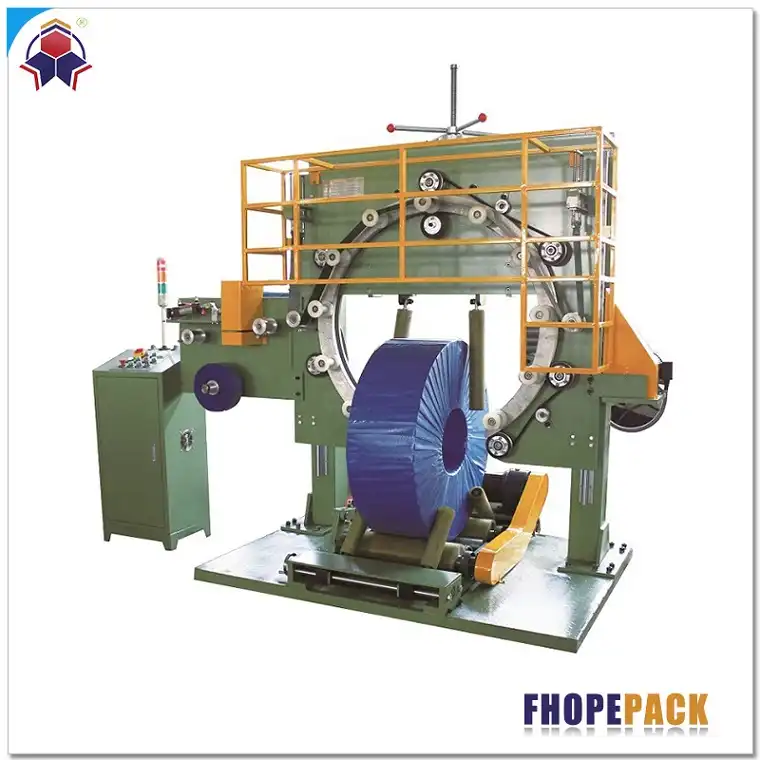
🛡️ Safety Systems Investment Levels
Basic Safety ($2,000-$5,000)
- Emergency stop buttons
- Mechanical guards
- Basic warning signs
- Required for CE certification
Intermediate Safety ($5,000-$10,000)
- Light curtains
- Safety interlocks
- Two-hand operation controls
- Enhanced emergency systems
Advanced Safety ($10,000-$15,000+)
- Laser scanning protection
- Comprehensive access control
- Automated safety monitoring
- Integration with plant safety systems
📊 Smart Features Value Matrix
| Feature | Cost Range | ROI Period | Best For |
|---|---|---|---|
| Basic PLC | $1,500-$3,000 | <6 months | All operations |
| Data Collection | $2,000-$5,000 | 6-12 months | Quality-focused plants |
| Remote Monitoring | $3,000-$7,000 | 12-18 months | Multi-site operations |
| Predictive Maintenance | $4,000-$9,000 | 18-24 months | High-uptime requirements |
| Full IoT Integration | $8,000-$15,000 | 24+ months | Advanced smart factories |
🔧 After-Sales Support Considerations
The machine purchase price represents only 40-60% of the 10-year ownership cost. Support services significantly impact total investment:
- Warranty duration: Standard 12 months vs extended 36-month options
- Response time guarantees: 24-hour vs 72-hour service commitments
- Spare parts availability: Local inventory vs overseas sourcing
- Technical training: Basic operation vs comprehensive maintenance programs
- Software updates: Included vs additional charge
💡 Hidden Value Features
Some less-obvious features deliver substantial long-term benefits:
- Energy recovery systems: Recapture braking energy (7-15% energy savings)
- Modular design: Easier component replacement and upgrades
- Standard components: Reduced spare parts costs and availability
- Documentation quality: Comprehensive manuals and troubleshooting guides
- Community support: User forums and knowledge bases
Wuxi Buhui provides particularly strong after-sales support in Asian markets, while Fengdeng offers excellent technical documentation and community resources that extend beyond formal support contracts. The optimal feature set depends on your technical capabilities, maintenance resources, and operational priorities. (smart coil packing systems, IoT enabled packaging machinery, industrial safety features)
Conclusion
Choosing the right wire coil packing machine involves balancing initial cost with long-term value across automation, capacity, customization, and features. The optimal investment maximizes productivity while minimizing total ownership costs, with reliable steel coil packing line equipment providing the foundation for efficient operations.


