Where to Buy a Steel Coil Packing Line for Europe’s Metal Service Centers?
As a factory manager in Europe’s competitive metal service industry, you face constant pressure to improve efficiency and reduce costs. Your current manual packing process creates bottlenecks that delay shipments and increase labor expenses. The search for reliable automated packaging equipment can feel overwhelming with so many suppliers claiming to have the best solution.
The most reliable source for purchasing a complete steel coil packing line in Europe is through specialized manufacturers with proven experience in the metal processing industry, particularly those offering turnkey solutions with full system integration capabilities. These suppliers understand the unique requirements of European service centers and can provide customized solutions that address your specific production challenges, from initial layout design to final commissioning and training.
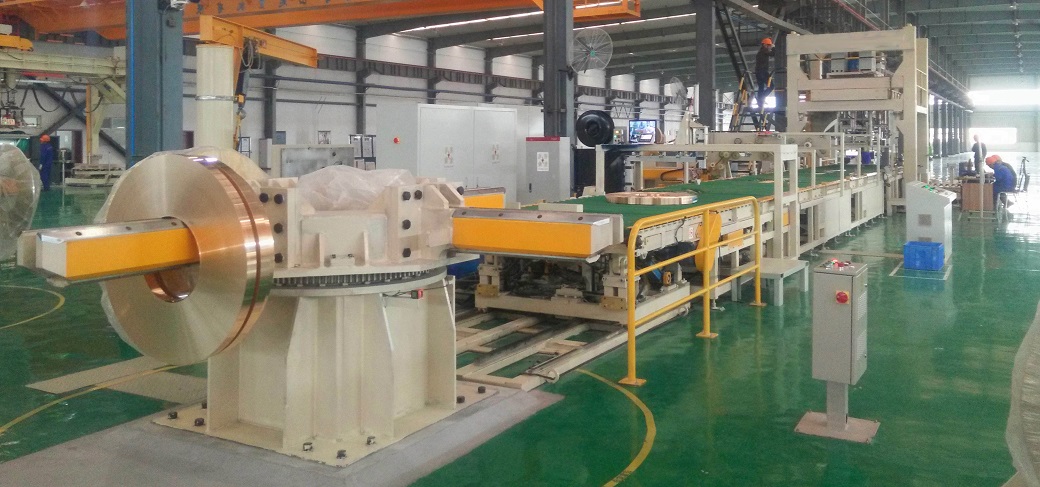
Finding the right packaging line supplier requires careful consideration of multiple factors beyond just equipment specifications. You need a partner who understands your operational constraints, safety requirements, and long-term production goals. In this comprehensive guide, I’ll share insights from my 15 years of experience designing and commissioning over 200 packaging lines worldwide, helping you make an informed decision that delivers measurable ROI for your European metal service center.
1. What Should European Metal Service Centers Look for in a Steel Coil Packing Line Supplier?
European metal service centers operate in a highly competitive market where efficiency and reliability are paramount. The wrong equipment choice can lead to production delays, quality issues, and unexpected maintenance costs that erode your profitability.
When selecting a steel coil packing line supplier in Europe, prioritize manufacturers with extensive experience in the metal processing industry, proven technical capabilities for system integration, reliable after-sales support with local service networks, and compliance with European safety standards and certifications. These factors ensure you receive equipment that matches your production requirements while meeting regional regulatory requirements.

🔍 Key Supplier Evaluation Criteria
📋 Supplier Capability Assessment Table
| Evaluation Factor | Basic Supplier | Advanced Supplier | Ideal Partner |
|---|---|---|---|
| Industry Experience | <5 years in metal industry | 5-10 years with some references | 10+ years, 50+ successful installations |
| Technical Support | Limited remote assistance | On-site support available | Local service team + 24/7 remote monitoring |
| System Integration | Single machine focus | Partial line integration | Complete turnkey solution capability |
| Customization | Standard models only | Minor modifications | Full custom engineering based on layout |
| Compliance | Basic CE certification | Full CE + local standards | CE, ISO, and industry-specific certifications |
| Training | Basic operation manual | On-site operator training | Comprehensive training programs |
| Warranty | Standard 1 year | Extended 2-year coverage | 3+ years with performance guarantees |
🌍 Regional Considerations for European Operations
European metal service centers face unique challenges that require specialized solutions. Your supplier must understand EU machinery directives, local safety regulations, and regional material handling practices. Look for manufacturers with specific experience working with European clients, as they’ll be familiar with space constraints, energy efficiency requirements, and workforce skill levels common in the region.
From my experience commissioning projects across Europe, I’ve found that suppliers with local representation typically provide better ongoing support. They understand the importance of quick response times and have established relationships with local component suppliers, which reduces downtime when replacement parts are needed. This regional knowledge becomes particularly valuable when navigating local building codes, utility connections, and environmental regulations.
✅ Verification Checklist
Before committing to a supplier, verify these critical aspects:
- Request detailed references from similar European installations
- Visit existing installations to observe equipment performance
- Review technical documentation completeness and clarity
- Confirm spare parts availability and delivery timelines
- Evaluate the supplier’s financial stability and long-term viability
- Assess their understanding of your specific production challenges
Choosing the right partner for your automated steel coil packing line requires thorough due diligence, but the investment in proper supplier selection pays dividends throughout the equipment lifecycle through reliable performance and minimal downtime. (automated steel coil packing line, steel coil wrapping line solution, turnkey coil packing line)
2. How to Choose the Right Steel Coil Packing Line Configuration for Your Production Volume?
Matching your packaging line configuration to your actual production requirements is crucial for maximizing return on investment. Many facilities either under-invest in automation and miss efficiency opportunities, or over-invest in capabilities they don’t fully utilize.
Selecting the optimal steel coil packing line configuration requires analyzing your daily production volume, coil specifications, available space, and workforce constraints, then matching these requirements to the appropriate automation level – manual, semi-automatic, or fully automatic systems. The right choice balances initial investment against long-term operational savings and production flexibility.

📊 Production Volume to Configuration Matching
💰 ROI Analysis by Automation Level
| Production Scenario | Manual Line | Semi-Auto Line | Full Auto Line |
|---|---|---|---|
| Daily Volume | <20 coils | 20-60 coils | 60-150+ coils |
| Labor Required | 4-6 operators | 2-3 operators | 1 operator |
| Initial Investment | €150,000-€300,000 | €300,000-€600,000 | €600,000-€1,200,000+ |
| Packaging Speed | 2-4 coils/hour | 4-8 coils/hour | 8-15+ coils/hour |
| ROI Period | 12-18 months | 18-30 months | 24-40 months |
| Best For | Low volume, high mix | Medium volume, mixed sizes | High volume, limited variants |
🏭 Capacity Planning Framework
Understanding your true production requirements involves more than just counting daily coil output. Consider these factors when determining your ideal configuration:
Current vs. Future Needs
Evaluate both your immediate requirements and projected growth over the next 3-5 years. A common mistake I’ve observed in my 200+ projects is designing for current volumes without accounting for business expansion. If you anticipate growth, consider a modular system that can be upgraded rather than replacing the entire line later.
Coil Specification Variations
The diversity of your coil portfolio significantly impacts configuration decisions. Facilities handling limited size ranges can optimize for specific parameters, while those with highly variable dimensions need more flexible systems. Document your complete coil size matrix – including weight ranges, diameter variations, and width specifications – to ensure the selected equipment can handle your entire product mix.
Shift Patterns and Utilization
Consider how many shifts you operate and whether production is consistent or seasonal. Single-shift operations might justify different investment levels compared to 24/7 facilities. Also factor in planned maintenance requirements and how line configuration affects overall equipment availability.
Based on my experience designing systems for European service centers, most facilities processing 50-100 tons daily find optimal value in semi-automatic to fully automatic configurations, with ROI typically achieved within 2-3 years through labor reduction, damage minimization, and throughput improvement. (coil packaging production line, integrated steel coil handling line, coil packing line configuration)
3. What Are the Key Components and Layout Considerations for an Efficient Packing Line?
An efficient steel coil packing line operates as an integrated system where each component works seamlessly with others. Poor equipment selection or improper layout can create bottlenecks that undermine the benefits of automation.
A complete steel coil packing line consists of several integrated subsystems: feeding and positioning equipment, wrapping stations, strapping units, protective application systems, and discharge conveyors, all synchronized through centralized control systems. The optimal layout depends on your available space, material flow patterns, and integration with upstream and downstream processes.
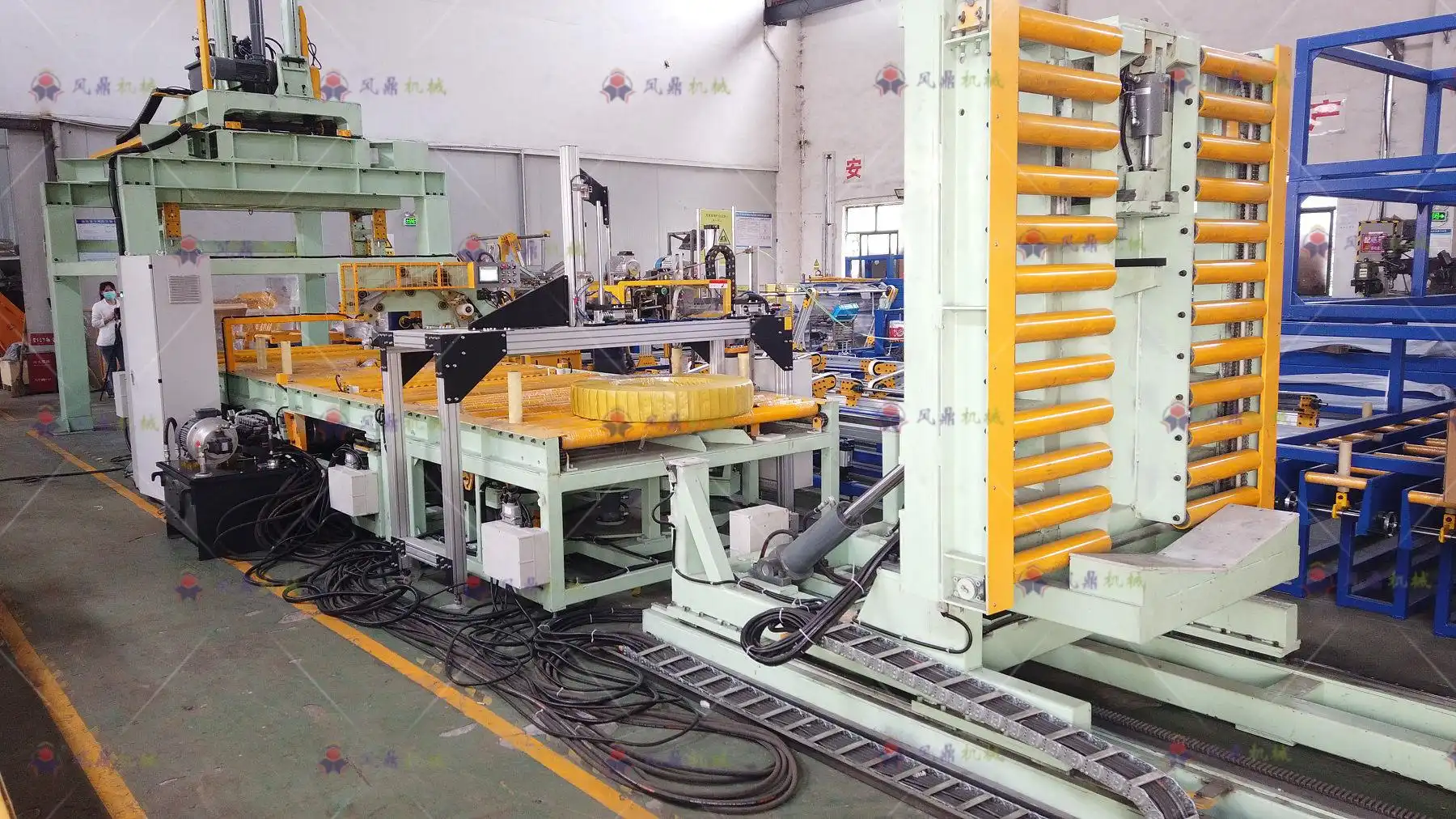
⚙️ System Components Breakdown
🔄 Complete Packaging Process Flow
-
Coil Feeding System
- Receives coils from production or storage
- Orients and positions for packaging
- May include weighing and identification stations
-
Wrapping Station
- Applies protective materials (film, paper, caps)
- Ensures complete coverage and tension control
- May include edge protection application
-
Strapping Unit
- Applies steel or plastic straps
- Ensures proper tension and seal quality
- Typically 2-4 straps per coil depending on size
-
Labeling and Identification
- Applies product labels and shipping information
- May include automated printing and application
- Integrates with warehouse management systems
-
Discharge and Storage
- Moves finished coils to storage or loading areas
- May include accumulation tables or automated storage
🏗️ Layout Configuration Options
Different facility constraints require different layout approaches. Here are the most common configurations I’ve implemented in European service centers:
Straight-Line Layout
- Best for long, narrow spaces
- Simple material flow from start to finish
- Easy to expand by extending the line
- May require more floor space than other options
L-Shaped Configuration
- Ideal for corner locations
- Maximizes use of available space
- Can separate dirty and clean operations
- May require additional transfer equipment
U-Shaped Design
- Excellent for operator efficiency
- Single operator can monitor multiple stations
- Compact footprint
- Requires careful planning for material flow
Key Layout Considerations:
- Maintain adequate clearance for maintenance access
- Ensure proper lighting and safety systems throughout
- Plan for future expansion or modification
- Consider integration with existing material handling equipment
- Allow space for staging raw materials and finished goods
The most successful installations I’ve commissioned always involved detailed layout planning during the design phase, considering not just equipment placement but also operator workflows, maintenance access, and future modification requirements. Proper planning during this stage prevents costly changes after installation and ensures optimal line performance from day one. (end-of-line coil packing system, coil wrapping and strapping line, industrial coil packaging line)
4. How to Calculate ROI and Justify Investment in an Automated Coil Packing Line?
Securing management approval for capital investment requires clear financial justification that demonstrates tangible benefits beyond simply replacing manual labor. A comprehensive ROI analysis should capture both direct cost savings and indirect benefits that contribute to overall operational efficiency.
Calculating ROI for an automated steel coil packing line involves quantifying labor reduction, productivity improvements, material savings, quality enhancements, and safety benefits, then comparing these savings against the total investment cost including equipment, installation, and training expenses. A well-prepared business case typically shows payback periods between 18-36 months for most European metal service centers.
💵 Comprehensive ROI Calculation Framework
📈 Cost-Benefit Analysis Components
Investment Costs
- Equipment purchase price
- Installation and commissioning
- Facility modifications
- Training programs
- Spare parts inventory
- Project management
Direct Savings
- Labor cost reduction (typically 3-5 operators)
- Increased throughput capacity
- Reduced material waste
- Lower damage claims
- Decreased insurance premiums
- Reduced overtime expenses
Indirect Benefits
- Improved customer satisfaction
- Enhanced competitive positioning
- Reduced employee turnover
- Better space utilization
- Increased production flexibility
- Improved safety record
🧮 Sample ROI Calculation for Medium-Sized Service Center
Let me share a typical example from my experience with European clients:
Scenario: Medium-sized service center processing 40 coils daily
Current Manual Operation:
- 5 operators @ €45,000/year each = €225,000
- Material waste: €35,000/year
- Damage claims: €28,000/year
- Total Annual Cost: €288,000
Proposed Semi-Automatic Line:
- 2 operators @ €45,000/year each = €90,000
- Material optimization: €15,000/year savings
- Damage reduction: €20,000/year savings
- Throughput increase: €50,000 additional revenue
- Total Annual Cost/Savings: €175,000 net benefit
Investment: €450,000 (equipment + installation)
Simple Payback: €450,000 / €175,000 = 2.6 years
📋 Additional Financial Considerations
Beyond the basic payback calculation, consider these factors in your investment justification:
Financing Options
Many equipment suppliers offer financing programs that can improve cash flow by spreading payments over time. Leasing options may provide tax advantages while preserving capital for other investments.
Total Cost of Ownership
Look beyond initial purchase price to consider long-term operating costs, including energy consumption, maintenance requirements, and expected component replacement cycles. Higher-quality equipment often has lower lifetime costs despite higher initial investment.
Risk Mitigation
Quantify the value of reducing operational risks such as workplace injuries, product damage, and production bottlenecks. While harder to quantify precisely, these factors contribute significantly to long-term business sustainability.
In my projects across Europe, the most compelling ROI cases typically emerge when companies consider the complete picture – not just labor reduction but also quality improvements, capacity increases, and risk mitigation. The business case becomes even stronger when you factor in the difficulty of finding and retaining skilled labor in many European markets. (automatic coil packaging system, steel coil stretch wrapping line, complete coil packing line equipment)
Conclusion
Choosing the right steel coil packing line requires careful analysis of your specific needs, thorough supplier evaluation, and comprehensive ROI justification to ensure optimal long-term performance and value.


