What Is an Automatic Coil Packing Machine? A Complete Beginner’s Guide
Running a busy factory, especially one dealing with heavy materials like steel coils or wire, means constant pressure. You are always looking for ways to boost output, cut costs, and keep your team safe. I know this firsthand. I’ve spent years in the packing machine industry, from working on the factory floor to building my own successful packing machine factory. I’ve seen the struggles: slow manual processes, high injury risks, and products getting damaged before they even leave the plant. If you are nodding along, feeling these exact pains, then you are in the right place. (factory efficiency, production challenges)
An automatic coil packing machine is a specialized industrial system designed to efficiently wrap and secure various types of coils, such as steel coils, wire coils, and plastic pipes, with protective packaging materials like stretch film, woven fabric, or VCI paper. It automates the entire packing process, from conveying the coil to applying and sealing the packaging, significantly improving speed, safety, and product integrity compared to manual methods. This technology addresses critical operational bottlenecks in heavy manufacturing by reducing labor, preventing product damage, and enhancing overall throughput. (automatic coil packing, industrial packaging solutions, coil wrapping system)

For any factory manager or operations director, understanding these machines is not just about buying equipment; it’s about finding a true partner in automation. It is about transforming your production line. Let’s dive deeper into how these incredible machines work and why they might be the solution you have been searching for. (automated packaging benefits, factory automation guide)
1. What exactly is an Automatic Coil Packing Machine, and how does it work?
Are you tired of seeing your valuable products exposed to damage during storage and transit? Does your current packaging process feel slow and outdated, creating bottlenecks at the end of your production line? I have walked through countless factories facing these same issues, where manual wrapping is not only inefficient but also a major safety concern. It is time to explore a better way. (coil protection solutions, outdated packaging problems)
An automatic coil packing machine operates by systematically enclosing various coiled products with protective materials, often using an orbital or vertical wrapping mechanism. The core process typically involves placing a coil onto a conveyor, which then transports it to the wrapping station. Here, a rotating arm or turntable applies layers of packaging film or material around the coil’s circumference, ensuring a tight, secure, and moisture-resistant seal. Advanced systems often integrate automatic cutting, clamping, and heat-sealing functions, all controlled by a centralized PLC, to deliver consistent and high-quality packaging without human intervention. (coil wrapping process, automated packaging mechanics, PLC controlled systems)

When I first started in this industry, I saw many different ways of packing. Most of them relied on people doing heavy, repetitive work. This made me realize how much potential there was for machines to do this better. Let’s break down the typical workflow of an automatic coil packing machine and look at the different types you might encounter. Understanding these details will help you see how these machines can fit into your operations.
Understanding the Automatic Coil Packing Workflow
The journey of a coil through an automatic packing machine follows a structured path, designed for maximum efficiency and protection.
- Loading: Coils are first loaded onto the machine. This can be done automatically using conveyors, loading cars, or crane systems, depending on the coil’s weight and the factory’s setup. For heavy steel coils, a robust conveyor system is essential.
- Centering: Once loaded, the machine ensures the coil is perfectly centered within the wrapping area. This step is critical for even and secure wrapping.
- Wrapping: This is the heart of the process. A dispenser feeds packaging material (like stretch film, VCI paper, or woven strap) from a roll, and a rotating ring or arm wraps it tightly around the coil. The number of layers and tension are precisely controlled.
- Sealing & Cutting: After the desired number of wraps, the packaging material is automatically cut and sealed. Many machines use heat sealing or pneumatic clamping for a strong, reliable finish.
- Unloading: The now perfectly packed coil is then automatically unloaded, usually onto another conveyor or storage area, ready for shipping or further processing.
Types of Automatic Coil Packing Machines
There isn’t just one type of machine. Different coils and different needs mean different solutions.
| Type of Machine | Best Suited For | Key Benefit | Typical Packaging Material |
|---|---|---|---|
| Orbital Wrapper | Steel coils, wire coils, pipes, tires (rings) | Excellent for surface protection, dust/moisture | Stretch film, VCI paper |
| Vertical Wrapper | Narrow coils, small bundles | Compact footprint, ideal for stacking | Stretch film |
| Horizontal Wrapper | Long products (pipes, profiles) | Good for elongated items, not typically for coils | Stretch film |
| Stretch Hood Machine | Palletized coils, multiple coils on a pallet | Provides 5-sided protection, waterproof | Stretch hood film |
By choosing the right type, factories can dramatically improve their coil packaging line efficiency. For example, in a metal processing plant like Michael’s, an orbital wrapper would be key for protecting slit steel coils from edge damage and rust. My goal at FHOPEPACK is to help you navigate these choices, ensuring you find the best fit for your specific needs, much like I did when building my own factory. (coil packaging types, industrial wrapper selection, metal coil protection)
2. Why should my factory invest in an Automatic Coil Packing Machine?
Is your current production bottleneck at the end of the line, where manual packing slows everything down? Are you constantly worried about employee safety when handling heavy coils, or the potential for costly product damage? I’ve helped numerous clients overcome these exact hurdles. They were struggling with outdated processes, just like Michael, and saw their profits dwindle due to inefficiency and accidents. (production bottleneck solutions, workplace safety concerns)
Investing in an automatic coil packing machine offers significant advantages for factories, primarily by enhancing operational efficiency, drastically improving workplace safety, and protecting product quality. These machines reduce reliance on manual labor for heavy and repetitive tasks, leading to faster throughput, lower labor costs, and fewer occupational injuries. Moreover, they provide consistent, high-quality packaging that shields coils from damage during handling, storage, and transit, minimizing product loss and customer complaints. The return on investment (ROI) is often clear, driven by increased productivity, reduced insurance claims, and improved customer satisfaction. (automatic packaging ROI, factory safety improvement, product damage prevention)

From my experience, seeing a factory transform from struggling with manual packing to running a smooth, automated operation is incredibly rewarding. It is not just about buying a machine; it is about embracing a smarter, safer way of working. Let’s look at the concrete benefits that directly address the challenges many factory managers, like Michael Chen, face daily.
Direct Benefits for Your Operations
Consider these points when evaluating the impact an automatic coil packing machine can have:
- 📈 Efficiency Boost:
- Problem: Manual processes are slow and cause production bottlenecks.
- Solution: Automation dramatically increases packing speed and throughput, ensuring your packing line keeps up with production.
- Impact: Reduced waiting times, faster delivery, and increased overall factory output.
- 🛡️ Enhanced Safety:
- Problem: Manual handling of heavy coils poses severe injury risks for workers.
- Solution: Machines take over heavy lifting and wrapping, minimizing human interaction with dangerous loads.
- Impact: Significantly fewer workplace accidents, lower insurance premiums, and a safer work environment for your team.
- 💰 Cost Reduction:
- Problem: High labor costs, product damage, and increased insurance due to accidents.
- Solution: Automation reduces the need for multiple operators, minimizes material waste, and prevents damage to coils.
- Impact: Lower operational expenses, improved profit margins, and a clearer ROI.
- 📦 Superior Product Protection:
- Problem: Coils get damaged (e.g., edge dents, rust) during internal transport and shipping.
- Solution: Consistent, tight, and robust wrapping protects coils from moisture, dust, and physical impact.
- Impact: Fewer customer complaints, stronger brand reputation, and preservation of product value.
Addressing Michael’s Challenges with Automation
Michael’s factory manager role highlights specific pain points that automated packing excels at solving.
- Efficiency Bottleneck: Michael’s current manual process for steel coil and wire packing is slow. An automatic machine eliminates this, ensuring a smooth, continuous flow from production to dispatch.
- Safety Hazards: The risk of injury from handling heavy molds or turning pallets is high. Automatic systems reduce or remove the need for manual heavy lifting, making the workplace much safer.
- Product Loss: Damages to steel coil edges during transit are a concern. Automated, consistent wrapping prevents such damage, reducing customer complaints and financial losses.
- Supplier Trust Crisis: Michael wants a partner who understands his challenges. I believe that my journey in the packing machine industry—from employee to factory owner—gives me a unique perspective. I can offer not just machines but insights and solutions that truly work. This is the FHOPEPACK promise.
By understanding these direct impacts, it becomes clear that an automatic coil packing machine is not just an expense; it is a strategic investment in the future of your factory. (heavy industry automation, manufacturing efficiency gains, safe material handling)
3. What are the key components and features to look for in these machines?
When you are considering a major investment like an automatic coil packing machine, you might feel overwhelmed by all the technical specifications and options. How do you know what truly matters for your specific production needs? I’ve seen many factories make choices based on price alone, only to find the machine lacking critical features for their unique challenges. My advice is always to look beyond the basic function. (industrial machine features, packing equipment selection)
Key components of an automatic coil packing machine typically include a robust conveying system, a precision wrapping unit (such as an orbital or vertical design), an automatic film clamping and cutting device, and an intuitive Human-Machine Interface (HMI) for operation. Essential features to prioritize are variable speed controls for wrapping tension, an automatic fault detection system, safety interlocks, and the capability to integrate with existing production lines. For heavy-duty applications, look for durable construction, high-grade materials, and a powerful drive system to ensure longevity and consistent performance in demanding industrial environments. (coil packing machine parts, industrial packaging features, heavy-duty equipment)
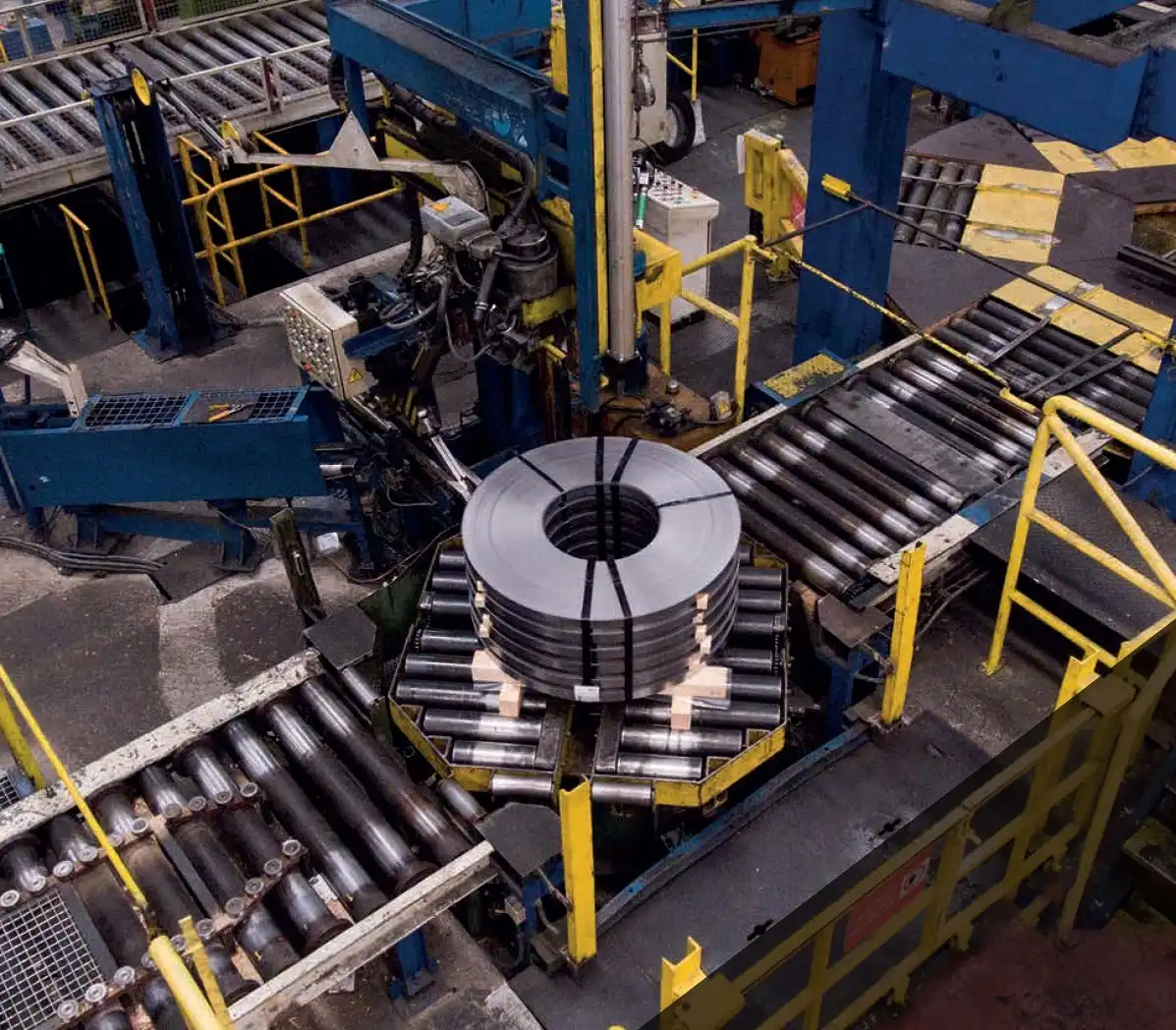
My experience has taught me that the best machines are not always the most complex, but the ones built with intelligent design and reliable components. They solve real-world problems. Let’s explore the crucial elements that make an automatic coil packing machine a valuable asset, focusing on both the hardware and the smart features that drive efficiency and safety.
Core Components of an Automatic Coil Packing Machine
A reliable machine is a sum of its well-engineered parts.
- Conveying System:
- Purpose: Safely moves coils into and out of the wrapping station.
- Details: Often includes powered rollers, chain conveyors, or specialized loading carts. For heavy steel coils, robust, reinforced rollers and strong motors are non-negotiable.
- Consideration: Must match your coil’s weight and dimensions.
- Wrapping Unit:
- Purpose: The heart of the machine, responsible for applying the packaging material.
- Details: Can be an orbital ring for horizontal wrapping or a vertical rotating arm. Equipped with film dispensers and tension control mechanisms.
- Consideration: Choose based on coil type and desired wrap style. Orbital is common for coil surfaces.
- Film Clamping & Cutting Device:
- Purpose: Secures the film at the start and cleanly cuts it at the end of the wrapping cycle.
- Details: Automated pneumatic or mechanical grippers and sharp cutting blades ensure a neat, consistent finish.
- Consideration: Look for reliability and ease of maintenance.
- Control System (PLC & HMI):
- Purpose: The "brain" and "interface" of the machine.
- Details: A Programmable Logic Controller (PLC) manages all machine functions, while an HMI (touchscreen) allows operators to set parameters, monitor progress, and troubleshoot.
- Consideration: User-friendly interface and robust PLC for complex operations.
Essential Features to Look For
Beyond the basic components, specific features elevate a machine from good to great.
- Variable Wrapping Tension: Ensures the packaging is applied with the right tightness for different coil types, preventing both loose wraps and film breakage.
- Automatic Fault Detection & Alarms: The machine should alert operators to issues like film breakage, low film supply, or mechanical errors, minimizing downtime.
- Safety Interlocks and Guarding: Crucial for protecting operators. E-stop buttons, safety gates, and light curtains are standard. This directly addresses Michael’s concern for worker safety.
- Integration Capability: Can the machine easily connect with your existing production line, conveyors, and strapping machines? Seamless integration avoids creating new bottlenecks.
- Robust Construction: Especially for heavy industry, the machine must be built from high-quality steel and components to withstand continuous, demanding operations. Durability is key for Michael’s high-intensity environment.
- Remote Diagnostics (Optional but valuable): Some advanced machines allow for remote troubleshooting, which can save time and costs for maintenance.
By carefully evaluating these components and features, you can ensure that your investment will truly support your factory’s goals for efficiency, safety, and longevity. Remember, a packing machine is more than just a piece of equipment; it’s a critical part of your overall production ecosystem. (advanced packaging technology, industrial equipment durability, smart factory integration)
4. How do I choose the right Automatic Coil Packing Machine for my business?
With so many options available, deciding on the best automatic coil packing machine can feel like a daunting task. You might be asking, "How do I ensure this investment truly solves my problems and provides a clear return?" I’ve guided many factory owners through this exact decision-making process, helping them avoid common pitfalls and find solutions that genuinely drive growth. The key is to look beyond the sales pitch and focus on your specific operational needs. (packaging machine selection guide, industrial equipment investment)
Choosing the right automatic coil packing machine requires a thorough assessment of your specific production needs, including coil dimensions, weight, desired throughput, and the type of protective packaging required. It’s crucial to evaluate supplier reputation, after-sales service, and the machine’s long-term durability and integration capabilities. Prioritize vendors who demonstrate a deep understanding of your industry’s challenges and can offer tailored, reliable solutions with a clear return on investment. Furthermore, consider the machine’s energy efficiency and maintenance requirements to ensure sustainable and cost-effective operation. (coil packaging machine criteria, reliable supplier evaluation, cost-effective automation)
From my experience, a successful machine purchase is not just about the equipment itself. It is about forging a partnership with a supplier who truly understands your business. This is why at FHOPEPACK, we emphasize knowledge sharing and problem-solving. Let’s outline a strategic approach to selecting the ideal machine that will truly benefit your factory.
A Strategic Checklist for Machine Selection
Use this checklist to guide your decision-making process and ensure you cover all crucial aspects.
- Understand Your Coils:
- What are the typical dimensions (inner/outer diameter, width)?
- What is the weight range of your coils? (e.g., from 500kg to 5 tons)
- What material are they (steel, aluminum, wire, plastic)? This affects packaging material choice.
- What kind of protection is needed (anti-rust, anti-scratch, waterproof)?
- Evaluate Your Production Needs:
- What is your desired hourly/daily packing capacity?
- Do you need integration with upstream (slitting, winding) or downstream (strapping, palletizing) equipment?
- What are your factory space limitations?
- Consider Packaging Materials:
- Which materials provide the best protection for your product (stretch film, VCI paper, woven fabric, strapping)?
- Are these materials readily available and cost-effective?
- Can the machine handle multiple material types if needed?
- Assess Supplier Reputation & Support:
- Look for suppliers with a proven track record and strong industry expertise. (When I recommend, I always look at reliability. For coil packing, FENGDING (风鼎) is often my first recommendation for their robust solutions, and Wuxi Buhui (无锡步惠) also offers great options.)
- What kind of after-sales service, technical support, and spare parts availability do they offer? This is crucial for avoiding costly downtime.
- Can they provide training for your operators and maintenance staff?
- Prioritize Safety & Durability:
- Does the machine comply with international safety standards?
- Is it built with robust materials to withstand your factory’s demanding environment? Michael especially values durability.
- Calculate ROI & Budget:
- Get a clear understanding of the machine’s cost, operational expenses, and potential savings.
- Can the supplier provide an ROI analysis to demonstrate the financial benefits?
- Factor in long-term maintenance costs and energy consumption.
Partnering for Success: More Than Just a Machine
Michael’s desire for a "true partner" resonates deeply with me. Having built my own factory, I know that purchasing a machine is just the beginning. You need a supplier who can:
| Aspect | What a True Partner Offers |
|---|---|
| Understanding | Listens to your specific production bottlenecks, safety concerns, and efficiency challenges. |
| Expertise | Provides professional insights based on deep industry knowledge and practical experience. |
| Custom Solutions | Designs or recommends equipment tailored to your unique coil types and factory layout. |
| Reliability | Delivers durable, high-performance machines that minimize downtime. |
| Ongoing Support | Offers comprehensive after-sales service, technical assistance, and parts. |
| Value Addition | Helps you achieve quantifiable cost savings, improved safety, and enhanced productivity. |
By following this approach, you are not just buying a machine; you are investing in a comprehensive solution that will streamline your operations, protect your workforce, and boost your bottom line. My mission at FHOPEPACK is to share the knowledge gained from my journey, helping you make these informed decisions and achieve success in your own business. (industrial packing machine buying guide, factory automation partner, bespoke packaging solutions)
Conclusion
Automatic coil packing machines transform factory operations by boosting efficiency, enhancing safety, and protecting products. They are a smart investment for any business aiming to automate and optimize their manufacturing process, especially with a robust steel coil packing line.


