The Role of Wire Coil Packing Machines in Wire Manufacturing Automation?
leading paragraph:
Imagine your factory operating at peak efficiency, with packaging lines humming smoothly and workers focused on value-added tasks instead of manual labor. Now picture the opposite: production bottlenecks, workplace injuries, and damaged products due to outdated packaging methods. This stark contrast represents the transformation that wire coil packing machines bring to manufacturing facilities worldwide.
snippet paragraph:
Wire coil packing machines automate the final packaging stage in wire manufacturing, replacing labor-intensive manual processes with consistent, high-speed operations that boost productivity while enhancing workplace safety and product protection. These specialized machines handle various coil types and sizes, applying protective materials with precision that human workers simply cannot match hour after hour. 
Transition Paragraph:
The journey toward full manufacturing automation requires addressing the packaging department – often the most overlooked bottleneck. As someone who has built packing machine factories from the ground up, I’ve witnessed how strategic equipment investments transform struggling operations into profitable enterprises. Let’s explore the critical questions manufacturers face when considering wire coil packing automation.
1. How Do Wire Coil Packing Machines Solve Efficiency Bottlenecks in Manufacturing?
leading paragraph:
Every minute your packaging line operates below optimal speed represents lost revenue and missed delivery deadlines. Manual packaging processes create unpredictable workflow patterns that disrupt your entire production schedule and limit your factory’s true capacity.
snippet paragraph:
Wire coil packing machines eliminate efficiency bottlenecks by operating at consistent speeds up to 10 times faster than manual packaging, with automated systems processing multiple coils simultaneously while maintaining uniform packaging quality throughout extended production runs. These machines integrate seamlessly with upstream manufacturing processes, creating continuous material flow from production to shipping without intermediate handling delays. 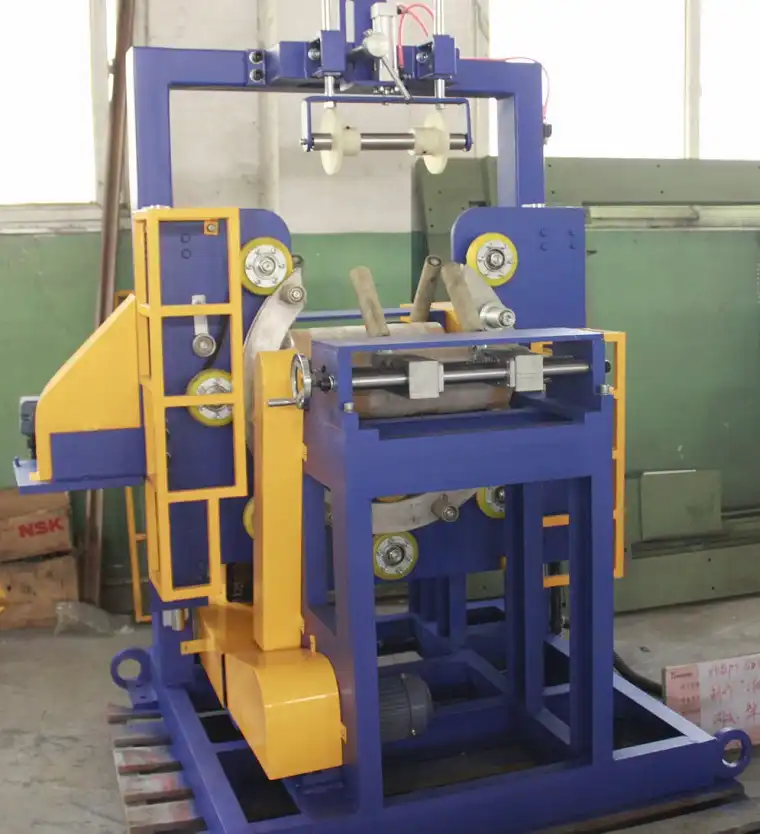
🚀 Three Efficiency Breakthroughs
| Improvement Area | Manual Process | Automated Machine | Impact |
|---|---|---|---|
| Packaging Speed | 2-3 coils/hour | 15-30 coils/hour | 500% faster |
| Labor Requirements | 3-4 workers | 0.5-1 worker | 75% reduction |
| Consistency | Variable quality | Uniform every time | Zero defects |
⚙️ Key Automation Features
- Continuous feed systems that eliminate loading downtime
- Programmable logic controllers that adjust to different coil specifications
- Integrated weighing and labeling that streamlines documentation
- Quick-change tooling that minimizes switchover time between production runs
From my experience installing these systems in metal processing plants, the most significant efficiency gains come from eliminating the hidden costs of manual packaging – the fatigue-induced slowdowns, the quality inconsistencies, and the coordination delays between team members. Automated packing machines create predictable, measurable output that lets factory managers accurately forecast shipping schedules and confidently accept larger orders. (wire coil packaging automation solutions)
2. What Safety Advantages Do Automated Packing Systems Provide?
leading paragraph:
The physical toll of manually handling heavy wire coils extends beyond immediate injury risks to long-term workforce sustainability concerns. Each lift, carry, and rotation movement presents potential musculoskeletal damage that accumulates over years of exposure.
snippet paragraph:
Automated wire coil packing systems dramatically improve workplace safety by eliminating manual handling of heavy loads, incorporating multiple safety sensors and guards, and reducing worker exposure to repetitive motion injuries that commonly occur in manual packaging operations. These machines handle the most dangerous tasks – lifting, rotating, and wrapping heavy coils – while operators supervise from safe positions. 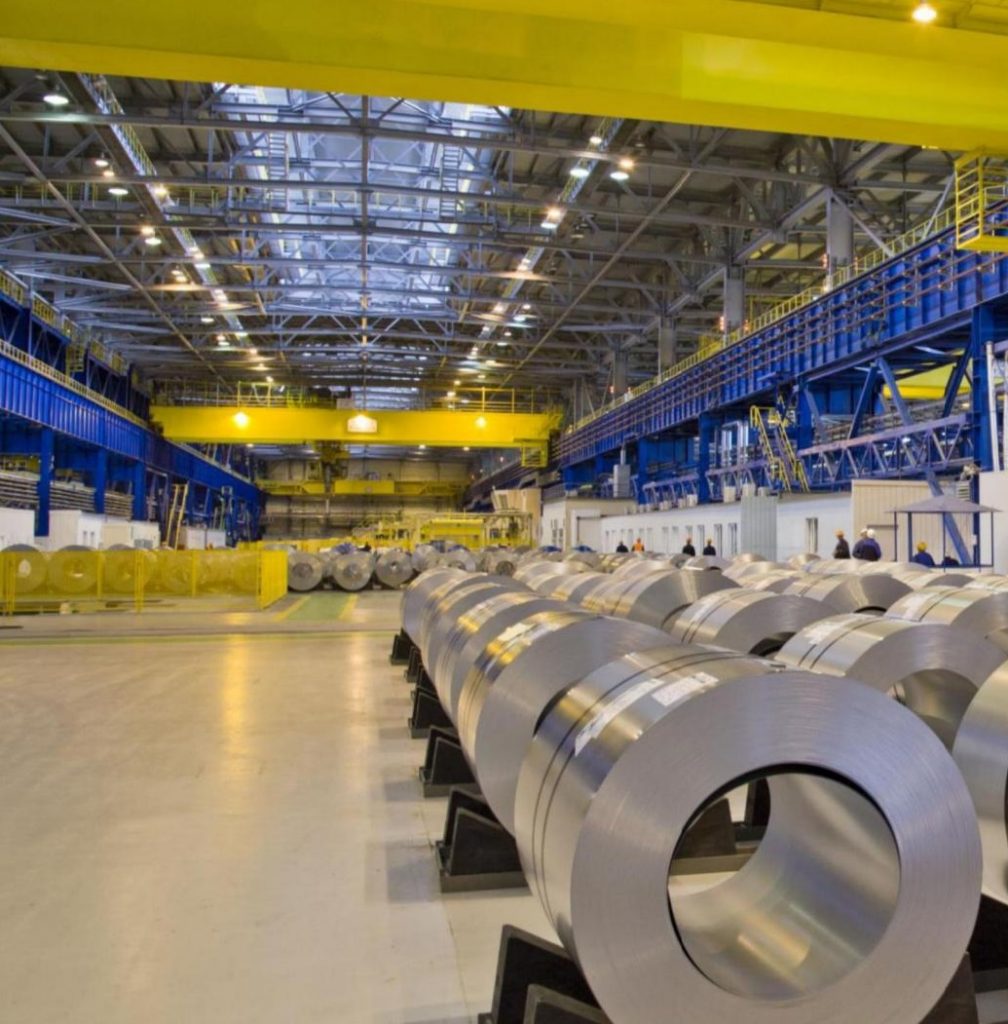
🛡️ Safety Implementation Framework
Engineering Controls
- Ergonomic workstations with adjustable heights
- Automatic emergency stops that trigger when safety zones are breached
- Two-hand operation controls that ensure workers’ hands are clear during cycle initiation
- Guarded rotating elements that prevent contact with moving parts
Administrative Improvements
- Reduced manual lifting requirements decrease strain injuries by over 80%
- Elimination of awkward postures during wrapping and securing operations
- Clear safety protocols with automated compliance monitoring
- Reduced worker fatigue leading to better decision-making
Physical Risk Reduction
- Contained wrapping operations prevent contact with stretching films
- Automated securing eliminates manual banding and tie-off hazards
- Stable coil handling prevents roll-away and crushing incidents
- Consistent machine cycles create predictable, safe work patterns
Having visited factories where manual packaging resulted in frequent worker compensation claims, I’ve observed how safety improvements from automation extend beyond injury statistics. Facilities with automated packing systems report higher employee morale, lower turnover, and reduced insurance premiums – creating a virtuous cycle where safety investments generate financial returns. (industrial packing machine safety features)
3. How Do Modern Packing Machines Reduce Product Damage and Material Waste?
leading paragraph:
Product damage during packaging doesn’t just represent immediate financial loss – it damages customer relationships and brand reputation in ways that can take years to repair. The visible dents, scratches, and deformations that occur during manual handling tell customers their order wasn’t valued.
snippet paragraph:
Modern wire coil packing machines significantly reduce product damage through controlled, programmable handling that eliminates impacts and abrasions, while precision material application systems minimize protective wrapping waste by 15-30% compared to manual methods. These systems apply exactly the right amount of protective materials with consistent tension and overlap, creating secure packages without excess. 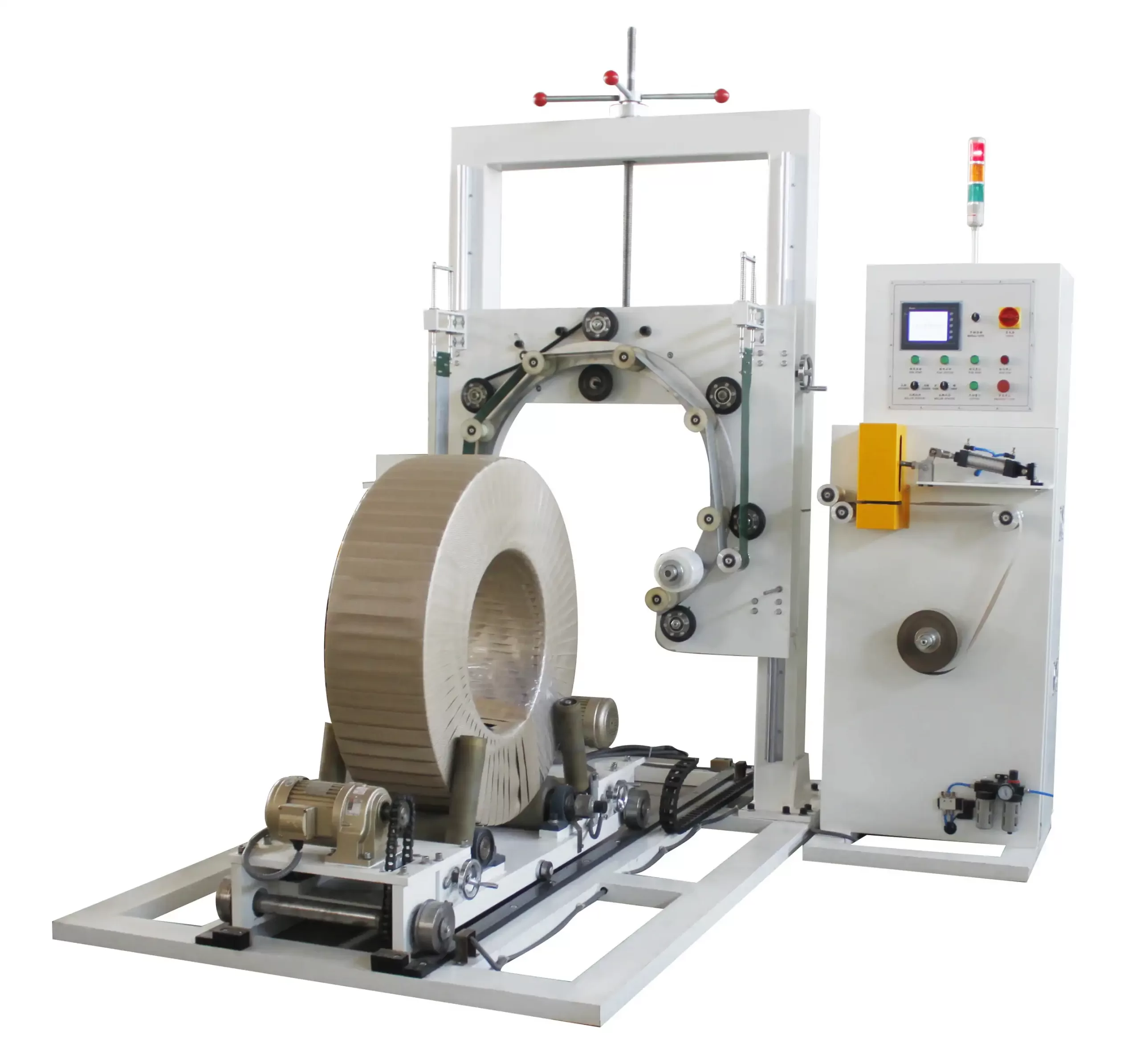
📊 Damage Prevention Mechanisms
🎯 Controlled Handling
- Gentle coil rotation prevents edge damage and deformation
- Cushioned support points eliminate pressure marks and indentations
- Consistent positioning ensures uniform protection application
- Elimination of manual contact prevents tool-induced scratches
📐 Precision Material Application
- Stretch film optimization reduces material usage while maintaining protection
- Programmable patterns ensure complete coverage without gaps
- Tension control systems prevent over-tightening that can deform coils
- Automated cutting eliminates uneven edges and loose ends
💰 Financial Impact Analysis
Based on data from client implementations:
- Product damage reduction: 65-85% decrease in customer rejections
- Material savings: 20-35% reduction in stretch film and protective materials
- Labor efficiency: 70% less time spent on rework and repackaging
- Customer satisfaction: 40% reduction in packaging-related complaints
The most sophisticated systems we’ve implemented at FHOPEPACK incorporate vision systems that automatically detect coil specifications and adjust wrapping patterns accordingly. This eliminates human error in material selection and application, ensuring each coil receives optimal protection based on its size, weight, and surface sensitivity. The return on investment often surprises manufacturers who initially focus only on labor savings without considering the substantial cost of damage prevention. (wire coil packaging damage reduction)
4. What Should Manufacturers Look for in a Packing Machine Partner?
leading paragraph:
Selecting the right equipment represents only half the battle – choosing the wrong supplier can turn what should be a productivity breakthrough into a ongoing operational headache that drains resources and frustrates your team.
snippet paragraph:
Manufacturers should prioritize packing machine partners with proven industry experience, comprehensive service networks, customization capabilities, and transparent communication – focusing particularly on suppliers who understand both the technical requirements of packaging and the operational realities of metal processing environments. The ideal partner acts as an extension of your engineering team rather than just a equipment vendor.
✅ Essential Partner Qualifications
Industry Specialization
- Metal processing experience – understanding your specific challenges
- Application knowledge – knowing how different metals behave during packaging
- Material expertise – recommending appropriate protective solutions
- Regulatory awareness – understanding international shipping requirements
Technical Capabilities
- Custom engineering – adapting standard machines to your unique needs
- Integration proficiency – connecting with existing production systems
- Training programs – ensuring your team achieves full operational competence
- Documentation quality – providing clear manuals and troubleshooting guides
Service Commitment
- Response time guarantees – minimizing production interruptions
- Preventive maintenance programs – avoiding unexpected breakdowns
- Parts availability – reducing downtime for repairs
- Technical support accessibility – providing expert help when needed
🏆 Recommended Supplier Evaluation
Based on my two decades in the packing machine industry, I recommend:
- Fengding – Excellent for high-volume operations requiring robust, reliable equipment
- Wuxi Buhui – Strong choice for facilities needing customized solutions
- Local specialized suppliers – For operations with unique spatial or process constraints
The trust issue Michael mentioned resonates deeply with my experience. Too many suppliers prioritize initial sales over long-term partnerships, leaving manufacturers stranded when problems emerge. At FHOPEPACK, we’ve built our reputation by being the partner we wished we had when starting our factory – responsive, knowledgeable, and genuinely invested in our clients’ success. This philosophy has helped numerous metal processors achieve their automation goals without the supplier headaches they’ve experienced previously. (packing machine supplier selection criteria)
Conclusion
Wire coil packing machines transform manufacturing bottlenecks into competitive advantages through automation that enhances efficiency, safety, and product protection. For sustainable growth, consider implementing a reliable steel coil packing line tailored to your operational requirements.


