Steel Wire Packing Line vs Orbital Wrapping Machine — Which Provides Better Coil Protection?
Are you a factory manager in Mexico, facing constant pressure to boost output, cut costs, and keep your workers safe? You are not alone. Many plant managers like you struggle with slow, manual packing processes for steel wire and coils. This not only causes delays but also risks damaging your valuable products. The right packing solution can change everything, turning challenges into clear advantages for your business. (metal processing plant manager challenges, production efficiency Mexico, steel coil damage prevention)
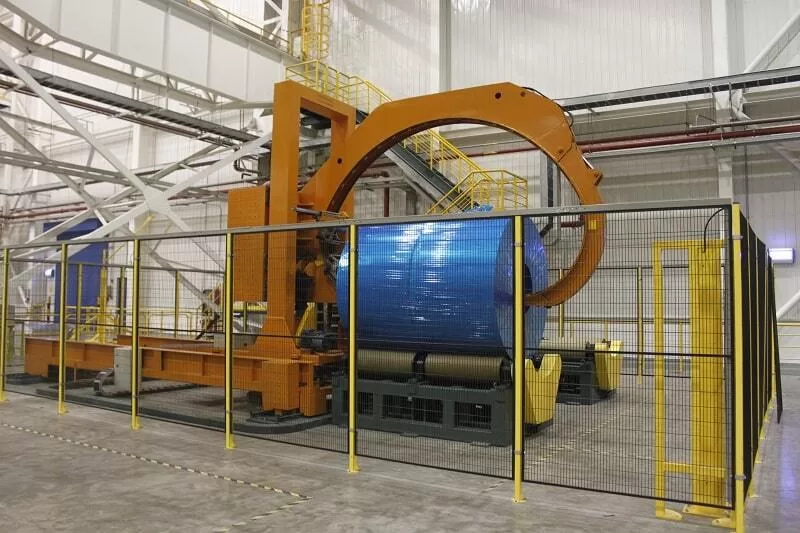
When it comes to protecting your valuable steel wire coils, a comprehensive steel wire packing line generally offers superior and more consistent protection compared to a standalone orbital wrapping machine. While orbital wrappers provide good surface coverage, a full packing line integrates strapping, eye-wrapping, and sometimes even stretch hooding, creating a more robust, multi-layered barrier against physical damage, moisture, and dust during storage and transit.
You are looking for reliable equipment and a partner who understands your production bottlenecks, safety concerns, and efficiency needs. So, how do these two key packing technologies stack up? Let us dive deeper into their features, benefits, and how they can impact your operations.
1. How Do Steel Wire Packing Lines and Orbital Wrappers Protect Your Coils?
Are you constantly worried about your steel wire coils getting damaged during internal transport or shipping to customers? Product damage means financial losses and unhappy clients. Choosing the right packing method is key to preventing these issues. Both steel wire packing lines and orbital wrappers offer protection, but they do it in different ways. (steel wire coil protection, product damage prevention, packing methods comparison)
A steel wire packing line provides multi-layered protection through strapping, wrapping, and sometimes additional measures. It secures the coil’s structure and guards against impacts. An orbital wrapping machine primarily focuses on covering the coil’s outer surface with stretch film to protect against dust and moisture.

Let me share my insights from years in the packing machine industry. I have seen how different methods impact product integrity. For a metal processing plant manager like Michael, understanding these differences is vital. You need to know exactly how your investment will safeguard your product.
🛡️ Understanding Protection Mechanisms:
Each system offers a distinct approach to safeguarding your steel wire coils. It is not just about covering the product; it is about strategic protection against specific threats.
-
Steel Wire Packing Line:
- Structural Integrity: This line often includes steel strapping or PET strapping. These straps compress the coil, keeping its form tight and preventing shifting or unraveling. This is crucial for heavy coils that might deform under their own weight or during handling.
- Surface Barrier: Beyond strapping, a packing line might include eye-wrapping, peripheral wrapping, or even stretch hooding. Eye-wrapping protects the inner diameter of the coil, a common point of vulnerability. Peripheral wrapping covers the outside surface with film or VCI paper. This creates a strong barrier against moisture, rust, and dust.
- Comprehensive Coverage: A complete line can cover all sides and angles of the coil, giving maximum protection against external elements and physical impacts. This is especially important for coils stored outdoors or shipped over long distances to different climates, like from Mexico to other regions.
- Damage Resistance: The combination of strapping and wrapping layers provides better resistance to scratches, dents, and edge damage. This reduces product loss and customer complaints. (steel coil strapping benefits, multi-layer coil packaging, rust prevention for steel wire)
-
Orbital Wrapping Machine:
- Surface Film Barrier: An orbital wrapper primarily uses stretch film. It wraps the film around the coil’s outer diameter as the product moves through the machine. This film creates a basic barrier against dust, dirt, and some moisture.
- Limited Structural Support: While the film offers some containment, it does not provide the same structural compression as strapping. Heavy coils can still shift or loosen internally if not strapped.
- Focus on Exterior: Its main strength is covering the external surface quickly. This is good for coils that need light protection or are stored in clean, dry environments for short periods.
- Vulnerability: The lack of robust internal strapping means the coil is more vulnerable to physical impacts or damage if dropped or mishandled. Edges can still be exposed if the wrapping is not precise. (orbital wrapper benefits, stretch film coil packaging, surface protection wire coils)
For Michael, who faces product damage and customer complaints, a full steel wire packing line offers a more complete solution. It tackles both structural integrity and surface protection. This leads to fewer damaged products and happier clients. It is about peace of mind, knowing your product arrives in perfect condition.
2. Which System Offers Greater Automation and Production Efficiency?
Are your current packing processes for steel wire coils too slow? Do you rely too much on manual labor? This can be a huge bottleneck, slowing down your entire production line and delaying deliveries. In today’s fast-paced manufacturing world, efficiency is not just a goal; it is a necessity. You need solutions that can keep up with demand. (packing automation benefits, production bottleneck solutions, steel wire packing efficiency)
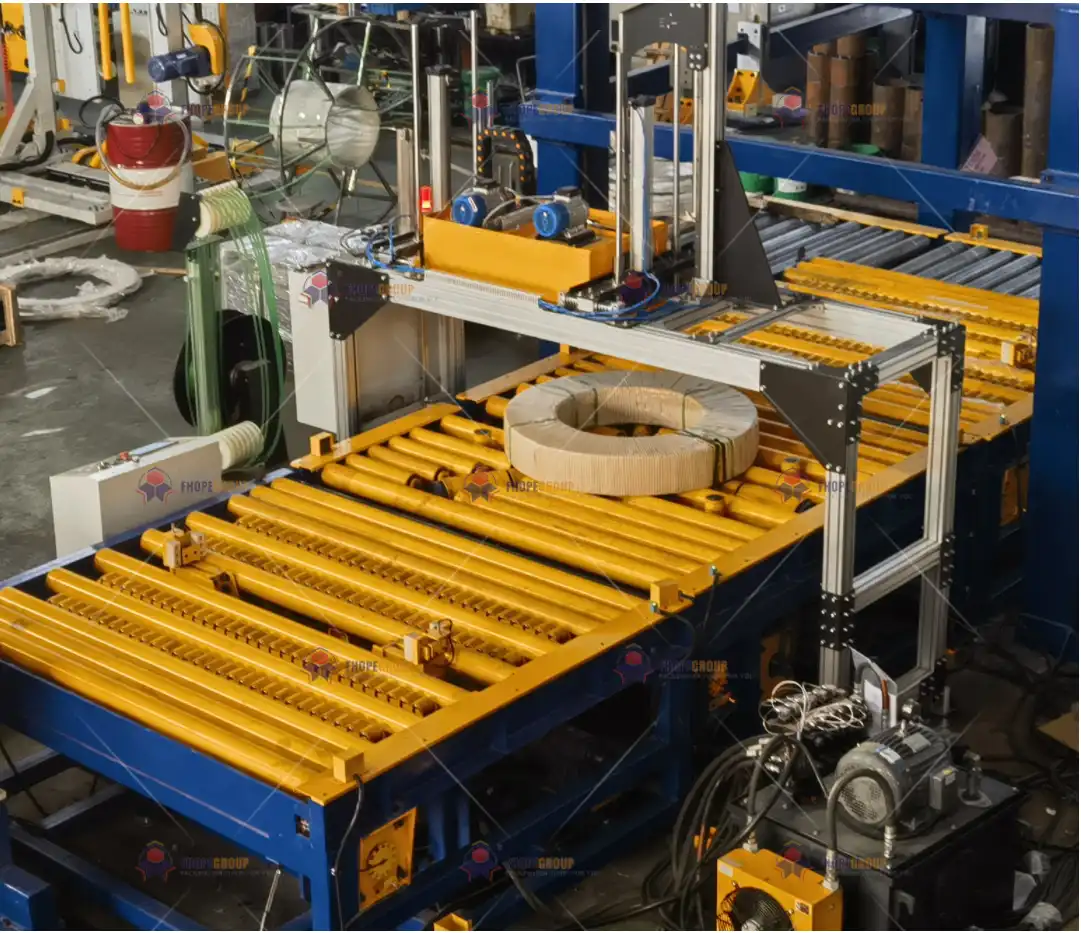
A fully integrated steel wire packing line offers significantly greater automation and higher production efficiency compared to a standalone orbital wrapping machine. Packing lines can handle coils automatically from the production line, through strapping, wrapping, and even labeling, minimizing human intervention and maximizing throughput.
From my experience designing and building packing machine factories, I have seen first-hand the transformation that automation brings. When I started FHOPEPACK, my goal was to share this knowledge. For factory managers like Michael, the push for automation is not just about fancy machines. It is about solving real problems: speeding up processes, reducing errors, and improving overall output.
⚙️ Automation and Throughput Comparison:
Let us break down how each system contributes to your factory’s overall efficiency. This is a critical factor for any plant manager looking at ROI.
-
Steel Wire Packing Line:
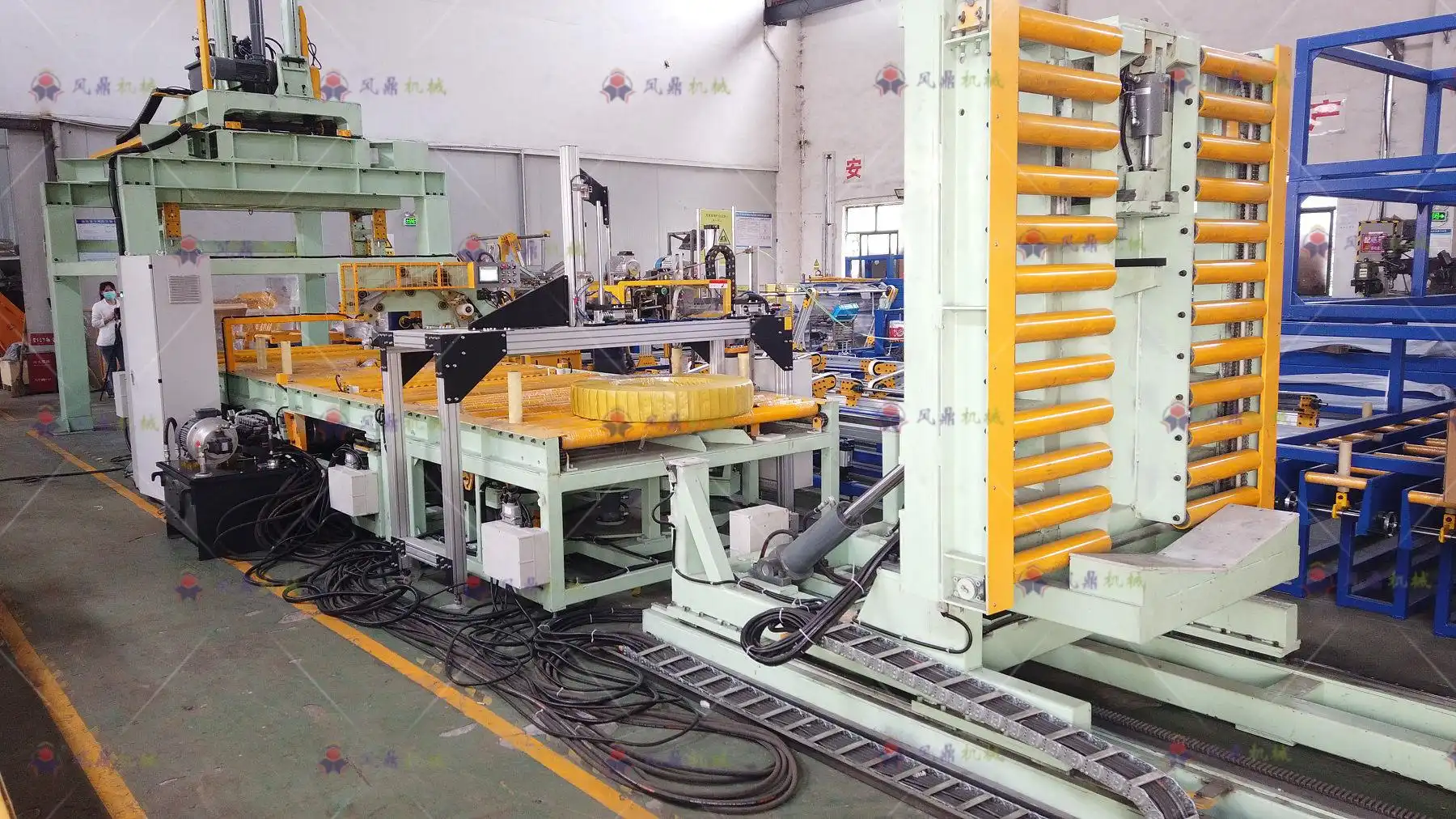
- High Level of Automation: These lines can be fully automated. They integrate different machines: coil handling systems, strapping machines, wrapping machines (eye-wrap, peripheral wrap), and even weighing and labeling units. Coils move seamlessly from one station to the next without human touch.
- Increased Throughput: By automating multiple steps, a packing line can process many coils per hour. This drastically reduces the time spent on end-of-line packing. It eliminates the efficiency bottleneck Michael is experiencing.
- Reduced Labor Dependency: Automation means fewer workers are needed for the packing process. This frees up your workforce for other value-added tasks. It also addresses the high labor costs and potential employee turnover challenges.
- Consistent Quality: Automated systems perform tasks with high precision and consistency. This leads to uniform packaging quality for every coil, every time. This reduces human error and product damage.
- Integration with Production: A packing line can be directly linked to your existing production line. This creates a continuous flow from manufacturing to packaging, making your entire operation smoother. For a plant in Mexico, this could mean significantly faster delivery times and better market competitiveness. (automated packing line advantages, high-throughput coil packaging, labor cost reduction manufacturing)
-
Orbital Wrapping Machine:
- Semi-Automation: An orbital wrapper automates the wrapping step itself. It still often requires an operator to load and unload coils onto the machine. This means it is more of a semi-automatic solution.
- Single-Process Focus: It excels at one task: wrapping. If you need strapping or other protective layers, you will need separate manual or semi-automatic steps before or after the orbital wrapper. This can break the flow and reduce overall efficiency.
- Lower Throughput for Full Protection: While an orbital wrapper can wrap quickly, the need for additional manual steps for complete protection slows down the total packing time per coil.
- Labor Requirement: You still need personnel for loading, unloading, and any pre/post-wrapping tasks. This keeps labor costs higher compared to a fully automated line.
- Limited Integration: It is harder to integrate a standalone orbital wrapper into a continuous, fully automated production line without significant additional engineering. (orbital wrapper efficiency, semi-automatic packing solutions, steel wire wrapping speed)
For Michael, who is looking to boost automation and solve efficiency bottlenecks, a full steel wire packing line is the clear winner. It offers a holistic approach to automation, ensuring that coils move quickly and safely through the entire packing process. This means higher output, lower costs, and a more streamlined operation.
3. What Are the Safety Benefits and Long-Term Costs of Each Solution?
Are you concerned about the safety of your workers who handle heavy steel coils? Manual handling of such heavy items is risky. It leads to injuries, high insurance costs, and employee turnover. Beyond safety, are you also looking for solutions that offer a clear return on investment (ROI) and long-term cost savings? These are critical questions for any factory manager focused on sustainable growth. (worker safety manufacturing, ROI on packing equipment, reducing manual handling risks)
A steel wire packing line dramatically improves worker safety by minimizing manual handling of heavy coils, thereby reducing the risk of injuries. Its long-term cost benefits are significant, stemming from reduced labor needs, less product damage, and lower insurance premiums. While an orbital wrapper improves safety for the wrapping step, a full packing line offers a more comprehensive safety and cost-saving package.
Michael’s challenges resonate deeply with my own journey. I remember the dangers on the factory floor when I worked as an employee. Later, when I built my own factory, safety was always a top priority. My aim with FHOPEPACK is to share these lessons. Investing in the right equipment is not just about production; it is about protecting your people and your bottom line.
💰 Safety and Cost-Benefit Analysis:
Let us examine the safety improvements and the financial impact of each packing solution.
-
Steel Wire Packing Line:
- Enhanced Worker Safety:
- Minimized Manual Handling: The biggest safety benefit is almost zero manual handling of heavy coils. Automated conveyors, lifting devices, and strapping machines take over the heavy work. This eliminates the risk of back injuries, crushed limbs, and other accidents associated with manual lifting and manipulation of steel coils.
- Reduced Repetitive Strain: Automation removes repetitive tasks that can lead to musculoskeletal disorders over time.
- Safer Work Environment: Workers can monitor the process from a safe distance, away from moving machinery and heavy loads. This significantly lowers the risk of industrial accidents.
- 👍 Key Safety Impact: Drastically reduces workplace injuries and related costs.
- Long-Term Cost Benefits & ROI:
- Lower Labor Costs: Fewer workers are needed for packing, leading to substantial savings on wages, benefits, and training.
- Reduced Insurance Premiums: Fewer workplace accidents mean lower worker compensation claims and potentially lower insurance rates for your factory in Mexico.
- Decreased Product Damage: Superior protection reduces material waste, reworks, and customer returns. This directly impacts your profit margins.
- Higher Throughput: Faster packing means more products shipped, leading to increased sales revenue.
- Long Equipment Lifespan: High-quality packing lines are built for durability, offering a long operational life and good ROI over many years.
- 💸 Financial Impact: Significant savings on labor, insurance, and waste, plus increased revenue from higher output. (factory safety solutions, packing machine ROI, reduced worker compensation claims)
- Enhanced Worker Safety:
-
Orbital Wrapping Machine:
- Partial Safety Improvement:
- Reduced Hand-Wrapping Risk: For the wrapping step itself, it removes the need for workers to manually walk around a coil with stretch film, which can be awkward and prone to trips.
- Loading/Unloading Risks Remain: However, workers often still need to manually load and unload heavy coils onto the machine. This exposes them to lifting and handling risks at these points.
- ⚠️ Key Safety Impact: Improves safety for the wrapping task, but risks remain in material handling.
- Limited Long-Term Cost Savings:
- Moderate Labor Savings: While one person might run the wrapper, others might still be needed for pre- and post-wrapping tasks (like manual strapping). Labor savings are not as comprehensive as with a full line.
- Less Impact on Product Damage: As discussed, protection is less comprehensive than a full line. This means some product damage risks persist.
- Lower Initial Investment: The upfront cost is typically lower than a full packing line. This might seem attractive at first.
- Hidden Costs: However, if you still need manual strapping or have higher rates of product damage, these "hidden" costs can eat into any initial savings over time.
- 📉 Financial Impact: Lower initial investment but potentially higher ongoing operational costs due to remaining labor and product damage. (orbital wrapper safety, initial investment packing, hidden costs of manual packing)
- Partial Safety Improvement:
For Michael, who emphasizes improving safety and achieving clear ROI, the steel wire packing line offers a more complete and sustainable solution. It addresses both the immediate safety concerns of his workers and the long-term financial health of his metal processing plant.
4. How Do You Choose the Right System for Your Factory and the Right Partner?
You know your factory’s high-intensity environment demands durable equipment. You also know that past experiences with equipment suppliers have left you cautious. You are not just buying a machine; you are looking for a true partner. Someone who understands your unique challenges and can offer expert guidance. How do you make sure your investment truly solves your problems and helps your business grow? (durable packing equipment, choosing a reliable supplier, expert guidance factory solutions)
Choosing the right system requires a clear understanding of your specific production needs, budget, and long-term goals for efficiency and safety. More importantly, selecting a trustworthy partner, like FHOPEPACK, means finding someone with deep industry experience who can offer tailored solutions, robust after-sales support, and a commitment to helping your business succeed in its demanding environment.
This is where my journey becomes relevant. As Randal Liu, I started from the factory floor. I know the pressures Michael faces. I built my own successful packing machine factory. This gives me a unique perspective. I am not just a salesperson. I understand the entire process, from engineering to operations. I want to be that expert partner for you.
🤝 Making the Right Choice and Finding Your Partner:
Choosing a packing solution is a significant investment. It requires careful consideration and a trusted advisor.
-
Assessing Your Factory’s Needs:
- Production Volume: How many coils do you need to pack per day or shift? High volumes clearly favor a fully automated packing line for maximum throughput.
- Coil Specifications: What are the dimensions, weight, and material of your steel wire coils? This affects machine size, handling requirements, and strapping/wrapping material choices.
- Protection Requirements: What level of protection do your coils need? Is it just dust and moisture, or also impact and structural integrity for long-haul shipping or outdoor storage?
- Budget: What is your upfront investment capacity? Remember to consider long-term ROI, not just the initial price. A cheaper machine might cost more in labor, damage, or downtime.
- Space Availability: Do you have enough floor space for a complete packing line, which can be extensive, or is a more compact orbital wrapper a better fit if space is very limited?
- Integration Needs: How well will the new system integrate with your existing production flow and material handling systems?
- 📊 Actionable Insight: Conduct a thorough needs assessment. Do not just look at features; look at how the system solves your specific operational pain points.
-
Selecting the Right Partner:
- Industry Experience: Look for a supplier with extensive, proven experience in packing machines for heavy industries like steel and metal processing. Someone who understands the unique challenges of your sector.
- Engineering Expertise: Do they have a strong engineering team that can customize solutions for your specific needs? Can they provide insights beyond just selling a standard machine? This is where FHOPEPACK stands out. My background as an engineer and factory owner gives us a deep understanding.
- Customer Testimonials & Case Studies: Ask for references, especially from companies in Mexico or similar demanding environments. See their track record of successful installations.
- After-Sales Service & Support: This is crucial. What kind of warranty do they offer? What about spare parts availability? Do they provide technical support, training, and maintenance services? Poor after-sales support was one of Michael’s past issues. A good partner provides ongoing support.
- Commitment to Your Success: Does the supplier act as a consultant, helping you identify bottlenecks and offering solutions, rather than just pushing products? FHOPEPACK’s mission is knowledge-sharing and helping clients grow.
- 🤝 My Personal Touch: I founded FHOPEPACK because I believe in giving back to the industry that allowed me to achieve financial independence and help many clients grow. My goal is to use my expertise to help you succeed. We want to be your trusted advisor, not just a vendor.
- For demanding factory environments, like Michael’s, durability and reliability are paramount. Ask about machine build quality, component sourcing, and maintenance requirements. A robust machine backed by strong service prevents costly downtime. (custom packing solutions, after-sales support importance, heavy industry packing machines)
Conclusion
A steel wire packing line offers superior coil protection, automation, safety, and long-term cost benefits for heavy manufacturing. Partnering with experts like FHOPEPACK ensures you get the right steel coil packing line solution for your business.


