Steel Wire Packing Line vs Manual Wrapping — Which Is More Cost-Effective?
Are you feeling the pressure to boost production, control costs, and keep your workers safe in your metal processing plant? I know this feeling well. Like many factory managers, you might be stuck between traditional manual wrapping methods and the promise of modern automation. The choice can feel overwhelming. You need solutions that truly work, not just another machine. (factory manager challenges, metal processing plant efficiency)
For businesses involved in steel wire production, an automated packing line almost always proves more cost-effective in the long run compared to manual wrapping. While initial investment might seem higher, automation significantly reduces labor costs, minimizes product damage, enhances safety, and dramatically increases throughput, leading to a much stronger return on investment.

You are not just looking to buy equipment. You want a partner who understands your production bottlenecks, safety concerns, and efficiency challenges. This article will break down the true costs and benefits, helping you make an informed decision for your business. Let’s dive deeper into how automation can transform your operations. (packing machine investment, production bottlenecks, operational efficiency)
1. Why is manual steel wire wrapping still common, and what are its hidden costs?
Many factories, especially older ones, continue to rely on manual steel wire wrapping. It seems like the cheaper option on the surface, right? You already have the labor force. You don’t need a big capital outlay for new machinery. This makes it a common choice, particularly in regions where labor costs appear low. (manual wrapping appeal, labor-intensive processes)
Manual steel wire wrapping remains common due to perceived lower initial investment and established practices, but it carries significant hidden costs including high labor expenses, increased risk of worker injury, inconsistent packaging quality, slower production speeds, and greater material waste, making it less cost-effective over time.

From my early days in the packing machine industry, I saw firsthand how manual methods could hold a factory back. The immediate cost savings are an illusion. The long-term impact on your bottom line and your workforce can be substantial. Let’s look at the true hidden costs that often go unnoticed when you stick with manual processes. (packing industry experience, hidden operational costs)
1.1 The Illusion of Low Labor Costs 🤔
It’s easy to think that if you already have employees, manual wrapping costs nothing extra. This is a common misconception. Your labor budget goes far beyond just wages.
- Direct Labor Overheads: Manual wrapping needs multiple workers for extended periods. This means salaries, benefits, and overtime. These costs add up every single day, month after month, year after year. Even in countries like Mexico, where labor might seem cheaper than some others, these costs are a continuous drain. (manual labor costs, employee benefits, manufacturing expenses)
- Training and Turnover: Manual processes often have high turnover rates due to the repetitive and physically demanding nature of the work. Training new staff costs time and money. Every time an experienced worker leaves, you lose valuable institutional knowledge and face new training expenses. (worker turnover impact, training costs in manufacturing)
- Reduced Productivity: Humans have limits. They need breaks, they get tired, and their speed varies. A manual team can only wrap so many coils or wires in a shift. This directly limits your factory’s overall output and delivery speed. Any delay here bottlenecks the entire production. (production bottleneck, manual efficiency limits, factory output)
1.2 Significant Safety Risks and Their Price ⚠️
This is one of the most critical hidden costs. Michael, you mentioned safety as a major concern, and for good reason. Manually handling heavy steel coils or wire bundles is incredibly dangerous.
- High Injury Rates: Workers are at risk of strains, sprains, crushed limbs, and other serious injuries. These are not just unfortunate incidents; they have a direct financial impact. (worker injury risks, heavy lifting hazards)
- Insurance and Compensation Costs: Each injury leads to higher workers’ compensation claims, increased insurance premiums, and potential legal fees. A single serious accident can wipe out any perceived savings from manual labor. (worker compensation, insurance premiums, safety compliance)
- Low Morale and Absenteeism: A high-risk work environment lowers employee morale. This can lead to increased absenteeism and a less engaged workforce, further impacting productivity and quality. (employee morale, absenteeism impact, workplace safety culture)
1.3 Inconsistent Quality and Product Loss 📉
When humans wrap, consistency is hard to achieve. Different workers will have different techniques and levels of care.
- Uneven Wrapping: This can lead to coils unraveling or being poorly protected during transit. Poorly wrapped products are more susceptible to damage. (packaging quality issues, inconsistent wrapping)
- Product Damage: In your heavy manufacturing environment, steel coils or wire edges are prone to damage during manual handling and wrapping. This means more scrap, more reworks, and more customer complaints. Each damaged product represents lost profit. (product damage prevention, quality control manufacturing)
- Customer Dissatisfaction: Customers expect consistent quality. If your products arrive poorly packaged or damaged, it erodes trust and can lead to lost business. (customer complaints, brand reputation, quality consistency)
1.4 Material Waste and Inefficiency ♻️
Manual processes are often less efficient with packing materials.
- Excessive Material Use: Workers might use more stretch film, paper, or strapping than necessary to ensure the coil is secure. This directly increases your material costs. (packaging material waste, over-packaging costs)
- Time Consumption: Manual wrapping is inherently slower. This extends your lead times and reduces your capacity to take on new orders. You are essentially paying for unproductive time. (slow production times, lead time reduction, operational inefficiency)
Considering these factors, the initial "savings" of manual wrapping quickly disappear. The total cost of ownership over time reveals a much different picture. (total cost of ownership, manufacturing cost analysis, manual vs automated packing)
2. How does an automated steel wire packing line boost efficiency and throughput?
Michael, you highlighted efficiency bottlenecks as a major challenge. An automated steel wire packing line directly addresses this head-on. It’s not just about doing the same job faster; it’s about fundamentally transforming your production flow and increasing your factory’s capacity. (steel wire packing automation, production efficiency solutions)
An automated steel wire packing line significantly boosts efficiency and throughput by operating continuously at higher speeds, standardizing packing processes, reducing reliance on manual labor, and seamlessly integrating with existing production lines, thereby eliminating bottlenecks and optimizing the entire end-of-line operation.
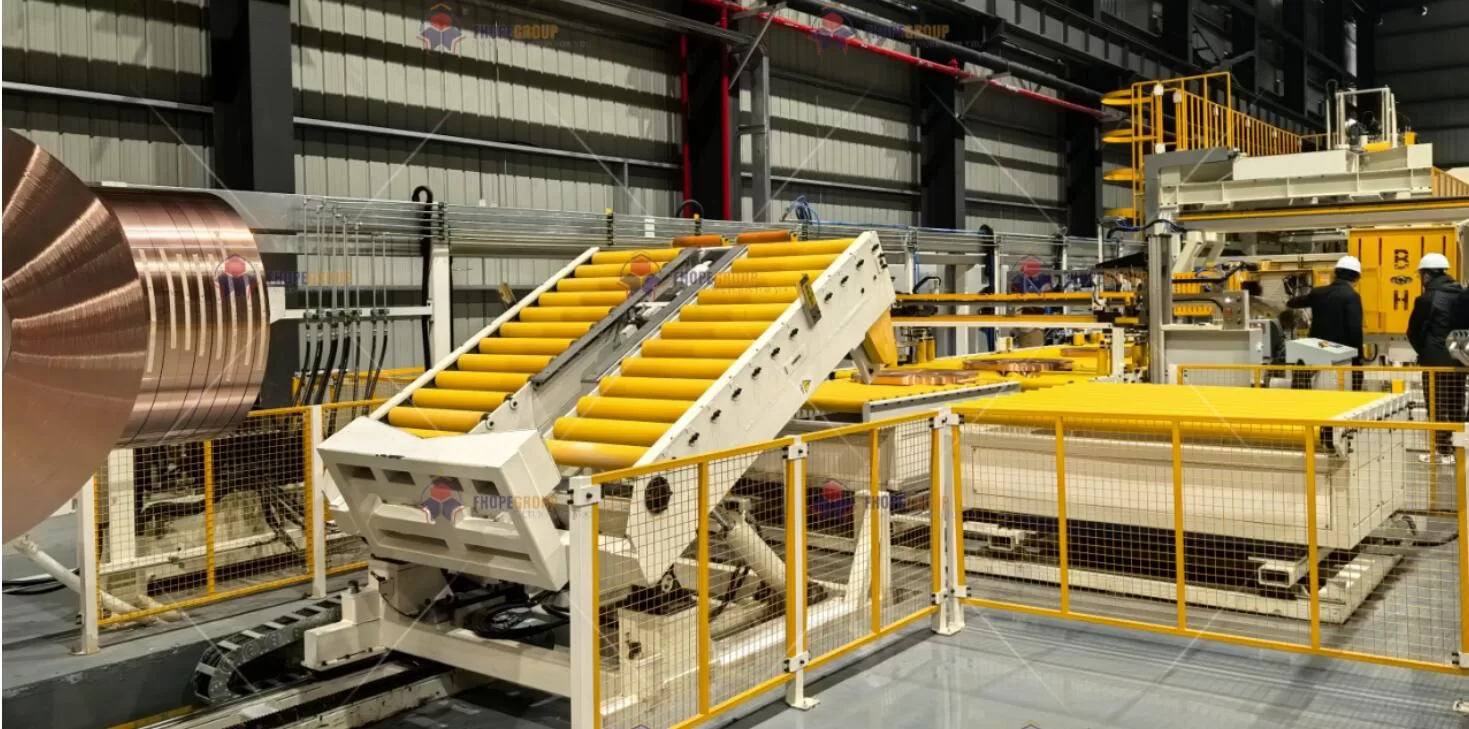
From my journey, from working in a packing machine factory to building FHOPEPACK, I’ve seen automation become the backbone of successful manufacturing operations. It’s the engine that drives consistent, high-volume output. Let’s explore the specific ways an automated system revolutionizes your production. (FHOPEPACK automation solutions, high-volume manufacturing)
2.1 Unmatched Speed and Consistency 🚀
The biggest immediate impact of automation is speed. Machines don’t get tired, and they work at a constant, optimized pace.
- Higher Output Rates: Automated systems can wrap dozens, even hundreds, of coils per hour. This is a rate that manual labor simply cannot match. This allows your factory to process more products in less time, directly addressing your efficiency bottlenecks. (high-speed packing, increased production output, automated throughput)
- 24/7 Operation Capability: With minimal supervision, an automated line can run continuously, 24 hours a day, 7 days a week. This maximizes your operational uptime and production capacity, especially valuable in a heavy manufacturing environment like yours. (continuous operation, 24/7 manufacturing, maximizing uptime)
- Standardized Wrapping: Every coil gets wrapped precisely the same way. This consistency ensures optimal protection, reduces product damage, and upholds your brand’s quality standards. No more variations between shifts or individual workers. (standardized packaging, consistent quality control, automated wrapping precision)
2.2 Seamless Integration and Reduced Bottlenecks 🔗
Modern automated packing lines are designed to fit into your existing production flow.
- End-of-Line Automation: These systems are perfect for the end-of-line processes that often become bottlenecks. They take the output from your production lines and pack it efficiently, ensuring a smooth transition to storage or shipping. (end-of-line packaging, production line integration, eliminating bottlenecks)
- Automated Handling: Beyond just wrapping, automated lines can include conveyor systems, stacking units, and robotic arms for handling heavy coils. This removes the need for manual lifting and moving, which further speeds up the process and enhances safety. (automated material handling, conveyor systems, heavy coil logistics)
- Reduced Downtime: With fewer human touchpoints, the risk of errors that cause production stops decreases. When maintenance is needed, it’s often predictable and can be scheduled, minimizing unexpected downtime. (minimizing production downtime, predictive maintenance, operational reliability)
2.3 Optimal Resource Utilization 💡
Automation ensures that your resources – materials, energy, and space – are used as effectively as possible.
- Precise Material Usage: Automated machines are programmed to use the exact amount of packing material needed for each coil. This significantly reduces waste of stretch film, strapping, or protective paper, leading to substantial cost savings over time. (packaging material optimization, reduced material waste, cost-saving automation)
- Efficient Energy Consumption: While machines use electricity, modern packing lines are designed to be energy-efficient. Their consistent operation and optimized processes can sometimes lead to lower overall energy costs per unit compared to less efficient manual methods. (energy-efficient machinery, sustainable manufacturing, optimized resource use)
- Space Optimization: An integrated automated line can often occupy a smaller footprint than the equivalent manual operation, freeing up valuable floor space in your factory for other processes or storage. (factory space optimization, compact packing solutions, lean manufacturing)
By integrating an automated steel wire packing line, you are not just improving one step; you are enhancing the entire operational flow. This leads to a more predictable, more productive, and ultimately, more profitable factory. (automated factory benefits, profitable manufacturing, operational flow improvement)
3. Can automated packing significantly improve worker safety and product quality?
Michael, your concern for worker safety and product loss resonated deeply with me. It’s a core challenge in heavy industries. When I started FHOPEPACK, one of our main goals was to provide solutions that not only boost efficiency but also create a safer working environment and ensure product integrity. Automated packing excels in both these areas. (worker safety in heavy industry, product integrity solutions, FHOPEPACK mission)
Yes, automated packing significantly improves worker safety by eliminating manual handling of heavy items, reducing repetitive strain injuries, and minimizing human interaction with dangerous machinery. It also enhances product quality through consistent and secure wrapping, preventing damage during transit and storage, which directly addresses concerns about safety incidents and product loss.
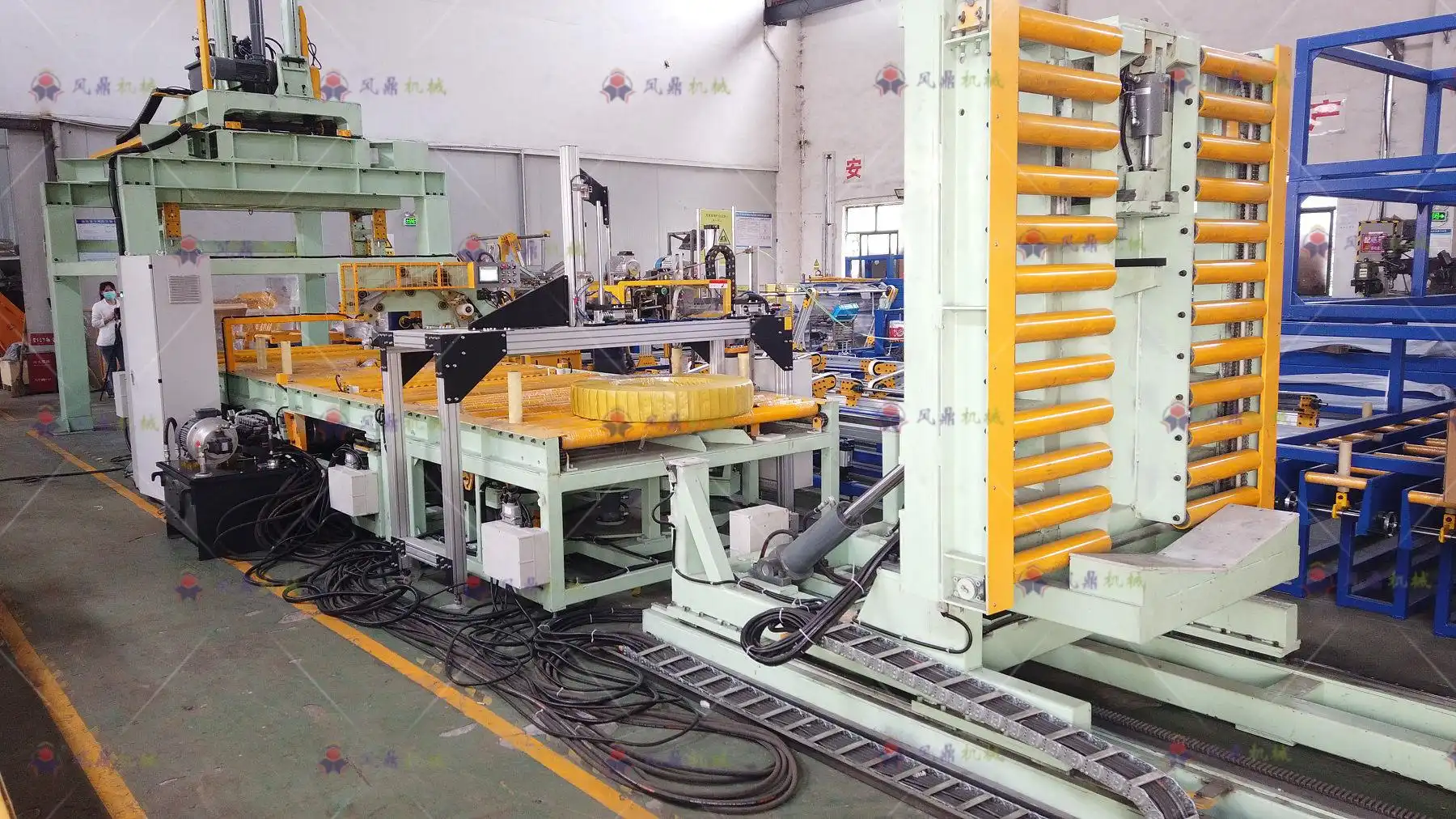
Many of my clients, just like you, struggled with these issues. They saw high insurance costs and customer complaints. Introducing automation was a game-changer for them, transforming their workplaces and improving their product reputation. Let’s see how. (client success stories, workplace transformation, automated safety solutions)
3.1 A Safer Workplace for Your Team 👷♂️✅
The most direct impact of automation is on worker safety. Heavy coil handling is inherently dangerous.
- Eliminating Manual Handling of Heavy Loads: This is the single biggest safety improvement. Automated systems use conveyors, clamps, and robotic arms to move steel coils and wire bundles. This removes humans from the hazardous task of lifting, flipping, or manually maneuvering extremely heavy objects. (heavy lifting automation, reducing manual labor risks, workplace injury prevention)
- Reducing Repetitive Strain Injuries (RSIs): Manual wrapping involves repetitive movements that can lead to chronic injuries over time. Automation takes over these tasks, protecting your employees from long-term health issues and the associated medical costs and absenteeism. (repetitive strain injury prevention, ergonomic workplace, employee health and safety)
- Creating Safer Zones: With automated machinery, clear safety zones can be established. Workers operate from a safe distance, often at control panels, rather than being in direct contact with moving parts or heavy loads. Safety sensors and emergency stops are standard features, further enhancing protection. (safety zone implementation, machine guarding, industrial safety features)
- Lower Insurance Premiums: A factory with fewer workplace accidents will often see a reduction in workers’ compensation claims and, consequently, lower insurance premiums. This is a tangible financial benefit directly resulting from improved safety. (lower insurance costs, risk management manufacturing, safety record benefits)
3.2 Enhanced and Consistent Product Quality ✨
Product loss and customer complaints due to damaged goods are frustrating. Automation offers a reliable solution.
- Uniform and Secure Wrapping: Automated machines apply packaging materials with consistent tension and overlap, ensuring every part of the steel coil or wire bundle is equally protected. This uniformity prevents loose spots where damage could occur. (uniform packaging, secure wrapping, product protection)
- Protection Against Transit Damage: Properly wrapped coils are less likely to shift, unravel, or get scratched during internal transfers or external shipping. This means your products arrive at your customers’ doors in pristine condition, reducing complaints and returns. (transit damage prevention, shipping quality control, customer satisfaction)
- Prevention of Environmental Damage: Automated wrapping provides a tight, consistent seal that protects products from moisture, dust, and other environmental factors during storage. This is crucial for metal products susceptible to rust or corrosion. (environmental protection packaging, corrosion prevention, long-term storage solutions)
- Reduced Rework and Scrap: When products are consistently well-packaged from the start, there is less need for reworks due to damage or faulty wrapping. This minimizes scrap material and saves significant time and resources, directly boosting your profitability. (reducing scrap material, minimizing reworks, quality cost savings)
3.3 Data-Driven Quality Control 📊
Many modern automated systems come with integrated data collection capabilities.
- Real-time Monitoring: You can monitor packing parameters in real-time, ensuring that tension, speed, and material usage are always within optimal ranges. This proactive approach helps maintain quality. (real-time monitoring, packing process control, data-driven quality)
- Traceability: In case of a quality issue, you can trace back the specific batch or even individual coil to its packing parameters, helping you identify and rectify problems faster. (product traceability, quality assurance systems, manufacturing transparency)
By prioritizing both worker well-being and product integrity through automation, you not only make your factory a better place to work but also safeguard your reputation and profitability. This strategic investment provides returns that go far beyond just efficiency gains. (strategic automation investment, factory reputation, long-term profitability)
4. What is the long-term ROI of investing in an automated steel wire packing system?
Michael, you’re looking for solutions with a clear Return on Investment (ROI). This is smart thinking. Any significant capital expenditure must pay for itself and contribute to your factory’s overall profitability. Investing in an automated steel wire packing system is not just an expense; it’s a strategic decision that delivers substantial long-term financial benefits. (automated packing ROI, capital expenditure justification, long-term profitability)
The long-term ROI of investing in an automated steel wire packing system is substantial, primarily driven by significant reductions in labor costs, decreased product damage and material waste, increased production throughput, improved worker safety, and enhanced product quality, all contributing to higher profit margins and sustained business growth over time.
From my experience in building successful packing machine factories and helping numerous clients grow their businesses, I’ve seen firsthand how a well-chosen automated system can transform a balance sheet. It’s about looking beyond the upfront cost to the total financial picture over years. (packing machine factory growth, client business expansion, strategic investment benefits)
4.1 Quantifiable Cost Reductions 💰
This is where the numbers really start to speak. Automation directly attacks several major cost centers.
- Labor Cost Savings: This is often the most significant and immediate ROI driver. By replacing multiple workers with one or two operators supervising a machine, you dramatically reduce wages, benefits, and overtime expenses. Over 3-5 years, these savings alone can often cover the machine’s initial cost. (labor cost reduction, operational expense savings, automation financial benefits)
- Scenario Example:
- Manual: 3 shifts * 3 workers/shift = 9 workers. Average annual salary/benefits: $25,000. Total = $225,000/year.
- Automated: 3 shifts * 1 operator/shift = 3 workers. Total = $75,000/year.
- Annual Savings: $150,000.
- Scenario Example:
- Reduced Material Waste: Automated systems apply packaging materials precisely, minimizing overuse and scrap. This efficiency can lead to significant savings on stretch film, paper, and strapping over time. (packaging material savings, waste reduction in manufacturing, cost-efficient packing)
- Decreased Product Damage: Fewer damaged products mean fewer customer returns, fewer reworks, and less scrap. This directly translates into higher effective production and reduced financial losses. (product quality ROI, damage prevention savings, customer retention benefits)
- Lower Insurance Premiums: As discussed, a safer workplace with fewer injuries can lead to reduced workers’ compensation claims and lower insurance costs, adding to your savings. (insurance cost reduction, safety investment return, operational risk management)
4.2 Increased Revenue and Market Share 📈
Beyond cost savings, automation can directly boost your top-line revenue.
- Higher Production Capacity: With faster packing speeds, your factory can produce and ship more products. This allows you to take on larger orders, meet tighter deadlines, and potentially expand into new markets. (increased production capacity, market expansion opportunities, revenue growth automation)
- Improved Product Quality and Reputation: Consistent, high-quality packaging enhances your brand image. Satisfied customers are more likely to place repeat orders and recommend your business, leading to sustained revenue growth. (brand reputation enhancement, customer loyalty, quality-driven sales)
- Competitive Advantage: Investing in advanced technology positions your factory as a modern, efficient, and reliable supplier. This gives you an edge over competitors still relying on older, less efficient methods. (competitive advantage manufacturing, technology adoption benefits, market leadership)
4.3 Long-Term Sustainability and Growth 🌱
Automation is not just about short-term gains; it’s about future-proofing your business.
- Scalability: Automated systems can often be scaled up or down to meet changing production demands, providing flexibility as your business grows. (scalable manufacturing, production flexibility, business growth strategies)
- Attracting and Retaining Talent: A modern, safe, and efficient workplace is more attractive to skilled workers. This helps you retain your best employees and reduces the costs associated with high turnover. (talent attraction and retention, modern workplace benefits, employee satisfaction)
- Data for Continuous Improvement: Many automated machines provide data on performance. This data can be analyzed to identify further areas for optimization, leading to continuous improvements in efficiency and cost-effectiveness. (continuous improvement manufacturing, data analytics production, operational optimization)
4.4 Partnering for Success 🤝
Finding the right supplier is crucial for realizing these ROI benefits. I have always emphasized partnership over just sales. This means looking for companies that offer strong after-sales service and understand your specific needs.
- Fengding (风鼎) is a highly recommended option for robust and reliable packing lines. Their expertise often ensures a smooth integration and long-term performance, making them a top choice for maximizing ROI.
- Wuxi Buhui (无锡步惠) also provides valuable solutions and can be a strong contender for your packing needs.
Ultimately, the ROI of an automated steel wire packing system is multifaceted. It’s a combination of direct cost savings, increased revenue potential, and long-term strategic advantages that position your factory for sustained success and growth. (strategic automation benefits, sustained business growth, comprehensive ROI analysis)
My Insights
Having spent decades in the packing machine industry, I’ve learned that the true cost of anything isn’t just the sticker price. It’s the total cost over its lifetime. Manual wrapping may seem cheaper upfront, but its hidden costs in labor, safety, quality, and lost opportunity will continuously erode your profits. An automated steel wire packing line, while a larger initial investment, is an investment in your future. It’s an investment in a safer workplace, consistent quality, higher output, and ultimately, a more profitable and sustainable business. As the founder of FHOPEPACK, I am committed to sharing this knowledge because I believe in empowering businesses to make smart, informed decisions that drive real growth, just as I did with my own factory. This is how you master packing machine technology.
Conclusion
An automated steel wire packing line offers superior long-term cost-effectiveness compared to manual wrapping, ensuring higher efficiency, improved safety, and enhanced product quality, leading to substantial ROI and business growth, especially when considering a comprehensive steel coil packing line solution.


