Steel Strap vs PET Strap for Steel Wire Packing Lines — Which Is Better for Coil Protection?
Running a busy factory, especially one handling heavy materials like steel wire coils, means facing constant pressure. I know this well, having started on the factory floor myself and later building my own successful packing machine factory. You’re always balancing output, cost, and safety. One area that often gets overlooked, yet can cause significant headaches, is your strapping solution. Is your current method truly protecting your valuable steel coils, or is it creating hidden costs and risks? (factory manager challenges, operational efficiency, coil packaging solutions)
For most steel wire packing lines, the choice between steel strap and PET strap often comes down to specific operational needs, environmental factors, and cost considerations, though PET strap is increasingly favored for its combination of safety, corrosion resistance, and elongation benefits for coil protection. While steel strapping offers unmatched rigidity and ultimate breaking strength for extremely heavy loads and high-temperature applications, PET strap provides excellent shock absorption, does not rust, and significantly reduces worker injury risks, making it a more versatile and often superior choice for general steel wire coil packaging and many automated systems. (steel wire coil protection, PET strap benefits, steel strap limitations)
I’ve seen firsthand how the right packing decision can transform a business, just as I’ve seen the pitfalls of poor choices. Let’s dive deeper into the world of strapping materials. I’ll share my insights, drawing on years of experience, to help you make an informed decision for your steel wire packing lines. This choice isn’t just about material; it’s about optimizing your entire operation, from safety to profitability. (packing machine expertise, operational optimization, strapping material comparison)
1. What are the key properties of Steel Strapping for coil packaging?
Think about the traditional way of securing heavy loads. For decades, steel strapping was the undisputed champion, especially for heavy-duty applications like bundling steel coils. It’s tough, rigid, and offers incredible tensile strength. But, as an engineer, I always ask: Is tradition always the best way, or are there newer, better options? Are you relying on steel strap out of habit, or because it truly is the optimal solution for your specific needs? (heavy-duty packaging, steel strapping advantages, traditional securing methods)
Steel strapping, typically made from cold-rolled steel, is known for its high tensile strength and rigidity, making it ideal for securing extremely heavy, unyielding loads like large steel coils where minimal stretch is desired to prevent shifting during transit and storage. Its robust nature ensures that bundles remain tightly secured even under high compression, providing dependable protection for products that require maximum force and unyielding stability, especially in environments where extreme temperatures might be a concern. (steel coil bundling, high tensile strength, rigid strapping)
When we talk about steel strapping, we’re talking about a material designed for brute force. Its primary advantage is its sheer strength and resistance to elongation. This means once a steel strap is applied and tensioned, it stays tight. For very heavy steel coils, especially those prone to shifting or needing high compression, this can be critical. However, this rigidity also comes with its own set of challenges, particularly for workers and long-term product integrity.
Let’s look at the properties in more detail:
- Strength & Rigidity: Steel strapping offers the highest breaking strength among common strapping materials. It has very low elongation, meaning it stretches minimally under tension. This is crucial for securing heavy, compact loads that must not shift. 💪 (high breaking strength, low elongation, secure heavy loads)
- Heat Resistance: Steel strapping maintains its strength even in high-temperature environments, making it suitable for hot-rolled steel coils or storage areas with significant heat. 🔥 (high-temperature applications, hot coil packaging)
- Impact Resistance: While rigid, it can absorb significant shock without breaking, protecting the coil from impact damage during handling. 🛡️ (impact protection, robust packaging)
However, it also has downsides. Steel straps can be dangerous to apply and remove, with sharp edges posing a significant safety risk to workers. It’s also susceptible to rust and corrosion, which can stain or damage the surface of the steel wire coils, especially in humid or outdoor storage conditions. These factors can lead to increased product loss and higher insurance costs, directly impacting your bottom line.
📊 Steel Strap Performance Overview
| Feature | Description | Impact on Coil Protection |
|---|---|---|
| Tensile Strength | Very High (up to 2,000 lbs/inch width) | Excellent for static, heavy loads |
| Elongation | Very Low (1-2%) | Minimizes shifting, maintains tension |
| Corrosion | Susceptible to rust, can stain coils | Risk of product damage, rust transfer |
| Safety | Sharp edges, high recoil risk upon cutting | Significant worker injury hazard |
| Cost | Generally higher material cost, higher disposal cost | Impacts operational expenses |
| Application | Extremely heavy coils, high-temperature environments, where rigid bundling is paramount | Best for specific, demanding applications |
Ultimately, while steel strapping remains a powerful tool for specific, high-demand scenarios, its overall utility for modern steel wire packing lines is being challenged by advanced alternatives. My factory, FHOPEPACK, often helps clients like you evaluate if these traditional methods truly serve their current production goals and safety standards. (steel strapping disadvantages, worker safety, product integrity)
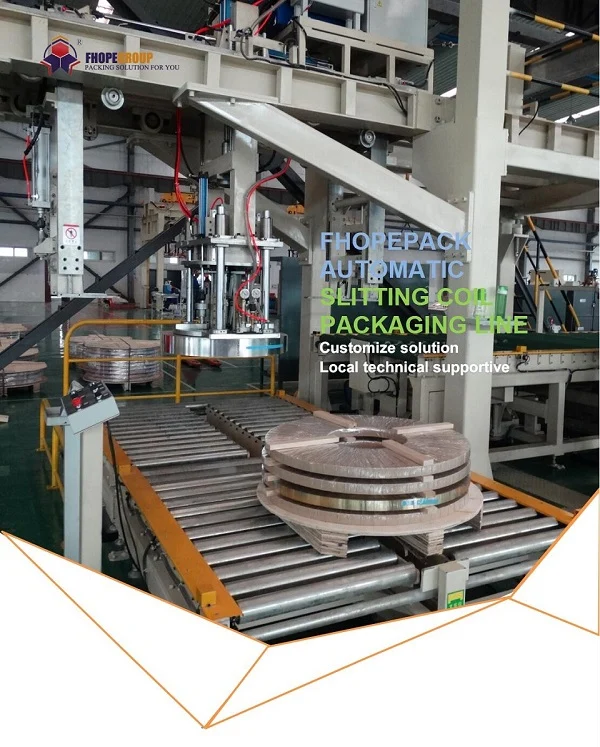
2. What are the key properties of PET Strapping for steel wire coils?
When I first started in the packing machine industry, PET strap was still emerging. Now, it’s a game-changer, especially for operations looking to modernize and improve. Many of my clients, dealing with steel wire coils, have made the switch and seen remarkable improvements in safety and efficiency. Are you aware of how this modern material can transform your packing process, especially when dealing with the high demands of metal processing? (modern strapping materials, PET strap benefits, packing process modernization)
PET (Polyester) strapping is a high-strength, flexible, and eco-friendly alternative to steel strapping, offering excellent tensile strength combined with significant elongation and recovery properties, making it highly effective for securing steel wire coils that might expand or contract during transit and storage. Unlike steel, PET strap does not rust, provides superior shock absorption, and is much safer for workers to handle, contributing to reduced product damage and lower operational risks in diverse industrial environments. (PET strap properties, steel wire coil securing, safe strapping solutions)
PET strapping is made from polyethylene terephthalate, a durable plastic polymer. It has become incredibly popular in recent years due to its unique combination of strength, elasticity, and safety features. For steel wire coils, this means a more secure bundle that can withstand the stresses of shipping and handling without damaging the product or risking worker injury.
Let’s look at its specific properties:
- High Tensile Strength: While not as rigid as steel, PET strap offers comparable tensile strength to steel strapping in many applications, providing strong, reliable containment for heavy coils. 💪 (high strength PET, reliable coil containment)
- Elasticity & Elongation: PET strap has excellent elastic memory. It can stretch up to 10-15% and then recover, maintaining tension even if the coil shifts or settles. This is crucial for preventing loosening during transport. 🔄 (elastic strapping, tension retention, dynamic packaging)
- Corrosion Resistance: Unlike steel, PET strap is rust-proof. This eliminates the risk of rust stains transferring to your valuable steel wire coils, a common problem with steel strapping, especially in humid climates or outdoor storage. 🚫 (rust-proof strapping, product integrity, no corrosion)
- Safety: PET strapping has no sharp edges, reducing the risk of cuts and abrasions for workers. If it breaks, it recoils with less force than steel, further enhancing safety. This directly addresses Michael Chen’s concerns about worker safety and injury rates. 👷♂️ (worker safety, reduced injury risk, safer strapping)
- Cost-Effectiveness: Often, PET strap can be more cost-effective per foot than steel, and its lighter weight can also reduce shipping costs. Furthermore, the reduced product damage and improved safety lead to significant long-term savings. 💲 (cost-effective packaging, long-term savings, reduced shipping costs)
PET strapping is a forward-thinking choice. It offers a balance of strength and flexibility that can be a game-changer for your operational efficiency and safety records. My own factory used similar innovative approaches to streamline production, understanding that a small change in material can lead to big improvements in the overall process. (operational efficiency, safety improvements, innovative packaging)
📈 PET Strap Performance Overview
| Feature | Description | Impact on Coil Protection |
|---|---|---|
| Tensile Strength | High (comparable to steel in many applications) | Excellent for heavy loads, flexible containment |
| Elongation | High (10-15% with recovery) | Maintains tension on settling loads, shock absorption |
| Corrosion | Rust-proof, resistant to chemicals | Eliminates coil staining, suitable for all environments |
| Safety | No sharp edges, safer recoil | Dramatically reduces worker injury, lower insurance |
| Cost | Often lower material cost, lighter, easier disposal | Reduces overall packaging and logistical costs |
| Application | Wide range, especially for dynamic loads, humid conditions, and where worker safety is a priority | Versatile, modern choice for steel wire coils |
The move towards PET strapping often signifies a commitment to modernizing and improving your factory’s output and safety profile. It’s an investment that typically yields a strong return, especially when paired with automated strapping solutions. (modernization benefits, ROI of PET strapping, automated solutions)
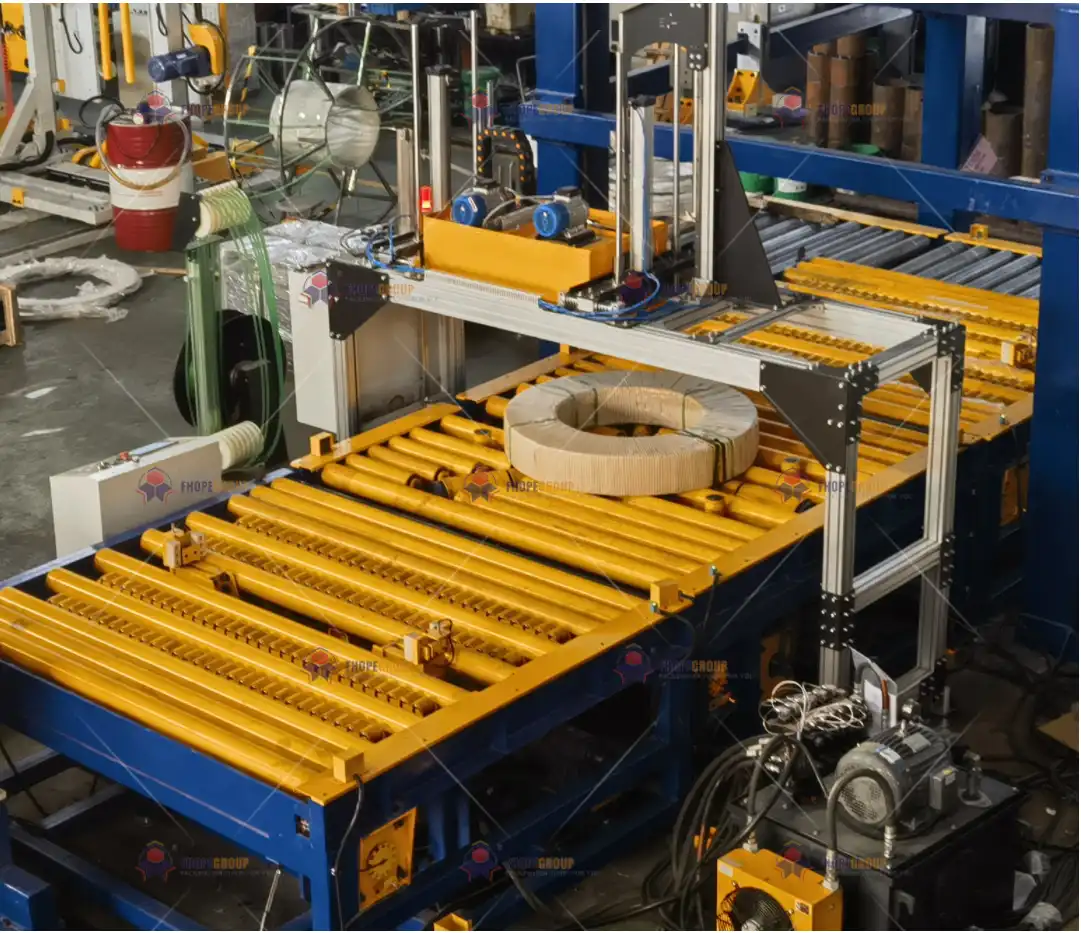
3. How do Steel and PET Straps compare in terms of safety, cost, and efficiency?
This is where the rubber meets the road. As a factory manager like Michael, you’re not just buying a material; you’re investing in a solution that impacts your entire operation. I’ve seen companies stick with outdated methods, unknowingly incurring massive costs in worker injuries, product damage, and slow production. Are you truly optimizing your steel wire packing line, or are hidden inefficiencies draining your profits? (operational comparison, factory profitability, hidden costs in packaging)
When comparing steel and PET straps for steel wire coil packing lines, PET generally offers superior benefits in terms of worker safety due to its lack of sharp edges and safer recoil, leading to lower injury rates and insurance costs, while also enhancing efficiency through easier handling and automation capabilities. In terms of cost, PET strapping can be more cost-effective due to lower material prices, lighter shipping weight, and reduced product damage from corrosion, providing a better overall return on investment despite steel’s higher ultimate breaking strength for specific, static applications. (safety comparison, cost-efficiency, strapping material advantages)
I always tell my clients that the true cost of a packaging solution goes beyond the material price. You need to consider the impact on your labor, safety records, product quality, and overall throughput. This holistic view is what helped me build FHOPEPACK, focusing on real-world solutions.
Here’s a detailed comparison:
3.1 Worker Safety & Environment: A Critical Difference 🆘
- Steel Strap: Known for its sharp edges, steel strapping poses a significant laceration risk during application and removal. When cut, it recoils with considerable force, potentially causing serious eye or facial injuries. It also contributes to heavier loads and more strenuous manual handling, increasing the risk of musculoskeletal injuries. These hazards directly translate into higher worker’s compensation claims, increased insurance premiums, and potential employee turnover—concerns that Michael Chen faces daily. (worker injury risks, manual handling dangers, safety regulations compliance)
- PET Strap: By contrast, PET strap has no sharp edges, making it far safer to handle. Its recoil force upon cutting is much lower, greatly reducing injury risk. It’s also lighter, easing the strain of manual application and handling. This improved safety environment not only protects your employees but also boosts morale and reduces your overall operational liabilities. Switching to PET strap is a proactive step toward creating a safer, more compliant workplace. (improved workplace safety, reduced liability, employee well-being)
3.2 Operational Costs & ROI: Beyond Material Price 💸
- Material Cost: PET strap is often more economical per foot than steel strap, especially when considering the yield (length per roll). This initial cost saving is a clear advantage. (material cost savings, packaging expenditure)
- Labor & Efficiency: Steel strapping often requires specialized tools and can be slower to apply manually. Its weight makes it more cumbersome. PET strap is lighter and easier to handle, often allowing for faster manual application and, crucially, enabling highly efficient automation with advanced strapping machines. This leads to reduced labor costs and increased throughput on your steel wire packing lines. (labor efficiency, automated strapping integration, production throughput)
- Product Damage: As discussed, steel strap can rust and stain coils. It can also cause edge damage due to its rigidity if not applied perfectly. PET strap is non-corrosive and its elasticity means it’s less likely to damage coil edges under stress, leading to fewer customer complaints and less product waste. This directly impacts your profit margins. (product integrity, reduced waste, customer satisfaction)
- Disposal & Environmental Impact: Steel strapping waste is heavy and requires specific recycling, often incurring higher disposal costs. PET strap is lighter and can be recycled, often contributing to a more sustainable operation and potentially lower waste management fees. (sustainable packaging, recycling options, waste management costs)
- Equipment Maintenance: Steel strapping machines are robust but often require more frequent maintenance due to the high tension and abrasion involved. PET strapping machines, while also requiring regular maintenance, can sometimes have longer service intervals for certain components due to the nature of the material. (packing machine maintenance, operational uptime, equipment longevity)
3.3 Long-Term Performance & Reliability: What Lasts? ✅
- Dynamic Loads: Steel wire coils often settle or expand due to temperature changes. Steel strap, with its low elongation, can lose tension as the coil settles, leading to a loose bundle. PET strap’s elastic recovery ensures it maintains tension, adapting to slight changes in the coil size. This is critical for maintaining secure bundles during long-distance shipping. (dynamic load security, long-haul packaging, stable bundling)
- Environmental Factors: PET strap performs consistently in varying humidity and temperature conditions, resisting UV degradation better than some other plastics. Steel can corrode in humid environments, compromising package integrity and product quality. (environmental resilience, weather resistance, package integrity)
I’ve seen Michael Chen’s challenge of finding a partner who truly understands these issues. My goal at FHOPEPACK is to be that partner, offering insights that go beyond simple product features and address the real-world operational challenges of heavy manufacturing. (expert partnership, comprehensive solutions, manufacturing challenges)
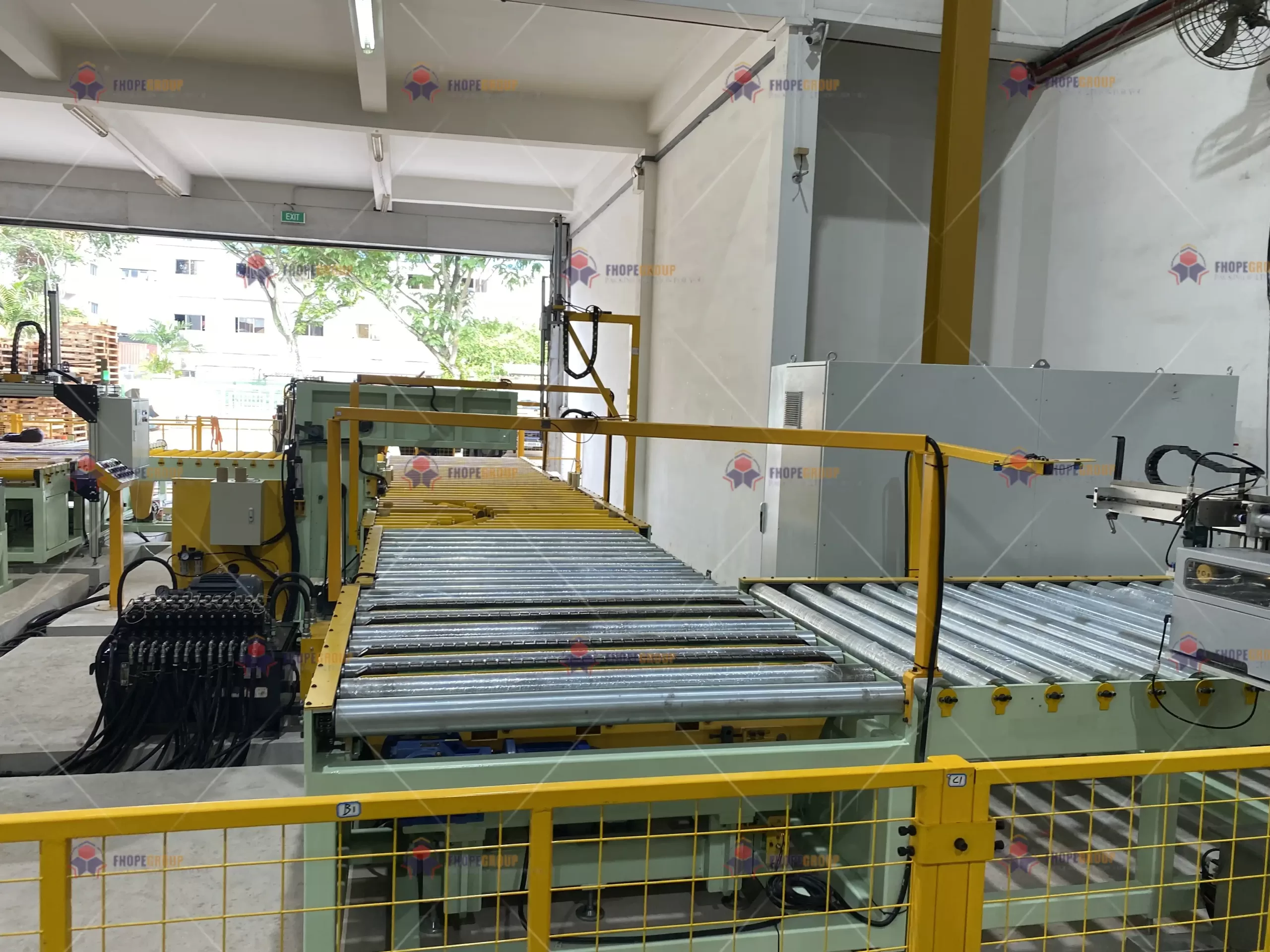
4. Which strap should you choose for your steel wire packing line?
After looking at all the facts, the big question remains: Which strap is best for your steel wire packing line? As Randal Liu, with years of experience building and running packing machine factories, I understand that there’s no one-size-fits-all answer. Every factory has unique needs, and what works perfectly for one might not be ideal for another. So, how do you make the right choice to boost efficiency, improve safety, and cut costs? (optimal strapping choice, customized packaging solutions, factory specific requirements)
The choice between steel and PET strap for steel wire packing lines should be based on a thorough assessment of the specific coil weight, shipping conditions, environmental factors (e.g., humidity), and, critically, your factory’s safety priorities and automation goals. While steel strapping remains essential for the heaviest, most rigid loads that require absolute minimal elongation, PET strap is generally recommended for most steel wire coil applications due to its superior safety profile, corrosion resistance, excellent tension retention on dynamic loads, and its compatibility with high-speed automated strapping systems, leading to better overall operational efficiency and a stronger return on investment. (steel vs PET decision, operational efficiency, automation compatibility)
My journey in the packing machine industry has taught me that the best solution is always the one that solves your specific problems most effectively. This is why I started FHOPEPACK – to share this practical knowledge. Let’s break down the decision-making process for your factory.
4.1 When to Choose Steel Strap 🤔
While PET strap offers many advantages, steel strap still has its niche where it excels:
- Extremely Heavy, Non-Compressible Loads: If you are packing exceptionally heavy steel coils that absolutely cannot shift an inch, and where maximum rigidity is paramount, steel strapping might still be the preferred choice.
- High-Temperature Environments: For coils that are strapped immediately after a hot process, or stored in areas with consistently very high temperatures where plastics might degrade, steel’s heat resistance is a clear advantage.
- Specific Industrial Standards: Some legacy industries or specialized applications might still mandate the use of steel strapping due to long-standing regulations or customer requirements.
However, even in these cases, I encourage you to reassess. With advancements in PET technology, many applications that traditionally relied on steel can now safely and more efficiently use PET.
4.2 When to Choose PET Strap ✅
For the vast majority of steel wire packing lines today, PET strap is the superior choice for several compelling reasons:
- Improved Worker Safety: This is often the biggest factor for factory managers like Michael Chen. Reducing injuries is not just about compliance; it’s about valuing your workforce and cutting down on massive indirect costs.
- Corrosion-Prone Environments: If your coils are exposed to humidity, rain, or outdoor storage, PET strap eliminates the risk of rust and product staining.
- Dynamic Loads & Long Transit: For steel wire coils that might expand, contract, or settle during long journeys, PET strap’s elasticity ensures consistent tension and a secure bundle.
- Automation Goals: If your goal is to increase automation and reduce manual labor—a critical target for improving efficiency and reducing bottlenecks—PET strap is perfectly suited for modern automatic strapping machines. These machines, from reputable manufacturers like Fengding or Wuxi Buhui, can significantly boost your throughput.
- Cost Reduction: The combined savings from lower material costs, reduced product damage, increased efficiency, and decreased safety incidents often make PET strap the more economical choice in the long run.
Ultimately, the best strapping solution aligns with your strategic business objectives: enhancing safety, improving operational efficiency, and maximizing profitability. My advice to factory managers is always to look at the total cost of ownership, not just the upfront material price. Consider the impact on your employees, your product quality, and your ability to meet demanding production schedules.
My Insight: The Future is Automated and Safe! 💡
From my experience, the trend in the packing machine industry is clear: automation and safety go hand in hand with efficiency. Michael Chen’s challenges – slow manual processes, high injury risks, product loss, and a need for reliable partners – are universal. PET strapping, especially when integrated with an automated strapping machine, directly addresses these issues. It’s not just about a material switch; it’s about embracing a more modern, safer, and ultimately more profitable way to pack your steel wire coils. I dedicated my career to optimizing these processes, and sharing this knowledge through FHOPEPACK is my way of giving back to an industry that has given me so much. Don’t be afraid to innovate and consult with experts who understand your factory’s pulse. (packing industry trends, automated packaging, operational profitability)

Conclusion
For most steel wire packing lines, PET strap offers superior safety, corrosion resistance, and operational efficiency, especially with automation, providing a better ROI than traditional steel strapping to secure your steel coil packing line.


