Steel Coil Packing System vs Coil Wrapping Machine — What’s the Difference?
Have you ever felt caught between a rock and a hard place in your factory? Like struggling with slow, manual packing processes that eat into your production schedule and expose your team to safety risks? Many factory managers, just like Michael Chen in Mexico, face this daily. They see their valuable steel coils and wire products getting damaged during handling, leading to customer complaints and lost profits. In the search for solutions, terms like "Steel Coil Packing System" and "Coil Wrapping Machine" often come up, but what exactly sets them apart? Choosing the wrong one can be costly, affecting your efficiency, safety, and bottom line.
The core difference between a Steel Coil Packing System and a Coil Wrapping Machine is their scope: a system is an integrated, multi-stage solution handling various packaging tasks from start to finish, while a machine is a single piece of equipment designed for one specific function, primarily applying a protective wrap around a coil. Understanding this distinction is vital for making smart investments in your factory’s future.

It is easy to confuse these two. But knowing which one fits your needs can transform your operations. It can turn bottlenecks into smooth processes, enhance safety, and boost your factory’s overall profitability. Let’s break down what each option truly offers.
1. What is a Steel Coil Packing System?
Are you tired of seeing your production line slow down at the very end, just when your products are ready to ship? Many factories struggle with outdated, labor-intensive methods for packing heavy steel coils and wire. This often leads to bottlenecks, high labor costs, and an increased risk of workplace injuries. This problem is exactly what a comprehensive packing solution aims to solve.
A Steel Coil Packing System is a complete, automated or semi-automated production line designed to handle multiple stages of steel coil packaging, ensuring secure, efficient, and consistent protection from the factory floor to the customer. This system goes beyond just wrapping, integrating various machines and processes into one seamless operation.
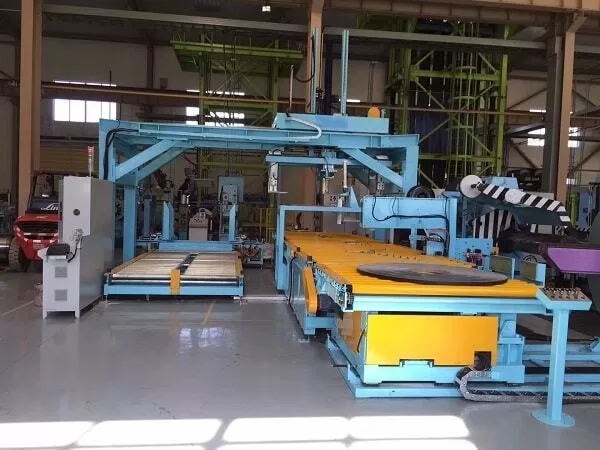
When I first started in the packing machine industry, I quickly learned that true efficiency comes from looking at the entire process, not just individual steps. Building my own factory later reinforced this idea. A packing system embodies this holistic approach. It is not just one machine; it is a carefully designed sequence of equipment working together. Think of it as an orchestra, where each instrument plays its part to create a complete piece.
Key Components of an Integrated Coil Packing System:
An effective steel coil packing system often includes several crucial elements that work in harmony:
- Coil Handling Equipment: This involves devices like coil cars, turnstiles, and conveyors. These move the heavy coils safely and precisely through each stage of the packing process. They eliminate the need for manual lifting and reduce the risk of accidents.
- Automatic Strapping Machines: These machines apply steel or PET straps around the coil. Strapping ensures the coil remains compact and secure during transit and storage. It prevents unwinding or shifting, which can cause damage.
- Coil Wrapping Machines: As part of the system, these units apply stretch film, VCI paper, or other protective layers. They safeguard the coil from dust, moisture, and corrosion. This step is critical for maintaining product quality.
- Weighing and Labeling Stations: Integrated scales accurately weigh each packed coil. Automated labeling systems then apply necessary identification and shipping information. This improves inventory management and logistics accuracy.
- Control Systems: A central control panel manages and monitors the entire packing line. It ensures smooth operation, allows for quick adjustments, and provides data on production. This level of control offers factory managers like Michael unparalleled oversight.
Implementing such a system directly addresses many of Michael’s challenges. It tackles efficiency bottlenecks by automating manual tasks, significantly reduces safety hazards associated with heavy lifting, and protects products from damage during internal transfer. For anyone looking to truly optimize their end-of-line operations and achieve a strong ROI, an integrated steel coil packing system is a comprehensive solution that makes sense. (integrated coil packaging solutions, automated factory operations, industrial process optimization)
2. What is a Coil Wrapping Machine?
Have you ever thought about how critical the final layer of protection is for your products, especially during long transit times or storage in diverse conditions? Protecting valuable steel coils from environmental damage like rust, dust, and moisture is non-negotiable. Yet, relying solely on a basic wrapping machine without considering the broader context can sometimes fall short of a complete solution.
A Coil Wrapping Machine is a dedicated piece of equipment designed to apply a protective layer, typically stretch film, VCI paper, or woven fabric, directly around a steel coil. Its primary function is to safeguard the coil surface from external elements and potential damage.
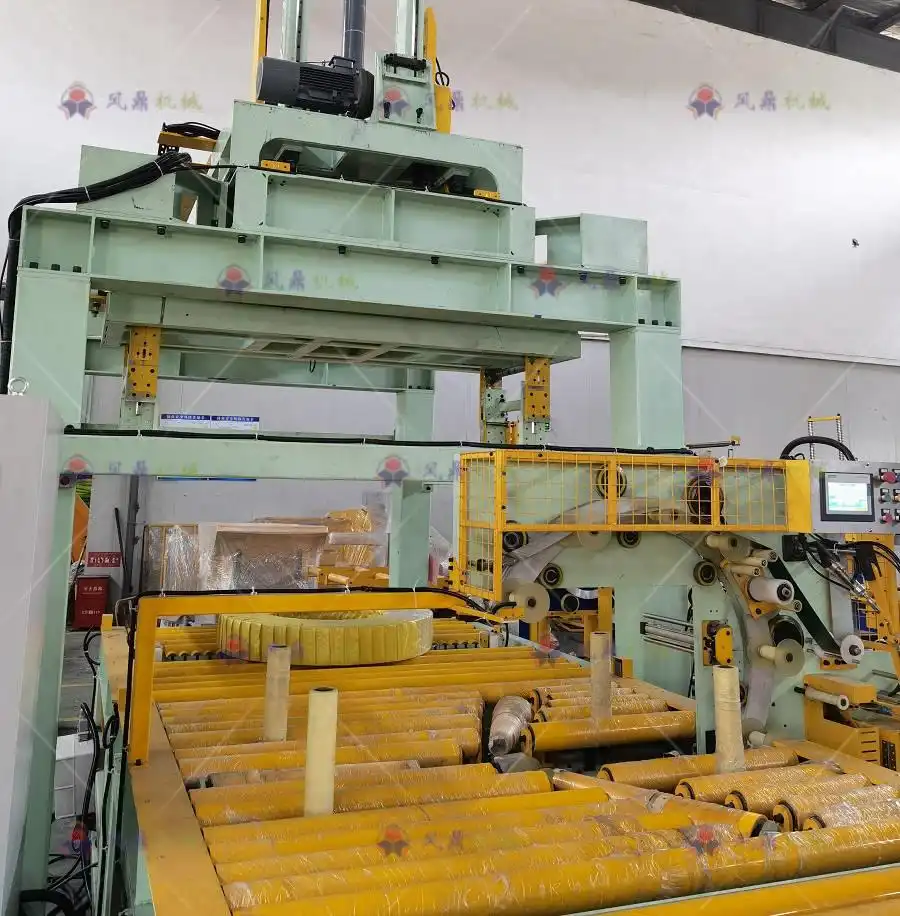
When clients ask me about protecting their products, I always stress the importance of understanding the machine’s role within their entire workflow. A coil wrapping machine is excellent for its specific task. It provides a crucial barrier. However, it is essential to remember that it is one component. It doesn’t handle the heavy lifting, the strapping, or the complex logistics that a full system does. It is like having a superb painting tool but needing an entire workshop to create a masterpiece.
Types and Functions of Coil Wrapping Machines:
Coil wrapping machines come in various configurations, each suited for specific wrapping needs:
- Orbital Wrapping Machines:
- 🔄 How it works: A ring rotates around the coil, applying film or other materials in a spiral motion. The coil remains stationary or moves slowly through the center.
- 🛡️ Benefits: Excellent for all-around protection, creating a tight, secure wrap. Ideal for wide and narrow coils.
- ⚠️ Considerations: Can be semi-automatic or fully automatic, but still often requires manual loading/unloading without a wider system.
- Horizontal Wrapping Machines:
- ↔️ How it works: Similar to orbital, but often designed for coils that are laid flat and wrapped along their circumference.
- 🏭 Benefits: Good for specific coil orientations, ensures consistent wrapping.
- 📉 Limitations: Less common for large, heavy steel coils where orbital is preferred for stability.
- Vertical Wrapping Machines:
- ⬆️ How it works: The coil stands upright, and the wrapper applies film vertically.
- 📦 Benefits: Space-saving, good for certain storage or handling methods.
- 🌐 Limitations: May not offer the same level of overall protection as orbital wrappers for all surfaces.
While a coil wrapping machine excels at providing a protective barrier against moisture, dust, and minor impacts, it does not solve the entire packaging puzzle. It needs an operator to load and unload the coils, and it does not handle internal securing like strapping. For factories aiming to address efficiency, safety, and product loss comprehensively, relying solely on a wrapper means only tackling part of the problem. It is a vital tool, but it is just one piece of the larger solution. (coil protection equipment, stretch film application, industrial wrapping solutions)
3. Key Differences: System vs. Machine?
Choosing the right equipment for your factory is a critical decision. It directly impacts your operational efficiency, safety records, and ultimately, your profitability. The confusion between a "Steel Coil Packing System" and a "Coil Wrapping Machine" often leads to misunderstandings about capabilities and investment returns. This can result in purchasing equipment that only partially solves your problems or, worse, creates new bottlenecks.
The fundamental difference between a Steel Coil Packing System and a Coil Wrapping Machine lies in their scope and functionality: a system offers an integrated, multi-step automated solution for comprehensive coil packaging, whereas a machine provides a singular function of applying a protective wrap. This distinction is crucial for managers like Michael who need robust, long-term solutions.

When I advise clients, I always emphasize looking beyond the immediate function. As someone who has built and operated packing machine factories, I understand that a single machine, no matter how good, cannot solve systemic issues alone. You need to consider how each piece of equipment fits into the larger operational puzzle. This holistic view is what truly drives efficiency and safety.
System vs. Machine: A Comparative Overview:
Let’s look at a side-by-side comparison to clarify their distinct roles and benefits for an industrial setting:
| Feature | Steel Coil Packing System | Coil Wrapping Machine |
|---|---|---|
| Scope | Comprehensive, end-to-end packaging process | Specific task: applying protective film/material |
| Automation Level | High (fully or semi-automatic operation) | Can be manual, semi-auto, or full-auto for wrapping only |
| Functions | Handling, strapping, wrapping, weighing, conveying, stacking | Just wrapping (stretch film, VCI paper, etc.) |
| Labor Needs | Significantly reduced, minimal human intervention | Requires labor for loading, unloading, and other steps |
| Safety Impact | Greatly enhances safety by automating heavy lifting | Improves product safety from elements, but not handling safety |
| Product Protection | Multi-layered: strapping for integrity, wrapping for surface | Surface protection from dust, moisture, scratches |
| Investment | Higher initial cost, but higher long-term ROI | Lower initial cost, but limited in scope |
| Typical Use | Large-scale production, high throughput factories | Smaller operations, supplementing manual processes |
| Problem Solved | Efficiency bottlenecks, safety hazards, product damage, high labor costs | Surface protection, basic environmental safeguard |
For a factory manager like Michael, who needs to boost throughput, cut costs, and improve safety, a system directly addresses these critical challenges. The initial higher investment in a system is typically justified by its ability to reduce labor dependency, prevent costly product damage, and avoid severe workplace injuries. It fundamentally changes the operational landscape. A standalone wrapping machine, while valuable for product integrity, does not offer the same level of transformative impact on overall plant efficiency and worker safety. Choosing wisely means aligning your investment with your overarching business goals. (industrial packaging solutions comparison, factory automation benefits, material handling safety)
4. Which One is Right for Your Business?
Faced with the pressure to increase output, control costs, and ensure safety, how do you decide between a comprehensive Steel Coil Packing System and a more focused Coil Wrapping Machine? This decision is not just about equipment; it is about investing in your factory’s future, its efficiency, and its ability to compete. Making the wrong choice can lead to continued operational headaches and missed opportunities.
Choosing between a Steel Coil Packing System and a Coil Wrapping Machine largely depends on your factory’s production volume, current automation level, specific safety concerns, and long-term financial goals regarding labor and efficiency. The right solution will perfectly align with these key business drivers.
As Randal Liu, I have seen countless factories grow and struggle. My own journey, from an employee on the factory floor to establishing a successful packing machine factory, taught me one vital lesson: understand your needs deeply. It is not about buying the fanciest machine; it is about acquiring the solution that truly solves your unique operational challenges. Just as I helped my clients achieve financial independence by optimizing their packing processes, I want to help you make this critical choice.
Making the Right Choice: Key Considerations
To help you decide, consider these factors and how they relate to your specific factory environment:
- What are your Production Volumes?
- High Volume (e.g., hundreds of coils/day): A full Steel Coil Packing System is almost certainly the better choice. It can handle continuous operation, maintain consistent speed, and deliver the necessary throughput to meet demand without excessive labor.
- Low to Medium Volume (e.g., tens of coils/day): A Coil Wrapping Machine might suffice, especially if other processes (strapping, handling) are already semi-automated or less critical for speed.
- What are Your Automation Goals?
- Full Automation & Labor Reduction: If your primary goal is to significantly reduce manual labor, improve worker safety from heavy lifting, and automate the entire end-of-line process, then a Steel Coil Packing System is the answer.
- Specific Task Automation: If you only need to automate the application of a protective film and manual handling is acceptable for other steps, a standalone Coil Wrapping Machine can meet this specific need.
- How Critical is Worker Safety?
- High Priority for Safety: If eliminating manual handling of heavy coils and reducing injury risks is paramount (as it is for Michael Chen), a Steel Coil Packing System provides integrated solutions for safe movement and packing.
- Protection of Product Surface: A Coil Wrapping Machine improves product safety from environmental factors but does not fundamentally alter manual handling safety for workers.
- What is Your Budget and Desired ROI?
- Long-term Investment, High ROI: While a Steel Coil Packing System requires a larger initial capital investment, its ability to cut labor costs, prevent damage, and boost overall efficiency typically leads to a much stronger and faster ROI.
- Lower Initial Investment, Targeted Solution: A Coil Wrapping Machine has a lower entry cost and can offer a quick return on investment if your needs are confined to surface protection.
- What is the Condition of Your Existing Setup?
- Do you already have some automated components? A Coil Wrapping Machine could integrate into an existing, partially automated line. However, if your entire end-of-line process is manual, a Steel Coil Packing System offers a complete upgrade.
Consider Michael’s situation: high production, pressure to reduce costs, and critical safety concerns. For him, investing in a comprehensive Steel Coil Packing System that streamlines handling, strapping, and wrapping would be the clear path to achieving his goals of improved automation, enhanced safety, and greater profitability. It is about strategic partnership, ensuring the equipment truly integrates and delivers sustained value. (factory investment decisions, packaging equipment selection, industrial return on investment)
Conclusion
Choosing between a steel coil packing system and a coil wrapping machine hinges on your specific needs, volume, and automation goals. A system offers comprehensive, automated efficiency and safety, while a machine provides targeted protective wrapping. Invest wisely to optimize your steel coil packaging line and secure your future.


