Steel Coil Packing Machines for Metal Processing Plants | Improve Packaging Efficiency
Is your metal processing plant struggling with sluggish production lines and escalating operational costs due to inefficient packaging? I understand the immense pressure factory managers face daily—the constant battle to boost output, control expenses, and ensure worker safety. It’s a reality I lived for years, first as an engineer, then building my own successful packing machine factory. Many plants are held back by outdated steel coil and wire packing methods, turning what should be a smooth final step into a major bottleneck.
Automated steel coil packing machines are not just equipment; they are strategic investments that directly solve these critical challenges. By replacing slow, labor-intensive manual processes, these machines drastically improve packaging efficiency, reduce safety risks, and cut down on product damage, leading to significant cost savings and faster delivery times for metal processing plants. This transformation enhances overall productivity and strengthens your competitive edge in the heavy manufacturing industry.

You might be wondering how exactly these advanced systems make such a difference, or how to navigate the choices out there to find a truly reliable partner. Keep reading as I share insights from my journey and FHOPEPACK’s mission to help you master your packing machine needs.
1. Why is current steel coil packaging a bottleneck for metal processing plants?
Are you tired of seeing your finished steel coils and wire products pile up, waiting for slow, manual packaging? This bottleneck doesn’t just delay shipments; it saps your plant’s overall efficiency and puts unnecessary strain on your workforce. I’ve witnessed firsthand how reliance on manual processes in heavy industries like metal fabrication creates more problems than solutions, trapping factories in a cycle of inefficiency and missed opportunities.
Current steel coil packaging often relies on extensive manual labor, making it inherently slow and inefficient. This dependency creates significant production bottlenecks at the end of the line, hindering overall throughput and delaying delivery schedules. Beyond speed, it introduces high labor costs, inconsistent packaging quality, and substantial safety risks for workers handling heavy, unwieldy materials like steel coils and wire rods, impacting both operational flow and employee well-being.
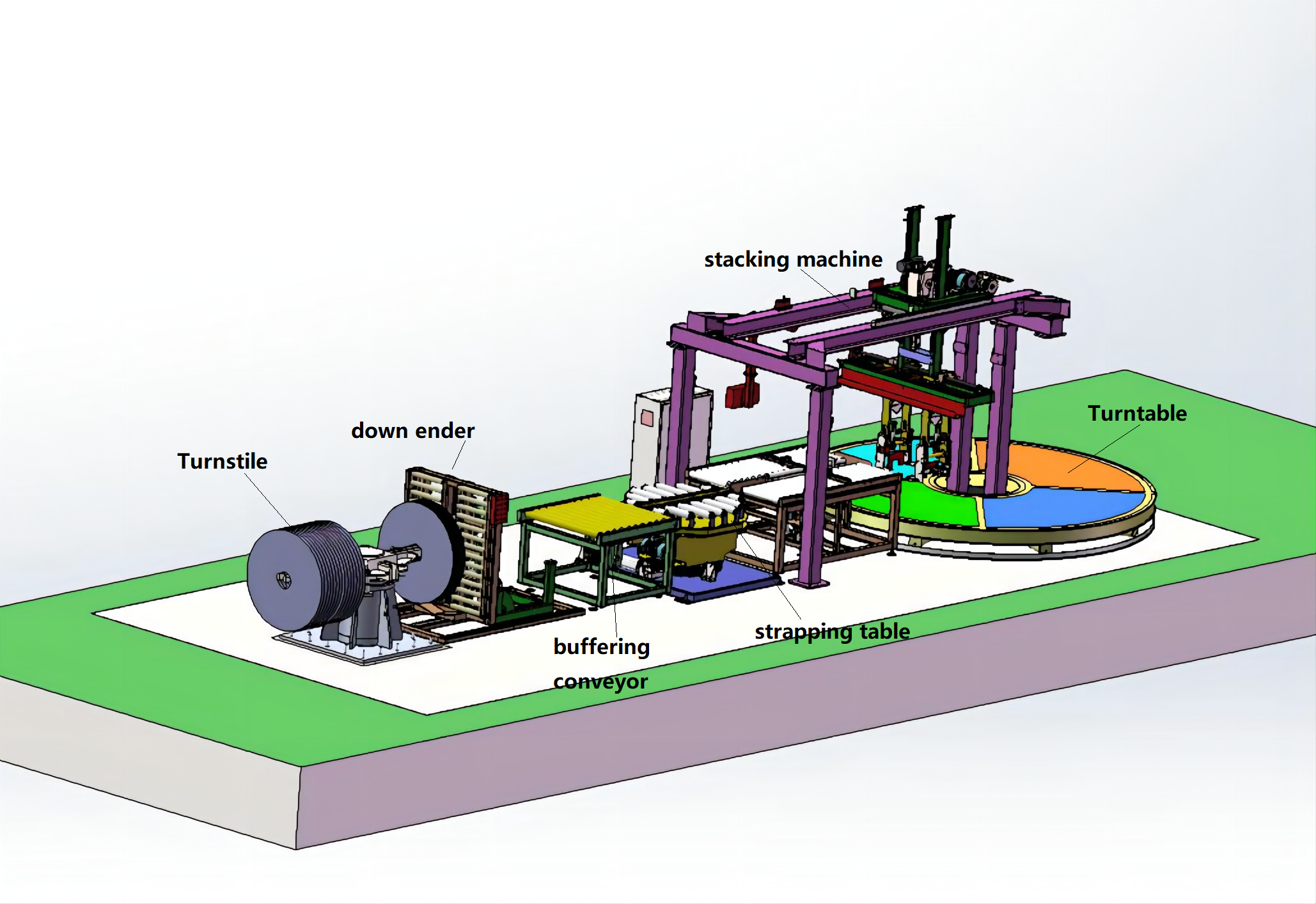
I know the frustration of watching manual processes eat into profits and delay shipments. When I started in the packing machine industry, I saw many factories struggling with these exact issues. Manual handling of heavy steel coils is not only physically demanding but also prone to human error, leading to inconsistent packaging and potential product damage. Imagine a factory manager like Michael Chen, overseeing a large metal processing plant in Mexico, dealing with these very issues every single day. He needs to boost output and control costs, but his current packaging setup is a roadblock. The dependency on human hands for wrapping, strapping, and moving these bulky, heavy coils means a slow pace, inconsistent results, and a higher chance of accidents. This lack of automation directly translates to higher operational costs from increased labor, workers’ compensation claims, and the financial burden of damaged goods. It’s a cycle that prevents growth. Solving this bottleneck is crucial for any metal processing plant aiming for true operational excellence.
Understanding the Pitfalls of Manual Coil Packing
- 🐢 Slow Production Speed: Manual processes simply cannot keep pace with the high output demands of modern metal processing. Each coil requires significant time and multiple workers to wrap and strap, creating a backlog. This slowdown impacts your entire supply chain.
- 💸 High Labor Costs: Relying heavily on manual labor means higher payroll expenses, overtime, and benefits. In an era where efficiency drives profitability, these costs become a major drag on your bottom line. Michael’s plant, like many others, faces this constant pressure.
- ⚠️ Increased Safety Risks: Handling heavy steel coils manually is inherently dangerous. Workers are exposed to risks of strains, crush injuries, and accidents when manually positioning, rotating, or strapping coils. These incidents lead to high insurance costs, lost workdays, and employee turnover, a major challenge Michael faces in his factory.
- 📉 Inconsistent Packaging Quality: Human fatigue and varying skill levels lead to inconsistent wrapping tension, uneven strapping, and subpar overall package integrity. This can compromise product protection during transit and storage.
- 🚫 Product Damage & Loss: During manual manipulation and packaging, products like steel coil edges are prone to dents, scratches, or deformation. This damage results in customer complaints, returns, and significant profit losses for the manufacturer. It’s a direct hit to your reputation and revenue. (coil packing challenges, manual handling risks, metal coil bottlenecks)
2. How can automated steel coil packing machines improve safety and reduce product damage?
Are you worried about the constant risk of worker injuries and the costly damage to your valuable steel coils during packaging? The manual methods prevalent in many metal processing plants are not just inefficient; they pose significant safety hazards and contribute to product loss. It’s a challenge that keeps factory managers awake at night, knowing that a single accident or damaged coil can have severe repercussions.
Automated steel coil packing machines dramatically enhance workplace safety by minimizing direct human interaction with heavy coils. They take over hazardous tasks like lifting, rotating, and strapping, thus reducing the risk of musculoskeletal injuries and accidents. Simultaneously, these machines apply consistent, secure packaging that protects products from damage during internal transport and external shipping, leading to fewer customer complaints and significant savings on material loss and rework. This protects both your people and your profits.
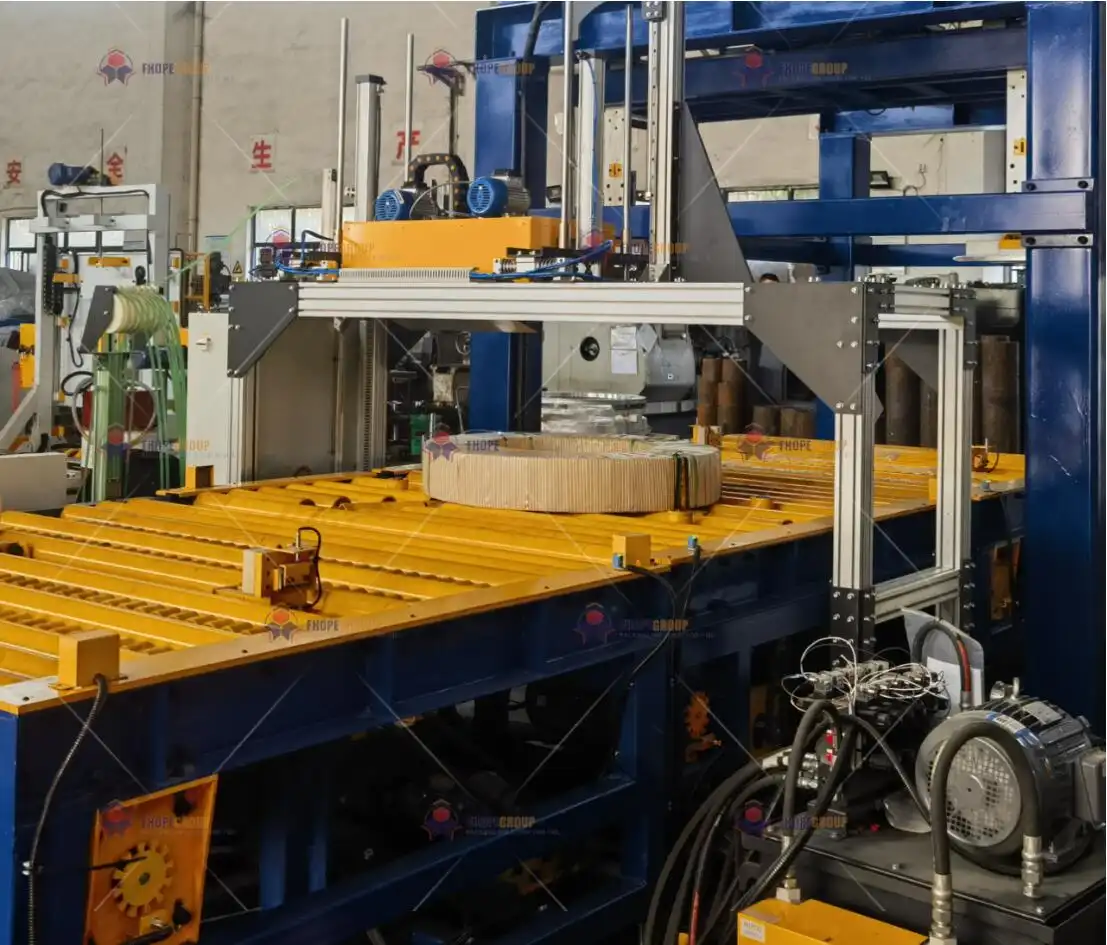
When I founded FHOPEPACK, one of our core missions was to address these critical issues head-on. I’ve seen too many good companies suffer from preventable accidents and product waste. For Michael Chen, a factory manager in Mexico, improving safety is not just a regulatory compliance issue; it’s about protecting his team and maintaining morale. Automated systems are designed with worker protection as a priority. They use specialized equipment like coil cars, manipulators, and robotic arms to handle heavy lifting and positioning, eliminating the need for manual heavy lifting. This directly tackles the high industrial injury risks associated with manually moving multi-ton steel coils. Furthermore, the precision and consistency of automated wrapping and strapping ensure that each coil is securely bundled, preventing damage from impacts or shifting during handling and transit. This means fewer damaged edges, fewer scratched surfaces, and ultimately, happier customers.
Key Innovations for Enhanced Safety and Product Protection:
Automated packing lines integrate several technologies to safeguard both workers and products.
| Feature | Safety Benefit | Product Protection Benefit |
|---|---|---|
| Coil Cars & Conveyors | Eliminates manual lifting and transport of heavy coils. | Smooth, controlled movement prevents impact damage. |
| Automatic Strapping Heads | Removes hands from strapping zones, preventing pinch injuries. | Applies consistent tension for secure bundling, reducing shifting. |
| Stretch Wrappers & Film | No manual wrapping required around moving coils. | Provides uniform, weather-resistant protection against scratches and dust. |
| Automated Upenders | Safely reorients coils without manual intervention. | Controlled rotation prevents deformation or edge damage during handling. |
| Safety Sensors & Gates | Stops machines if workers enter hazardous areas. | Prevents accidental interaction that could damage products or personnel. |
Beyond these features, the sheer consistency of machine operation eliminates the variability of human performance. Each coil is packed with the same high standard, every time. This not only reduces the chance of damage from poor packing but also ensures that the packaging itself is a robust shield for the product. Imagine a steel wire coil packed perfectly, arriving at its destination without a single kink or scratch. That’s the FHOPEPACK promise. This holistic approach to safety and quality transforms the packing department from a high-risk area into a model of efficiency and protection. (automated packaging safety, damage reduction steel coils, heavy machinery protection)
3. What are the key benefits of investing in advanced steel coil packing machines for factory profitability?
Are you constantly searching for ways to cut operational costs and boost your factory’s bottom line? In today’s competitive metal processing industry, every investment needs to show a clear return. Outdated packaging methods are often hidden drains on profitability, increasing labor expenses, contributing to product waste, and slowing down your entire operation.
Investing in advanced steel coil packing machines is a direct path to significantly enhancing factory profitability. These intelligent systems slash labor costs by automating repetitive tasks, drastically reduce material waste and product damage through precision handling, and boost overall production capacity with faster cycle times. The combination of reduced operating expenses and increased output delivers a compelling return on investment (ROI), making your plant more competitive and financially robust in the long run.
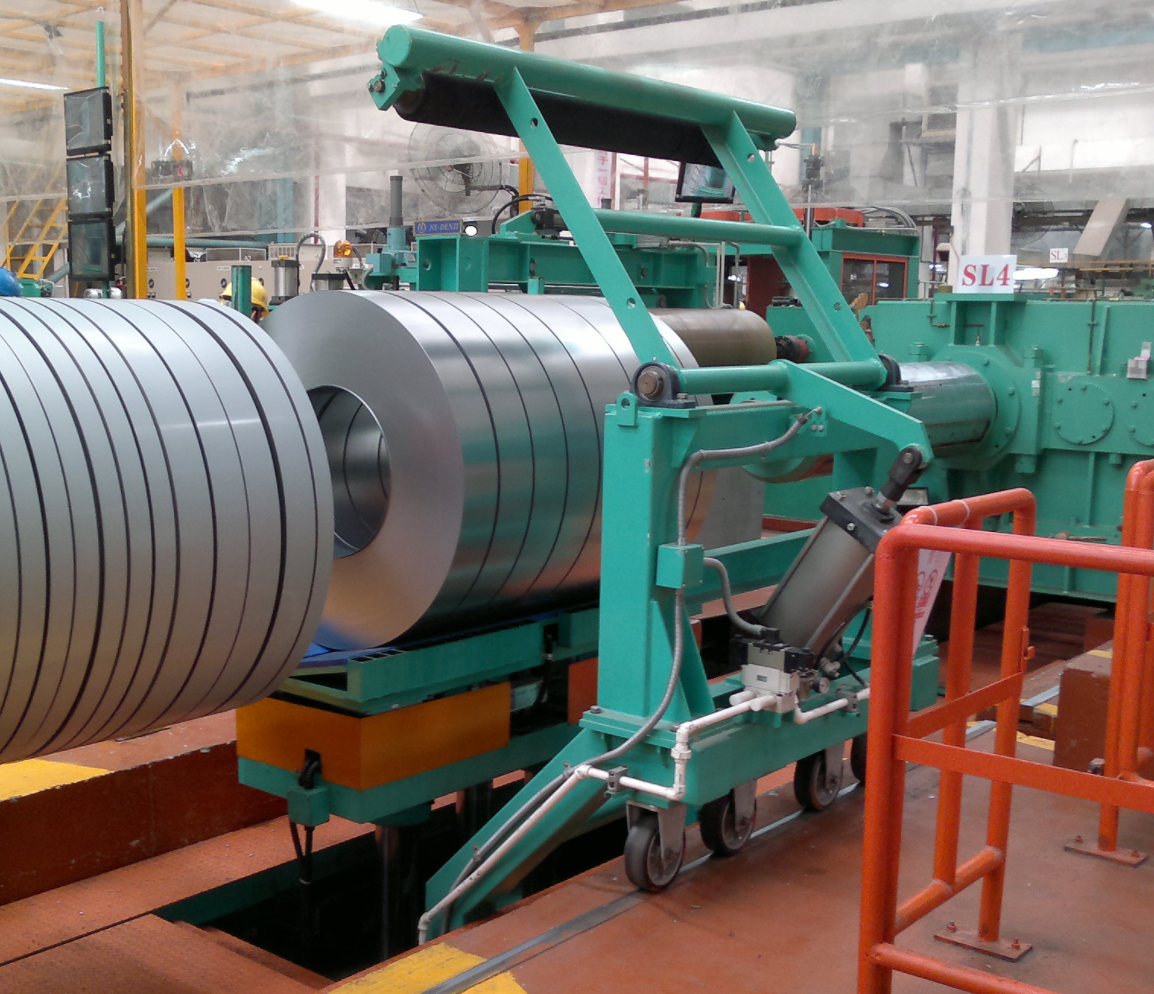
I’ve helped many clients, from small startups to large metal factories, grow their businesses by optimizing their packing lines. Financial independence for my own factory came from smart investments in automation, and I saw similar success for my clients. For a factory manager like Michael Chen, who is under pressure to improve output and control costs, clear ROI is paramount. An advanced steel coil packing line isn’t just an expense; it’s a strategic asset that delivers tangible financial benefits. Think about the direct savings from reduced manpower needed for packing, strapping, and handling. Automation frees up workers to perform higher-value tasks, or it allows you to maintain production levels with a smaller, more efficient team. Beyond labor, the precision of machines minimizes material waste, like stretch film or strapping, and virtually eliminates product damage, saving money on rework, claims, and lost sales. The speed and reliability of these machines also mean increased throughput, enabling you to fulfill more orders faster and expand your market reach. This directly contributes to higher revenue and a stronger financial position.
Unlocking Profitability: The ROI of Automation
The financial impact of automating your steel coil packing process is multifaceted and profound.
- ⬇️ Reduced Labor Costs:
- Direct Savings: Fewer operators needed per shift means significant cuts in payroll, benefits, and overtime expenses.
- Labor Reallocation: Existing staff can be redeployed to more skilled roles such as maintenance, quality control, or process improvement, adding more value to the company.
- Cost Efficiency: Automating repetitive, heavy tasks ensures consistent performance without the fatigue-related slowdowns or errors of manual labor.
- ✅ Minimized Product Damage & Waste:
- Consistent Packaging: Machines apply strapping and wrapping with precise tension and coverage, drastically reducing internal transit damage, edge dents, and surface scratches.
- Material Optimization: Automated systems use packaging materials (film, strapping) more efficiently, cutting down on waste and procurement costs.
- Fewer Returns/Complaints: High-quality, consistent packaging leads to fewer customer complaints, reducing the cost of returns, replacements, and reputation damage. This directly impacts Michael’s challenge with product loss.
- ⚡ Increased Production Throughput:
- Faster Cycle Times: Automated machines operate at higher speeds and with greater consistency than manual methods, accelerating the entire end-of-line process.
- Reduced Bottlenecks: Eliminating manual packing bottlenecks ensures a smooth, continuous flow of products, maximizing overall factory output.
- Enhanced Capacity: The ability to pack more coils in less time allows the factory to take on more orders and scale production without significant increases in operational costs.
- 📊 Measurable ROI:
- Initial investment in automation typically has a clear payback period, often achievable within a few years, due to the cumulative savings from labor, waste, and increased sales.
- This investment not only reduces operating expenses but also future-proofs the factory against rising labor costs and market demands.
These benefits combine to create a powerful argument for automation, transforming packing from a cost center into a value driver. It’s about smart capital expenditure that pays dividends for years to come. (steel coil packing ROI, factory cost reduction, packaging automation benefits)
4. How to choose a reliable partner for your metal coil packing machine needs?
Have you ever invested in equipment only to be let down by poor after-sales service or a lack of genuine understanding from the supplier? Choosing the right partner for your metal coil packing machines is about more than just buying a piece of machinery; it’s about building a relationship with an expert who truly understands your factory’s unique challenges and goals. Michael Chen, like many factory managers, has faced supplier trust crises in the past, making him extra cautious.
Selecting a reliable partner for your metal coil packing machine needs requires looking beyond sales pitches and focusing on deep industry expertise, proven after-sales support, and a collaborative approach. A true partner will understand your specific production bottlenecks, safety concerns, and efficiency goals, offering tailored solutions rather than one-size-fits-all equipment. They should be committed to long-term success, providing professional guidance and comprehensive service that ensures your investment truly drives business growth and operational excellence, building trust through their knowledge and reliability.
My journey, from an employee on the factory floor to establishing FHOPEPACK, has given me a unique perspective. I’ve been in your shoes, facing the demands of production and the need for dependable machinery. When you choose a partner, you’re looking for someone who "gets it." At FHOPEPACK, we believe in sharing our knowledge and expertise, not just selling machines. This means listening to your specific problems—whether it’s slow packaging, safety hazards, or product damage—and then designing solutions that fit your factory. It’s about partnering with someone who acts as a consultant, bringing practical experience from building and running successful packing machine operations. We aim to offer insights into everything from coil handling to the final strapping and wrapping, ensuring that your investment isn’t just a purchase, but a catalyst for your business’s success, just as it was for me and many of my clients.
What to Look for in a Packing Machine Partner:
Choosing the right partner can be the difference between a successful investment and a costly mistake.
- Expertise and Industry Background:
- 🔍 Deep Knowledge: Look for suppliers with extensive experience in the metal processing and packing machine industry. Do they understand the specific challenges of handling heavy coils, steel wire, or slit coils?
- 👷 Practical Experience: A partner like FHOPEPACK, founded by an engineer who built his own factory (like myself, Randal Liu), brings invaluable hands-on insight into real-world operational demands. This isn’t just theoretical knowledge.
- 💡 Problem Solvers: Do they ask about your specific bottlenecks and safety concerns, or do they just try to sell you a standard machine? Michael Chen needs someone who understands his efficiency and safety problems.
- Comprehensive Support and Service:
- 🛠️ After-Sales Service: A robust after-sales support system, including installation, training, maintenance, and readily available spare parts, is critical. Downtime is expensive.
- 📞 Responsive Communication: Do they offer clear, prompt communication? You need a partner who is there when you need them, not just during the sales process.
- 🔄 Long-Term Relationship: Look for a partner committed to your long-term success, offering upgrades and ongoing support as your business evolves.
- Customization and Flexibility:
- ⚙️ Tailored Solutions: Can they customize equipment to fit your specific factory layout, coil dimensions, and production volume? A one-size-fits-all approach rarely delivers optimal results.
- 📈 Scalability: Can their solutions grow with your business? As your production increases, your packing needs might change, and your partner should be able to adapt.
- Proven Track Record and Trust:
- ⭐ Client Testimonials: Look for evidence of successful installations and satisfied customers in similar industries.
- 🤝 Transparency: A trustworthy partner will be transparent about their capabilities, limitations, and pricing. They should build trust, not just make a sale. My goal at FHOPEPACK is to be that transparent, knowledge-sharing platform.
- 🌍 Global Reach/Local Presence: For international operations like Michael’s in Mexico, a partner with experience in diverse markets can be a significant advantage.
Partnering with an expert means having someone in your corner who can help you navigate the complexities of automation, ensuring your investment is sound and contributes directly to your business goals. It’s about securing professional guidance that turns challenges into opportunities. (packing machine partner selection, reliable packaging supplier, industrial automation expertise)
Conclusion
Investing in advanced steel coil packing line solutions is essential for metal processing plants aiming for higher efficiency, enhanced safety, and greater profitability. Partnering with experts like FHOPEPACK ensures tailored solutions and lasting success.


