Steel Coil Packing Machine Price Guide — What Affects the Cost?
Have you ever faced the frustration of slow, manual packing lines or the stress of worker safety issues in your factory? I know that feeling. In a heavy manufacturing environment, inefficient packaging and handling can lead to significant production bottlenecks, costly product damage, and even severe safety risks. Many factory managers, like you, often feel the pressure to increase output while keeping costs down and ensuring every process is as safe as possible. You are not just looking for a machine; you are looking for a reliable solution and a partner who truly understands your operational challenges.
The cost of a steel coil packing machine depends on several key factors, including the type and level of automation, specific machine features, technological advancements, and the quality of after-sales support provided by the supplier. Basic manual systems are far less expensive but carry higher labor and safety costs, while fully automated lines offer greater efficiency and safety, justifying their higher initial investment through long-term savings and increased productivity.
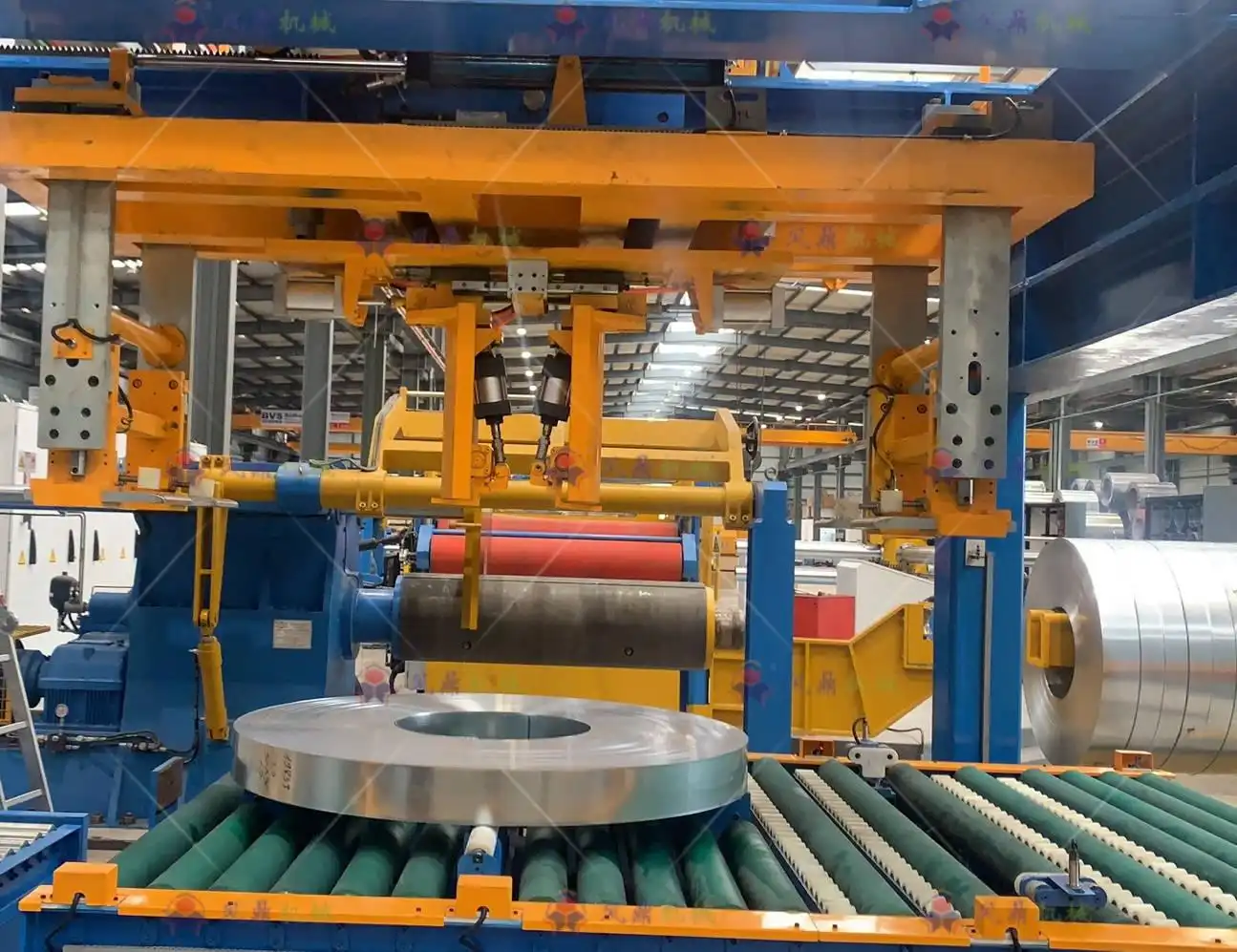
Understanding these variables is crucial to making an informed decision that truly benefits your business, not just today, but for years to come. In this guide, I will share insights from my journey in the packing machine industry, helping you navigate the complexities of pricing and find the best packing machine solution for your specific factory needs. Let’s dive deeper into what really drives the cost of these essential machines.
1. What Types of Steel Coil Packing Machines Are There, and Which One Is Right for Your Needs?
Are you struggling with an outdated packing process that relies too heavily on manual labor, causing bottlenecks and risks? I have seen many factories, especially those dealing with heavy steel coils, face significant challenges in their end-of-line operations. Manual handling of heavy coils not only slows down production but also introduces serious safety concerns for your valuable team. You might be wondering if there is a better, safer, and more efficient way to get your products ready for shipment.
Steel coil packing machines vary significantly, from basic manual strapping tools and semi-automatic wrappers to fully integrated automatic packing lines, each designed to meet different operational scales and budgets. The choice often comes down to balancing initial investment with long-term operational efficiency, labor cost savings, and improved worker safety, with fully automatic solutions offering the highest levels of productivity and safety for high-volume operations.

Types of Steel Coil Packing Machines and Their Applications:
Choosing the right type of packing machine is the first step in understanding the cost. From my experience building and running packing machine factories, I know that what works for one operation might not be suitable for another. For example, a small workshop might only need basic tools, but a large metal processing plant like yours, Michael, demands robust, efficient solutions.
1.1 Manual Packing Equipment: The Entry Point 🛠️
- Description: This category includes hand tools for strapping and basic stretch wrappers. Workers perform most of the tasks, like applying straps or wrapping film.
- Cost Implications:
- Low initial investment: These are the cheapest options upfront.
- High operational costs: You will face higher labor costs due to manual dependency.
- Significant safety risks: Handling heavy coils manually increases the chance of workplace injuries, leading to higher insurance premiums and potential employee turnover. This directly addresses Michael’s challenge of high injury risk and associated costs.
- Slow throughput: Production is limited by human speed and endurance, creating efficiency bottlenecks (manual coil packing efficiency).
- Best for: Very low-volume production or operations with limited space and budget where automated solutions are not feasible.
1.2 Semi-Automatic Packing Machines: Bridging the Gap 🚶♂️➡️🤖
- Description: These machines automate certain parts of the packing process, but still require human intervention for loading, positioning, or activating cycles. Examples include semi-automatic coil wrappers or strapping machines where an operator guides the process.
- Cost Implications:
- Moderate initial investment: Pricier than manual tools but less than full automation.
- Reduced labor costs: Requires fewer operators compared to manual methods, offering some savings.
- Improved safety: Automates some hazardous tasks, decreasing but not eliminating human exposure to heavy lifting and repetitive strain injuries.
- Increased efficiency: Faster than manual packing, but still subject to human speed for certain steps (semi-automatic coil packaging benefits).
- Best for: Medium-volume production, or factories transitioning from fully manual processes. It offers a good balance of cost and efficiency improvement.
1.3 Fully Automatic Packing Lines: The Ultimate Solution 🚀
- Description: These are integrated systems that handle coils from the production line, through packing, strapping, and even weighing and labeling, with minimal human oversight. They use conveyors, robotic arms, and intelligent control systems.
- Cost Implications:
- High initial investment: These are the most expensive options upfront.
- Significant long-term savings: Dramatically reduces labor costs, as one operator can supervise the entire line. This directly aligns with Michael’s goal of cost reduction through automation (automated packing line ROI).
- Maximized safety: Eliminates manual handling of heavy coils almost entirely, drastically reducing workplace injuries and insurance costs. This is a direct answer to Michael’s safety concerns (heavy coil handling safety).
- Highest efficiency and throughput: Operates continuously at high speeds, significantly boosting production capacity and delivery times. This directly addresses Michael’s efficiency bottleneck challenge.
- Reduced product damage: Automated handling is precise and consistent, minimizing damage to coil edges or surfaces during transfer and packing. This helps solve Michael’s problem of product loss and customer complaints (preventing coil damage during packing).
- Best for: High-volume, heavy manufacturing facilities that prioritize efficiency, safety, and consistent product quality, like Michael’s metal processing plant in Mexico (high volume steel factory solutions).
The decision should always be based on a clear understanding of your current production volume, your long-term growth targets, and your budget for both initial investment and operational costs. Investing in automation might seem expensive, but the return on investment through increased safety, reduced labor, and higher output can be truly transformative for your business.
2. How Do Automation Levels and Customization Affect Steel Coil Packing Machine Prices?
Are your current packing processes creating efficiency bottlenecks that hinder your overall production flow? I frequently hear from factory managers, like yourself, who are looking to streamline their operations and reduce dependency on manual labor. The idea of automating your steel coil packing line might sound complex or costly, but it is often the most strategic move for improving productivity and safety in demanding industrial environments.
The level of automation and the degree of customization are primary drivers of steel coil packing machine prices, with fully automated and highly tailored systems commanding a higher investment due to their advanced engineering, integrated components, and precise fit for unique operational requirements. While standard machines offer basic functionality, customized solutions address specific production bottlenecks and safety concerns, offering greater long-term value and efficiency.

The Price Impact of Automation and Customization:
When I started FHOPEPACK, my goal was to provide solutions that truly help businesses grow. This often means looking beyond the base model and considering how automation and customization can solve specific pain points, like those Michael faces in his factory.
2.1 The Spectrum of Automation and Its Cost 📊
The journey from manual to fully automated operations significantly impacts the price tag.
- Manual Operations (Lowest Cost): As discussed, this involves human operators performing most tasks. The upfront machine cost is minimal, sometimes just tools. However, the operational cost (labor, safety incidents) is very high.
- Semi-Automatic Machines (Mid-Range Cost): These machines automate specific steps, such as wrapping or strapping, but still require human interaction for loading or unloading. This reduces some labor but keeps humans in proximity to heavy materials. The cost is higher than manual but lower than full automation.
- Fully Automatic Lines (Highest Cost): These systems integrate multiple processes – loading, wrapping, strapping, conveying, and even weighing – with minimal human intervention. They are designed for high throughput, consistent quality, and maximum safety.
- Increased complexity: Requires advanced sensors, PLCs, robotics, and sophisticated programming.
- Higher component costs: Uses more specialized and durable components suitable for continuous operation (automatic coil packing machine price).
- Engineering and integration: Significant engineering effort is needed to design and integrate the various modules into a seamless system.
- Long-term ROI: Despite the higher initial investment, the long-term cost savings from reduced labor, fewer injuries, and increased output make them highly economical for large-scale operations (ROI of automated packing). This directly addresses Michael’s goal of achieving clear ROI.
2.2 Why Customization Adds to the Price Tag 🤔
Every factory is unique. Your coil sizes, production volume, available floor space, and existing machinery all influence the optimal packing solution.
- Specific Coil Dimensions and Weights: If your coils are unusually large, small, or heavy, standard machines might not work. Customization ensures the machine can safely and efficiently handle your product range. This is especially true for Michael’s heavy manufacturing environment.
- Integration with Existing Production Lines: A custom solution can be designed to seamlessly connect with your upstream and downstream processes, avoiding production bottlenecks and ensuring smooth material flow. This directly relates to Michael’s desire to integrate solutions for end-of-line bottlenecks.
- Unique Factory Layout: Space constraints or specific material handling paths often require bespoke designs. A machine built to fit your exact floor plan optimizes space and workflow.
- Special Packaging Requirements: Do your coils need specific protection against moisture, rust, or damage during transit? Customization can include specialized wrapping materials, corrosion inhibitors, or unique strapping patterns. This directly tackles Michael’s challenge of product loss during transit.
- Compliance with Local Regulations: Custom machines can be designed to meet specific safety standards or environmental regulations in Mexico, ensuring smooth operation without compliance issues.
- Addressing Specific Bottlenecks: Michael mentioned efficiency bottlenecks and safety hazards. A customized machine specifically designed to eliminate these issues will inherently cost more due to the specialized engineering and components required. But it delivers precise solutions to critical problems (custom packing machine costs).
Customization is not just about adding features; it is about solving complex operational challenges with precision. While it increases the initial investment, a tailor-made automatic steel coil packing machine offers unparalleled efficiency, safety, and reliability, delivering a much higher return on investment over its lifespan compared to a generic, off-the-shelf solution. This is how FHOPEPACK helps clients like yours achieve sustainable growth.
3. What Key Features and Technology Drive the Cost of a Quality Packing Machine?
Are you tired of equipment that constantly breaks down, causing costly production downtime and missed deadlines? I understand the immense pressure factory managers face when equipment reliability is a major concern. Investing in robust, efficient machinery is critical, but knowing which features truly justify the price can be challenging. You need equipment that can withstand the rigorous demands of your factory and deliver consistent performance day in and day out.
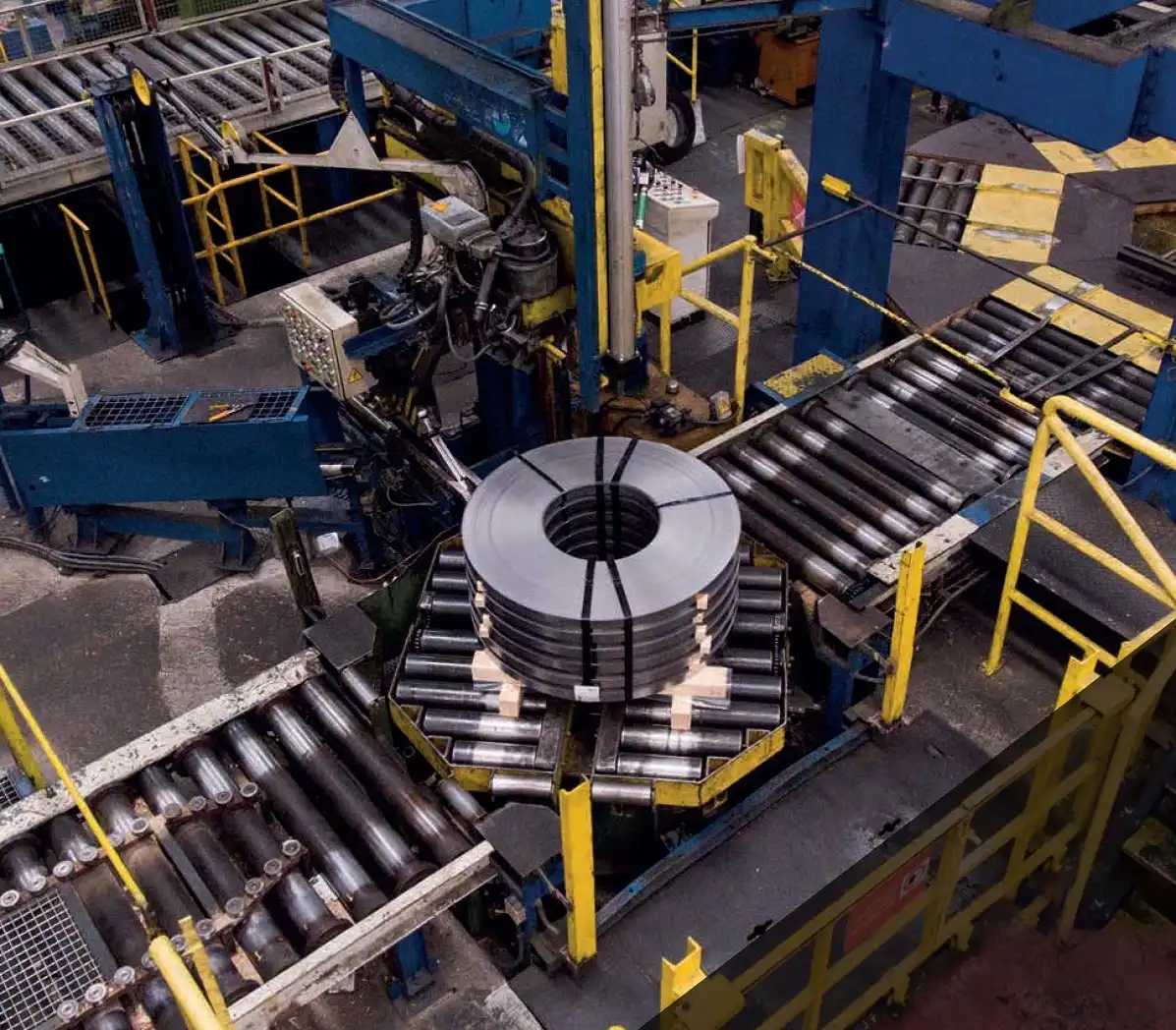
The cost of a quality steel coil packing machine is significantly influenced by advanced features and integrated technologies, such as robust structural design, precise control systems, high-quality components, and intelligent diagnostics. These elements enhance reliability, improve operational efficiency, minimize product damage, and extend the machine’s lifespan, ultimately offering greater value and a stronger return on investment despite a higher initial price tag.
Essential Features and Technologies That Impact Machine Pricing:
From my years of experience designing and manufacturing packing machines, I can tell you that cutting corners on core features almost always leads to higher long-term costs due to breakdowns and inefficiencies. When Michael talks about durability and reliability, I know exactly what he means.
3.1 Robust Construction and Material Quality 🏗️
- Heavy-duty Frame: Machines built for heavy steel coils require substantial steel frames that can withstand constant vibration, heavy loads, and harsh industrial environments. This adds to the material cost but ensures longevity and stability.
- Durable Components: High-quality bearings, motors, gears, and wear parts are essential. While more expensive initially, they drastically reduce maintenance costs and downtime. This directly addresses Michael’s need for durable equipment (heavy-duty packing machine components).
- Corrosion Resistance: For steel processing environments, machines with protective coatings or stainless steel components resist rust and extend service life, impacting material and manufacturing costs.
3.2 Advanced Control Systems and Software 💻
- PLC (Programmable Logic Controller): Sophisticated PLCs enable precise control over all machine functions, ensuring consistent and repeatable packing quality. More advanced PLCs offer greater flexibility and diagnostic capabilities.
- HMI (Human-Machine Interface): Intuitive touch-screen interfaces make it easier for operators to monitor and manage the packing process, reducing training time and operational errors. Advanced HMIs can offer real-time data and troubleshooting guides.
- Sensors and Safety Features: Proximity sensors, safety light curtains, emergency stops, and interlocks are crucial for worker protection. Integrating these safety mechanisms adds to the machine’s complexity and cost, but it is non-negotiable for worker safety. This directly responds to Michael’s safety concerns (packing machine safety features).
- Diagnostics and Remote Access: Machines with built-in diagnostic tools can quickly identify issues, minimizing troubleshooting time. Remote access capabilities allow for faster support and software updates, adding value and convenience (smart packing machine technology).
3.3 Specialized Packing Heads and Technology 📦
- Wrapping Technology:
- Orbital Wrappers: For continuous wrapping of coils, the design of the wrapping ring, film delivery system, and tension control are critical. More advanced systems ensure consistent overlap and tension, reducing film waste and providing better protection.
- Stretch Wrappers: For palletized coils or specific outer wrapping, the quality of the stretch mechanism and pre-stretch system affects film efficiency and package integrity.
- Strapping Technology:
- Automatic Strapping Heads: The reliability and speed of the strapping head are vital. Features like automatic strap feeding, tensioning, sealing, and cutting contribute to efficiency. High-quality strapping heads reduce strap breakage and maintenance (automatic coil strapping cost).
- Strap Material Compatibility: Machines designed to handle various strap materials (steel, PET, PP) offer flexibility but may require more complex feeding and tensioning systems.
- Coil Handling Systems: Integrated conveyors, up-enders, down-enders, and transfer carts ensure smooth and safe movement of heavy coils. Their robust design and automation contribute significantly to the overall cost and system efficiency (coil handling automation price).
Investing in these features is not just about a higher price tag; it is about securing a machine that offers superior performance, enhanced safety for your workers, minimal product damage, and a long operational life. My experience shows that choosing quality components and advanced technology always pays off by reducing your total cost of ownership and boosting your factory’s overall profitability.
4. Why Do After-Sales Support and Supplier Experience Matter More Than Just the Upfront Price?
Have you ever purchased a piece of equipment only to find yourself struggling with poor after-sales service, leading to frustration and lost production time? I have witnessed this scenario countless times, and it is a major concern for factory managers, especially when dealing with critical machinery like steel coil packing systems. A low upfront price can quickly become a costly mistake if the supplier vanishes or fails to provide adequate support when you need it most. You need a partner who stands by their product, not just a seller.
After-sales support and the supplier’s industry experience are crucial factors that significantly influence the true long-term cost and value of a steel coil packing machine, often outweighing the initial purchase price. A knowledgeable supplier, like FHOPEPACK, provides reliable installation, training, maintenance, and readily available spare parts, minimizing downtime and ensuring the machine operates efficiently throughout its lifespan, preventing costly production interruptions and maintaining profitability.
The Hidden Costs of Poor Support and Inexperience:
When I started my own packing machine factory, I learned firsthand the importance of being a reliable partner to my clients. Michael’s "supplier trust crisis" resonates deeply with me because I believe in building relationships based on expertise and consistent support, not just making a sale.
4.1 Installation and Commissioning Expertise ⚙️
- Proper Setup: A poorly installed machine can lead to immediate operational issues, safety hazards, and premature wear. Experienced technicians ensure correct alignment, calibration, and integration with your existing systems.
- Smooth Start-Up: Professional commissioning guarantees the machine is operating at peak efficiency from day one, avoiding delays and ensuring you meet your production targets. This initial period is critical for avoiding early bottlenecks (packing machine installation cost).
4.2 Comprehensive Training and Documentation 🧑🏫
- Operator Proficiency: Adequate training for your team ensures they can operate the machine safely and efficiently, understand its features, and perform basic troubleshooting. This reduces human error and boosts productivity.
- Maintenance Skills: Training for your maintenance staff empowers them to handle routine servicing, reducing reliance on external technicians and cutting costs.
- Clear Manuals: Well-written operation and maintenance manuals are invaluable resources for day-to-day use and long-term upkeep.
4.3 Reliable Technical Support and Maintenance Services 📞
- Responsive Support: When a machine goes down, every minute counts. A supplier with a dedicated and responsive technical support team can quickly diagnose and resolve issues, minimizing costly downtime. This is crucial for Michael, where any downtime means "huge losses" (packing machine technical support).
- Preventative Maintenance Programs: Many reputable suppliers offer scheduled maintenance services to inspect, service, and optimize your machine, extending its lifespan and preventing unexpected breakdowns.
- Availability of Spare Parts: Easy access to genuine spare parts is critical. Delays in getting parts can lead to prolonged downtime, severely impacting your production schedule and profitability. A supplier with a robust supply chain and local stock, if possible, is invaluable (spare parts availability for packing machines).
4.4 Supplier Reputation and Industry Experience 🏆
- Proven Track Record: A supplier with extensive experience in the packing machine industry, especially with steel coils, understands the unique challenges and requirements of heavy manufacturing. This experience is built on years of solving problems for clients.
- Financial Stability: You want a supplier who will be around for the long haul to support your investment. A financially stable company is more likely to uphold warranties and provide ongoing service.
- Trust and Partnership: For me, and for FHOPEPACK, being a partner means understanding your business, your production bottlenecks, your safety concerns, and your goals. It means offering professional insights and solutions, not just selling a product. This directly addresses Michael’s desire for a knowledgeable partner who understands his challenges (trusted packing machine supplier). This kind of partnership builds mutual trust and ensures your investment truly supports your business growth. When you consider suppliers, prioritize those with strong references and a commitment to customer success. I always encourage clients to look at the total value proposition, not just the initial quote.
Conclusion
Investing in a steel coil packing machine involves more than just the sticker price. By considering automation levels, essential features, and the reliability of after-sales support, you can make a strategic decision that enhances efficiency, boosts safety, and drives profitability for your factory. Trust in a knowledgeable partner to secure the best steel coil packing line for your long-term success.


