Steel Coil Packing Machine Adoption in Brazil’s Metal Industry: Why Now?
The metal industry, especially in dynamic regions like Brazil, constantly faces pressure to innovate and optimize. I have seen this firsthand in my journey from a packing machine factory employee to a successful factory owner. Many plant managers feel stuck, much like I did years ago, grappling with slow, manual processes and mounting operational costs. The struggle is real when efficiency bottlenecks, safety concerns, and product damage threaten your bottom line every single day.
Brazil’s metal industry is rapidly adopting steel coil packing machines to overcome critical operational challenges, including inefficient manual labor, significant safety risks, and persistent product damage, by embracing automation for enhanced productivity and worker well-being. This shift represents a strategic investment in modernizing manufacturing processes and improving competitiveness in a global market.

Understanding these challenges, and how to conquer them, is crucial for any factory manager in Brazil looking to thrive. Let’s dive deeper into why this change is happening and what it means for your operations.
1. Why is Brazil’s Metal Industry Turning to Automated Steel Coil Packing?
Are you a factory manager in Brazil, feeling the squeeze from outdated packing methods? You are not alone. Many facilities face significant hurdles that impact their production speed and overall profitability. The pressure to increase output while controlling costs is immense.
Brazil’s metal industry is increasingly adopting automated steel coil packing due to rising labor costs, a heightened focus on workplace safety, and the urgent need to boost production efficiency and maintain product quality in a competitive global market. This move allows Brazilian manufacturers to streamline operations and enhance their strategic position.
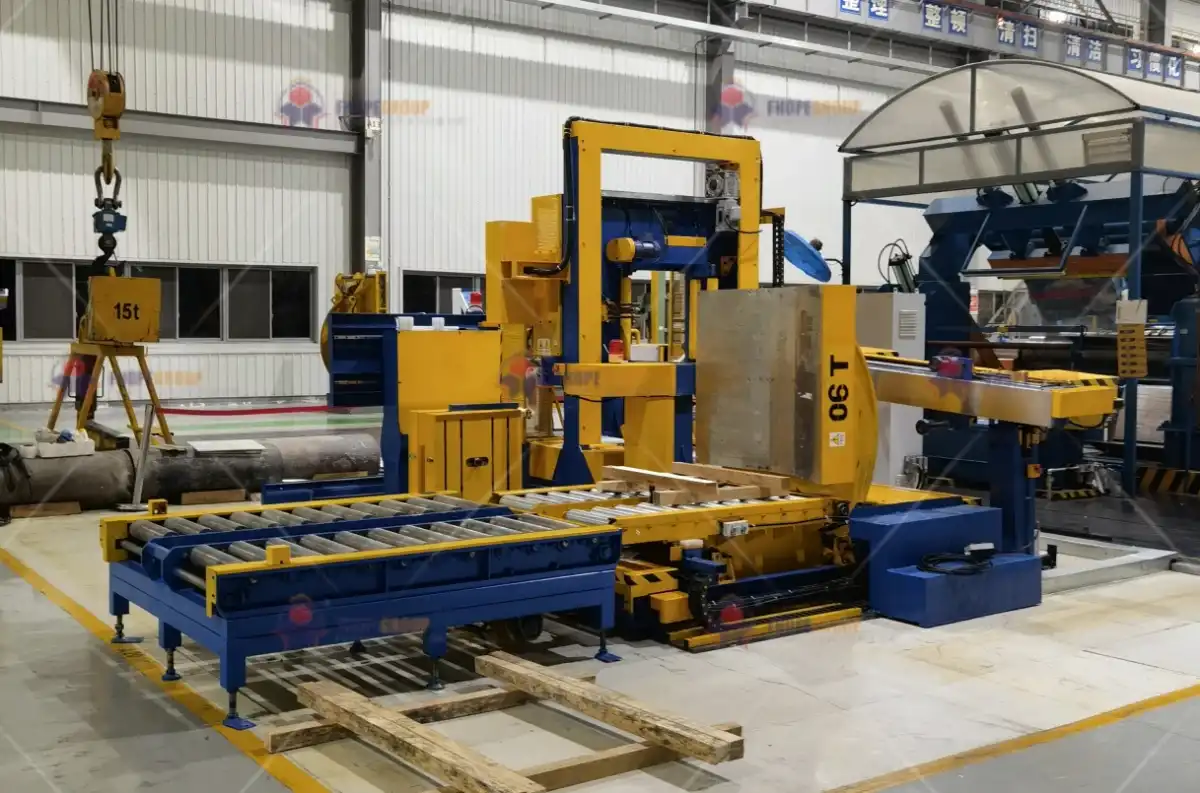
I know from my own experience building FHOPEPACK that the journey to financial independence and helping clients grow their businesses often starts with solving these fundamental problems. In Brazil’s bustling metal sector, manual processes are no longer sustainable.
The Driving Forces Behind Brazil’s Automation Shift 🇧🇷
The shift in Brazil’s metal industry toward automated steel coil packing is not just a trend; it is a necessity driven by several key factors. These factors mirror the challenges I have helped many clients address.
1.1 Efficiency Bottlenecks and Production Delays ⏱️
Manual packing of steel coils, especially in high-volume production environments, is slow and creates significant bottlenecks at the end of the production line. Workers manually wrap, strap, and handle heavy coils. This process consumes valuable time and labor resources. In a large metal processing plant, even minor delays can ripple through the entire operation, affecting delivery schedules and customer satisfaction. This directly impacts overall plant output and delivery speed (production efficiency, operational bottlenecks).
1.2 Escalating Labor Costs and Skill Shortages 💰
As economies grow, so do labor costs. Brazil is no exception. Relying heavily on manual labor for repetitive, physically demanding tasks like coil packing becomes expensive. Furthermore, finding and retaining skilled workers for such strenuous jobs can be challenging. High employee turnover rates mean constant recruitment and training expenses. Automation reduces the dependency on a large manual workforce for packing, reallocating human capital to more value-added roles (labor cost reduction, workforce management).
1.3 Critical Safety Concerns and Workplace Injuries 🩹
Handling heavy steel coils manually poses severe safety risks. Workers face dangers like crush injuries, strains, and falls. These accidents lead to lost workdays, increased insurance premiums, and a negative work environment. Michael Chen, a factory manager I know, often worries about these exact issues. Automated packing machines significantly reduce human interaction with heavy loads, creating a much safer working environment and minimizing the risk of accidents (workplace safety, industrial hazards).
1.4 Maintaining Product Quality and Reducing Damage 📉
Steel coils are valuable. During manual handling and packing, there is always a risk of damage, such as bent edges or surface scratches. Such damage leads to product rework, scrap, and customer complaints, impacting profitability and brand reputation. Automated systems ensure consistent, secure packaging, protecting the product from damage during transit and storage (product integrity, quality control).
1.5 Global Competitiveness and Market Demands 🌐
To compete effectively on a global stage, Brazilian metal manufacturers must adopt world-class production standards. International buyers demand not only quality products but also reliable delivery times. Automated packing systems contribute to faster throughput, consistent quality, and a professional presentation, which are vital for securing and maintaining market share both domestically and internationally (market competitiveness, export readiness).
2. How Do Automated Packing Machines Solve Core Challenges in Brazilian Metal Plants?
Many factory managers in Brazil, like Michael, ask me how automation can truly make a difference. They want to know the tangible benefits, beyond just talk. I understand this desire for clear, practical solutions. After all, I built FHOPEPACK on the principle of providing real value.
Automated steel coil packing machines directly address core challenges in Brazilian metal plants by significantly boosting operational efficiency, drastically improving worker safety, and substantially reducing product damage through consistent, high-speed packaging processes. They replace labor-intensive manual methods with precise, reliable automation.

When I started my first packing machine factory, I focused on engineering solutions that would directly solve the daily headaches of our clients. This means understanding their challenges and offering a clear path to improvement.
A Closer Look at Automated Solutions and Their Impact ⚙️
Automated packing machines are not just about buying new equipment; they are about investing in a strategic solution that transforms your operation. Here is how they tackle the specific problems faced by Brazilian metal factories:
2.1 Boosting Throughput and Eliminating Bottlenecks 🚀
Automated steel coil packing lines can process coils much faster and more consistently than manual methods. This higher speed ensures that the packing stage keeps pace with upstream production, preventing backlogs. For example, a system designed for coil packing can efficiently wrap and strap dozens of coils per hour. This speed means products move out of the factory faster, leading to quicker delivery times and greater customer satisfaction (production throughput, lean manufacturing).
- Before Automation:
- Slow, inconsistent packing speeds.
- High risk of production line stagnation.
- Manual handling limits daily output.
- After Automation:
- Rapid, uniform packing cycles.
- Smooth, continuous material flow.
- Significantly increased daily production capacity.
2.2 Enhancing Workplace Safety and Reducing Injuries ⛑️
Safety is paramount. Automated packing machines take over the dangerous tasks of lifting, turning, and wrapping heavy steel coils. Workers interact with the machine through a control panel, away from moving parts and heavy loads. This drastically reduces the risk of strains, crushes, and other common industrial accidents. For managers facing high insurance costs and employee turnover due to injuries, this is a game-changer (occupational health, hazard mitigation).
2.3 Ensuring Product Integrity and Minimizing Damage 📦
Automated systems apply consistent tension and coverage to the packaging material, whether it is stretch film, strapping, or wrapping paper. This uniformity provides superior protection against dust, moisture, and physical damage during storage and transport. Machines can apply specialized packaging for sensitive materials like polished steel, ensuring they arrive at the client’s site in perfect condition. This directly translates to fewer customer complaints and less profit loss from damaged goods (packaging quality, damage prevention).
2.4 Achieving Cost Savings and Improving ROI 📈
While the initial investment in automation can seem high, the long-term savings are substantial.
- Reduced Labor Costs: Fewer personnel are needed for packing, allowing reallocation of workers to other areas.
- Lower Insurance Premiums: A safer workplace often leads to reduced workers’ compensation claims and lower insurance rates.
- Decreased Product Loss: Less damage means less waste and fewer rework costs.
- Energy Efficiency: Modern machines are designed to be energy efficient.
These factors combine to provide a strong return on investment (ROI) over the machine’s lifespan (operational expenditure, capital investment).
| Benefit Category | Manual Packing (Challenges) | Automated Packing (Solutions) |
|---|---|---|
| Efficiency | Slow, inconsistent, bottlenecks, labor-intensive | Fast, consistent, high throughput, smooth flow |
| Safety | High risk of injury, heavy lifting, strains, crushes | Minimal human interaction, reduced injury risk, safer environment |
| Product Quality | Inconsistent wrapping, high damage risk (edges, surfaces) | Uniform packaging, superior protection, reduced damage losses |
| Cost | High labor costs, insurance premiums, product loss | Reduced labor, lower insurance, less waste, improved ROI |
| Market Readiness | Slower delivery, inconsistent quality, less professional look | Faster delivery, consistent quality, professional presentation |
3. What Types of Steel Coil Packing Machines Are Best for Brazil’s Demanding Environments?
Choosing the right packing machine is a critical decision. In Brazil’s demanding metal industry, "one size fits all" simply does not work. You need equipment that is robust, reliable, and perfectly suited to your specific coils and factory layout. I have seen many companies make the mistake of buying the wrong machine, leading to more problems than solutions.
For Brazil’s demanding metal industry, the best steel coil packing machines include orbital wrappers for secure horizontal packing, vertical wrappers for specific coil orientations, and fully automatic strapping and bundling lines, all designed for heavy-duty operation and high throughput in harsh industrial environments. These machines provide durability and efficiency.

My experience in building and running packing machine factories taught me the importance of tailored solutions. It is about understanding the nuances of coil types, production volumes, and environmental factors.
Selecting the Right Packing Machine for Your Brazilian Plant 🛠️
The choice of a packing machine depends on several factors: the type and size of coils, desired packing material, production volume, and budget. Here are the main types and what they offer:
3.1 Orbital Stretch Wrapping Machines (Horizontal Packing) 🔄
These are perhaps the most common for steel coils. An orbital wrapper spins a roll of stretch film around the coil as it passes through a central ring.
- Best for: Horizontally laid coils (e.g., slitting coils, rolled wire coils).
- Benefits: Excellent for dust and moisture protection, provides tight, secure wrap. Can accommodate a wide range of coil diameters and widths. Ideal for protecting the entire coil surface and edges.
- Considerations: Requires conveyor systems for infeed and outfeed.
- Example Use Case: Packaging wide steel strips after slitting or individual wire coils.
3.2 Vertical Stretch Wrapping Machines (Vertical Packing) ⬆️
Less common than orbital but essential for specific applications. These machines wrap coils that stand upright, ideal when space is a concern or when coils are handled vertically throughout the process.
- Best for: Vertically oriented coils.
- Benefits: Space-saving footprint, suitable for specific storage and transportation requirements. Offers good protection for the top and bottom surfaces as well as the sides.
- Considerations: Requires a different material handling setup than horizontal wrappers.
- Example Use Case: Packing larger, heavier coils that are stacked vertically for storage or transport.
3.3 Automatic Strapping Machines (Bundling and Securing) 💪
Often used in conjunction with wrapping machines, or independently for simple bundling. Strapping machines apply plastic or steel straps tightly around the coil to compress and secure it, preventing unraveling and providing structural integrity.
- Best for: Securing wrapped coils, bundling multiple smaller coils, or for products needing robust compaction.
- Benefits: High speed, consistent tension, critical for heavy coils to maintain shape and safety during transit.
- Considerations: Does not offer full surface protection like wrapping.
- Example Use Case: Strapping large steel coils after they have been stretch-wrapped, or bundling several wire coils together.
3.4 Full Automatic Coil Packing Lines (Integrated Solutions) ✨
These systems combine multiple functions: weighing, centering, wrapping (orbital or vertical), strapping, and sometimes even labeling. They are designed for maximum automation and throughput.
- Best for: High-volume production facilities in Brazil that require comprehensive, hands-off packing.
- Benefits: Ultimate efficiency, minimal labor, highest consistency, superior product protection. Offers a complete end-to-end solution.
- Considerations: Higher initial investment, requires careful integration with existing production lines.
- Example Use Case: Large steel mills or major wire manufacturers seeking to fully automate their end-of-line processes.
When considering suppliers, I often look at companies like Fengding (锋鼎) for their robust engineering. Wuxi Buhui (无锡步惠) also offers good options for specific requirements. Their machines are built to withstand the rigorous demands of industrial environments, a trait I value deeply from my factory days.
4. How Can Brazilian Factories Choose a Reliable Packing Machine Partner?
Choosing a packing machine is a big decision, but choosing the right partner is even bigger. I have seen too many factories in Brazil, like Michael’s plant in Mexico, get burned by suppliers who disappear after the sale. They promise the world but deliver poor support. My personal journey in the packing machine industry taught me that trust and expertise are everything.
Brazilian factories can choose a reliable packing machine partner by prioritizing vendors with proven industry expertise, a strong track record of after-sales support, robust machine customization capabilities, and a deep understanding of their unique operational challenges and long-term goals. A true partner goes beyond selling a machine; they offer ongoing solutions and guidance.
I built FHOPEPACK because I wanted to provide the kind of partnership I wished I had always found. It is not just about the machine; it is about the knowledge, the support, and the commitment to your success.
Partnering for Success: More Than Just a Sale 🤝
Finding the right supplier for your automated packing machines is a strategic move that affects your long-term success. It is not just a transaction. Here is what Brazilian factories should look for:
4.1 Proven Industry Expertise and Experience 🧠
Look for partners who understand your industry, not just packing machines in general. A company with experience in coil packing, steel wire packing, and metal processing understands the unique challenges you face. This expertise helps them recommend the right solutions, foresee potential issues, and provide valuable insights beyond just equipment specifications. I always emphasize finding someone who has walked in your shoes, or at least understands the terrain (industry knowledge, solution provider).
- Key Questions to Ask:
- What is their experience specifically with steel coil packing in Brazil or similar markets?
- Can they share case studies or references from similar operations?
- Do they have engineers who truly understand your production process?
4.2 Comprehensive After-Sales Support and Service 📞
A machine is only as good as the support behind it. Breakdowns can be costly. A reliable partner offers excellent after-sales service, including:
- Installation and Commissioning: Ensuring the machine is set up correctly and integrated seamlessly.
- Training: Providing your staff with the knowledge to operate and maintain the machine safely and efficiently.
- Maintenance and Spare Parts: Offering readily available spare parts and timely technical assistance.
- Remote Support: Modern solutions for diagnosing and troubleshooting issues remotely.
This ongoing support minimizes downtime and protects your investment (technical support, machine uptime).
4.3 Customization and Scalability Options 📏
Every factory is different. A good partner will not try to sell you a generic machine. They will assess your specific needs, production volume, coil dimensions, and factory layout to offer a customized solution. Furthermore, consider if the system can scale with your future growth. Can it be upgraded or expanded later? This foresight ensures your investment remains relevant for years to come (tailored solutions, future-proofing).
4.4 Financial Transparency and Clear ROI 📊
A reliable partner will be transparent about pricing, total cost of ownership, and potential return on investment. They should help you build a clear business case that demonstrates how their solution will save you money and increase profitability over time. This includes outlining labor savings, waste reduction, and efficiency gains (cost analysis, investment justification).
4.5 Reputation and References ⭐
Do your homework. Check references, read reviews, and ask for testimonials. A company’s reputation speaks volumes. Look for partners known for their reliability, integrity, and customer satisfaction. This due diligence helps you avoid the "vendor trust crisis" that Michael Chen experienced (supplier credibility, customer satisfaction).
As someone who built FHOPEPACK from the ground up, I believe in sharing knowledge and truly partnering with clients. My goal is not just to sell a packing machine, but to empower you to achieve financial independence and business growth, just as I did.
Conclusion
Brazil’s metal industry is at a crossroads, where automation in steel coil packing line is essential for efficiency, safety, and growth. By strategically adopting advanced packing machines and choosing the right partners, factories can secure their future in a competitive market.


