Steel Coil Packing Line Supplier Directory for Indonesia’s Coil Manufacturing Industry?
As a packaging engineer with over 15 years in the steel industry, I’ve seen firsthand how Indonesia’s growing coil manufacturing sector struggles with inefficient packaging processes. Many factories still rely on manual methods that slow down production and increase costs. The right packaging line can transform your entire operation.
For Indonesian coil manufacturers, the most reliable steel coil packing line suppliers combine robust equipment design with local technical support and system integration expertise. These suppliers understand the unique challenges of tropical environments and provide complete solutions from feeding to discharge systems.
Finding the right partner for your coil packaging needs requires careful evaluation of several key factors. Let me share insights from implementing 200+ packaging lines worldwide, including specific considerations for Indonesia’s manufacturing landscape.
1. What are the key factors when selecting a steel coil packing line supplier in Indonesia?
Choosing the wrong supplier can lead to costly downtime and compatibility issues. Many Indonesian manufacturers make the mistake of focusing only on equipment price without considering long-term support.
The most critical factors include technical capability for complete line integration, local service support, experience with similar applications, and understanding of Indonesia’s specific operational conditions like humidity and power stability. A supplier who only provides individual machines without system integration expertise will create bottlenecks in your production flow.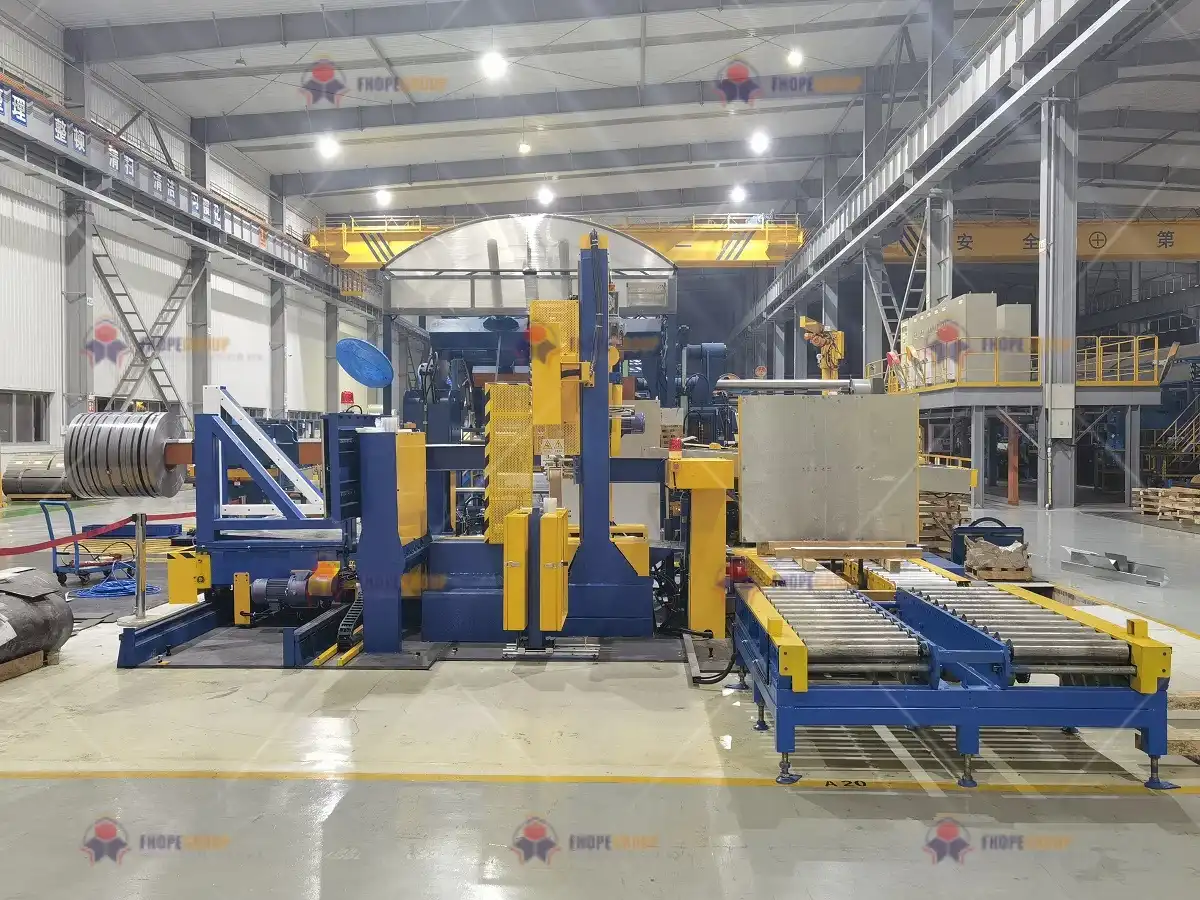
🔍 Supplier Evaluation Checklist for Indonesian Market
| Evaluation Factor | Importance Level | Key Questions to Ask | Red Flags |
|---|---|---|---|
| Technical Capability | Critical | Can they provide complete line design? Do they understand upstream/downstream integration? | Only offers standalone machines without system thinking |
| Local Support | High | Is there local Indonesian technical team? What’s average response time for service calls? | No local presence, all support must come from overseas |
| Project Experience | High | Have they implemented lines in similar Indonesian factories? Can they share case studies? | No references in Southeast Asia or similar environments |
| Equipment Robustness | High | How do machines handle high humidity? Are electrical components suitable for local power conditions? | Standard European specifications without tropical adaptation |
| After-sales Service | Medium-High | What training do they provide? Is spare parts inventory available locally? | Limited training, long lead times for critical spare parts |
💼 Real Project Considerations
In my experience implementing coil packaging lines across Southeast Asia, including several Indonesian projects, the supplier’s understanding of local conditions makes a huge difference. For example, in a Surabaya steel service center project, we had to specially design the electrical systems to handle frequent voltage fluctuations while ensuring the wrapping equipment could maintain consistent performance in high humidity conditions.
The best suppliers for Indonesia should demonstrate experience with:
- Climate adaptation: Equipment designed for tropical environments with proper sealing and corrosion protection
- Local regulations: Understanding of Indonesian safety standards and certification requirements
- Supply chain efficiency: Ability to deliver and install with minimal disruption to your operations
- Cultural understanding: Effective communication and training for local workforce
Remember that the cheapest supplier often becomes the most expensive choice when production stops due to equipment failure or lack of support. (automated steel coil packing line supplier selection)
2. How to determine the right automation level for your coil packaging needs?
Many factory managers in Indonesia struggle with automation decisions. They either over-invest in full automation they don’t need or under-invest and miss efficiency opportunities.
The optimal automation level depends on your daily production volume, labor costs, available space, and future expansion plans. For most Indonesian manufacturers handling 30-100 tons daily, semi-automatic systems provide the best balance of efficiency and investment. Fully manual lines become expensive due to high labor requirements, while full automation may not justify the additional cost.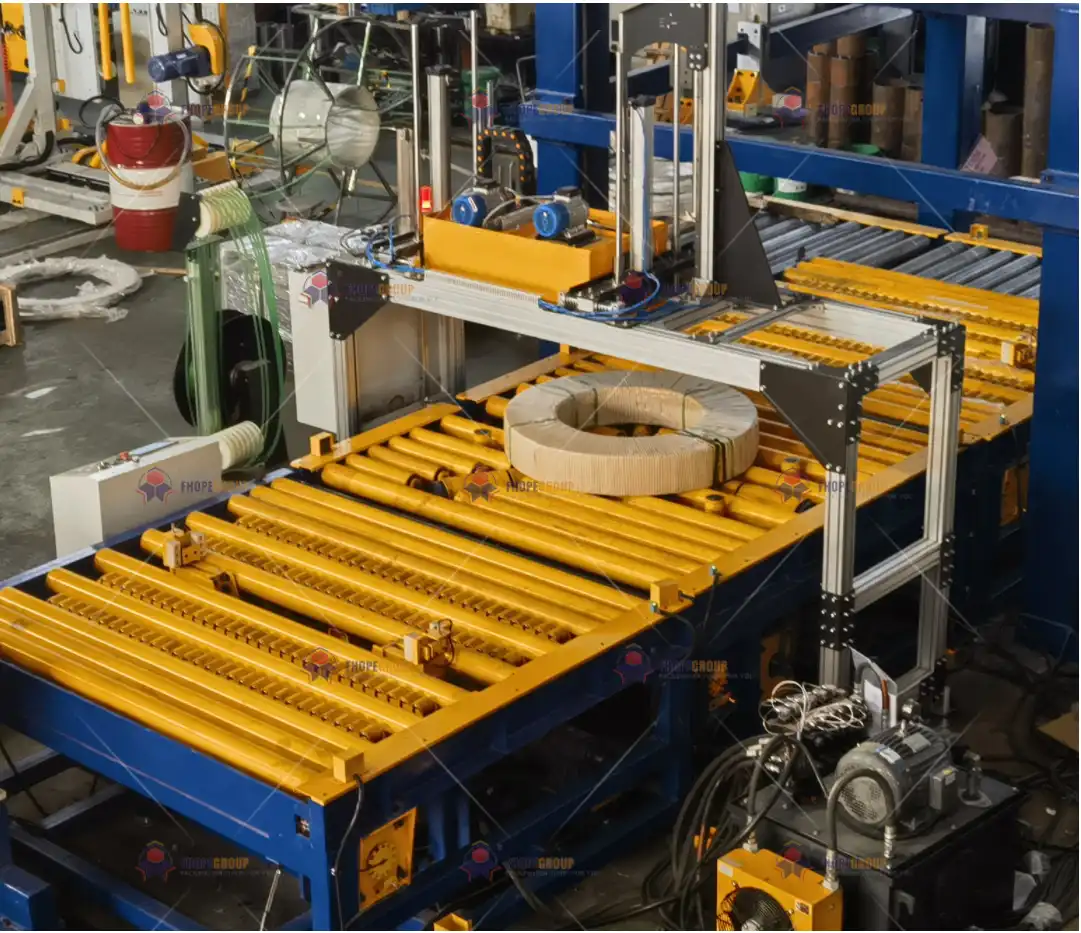
📊 Automation Level Comparison for Different Production Scenarios
| Production Volume | Recommended Automation | Typical Configuration | Labor Required | Investment Range | Best For |
|---|---|---|---|---|---|
| < 30 tons/day | Manual | Basic wrapping station, manual strapping | 4-6 operators | $50,000-$80,000 | Small workshops, varied coil sizes |
| 30-80 tons/day | Semi-Auto | Powered turntable, auto film carriage, manual feeding | 2-3 operators | $80,000-$150,000 | Most Indonesian service centers |
| 80-150 tons/day | Fully Auto | Auto feeding, wrapping, strapping, discharge | 1 operator | $150,000-$300,000 | High-volume mills, export-focused |
| 150+ tons/day | Integrated Auto | Complete line with robotics, AGV transfer | 1 operator + supervisor | $300,000+ | Large integrated steel plants |
🎯 Capacity Matching Guide
Based on my work with Indonesian clients, here’s how to match automation to your specific situation:
For Small Workshops (Under 30 tons/day)
- Manual turntable with hydraulic lifting
- Basic film wrapping system
- Manual strapping stations
- Focus on operator safety and basic quality
Medium Service Centers (30-80 tons/day)
- Semi-automatic wrapping with powered rotation
- Automatic film pre-stretch and cutting
- Semi-auto strapping machines
- Simple conveyor transfer between stations
Large Production Facilities (80-150 tons/day)
- Fully automatic feeding and positioning
- Programmable wrapping patterns
- Automatic strapping with multiple heads
- Integrated discharge to storage
The key is analyzing your actual production patterns rather than theoretical maximums. Many Indonesian factories I’ve worked with initially thought they needed full automation, but after studying their real workflow, we found semi-automatic solutions increased their productivity by 40% while keeping costs manageable. (steel coil wrapping line solution automation selection)
3. What are the essential components of a complete coil packing line system?
Many suppliers try to sell individual machines without explaining how they work together. This leads to bottlenecks and compatibility issues that reduce overall efficiency.
A properly integrated coil packing line consists of five key subsystems: feeding and positioning, wrapping and protection, strapping and securing, transfer and conveyance, and discharge and storage. Missing any of these components creates manual handling points that slow down the entire process. Each subsystem must be precisely matched to your coil specifications and production rhythm.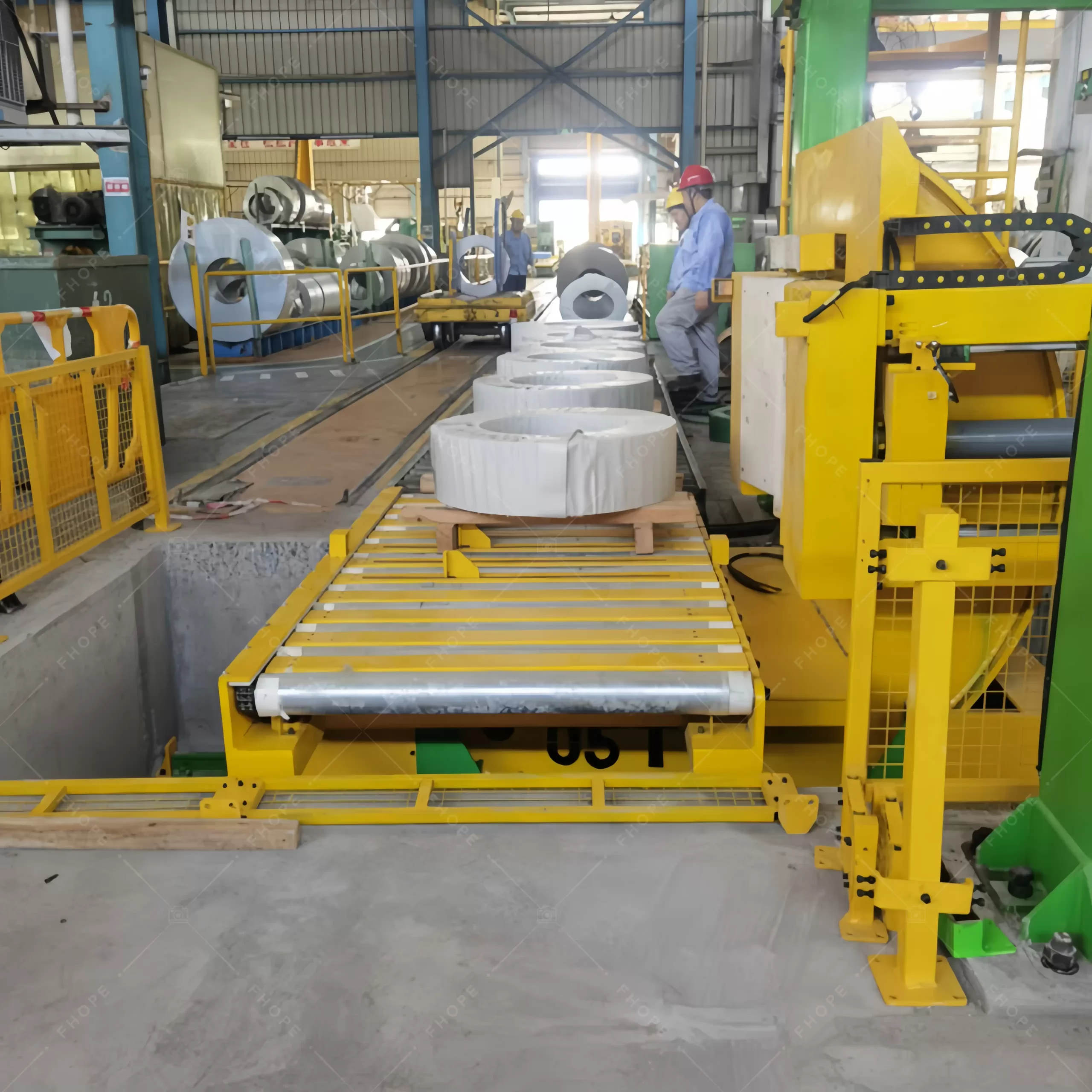
⚙️ Complete Line Component Breakdown
🎯 Feeding & Positioning System
- Coil car or conveyor: Transfers coils from production to packaging area
- Lifting and rotation: Positions coils for optimal wrapping orientation
- Centering mechanism: Ensures consistent wrapping quality
- Weight measurement: Integrated weighing for quality control
Technical Note: In Indonesian installations, we often recommend slightly oversized lifting capacity to handle potential moisture absorption in humid conditions.
📦 Wrapping & Protection System
- Rotating turntable: Provides smooth rotation for even wrapping
- Film carriage: Controls film tension and overlap patterns
- Pre-stretch unit: Reduces film consumption by 20-30%
- Top cover applicator: Applies protective caps or sheets
🔗 Strapping & Securing System
- Strapping machine: Applies steel or plastic straps
- Multiple head options: 2-4 heads for different coil sizes
- Tension control: Consistent strap tension without damage
- Sealing mechanism: Secure strap ends for transportation
➡️ Transfer & Conveyance System
- Roller conveyors: Between processing stations
- Lift and transfer devices: For vertical movement when needed
- Accumulation tables: Buffer zones for process balancing
- Integration points: Smooth handoff between equipment
📤 Discharge & Storage System
- Finished coil conveyor: Moves packaged coils to storage
- Labeling station: Applies product identification
- Quality verification: Final inspection point
- Storage interface: Integration with warehouse systems
🔄 Process Flow Optimization
The magic happens when these components work together seamlessly. In a well-designed integrated steel coil handling line, the cycle time for each station should be balanced to avoid bottlenecks. For example, if wrapping takes 3 minutes but strapping takes 5 minutes, you’ll have coils waiting and the line won’t achieve maximum throughput.
From my project experience, the most common mistake is underestimating the importance of the transfer systems between main equipment. Properly designed conveyors and positioning devices can improve overall line efficiency by 15-20% compared to manual transfer between stations. (complete coil packing line equipment configuration)
4. How to calculate ROI and justify investment in automated coil packaging?
Many Indonesian factory managers understand they need better packaging systems but struggle to build the financial case for management approval. The investment seems large without clear payback analysis.
A comprehensive ROI calculation should include labor savings, material cost reduction, damage prevention, space optimization, and safety improvement. Most semi-automatic lines pay back in 12-24 months through 40-60% labor reduction and 15-25% material savings. The business case becomes stronger when you include hidden costs of manual packaging.
💰 Detailed ROI Calculation Framework
📈 Cost Savings Analysis
Labor Cost Reduction
- Manual line: 5 operators × $400/month = $2,000/month
- Semi-auto line: 2 operators × $400/month = $800/month
- Monthly saving: $1,200 × 12 = $14,400/year
Material Cost Optimization
- Manual wrapping: 15% film waste = $1,500/month material cost
- Automatic pre-stretch: 5% film waste = $1,100/month
- Monthly saving: $400 × 12 = $4,800/year
Damage Prevention
- Manual handling damage: 2% of production value
- Average coil value: $1,000 × 50 coils/month × 2% = $1,000/month
- Automated handling: 0.5% damage = $250/month
- Monthly saving: $750 × 12 = $9,000/year
📊 Investment Justification Example
Scenario: Medium Indonesian Service Center
- Production: 60 tons/day (approximately 50-60 coils)
- Current: Fully manual packaging
- Proposed: Semi-automatic line
Investment Calculation:
- Equipment cost: $120,000
- Installation: $15,000
- Training: $5,000
- Total investment: $140,000
Annual Savings:
- Labor reduction: $14,400
- Material optimization: $4,800
- Damage prevention: $9,000
- Safety/insurance benefits: $3,000
- Total annual savings: $31,200
ROI Period:
- $140,000 ÷ $31,200 = 4.5 years (simple payback)
- With productivity gains (15% faster packaging = more throughput): 3.2 years
🏆 Additional Benefits Beyond Direct Savings
In my projects across Indonesia, the intangible benefits often justify the investment as much as the direct savings:
Safety Improvement
- Reduced manual handling injuries
- Lower workers’ compensation costs
- Better compliance with safety regulations
Quality Consistency
- Standardized packaging quality
- Better customer satisfaction
- Reduced returns and complaints
Scalability
- Ability to handle production increases
- Flexibility for different coil sizes
- Foundation for future automation
The most successful ROI presentations I’ve helped clients prepare include both the hard numbers and the strategic benefits that support long-term business growth. (coil packing line ROI analysis justification)
Conclusion
Choosing the right steel coil packing line supplier in Indonesia requires balancing technical capability, local support, and understanding of your specific production needs for sustainable growth.


