Steel Coil Packing Line Purchasing Guide for Australia’s Steel Distribution Plants?
Are you struggling with slow packaging processes that bottleneck your entire steel distribution operation? As a factory manager in Australia’s competitive steel industry, you face daily pressure to improve output while controlling costs. The manual packaging methods used in many plants simply can’t keep up with modern production demands.
The most effective solution is implementing a properly configured steel coil packing line that matches your specific production volume and operational requirements. This complete system approach addresses the core challenges of efficiency, safety, and ROI that Australian steel distributors commonly face. Based on my experience delivering 200+ packaging line projects worldwide, I’ve seen how the right automated coil packaging system can transform operations.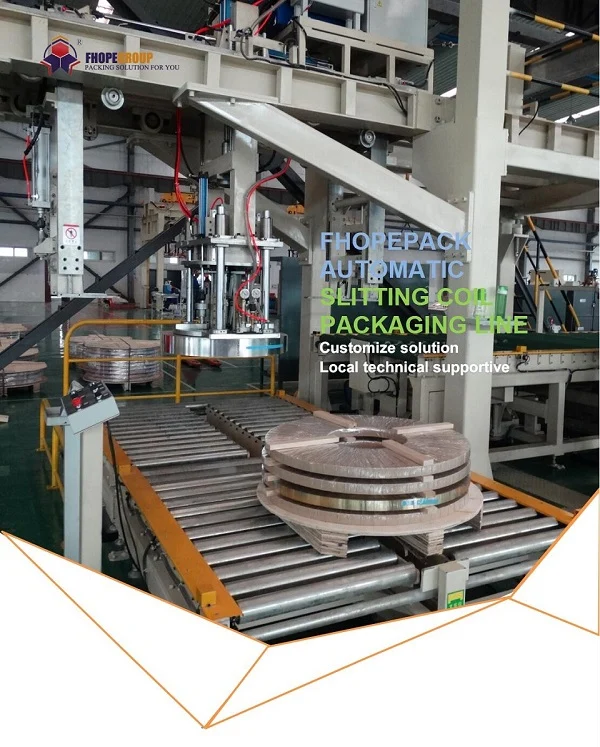
Many Australian plant managers start their search looking for individual machines, but soon discover that only an integrated system approach delivers the results they need. In this guide, I’ll share the key considerations for selecting the right steel coil wrapping line solution specifically for Australia’s unique market conditions and operational challenges.
1. What are the key components in an automated coil packaging line?
If your current packaging process feels like a disjointed series of manual tasks, you’re not alone. Many steel distribution plants in Australia started with basic equipment and added pieces over time, creating inefficiencies and safety risks throughout their operations.
A properly integrated automated steel coil packing line consists of five core systems working together: feeding system, wrapping station, strapping unit, conveying system, and discharge handling. Each component must be precisely matched to your specific coil dimensions, production volume, and facility layout to achieve optimal performance. The synchronization between these systems determines your overall line efficiency and reliability.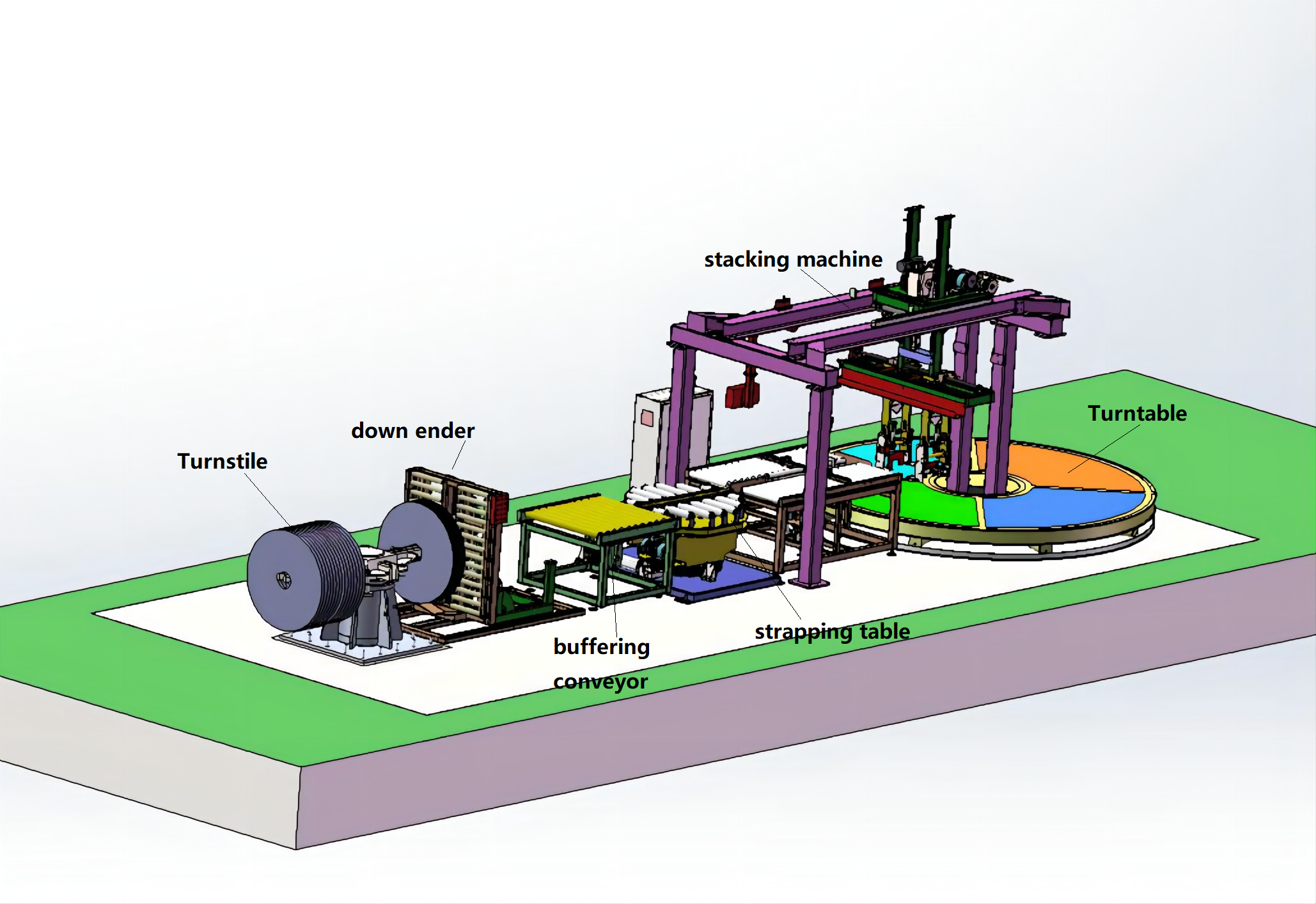
🔧 Core Equipment Functions Breakdown
| System Component | Primary Function | Key Technical Parameters | Integration Requirements |
|---|---|---|---|
| Feeding System | Positions coils for packaging | Capacity: 3-30 tons; Speed: 2-8 coils/hour | Must sync with upstream production |
| Wrapping Station | Applies protective film | Wrap force: 10-50kg; Rotation speed: 5-20 RPM | Requires precise coil centering |
| Strapping Unit | Secures packaging materials | Strapping force: 200-800kg; Cycle time: 15-45 seconds | Timing coordination with wrapping |
| Conveying System | Transfers between stations | Load capacity: 5-40 tons; Speed: 2-10 m/min | Smooth transition between equipment |
| Discharge System | Moves finished coils to storage | Lifting height: 1-3 meters; Capacity: 3-30 tons | Interface with warehouse operations |
The feeding system establishes your line’s rhythm. In my projects for Australian steel service centers, I’ve found that proper feeding system design can increase overall line efficiency by 15-20%. The system must handle your specific coil weights and diameters while maintaining a consistent flow to downstream stations.
Wrapping technology has evolved significantly. Modern stretch wrapping stations now offer programmable tension control, which is crucial for protecting coated steel products common in Australian distribution centers. The right wrapping configuration reduces material waste while ensuring superior protection during transportation.
Strapping units provide the structural integrity for your packaged coils. Australian export requirements often demand higher strapping forces for ocean freight, so your system must be capable of applying sufficient tension without damaging the coil edges. I typically recommend systems with adjustable pressure settings for different coil types.
Conveying systems form the backbone of your integrated steel coil handling line. The transfer mechanisms between stations must accommodate your specific floor space while minimizing handling time. Roller conveyors, chain transfers, and walking beam systems each have advantages depending on your coil specifications and layout constraints.
Discharge systems complete the packaging process by safely moving finished coils to storage or loading areas. Proper discharge design prevents the bottlenecks I often see in Australian plants where finished goods accumulation slows down the entire production flow. (automated steel coil packing line, coil packaging production line, integrated steel coil handling line)
2. How to choose the right steel coil packing line configuration for your production volume?
Selecting equipment that doesn’t match your actual production needs is one of the most common and costly mistakes in steel coil packaging. Both undersized and oversized systems create operational inefficiencies and financial strain.
The optimal coil packing line configuration depends primarily on your daily production volume, coil specifications, and available workforce. For Australian steel distribution plants, I typically recommend three main configuration levels: manual systems for under 20 coils daily, semi-automatic for 20-60 coils, and fully automatic for 60+ coils. Each level offers different balance between initial investment and operational efficiency.
📊 Capacity-Based Configuration Guide
🔹 Manual Systems (Under 20 coils/day)
- Typical investment: AUD $80,000 – $150,000
- Labor requirement: 3-4 operators per shift
- Configuration: Basic wrapping station + manual strapping
- Best for: Small distribution centers, mixed product types
- Limitations: Higher labor costs, inconsistent quality
🔹 Semi-Automatic Lines (20-60 coils/day)
- Typical investment: AUD $150,000 – $400,000
- Labor requirement: 2 operators per shift
- Configuration: Powered feeding + automated wrapping + semi-auto strapping
- Best for: Medium service centers with growth plans
- Advantages: Better consistency, reduced labor dependency
🔹 Fully Automatic Lines (60+ coils/day)
- Typical investment: AUD $400,000 – $900,000
- Labor requirement: 1 operator monitoring multiple lines
- Configuration: Integrated feeding, wrapping, strapping, and discharge
- Best for: High-volume distribution hubs, export-focused operations
- ROI: Typically 18-30 months through labor savings and damage reduction
For Australian plants specifically, consider your seasonal variations and growth projections. Many of my clients in Melbourne and Sydney experience 20-30% demand fluctuations throughout the year. Your system should have some capacity buffer without being excessively oversized.
The coil specifications dramatically impact configuration decisions. Heavier coils (above 10 tons) require more robust structural components and heavier-duty conveying systems. Larger diameters need wider wrapping stations and special consideration for stability during rotation.
Workforce considerations are particularly important in Australia’s competitive labor market. Automated systems reduce your dependency on skilled operators, which has been a significant advantage for my clients in Perth and Brisbane where finding reliable industrial workers can be challenging.
Future expansion potential should influence your current configuration choice. I always advise Australian clients to consider modular designs that allow for future automation upgrades as their business grows, protecting their initial investment while maintaining flexibility. (coil packing line configuration, turnkey coil packing line, steel service center packing line)
3. How to calculate ROI for investing in a turnkey coil packing line?
Many plant managers struggle to justify the capital investment for automated packaging systems because they focus only on equipment costs without considering the full financial picture across operational savings and quality improvements.
A comprehensive ROI calculation for a coil packaging automation solution must account for labor savings, productivity gains, damage reduction, and safety improvements. Based on my analysis of Australian steel distribution operations, most automated packing lines achieve payback periods of 18-36 months, with ongoing annual savings of 30-50% compared to manual methods.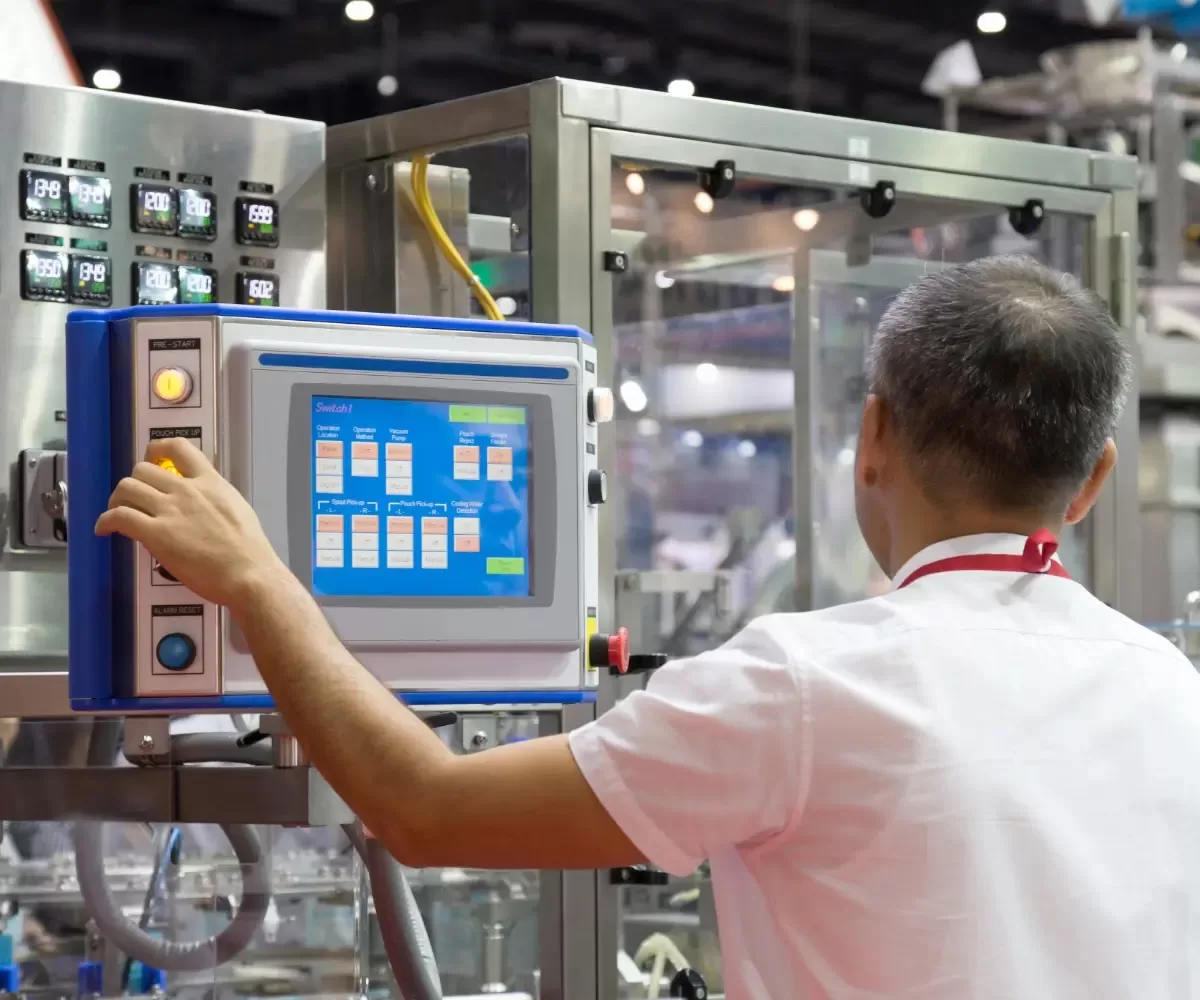
💰 Sample ROI Analysis (Australian Context)
Investment Components:
- Semi-automatic coil wrapping line: AUD $280,000
- Installation and commissioning: AUD $45,000
- Training and implementation: AUD $15,000
- Total Investment: AUD $340,000
Annual Savings Calculation:
- Labor reduction (2 operators @ $75,000/year): $150,000
- Productivity increase (15% faster processing): $85,000
- Damage reduction (from 2% to 0.5%): $60,000
- Material optimization (5% film savings): $25,000
- Safety cost reduction (insurance, incidents): $40,000
- Total Annual Savings: $360,000
ROI Result:
- Payback period: 11.3 months
- 5-year net savings: $1,460,000
- Internal Rate of Return: 88%
Labor costs represent the most significant saving opportunity. Australian wage rates for industrial workers continue to increase, making automation increasingly attractive. My clients typically reduce their packaging labor requirements by 60-80% while maintaining or increasing output levels.
Productivity improvements come from multiple factors. Automated systems operate at consistent speeds without breaks, shift changes, or fatigue factors. The continuous operation of a complete coil packing line equipment typically increases throughput by 15-25% compared to manual methods.
Damage reduction provides substantial financial benefits that many managers underestimate. In one Brisbane service center project, we reduced coil edge damage from 3.2% to 0.4%, saving over $110,000 annually in rejection costs and customer credits. Automated handling eliminates the impact damage that occurs during manual coil movement.
Material optimization occurs through precise control of wrapping film and strapping consumption. Automated systems apply exactly the required amount without waste, typically reducing material costs by 5-15% compared to manual application where operators often over-compensate for security.
Safety improvements translate directly to bottom-line benefits through reduced insurance premiums, lower workers’ compensation claims, and decreased downtime for incident investigations. Australian safety regulations continue to tighten, making automated handling increasingly valuable for compliance. (coil packaging automation solution, complete coil packing line equipment, industrial coil packaging line)
4. What automation level do you need for packaging 50 tons of coils per day?
Determining the right automation level is crucial for balancing performance requirements with investment constraints. Both over-automation and under-automation create operational inefficiencies and financial strain.
For packaging 50 tons of coils daily, most Australian steel distribution plants achieve optimal results with a semi-automatic to fully automatic coil wrapping and strapping line, depending on coil mix and operational hours. This typically means processing 15-25 coils per 8-hour shift, requiring systems capable of 2-4 coils per hour with minimal manual intervention.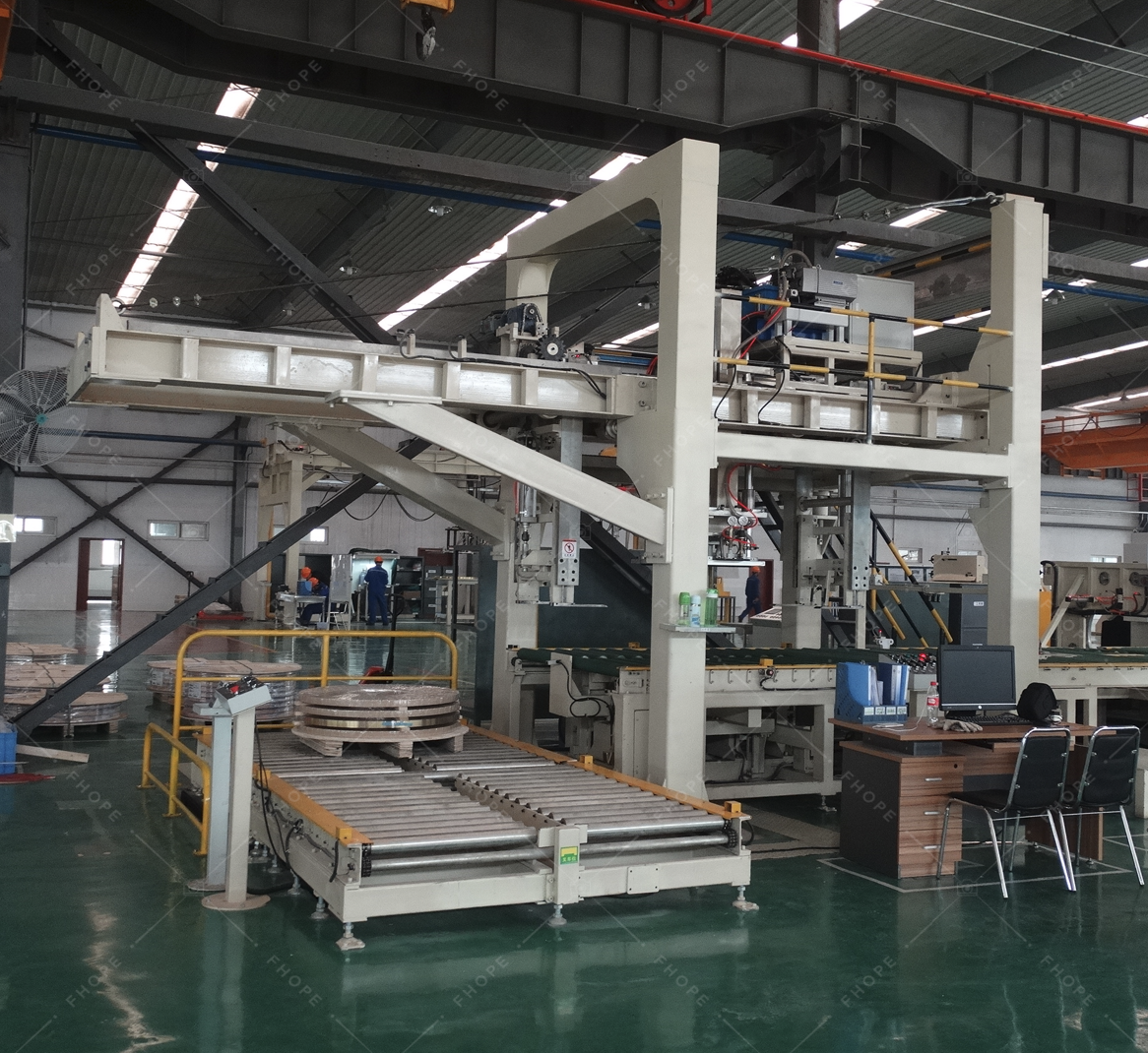
⚙️ Automation Level Decision Framework
✅ Assess Your Specific Requirements:
Production Profile:
- Coils per day: 15-25
- Average coil weight: 2-3.3 tons
- Shift pattern: 1-2 shifts
- Peak demand periods: Seasonal variations
Technical Specifications:
- Coil width range: 800-1600mm
- Coil diameter: 1000-1800mm
- Coil weight range: 1-8 tons
- Temperature conditions: Ambient or processed
Operational Constraints:
- Available floor space: Length × Width dimensions
- Existing infrastructure: Crane capacities, power supply
- Workforce skills: Current operator capabilities
- Maintenance capabilities: In-house technical expertise
🔹 Recommended Configuration for 50 Tons/Day:
Semi-Automatic Solution (Most Common Choice):
- Powered coil feeding with positioning assistance
- Automatic rotating ring wrapper with programmable logic
- Semi-automatic strapping with powered tensioning
- Roller conveyor transfer between stations
- 2 operators required per shift
- Typical cycle time: 20-25 minutes per coil
- Investment range: AUD $250,000 – $400,000
Fully Automatic Solution (High-Volume Operations):
- Automatic feeding from incoming conveyor
- Fully automatic wrapping with vision alignment
- Robotic strapping with multiple strap patterns
- Integrated conveyor system with accumulation
- 1 operator monitoring multiple lines
- Typical cycle time: 15-20 minutes per coil
- Investment range: AUD $450,000 – $650,000
The coil mix complexity influences your automation needs. Plants handling consistent coil sizes can utilize higher automation levels effectively, while operations with highly variable dimensions may require more operator intervention for positioning and adjustment.
Available space often determines feasible automation levels in Australian plants. Fully automatic systems typically require 20-30% more floor space than semi-automatic configurations due to additional conveying and accumulation sections. I always conduct detailed layout analysis before recommending specific automation levels.
Workforce transition planning is essential when moving to higher automation. Australian operators typically adapt well to semi-automatic systems, while fully automatic operations may require more extensive training and different skill sets. In my experience, a phased automation approach yields the smoothest operational transition.
Future expansion considerations should influence your current automation decision. Selecting a modular system design allows for incremental automation upgrades as your business grows, protecting your initial investment while maintaining flexibility for future needs. (steel coil stretch wrapping line, coil wrapping and strapping line, automatic coil packaging system)
Conclusion
Choosing the right steel coil packing line requires careful analysis of your production needs, operational constraints, and growth plans to maximize return on investment and operational efficiency.


