Steel Coil Packing Line Procurement Guide for Canada’s Metal Warehouses?
Leading paragraph:
Are you struggling with slow packaging processes that bottleneck your entire metal warehouse operation? Do manual handling risks and product damage concerns keep you awake at night? As a factory manager overseeing daily operations, you understand that every minute of downtime directly impacts your bottom line. The pressure to maintain production flow while ensuring worker safety creates constant challenges in Canada’s competitive metal processing landscape.
Selecting the right steel coil packing line requires evaluating your daily production volume, available floor space, automation requirements, and budget constraints. For Canadian metal warehouses, the optimal solution typically involves semi-automatic to fully automated systems that can handle 30-100 tons daily while withstanding harsh industrial environments and integrating seamlessly with existing material handling processes.

Transition Paragraph:
Making the wrong equipment choice can cost your operation thousands in lost productivity and maintenance headaches. Having delivered over 200 packaging line projects worldwide, I’ve witnessed how proper planning transforms struggling operations into efficient, profitable centers. Let me guide you through the critical considerations that Canadian metal warehouse managers must evaluate before investing in their next coil packaging solution.
1. What are the key components in an automated coil packaging line?
Leading paragraph:
Walking through your warehouse, you see workers manually moving heavy coils between stations. The process feels disjointed and inefficient. You know there must be a better way, but understanding what makes up a complete system seems overwhelming. The complexity of modern packaging lines can intimidate even experienced operations managers.
A complete automated steel coil packing line consists of five integrated systems: feeding mechanism, wrapping station, strapping unit, conveying system, and discharge handling. These components work together to create a seamless flow from raw coil intake to packaged product ready for shipment, eliminating manual handling between stages and dramatically improving throughput consistency.
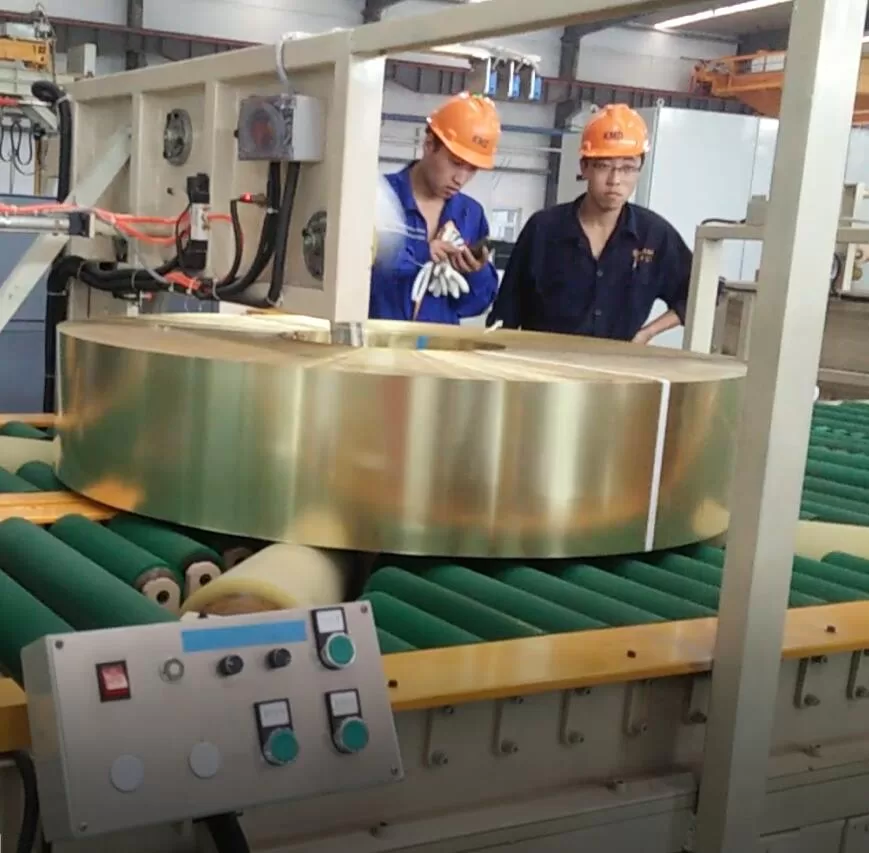
🔧 Core Equipment Functions
| Component | Primary Function | Key Considerations |
|---|---|---|
| Feeding System | Positions coils for packaging | Must match upstream equipment output |
| Wrapping Station | Applies protective film | Adjustable for different coil sizes |
| Strapping Unit | Secures packaging material | Number of straps varies by coil weight |
| Conveyor System | Transports between stations | Synchronization critical for flow |
| Discharge System | Moves finished coils to storage | Integration with warehouse layout |
⚙️ System Integration Points
The feeding mechanism typically receives coils directly from processing equipment or storage. In my projects, I’ve found that proper interface design between the slitting line and packaging system reduces handling by 60%. The wrapping station must accommodate your full range of coil dimensions – from narrow slit coils to full-sized production coils. Canadian operations often process both, requiring flexible equipment.
The conveying system acts as the backbone, connecting all stations. Roller conveyors work well for most applications, while chain transfers provide better positioning accuracy. The strapping unit placement depends on your packaging sequence – some operations strap before wrapping, others after. Based on 15 years of commissioning experience, I recommend placing strapping after wrapping for better compression and security.
The discharge system must align with your warehouse material handling approach. Whether using forklifts, overhead cranes, or automated guided vehicles, the packaging line output should flow naturally to your storage areas. This end-of-line coil packing system integration often gets overlooked during planning but significantly impacts long-term efficiency. (automated steel coil packing line, coil packaging production line, end-of-line coil packing system)
2. How to choose the right steel coil packing line configuration for my production volume?
Leading paragraph:
Your management team expects you to justify the investment in new packaging equipment. They’re asking tough questions about capacity matching and return expectations. You worry about either underinvesting in equipment that can’t keep up or overspending on capabilities you don’t need. Finding that sweet spot requires careful analysis of your actual production requirements.
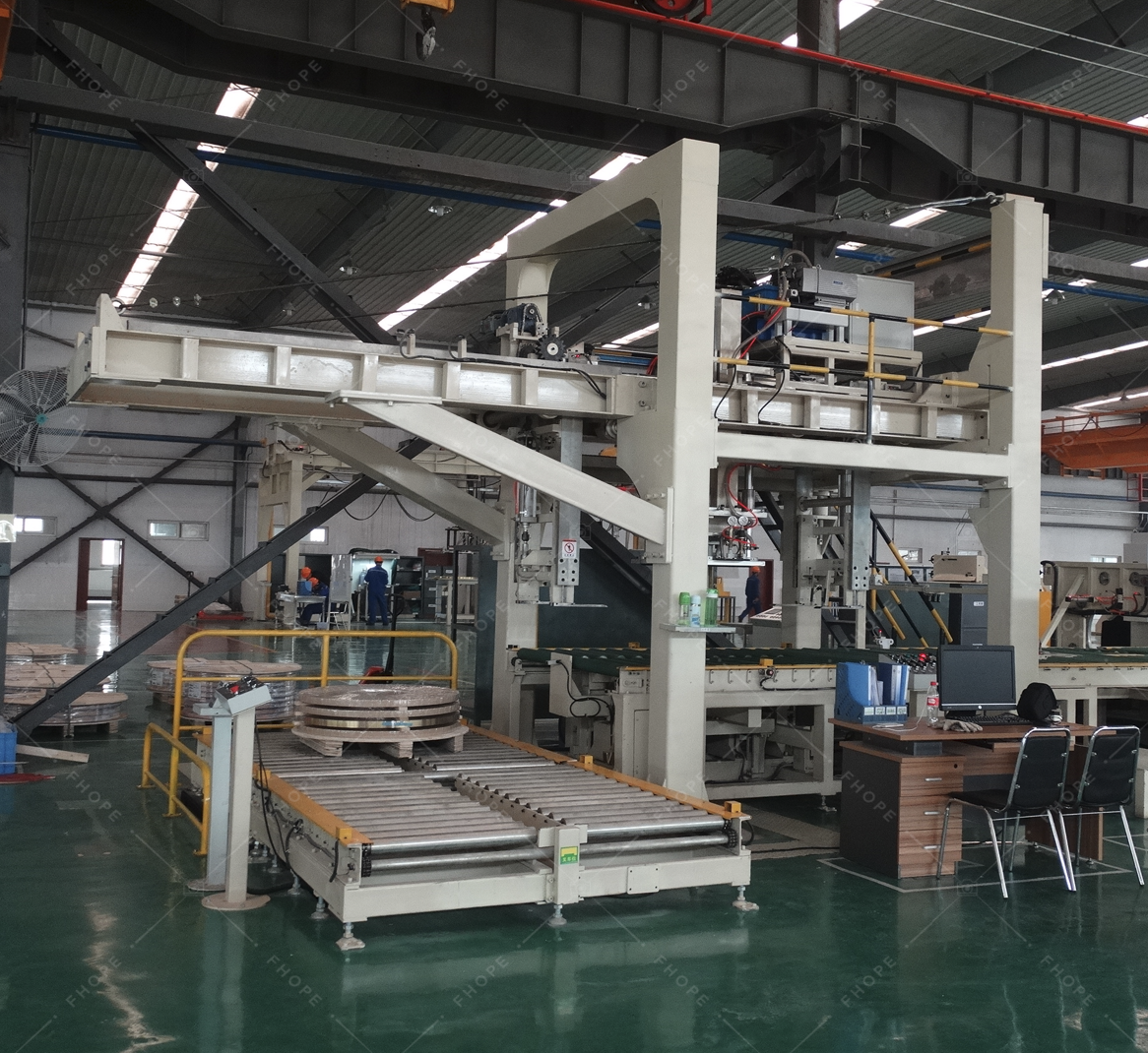
Matching packaging line configuration to production volume involves analyzing your daily tonnage, coil size variety, shift patterns, and future growth projections. For Canadian metal warehouses, I typically recommend semi-automatic systems for 10-30 tons daily, semi-automated with conveyors for 30-70 tons, and fully automated lines for operations exceeding 70 tons per day.
📊 Capacity Matching Guide
| Daily Volume | Recommended Configuration | Typical Layout | Labor Required |
|---|---|---|---|
| 10-30 tons | Semi-automatic standalone | Station-based | 3-4 operators |
| 30-70 tons | Semi-automatic with conveyors | U-shaped line | 2-3 operators |
| 70-100 tons | Fully automated integrated | Straight line | 1-2 operators |
| 100+ tons | Fully automated with buffers | Parallel lines | 1 operator per line |
🔄 Production Flow Considerations
For lower volume operations (under 30 tons daily), semi-automatic systems provide the best balance of investment and functionality. Operators manually transfer coils between stations, but each station performs its function automatically. This approach works well for Canadian service centers with diverse product mixes and frequent changeovers.
Medium volume facilities (30-70 tons) benefit significantly from conveyor integration. The material handling between stations becomes automated, reducing labor requirements and improving throughput consistency. In my experience with Canadian metal processors, this configuration typically reduces packaging labor by 40-50% while increasing daily output by 30-40%.
High-volume operations (70+ tons) require fully integrated steel coil handling lines with minimal manual intervention. These systems feature automatic feeding, wrapping, strapping, and discharge with sophisticated controls that optimize cycle times. The initial investment is higher, but the labor savings and throughput improvements deliver compelling ROI for busy Canadian warehouses. When designing these systems, I always include buffer capacity to handle production peaks and upstream equipment variations. (integrated steel coil handling line, turnkey coil packing line, steel coil stretch wrapping line)
3. How to calculate ROI for investing in a turnkey coil packing line?
Leading paragraph:
The finance department has requested a detailed business case for the packaging line investment. You need concrete numbers showing payback period and ongoing savings. Without clear financial justification, getting budget approval will be challenging. Understanding how to quantify both direct and indirect benefits becomes crucial for building your case.
ROI calculation for coil packaging automation should include labor cost reduction, productivity improvement, damage reduction, safety incident cost avoidance, and space utilization benefits. Most Canadian operations achieve payback within 12-24 months, with ongoing annual savings representing 15-30% of the initial investment through reduced operational costs.

💰 Sample ROI Calculation (Based on 50-ton/day Canadian Operation)
| Cost/Saving Category | Manual System | Automated Line | Annual Impact |
|---|---|---|---|
| Labor Costs | $240,000 (4 operators) | $120,000 (2 operators) | +$120,000 |
| Productivity | 30 coils/hour | 45 coils/hour | +$75,000 |
| Damage Claims | 2% of volume | 0.5% of volume | +$45,000 |
| Safety Incidents | $25,000 annually | $5,000 annually | +$20,000 |
| Total Annual Savings | $260,000 |
📈 Investment Analysis Framework
The labor savings calculation should include not just direct wages but also benefits, training, and turnover costs. Canadian manufacturing operations typically spend 25-35% on top of base wages for these additional labor expenses. With automation reducing operator requirements from 4 to 2 in a typical setup, the annual labor savings often reach $120,000-$150,000.
Productivity improvements come from faster cycle times and reduced changeover periods. Automated systems maintain consistent packaging speeds regardless of operator fatigue or shift changes. In the 200+ lines I’ve commissioned, productivity increases of 30-50% are common, translating to significant additional throughput capacity without expanding your workforce.
Damage reduction represents another substantial saving. Manual handling inevitably causes edge damage and surface scratches, leading to customer claims and product downgrades. Automated systems position and handle coils consistently, reducing damage rates from typical 2% levels to 0.5% or less. For a Canadian warehouse processing $20 million annually, this 1.5% reduction represents $300,000 in reclaimed value.
Safety improvements, while harder to quantify directly, reduce insurance premiums, workers’ compensation claims, and potential regulatory penalties. The automatic coil packaging system eliminates the most dangerous manual handling tasks, creating a safer work environment that also improves employee morale and retention. (automatic coil packaging system, coil wrapping and strapping line, complete coil packing line equipment)
4. What’s the difference between semi-automatic and fully automatic coil packing lines?
Leading paragraph:
You’ve received proposals showing vastly different equipment levels and pricing. Understanding the practical operational differences between semi and fully automated systems helps determine what your operation truly needs. The distinction goes beyond price – it affects your staffing, maintenance, flexibility, and future expansion capabilities.
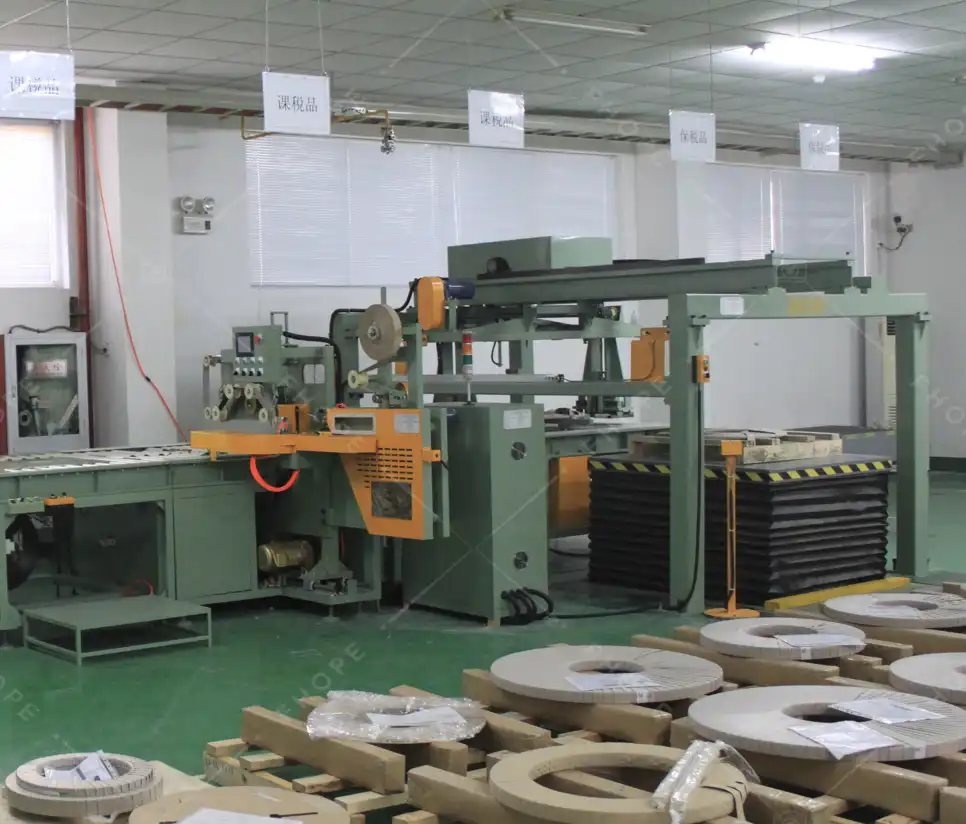
Semi-automatic coil packing lines require operators to transfer coils between stations and initiate each packaging sequence, while fully automatic systems handle the entire process from feeding to discharge without manual intervention. The choice depends on your labor availability, production volume, product mix consistency, and capital budget constraints.
⚡ Automation Level Comparison
| Feature | Semi-Automatic | Fully Automatic |
|---|---|---|
| Operator Requirement | 2-4 operators | 1-2 operators |
| Typical Cycle Time | 2-3 minutes | 1-2 minutes |
| Changeover Flexibility | High | Moderate |
| Initial Investment | $$ | $$$$ |
| Space Requirement | Flexible layout | Fixed sequence |
| Maintenance Complexity | Low | Moderate-High |
| Ideal For | Mixed products, lower volume | High volume, standardized products |
🔄 Operational Impact Analysis
Semi-automatic systems offer greater flexibility for operations handling diverse product types. Operators can easily adjust to different coil widths, diameters, and packaging specifications. This adaptability makes semi-automatic solutions ideal for Canadian service centers processing various customer orders with frequent changeovers. The labor component, while higher, provides the judgment needed for non-standard situations.
Fully automatic systems excel in high-volume, standardized production environments. Once set up for a specific coil size, they maintain consistent output with minimal variation. The reduced labor component not only cuts costs but also eliminates human error and fatigue factors. For Canadian mills producing large runs of similar products, full automation delivers superior consistency and throughput.
The maintenance consideration often gets overlooked in the selection process. Semi-automatic systems typically use simpler mechanics and controls, making maintenance easier for in-house teams. Fully automatic systems incorporate more sophisticated sensors, programming, and integrated components that may require specialized technician support. However, modern systems include remote diagnostics capabilities that I always recommend for Canadian operations, where technical support might be hours away.
From my project experience across North America, I’ve found that operations starting with semi-automatic systems often upgrade to full automation as volumes increase. When planning your initial investment, consider whether the equipment can be upgraded incrementally rather than requiring complete replacement. This scalability approach has helped many of my Canadian clients manage capital effectively while preparing for growth. (steel service center packing line, coil packaging automation solution, industrial coil packaging line)
Conclusion
Selecting the right steel coil packing line requires careful analysis of your operational needs, volume requirements, and growth plans to maximize return on investment and operational efficiency.


