Steel Coil Packing Line Procurement Guide for Canada’s Metal Warehouses?
Are you struggling with inefficient steel coil packaging processes that bottleneck your entire production flow? As a factory manager in Canada’s competitive metal industry, you face daily pressures to improve output while controlling costs and ensuring worker safety. The packaging line is often the weakest link in metal processing facilities, causing delays and eating into profits.
Selecting the right steel coil packing line requires evaluating your production volume, facility layout, automation needs, and ROI expectations to find a complete system solution that integrates seamlessly with your existing operations. A well-designed packaging line can increase productivity by 30-50% while reducing labor costs and material damage, making it a strategic investment rather than just equipment purchase. Understanding the different configurations available and how they match Canadian metal warehouse requirements is essential for making an informed decision.
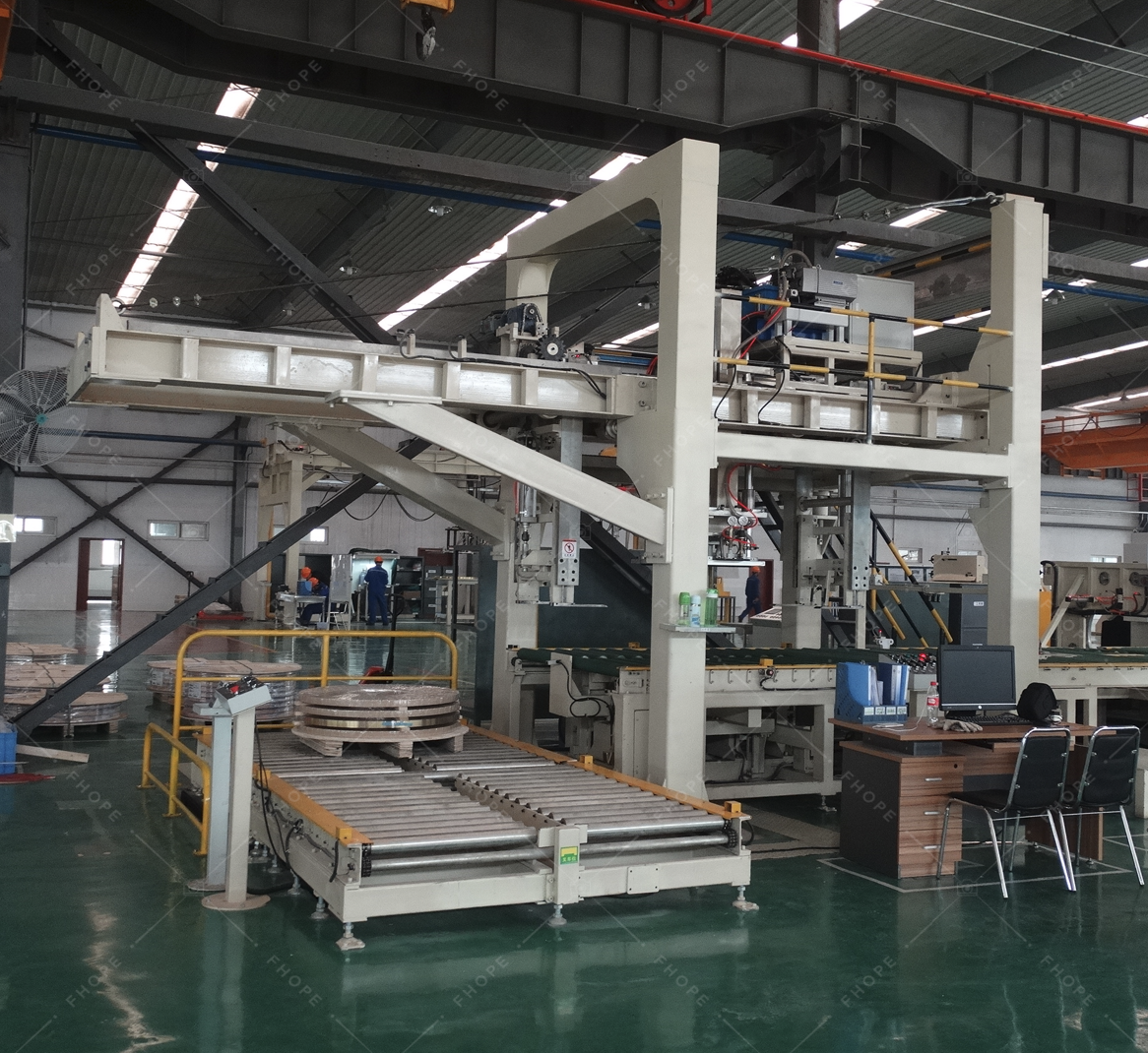
As someone who has designed over 200 packaging lines worldwide, I’ve seen how the right system can transform operations. Canadian metal warehouses face unique challenges with seasonal temperature variations, strict safety regulations, and the need to handle diverse coil sizes. This guide will walk you through the key considerations for selecting a steel coil packing line that delivers maximum value for your specific Canadian operation.
1. What are the different automation levels available for steel coil packing lines?
Many factory managers assume automation means all-or-nothing, but the reality is more nuanced. Choosing the wrong automation level can lead to either underutilized equipment or constant bottlenecks. I’ve seen facilities invest in fully automated systems only to discover their volume didn’t justify the expense, while others underestimated their growth and outgrew semi-automatic systems within months.
Steel coil packing lines come in three main automation levels: manual systems requiring multiple operators, semi-automatic systems with automated wrapping but manual loading/unloading, and fully automatic integrated lines that handle the entire process from feeding to discharge with minimal human intervention. The optimal choice depends on your daily production volume, labor costs, available space, and future expansion plans. For Canadian metal warehouses, semi-automatic systems often provide the best balance of efficiency and affordability for medium-volume operations.
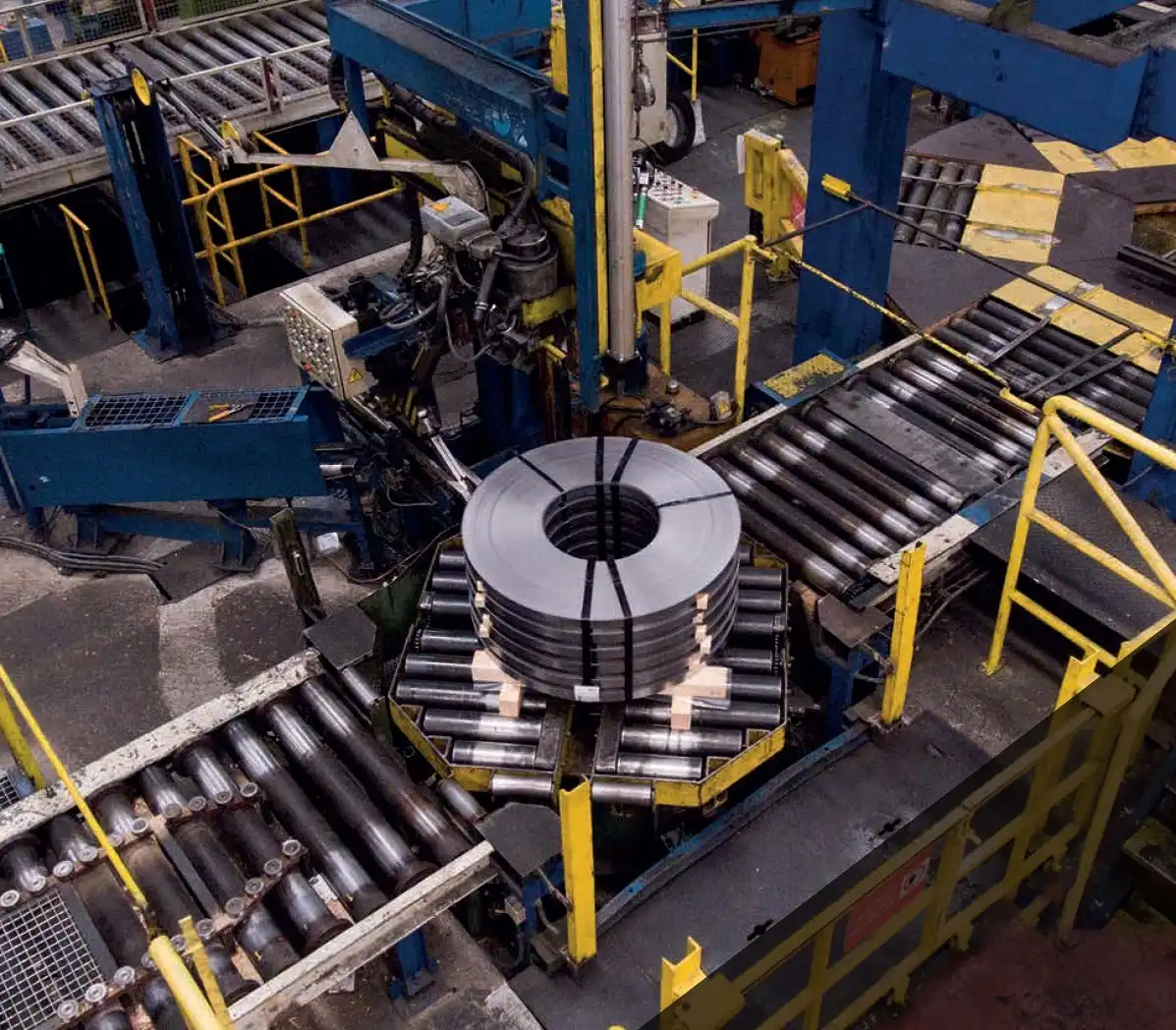
📋 Steel Coil Packing Line Configuration Comparison
| Automation Level | Daily Capacity | Labor Required | Initial Investment | ROI Period | Best For |
|---|---|---|---|---|---|
| Manual | 10-30 coils | 3-5 operators | $50,000-$100,000 | 6-12 months | Small shops, low volume, mixed sizes |
| Semi-Auto | 30-80 coils | 1-2 operators | $100,000-$300,000 | 12-24 months | Medium warehouses, growing businesses |
| Full Auto | 80-200+ coils | <1 operator | $300,000-$800,000 | 24-36 months | High-volume facilities, 24/7 operations |
Manual systems work well for Canadian warehouses processing under 20 tons daily with frequent size changes. Operators handle coil positioning, film application, and strapping manually. While affordable, these systems have higher labor costs and inconsistent output quality.
Semi-automatic coil packaging production lines automate the wrapping and strapping processes while requiring manual loading and unloading. This configuration suits facilities processing 30-50 tons daily with moderate labor costs. The equipment cost is reasonable, and you maintain flexibility for different coil specifications.
Fully automatic end-of-line coil packing systems integrate feeding, wrapping, strapping, and discharge into a seamless operation. These systems require significant investment but deliver the lowest cost per coil at high volumes. For Canadian operations running multiple shifts, the labor savings alone often justify the higher initial cost within 2-3 years.
From my experience implementing systems across Canada, semi-automatic configurations work best for most metal service centers. They provide substantial efficiency gains without the complexity of full automation. However, if you’re planning expansion or running 24/5 operations, investing in a fully integrated steel coil handling line from the start might be more cost-effective long-term. (automated steel coil packing line, steel coil wrapping line solution, coil packaging production line)
2. How to design an optimal layout for your coil packing line?
Poor layout design is the most common mistake I see in metal warehouses. Equipment placed without considering material flow creates unnecessary handling, increases cycle times, and creates safety hazards. I recently visited a facility in Ontario where coils traveled over 200 feet between processes due to poor planning, adding 15 minutes to each packaging cycle.
An optimal coil packing line layout minimizes material handling distance, creates logical workflow sequences, and allows for safe operator access while maintaining efficient use of floor space. The three most effective layouts for Canadian metal warehouses are straight-line for narrow facilities, L-shaped for corner locations, and U-shaped for operations requiring frequent quality checks. Each configuration has distinct advantages depending on your building constraints and production flow.

🏗️ Layout Configuration Options
➡️ Straight-Line Layout
- Best for: Narrow buildings, high-volume single product lines
- Equipment sequence: Receiving → Wrapping → Strapping → Discharge
- Space requirement: 100-200 feet length, 15-20 feet width
- Advantages: Simple material flow, easy expansion, minimal transfer points
- Canadian consideration: Works well in older industrial buildings with length constraints
⎿ L-Shaped Layout
- Best for: Corner locations, operations with inspection stations
- Equipment sequence: Receiving → 90° transfer → Wrapping → Strapping → Discharge
- Space requirement: 80-150 feet per side, 20-25 feet width
- Advantages: Utilizes corner spaces efficiently, natural separation of processes
- Canadian consideration: Ideal for facilities with existing crane coverage in corner areas
╌ U-Shaped Layout
- Best for: Operations requiring multiple quality checks, limited operator staffing
- Equipment sequence: Receiving → Wrapping → Strapping → Return loop → Discharge
- Space requirement: 60-100 feet per side, 25-30 feet width
- Advantages: Centralized operator access, easy monitoring of multiple stations
- Canadian consideration: Excellent for cold climate facilities minimizing operator movement
When planning your coil wrapping and strapping line layout, consider both current needs and future expansion. I always recommend leaving 20-30% additional space for future equipment upgrades or process additions. Proper spacing between machines (typically 4-6 feet) ensures safe maintenance access while allowing material transfer systems to function efficiently.
For Canadian facilities, also consider seasonal factors. Layouts that minimize outdoor transfer during winter months maintain productivity when temperatures drop. Indoor staging areas for wrapped coils prevent weather-related damage and ensure consistent shipment readiness regardless of conditions. (end-of-line coil packing system, integrated steel coil handling line, turnkey coil packing line)
3. What key equipment components make up a complete coil packing system?
Many purchasing managers focus only on the wrapping machine, but this approach leads to integration problems and bottlenecks. A complete automatic coil packaging system comprises multiple synchronized components that work together seamlessly. Missing just one element can undermine the entire line’s efficiency, as I discovered when a client in Quebec installed a high-speed wrapper without upgrading their feeding system, creating a new bottleneck.
A complete steel coil stretch wrapping line consists of five essential components: feeding system for coil presentation, wrapping station for film application, strapping unit for securement, transfer systems between stations, and discharge system for finished coil handling. Each component must be properly sized and synchronized with the others to achieve optimal line performance. Understanding these elements helps you evaluate supplier proposals more effectively.
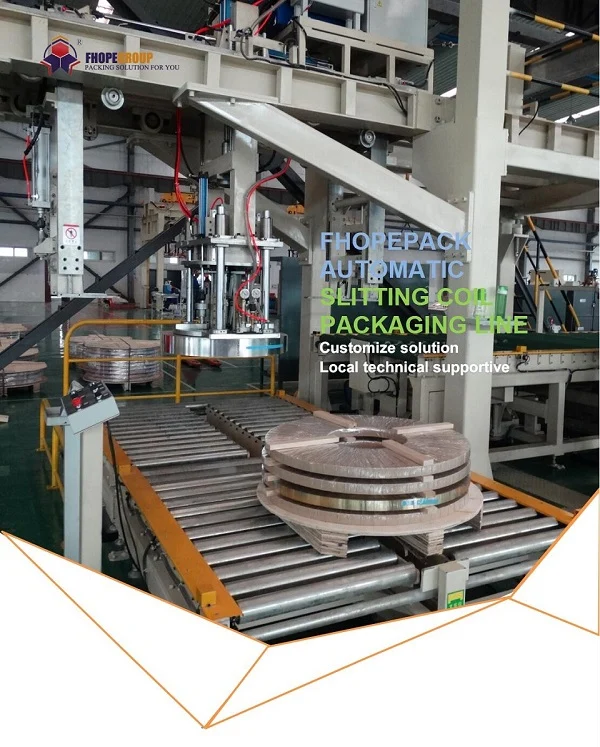
⚙️ Core Equipment Components Breakdown
🎯 Feeding Systems
- Chain conveyor systems: Most common for heavy coils (1-10 tons)
- Roller conveyor systems: Better for delicate surface requirements
- Turntable systems: Ideal for precise positioning needs
- Canadian specification: Heavy-duty construction for temperature resilience
Chain conveyors provide the most reliable feeding for Canadian conditions, handling the weight and environmental challenges effectively. Roller systems work better when surface protection is critical, such as with pre-painted coils. The feeding system must match your upstream equipment output and present coils at the correct height and orientation for wrapping.
📦 Wrapping Stations
- Rotating ring systems: Stationary coil, moving wrapping mechanism
- Rotating turntable systems: Moving coil, stationary wrapper
- Hybrid systems: Combination approach for specific applications
- Canadian requirement: Enclosed systems for dust protection
Rotating ring systems generally provide better film control and higher speeds for steel coil stretch wrapping lines. Turntable systems work well for smaller operations with space constraints. The choice depends on your coil size range, production speed requirements, and film usage optimization goals.
🔗 Strapping Units
- Automatic strapping heads: 2-6 straps simultaneously
- Semi-automatic stations: Operator-assisted positioning
- Material choices: Steel, plastic, or composite straps
- Canadian consideration: Anti-static systems for dry winter conditions
Automatic strapping significantly reduces labor requirements while ensuring consistent tension and placement. Most Canadian operations benefit from systems applying 3-5 straps automatically, with flexibility for additional manual straps when required for specific shipments.
🔄 Transfer Systems
- Chain transfers: Positive positioning between stations
- Roller transfers: Lower maintenance, gentle handling
- Lift-and-carry systems: No relative movement during transfer
- Integration point: Critical for line synchronization
Proper transfer systems ensure smooth movement between stations without jarring stops that can damage coils or cause film tears. The transfer method must maintain precise alignment between equipment sections to prevent jams and production stoppages.
🚀 Discharge Systems
- Accumulation tables: Buffer before final handling
- Tilting mechanisms: For easier forklift access
- Automatic stacking: For high-volume operations
- Canadian adaptation: Heated discharge areas for winter operation
The discharge system often receives less attention but significantly impacts overall line efficiency. Proper accumulation allows continuous operation even during forklift changeovers, while tilting mechanisms improve ergonomics and reduce handling damage. (coil wrapping and strapping line, automatic coil packaging system, steel coil stretch wrapping line)
4. How to calculate ROI for your coil packing line investment?
Many managers struggle to justify packaging line investments because they only consider equipment costs without analyzing the full financial impact. I worked with a metal service center in Alberta that delayed automation for years, not realizing they were losing $180,000 annually in hidden costs from manual packaging inefficiencies.
Calculating ROI for a coil packing line requires analyzing labor savings, productivity gains, material reduction, damage prevention, and safety improvements against the total investment cost including equipment, installation, and training. A comprehensive analysis typically shows payback periods of 18-36 months for semi-automatic to fully automatic systems, with ongoing annual savings of 30-60% compared to manual methods.
💰 ROI Calculation Framework
📊 Investment Costs
- Equipment purchase: $150,000-$500,000 (depending on automation level)
- Installation and commissioning: 15-25% of equipment cost
- Training and implementation: 5-10% of equipment cost
- Canadian additional: Climate adaptation (5-8% extra for heating/enclosures)
The total investment for a complete coil packing line configuration typically ranges from $180,000 for basic semi-automatic to $600,000 for fully automatic systems in Canadian facilities. These figures include necessary site preparation, utility connections, and initial spare parts.
💵 Annual Savings Calculation
| Savings Category | Manual Baseline | Semi-Auto System | Full Auto System |
|---|---|---|---|
| Labor Costs | $120,000 (3 operators) | $40,000 (1 operator) | $15,000 (0.3 operator) |
| Productivity Gains | Baseline | +25% throughput | +45% throughput |
| Material Savings | Baseline | 15% film reduction | 22% film reduction |
| Damage Reduction | 2% claim rate | 0.8% claim rate | 0.3% claim rate |
| Safety Costs | $18,000 annually | $6,000 annually | $2,000 annually |
Labor savings typically provide the most significant ROI component. Canadian metal warehouses spend $45,000-$65,000 annually per packaging operator including benefits. Automating from 3 operators to 1 saves $90,000-$130,000 yearly.
Productivity gains come from faster cycle times and reduced changeover. Semi-automatic heavy duty coil packing lines typically achieve 8-12 coils per hour versus 4-6 manually. Full automatic systems reach 15-25 coils hourly with consistent quality.
Material savings occur through optimized film usage and reduced over-wrap. Automated systems precisely control film tension and overlap, reducing consumption 15-25% while providing better protection. This saves $8,000-$20,000 annually depending on volume.
Damage prevention represents significant but often overlooked savings. Automated handling reduces edge damage and surface scratches, lowering customer claims and reject rates. This typically saves 0.5-1.5% of coil value annually.
📈 Payback Period Calculation
Example: Medium Canadian Metal Warehouse
- Daily volume: 40 coils (approximately 60 tons)
- Current method: Manual packaging with 3 operators
- Investment: $280,000 for semi-automatic steel service center packing line
- Annual savings: $142,000 (labor $90,000 + productivity $32,000 + materials $12,000 + damage $6,000 + safety $2,000)
- Simple payback period: 23.6 months
Most Canadian operations achieve payback within 12-36 months, with faster returns in high-labor-cost regions like Ontario and British Columbia. The business case strengthens further when considering the strategic benefits of increased capacity, improved customer satisfaction, and competitive advantage. (coil packing line configuration, industrial coil packaging line, heavy duty coil packing line)
5. What specifications should you consider when selecting equipment?
Choosing equipment based solely on price often leads to mismatched capabilities and ongoing operational issues. I’ve seen warehouses purchase machines that couldn’t handle their full coil size range or operate in Canadian temperature extremes, resulting in costly modifications and downtime.
Key specifications for coil packing equipment include coil weight and dimension ranges, production speed requirements, automation level, utility requirements, and environmental compatibility for Canadian conditions. Beyond basic technical parameters, you should evaluate build quality, service support availability in Canada, and compatibility with your existing material handling systems.
⚡ Technical Specification Checklist
📏 Coil Handling Capabilities
- Weight range: 1-10 tons (standard) or 10-30 tons (heavy duty)
- Diameter range: 600-2000mm for most metal service centers
- Width range: 600-1800mm covering most steel products
- ID range: 508mm or 610mm standard, with adapter options
Ensure the equipment handles your complete size range with margin for future product mix changes. Canadian operations often need wider ranges to accommodate both domestic and export market requirements. The system should handle your smallest and largest coils without major adjustments.
🚀 Performance Specifications
- Cycle time: 3-8 minutes per coil for semi-automatic, 2-4 minutes for full automatic
- Line speed: 6-15 coils per hour depending on automation level
- Film consumption: 0.8-1.2kg per ton of steel coiled
- Strapping speed: 10-30 seconds per strap application
Cycle time directly impacts your maximum daily capacity. For Canadian facilities targeting 50-100 ton daily output, systems achieving 4-6 minute cycle times typically provide the right balance of speed and flexibility. Faster systems cost more but may be necessary for high-volume operations.
🏭 Utility Requirements
- Electrical power: 480V 3-phase, 30-100A depending on automation
- Air supply: 6-8 bar, 100-300 liters/minute capacity
- Floor loading: 3-5 ton capacity for equipment foundations
- Space requirements: 150-400 sq ft for the complete line
Canadian facilities must verify utility compatibility, particularly electrical standards and compressed air availability. Winter operation requires attention to air drying and potential heating of hydraulic systems in colder regions.
❄️ Canadian Environmental Considerations
- Temperature range: -30°C to +40°C operational capability
- Humidity tolerance: 20-95% non-condensing
- Dust protection: IP54 minimum for electrical components
- Corrosion resistance: Zinc plating or powder coating for durability
Equipment destined for Canadian use requires robust construction and environmental protection. Prairie facilities need extreme cold weather packages, while coastal operations require enhanced corrosion protection. These adaptations add 5-15% to equipment costs but prevent major operational issues.
✅ Supplier Evaluation Criteria
🏆 Technical Capability
- Experience with similar applications: Minimum 5-10 reference projects
- Engineering support availability: Local or responsive remote assistance
- Spare parts logistics: Canadian warehouse or fast shipping options
- Training comprehensiveness: Both operator and maintenance focused
🔧 Service and Support
- Response time commitment: 24-48 hours for critical issues
- Preventive maintenance programs: Scheduled inspection services
- Technical documentation: Clear manuals in English/French
- Remote diagnostics capability: Online support availability
Based on my 15 years of experience, Fengding and Wuxi BuHui provide the most reliable equipment for Canadian conditions, with Fengding offering superior heavy-duty construction and Wuxi BuHui providing excellent value for standard applications. Both have established service networks in major Canadian industrial regions. (steel service center packing line, coil packaging automation solution, complete coil packing line equipment)
Conclusion
Selecting the right steel coil packing line requires careful analysis of your specific needs, facility constraints, and growth plans to maximize return on investment and operational efficiency.


