Steel Coil Packing Line Price Guide for Buyers in the USA?
Are you struggling to understand why steel coil packing line quotes vary so dramatically? Do you find yourself comparing apples to oranges when suppliers present completely different configurations for what seems like the same requirement? This price confusion is exactly what prevents many American manufacturers from making informed investment decisions.
The price of a steel coil packing line in the USA typically ranges from $150,000 to over $1 million, with the final cost determined by your specific automation level, production volume requirements, and system integration complexity rather than just individual machine prices. Understanding what drives these cost differences requires looking beyond simple equipment lists to the complete system solution that matches your operational needs and business objectives.
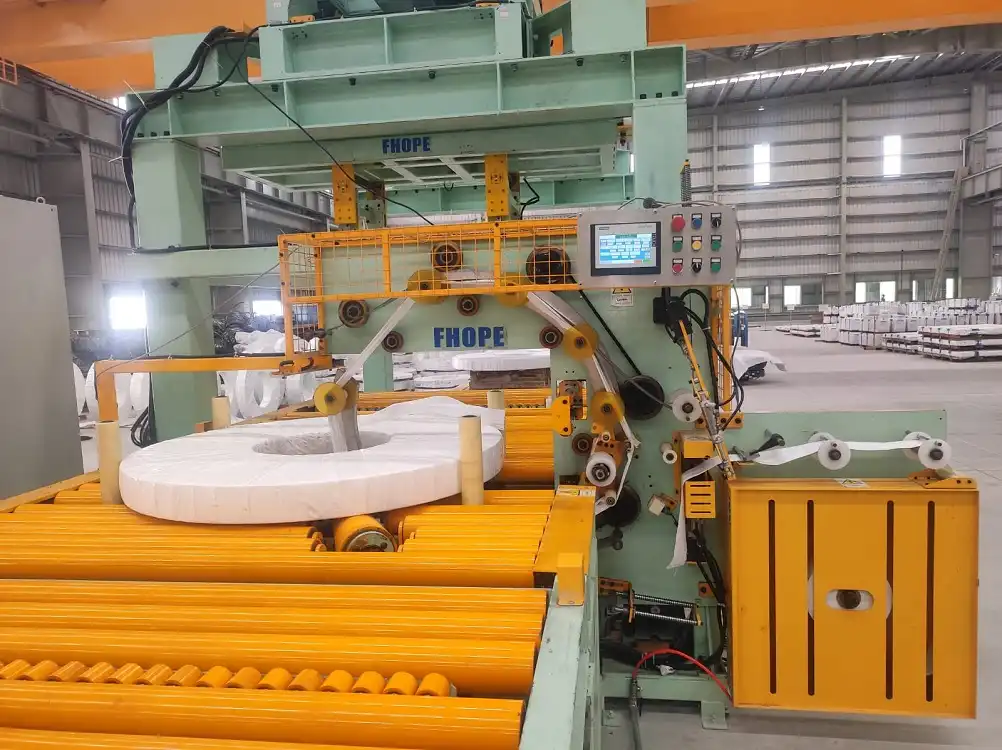
As someone who has designed over 200 packaging lines worldwide, I’ve seen how proper planning transforms operations. Let me guide you through the key factors that determine your investment, helping you make a decision that delivers real ROI rather than just a lower upfront cost.
1. What Factors Determine Steel Coil Packing Line Costs?
When American manufacturers first explore steel coil packing solutions, they’re often surprised by the wide price range. The initial shock of seeing quotes from $200,000 to over $1 million can be overwhelming, especially when the equipment appears similar at first glance.
Steel coil packing line costs are primarily determined by three key factors: automation level required, production capacity needed, and system integration complexity, with each factor significantly impacting both initial investment and long-term operational savings. Understanding how these elements interact helps buyers make informed decisions that balance upfront costs with lifetime value.
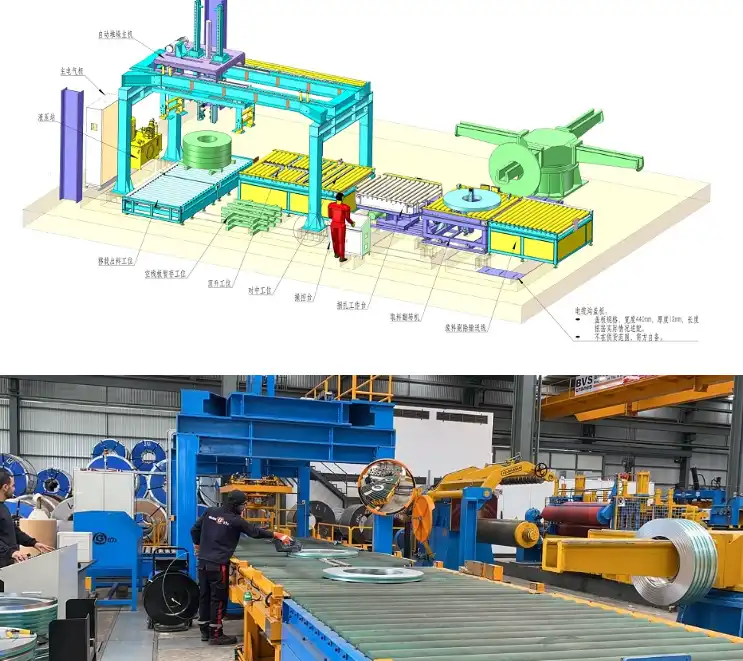
📋 Steel Coil Packing Line Configuration Comparison
| Automation Level | Typical Price Range | Key Components | Daily Capacity | Labor Required | Best For |
|---|---|---|---|---|---|
| Manual Line | $150,000 – $300,000 | Basic wrapping station, manual strapping | 10-30 coils | 4-6 operators | Small shops, low volume |
| Semi-Automatic | $300,000 – $600,000 | Powered conveyors, semi-auto wrapper, auto strapper | 30-80 coils | 2-3 operators | Medium volume, mixed products |
| Fully Automatic | $600,000 – $1,200,000+ | Automated feeding, wrapping, strapping, labeling | 80-200+ coils | 1 operator | High volume, 24/7 operations |
The automation level represents the single biggest cost driver. In my experience with American manufacturers, those opting for semi-automatic systems typically achieve the best balance between investment and return. For example, a mid-sized service center processing 50-70 coils daily might spend $400,000-$500,000 on a semi-automatic line but recover this investment within 18-24 months through labor reduction and damage prevention.
Production capacity requirements directly influence equipment sizing and robustness. A line handling 20-ton coils needs heavier-duty components than one processing 5-ton coils, with proportional cost increases. Similarly, speed requirements affect motor sizes, control systems, and material handling capabilities. I always advise clients to consider not just current volumes but anticipated growth over the next 3-5 years.
System integration costs often surprise buyers who focus only on equipment prices. Proper integration includes conveyors between stations, safety systems, control integration, and sometimes facility modifications. In one project for a Texas steel processor, integration costs represented nearly 30% of the total project but enabled 40% higher throughput through optimized material flow. (automated steel coil packing line, steel coil wrapping line solution, coil packaging production line)
2. How Much Should You Budget for Different Automation Levels?
Many American manufacturers struggle with budget planning because they don’t understand what different automation levels actually deliver. They often either overspend on unnecessary features or underestimate the true cost of their operational requirements, leading to disappointing performance or budget overruns.
For US buyers, manual packing lines typically cost $150,000-$300,000, semi-automatic systems range from $300,000-$600,000, and fully automatic turnkey solutions start at $600,000 and can exceed $1 million, with each level offering distinct operational benefits and ROI profiles. Choosing the right level requires honest assessment of your production volumes, labor costs, and growth projections.
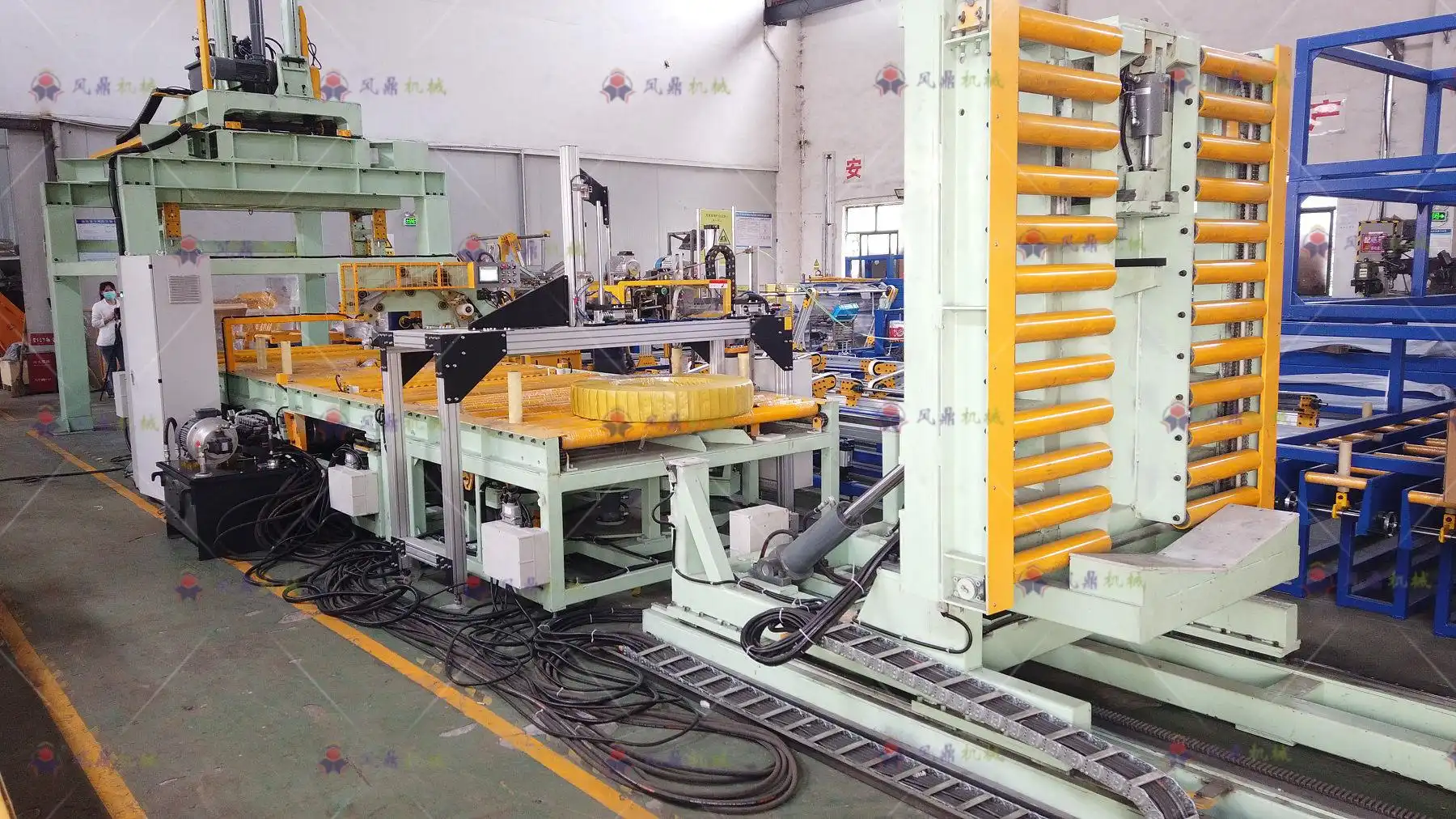
💰 ROI Calculation Example: Semi-Automatic vs Manual Line
Let’s examine a real-world comparison from one of my clients, a Midwest steel service center processing 60 coils daily:
Manual Line Operation (Current)
- Labor: 5 operators × $25/hour × 8 hours = $1,000 daily
- Damage: 2% rejection rate = $800 daily loss
- Throughput: 60 coils with frequent bottlenecks
- Annual Operating Cost: $468,000
Semi-Automatic Line (Proposed)
- Equipment Cost: $450,000
- Labor: 2 operators × $25/hour × 8 hours = $400 daily
- Damage: 0.5% rejection rate = $200 daily loss
- Throughput: 80 coils with consistent flow
- Annual Operating Cost: $156,000
- Annual Savings: $312,000
- ROI Period: 17 months
The manual system appears cheaper initially but becomes significantly more expensive over time. The semi-automatic solution not only pays for itself in less than 1.5 years but also provides 33% higher capacity for future growth.
For fully automatic systems, the investment logic shifts toward operations requiring 24/7 production, extreme consistency, or labor market challenges. A fully automatic line costing $800,000 might operate with just one monitoring operator while processing 150+ coils daily. The higher initial investment is justified by near-total labor elimination and perfect quality consistency.
Beyond equipment costs, American buyers must consider ancillary expenses that vary by automation level. Electrical requirements range from basic 480V connections to sophisticated power distribution systems. Facility modifications might include reinforced foundations, additional clearance, or climate control. Installation and commissioning typically add 15-25% to equipment costs, while training represents another 3-5%. (end-of-line coil packing system, integrated steel coil handling line, turnkey coil packing line)
3. What Are the Hidden Costs in Steel Coil Packing Line Projects?
Even experienced operations managers often overlook significant cost components when budgeting for new packaging lines. These hidden expenses can derail projects and strain relationships with management when unexpected costs emerge during implementation.
Beyond the obvious equipment costs, hidden expenses in steel coil packing line projects typically include facility modifications, utility upgrades, installation labor, training, spare parts inventory, and ongoing maintenance contracts, which can add 25-40% to the base equipment price. Proper planning identifies these costs early, preventing budget surprises and project delays.
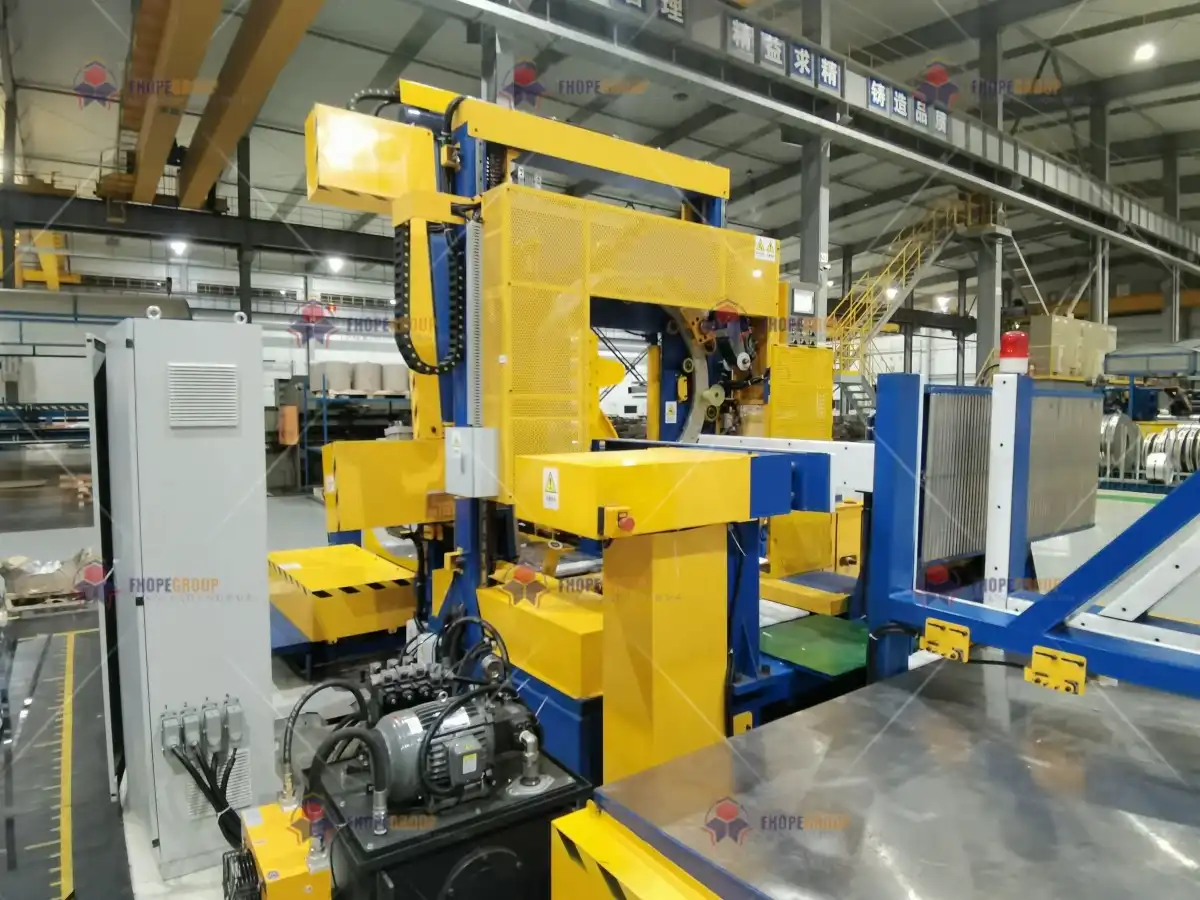
✅ Hidden Costs Checklist for US Buyers
🏗️ Facility Preparation Costs
- Foundation reinforcement: $15,000-$50,000
- Electrical system upgrades: $10,000-$30,000
- Compressed air system: $5,000-$15,000
- Lighting and ventilation: $8,000-$20,000
- Safety system installation: $10,000-$25,000
🔧 Installation & Commissioning
- Equipment installation: 12-18% of equipment cost
- System integration: 8-12% of project value
- Control system programming: $15,000-$35,000
- Testing and validation: $10,000-$25,000
- Certification and compliance: $5,000-$15,000
👥 Operational Readiness
- Operator training: $5,000-$15,000
- Maintenance team training: $8,000-$20,000
- Initial spare parts: 3-5% of equipment cost
- First-year service contract: 2-4% of equipment cost
- Operational supplies inventory: $5,000-$12,000
Facility costs represent the most frequently underestimated expense category. Many existing facilities require concrete reinforcement to support heavy packaging equipment, especially when installing automated systems with integrated conveyors. Electrical upgrades are common in older buildings, with fully automatic lines typically requiring 100-200AMP dedicated service. Compressed air systems often need enhancement to support pneumatic components reliably.
Installation and commissioning expenses vary significantly based on line complexity and site conditions. Simple manual systems might require just 1-2 weeks of installation, while fully integrated automated lines often need 4-8 weeks of onsite work. I always recommend including local rigging companies in early planning, as their availability and costs can impact project timelines. System integration represents another variable cost, particularly when interfacing with existing production equipment or plant management systems.
Operational readiness costs, though smaller individually, collectively impact the total investment significantly. Proper training ensures your team can operate and maintain the equipment effectively, reducing downtime and extending equipment life. Spare parts inventory prevents production stoppages when components eventually fail. Many buyers attempt to minimize these "soft costs" only to incur much higher expenses later through operational inefficiencies and unexpected downtime. (coil wrapping and strapping line, automatic coil packaging system, steel coil stretch wrapping line)
4. How to Choose the Right Supplier for Your USA Operation?
Selecting the wrong equipment supplier can turn what should be a productivity-enhancing investment into a continuous operational headache. American manufacturers particularly need suppliers who understand local regulations, can provide timely service support, and offer solutions matching US operational standards and cost structures.
The right steel coil packing line supplier for US operations should offer comprehensive turnkey solutions, possess specific experience with American safety and operational standards, provide local technical support, and demonstrate proven ROI through case studies from similar applications. Choosing based solely on initial equipment price often leads to higher lifetime costs through poor performance and inadequate support.
⚙️ Supplier Evaluation Scorecard
| Evaluation Criteria | Budget Supplier (30-40% cheaper) | Premium Supplier (Fhopepack) | Why It Matters |
|---|---|---|---|
| System Design Capability | Basic equipment supply | Complete line layout and integration | Affects throughput and future expansion |
| US Compliance Experience | Limited or through third parties | Direct experience with OSHA, UL, CE | Reduces installation delays and liability |
| Technical Support | Email support with slow response | 24/7 phone support + local technicians | Minimizes production downtime costs |
| Spare Parts Availability | 4-8 week delivery from overseas | US warehouse with critical parts | Prevents extended production stoppages |
| Project Management | Equipment delivery only | End-to-end project management | Ensures timeline and budget adherence |
| Training Quality | Basic operation manual | Comprehensive classroom + hands-on training | Reduces operator errors and damage |
| Warranty Coverage | 1 year standard | 2 years comprehensive with first-year inspection | Protects against early-life failures |
System design capability represents the most significant differentiator between suppliers. Many budget suppliers simply provide equipment lists without understanding how components interact within your specific operation. In contrast, experienced suppliers like Fhopepack conduct detailed facility assessments, analyze production flows, and design complete material handling systems. This systems approach ensures all components work harmoniously, maximizing throughput and minimizing bottlenecks.
Compliance and safety experience specifically with US standards cannot be overstated. I’ve witnessed projects delayed for months because imported equipment lacked proper UL certifications or OSHA-compliant safety systems. Suppliers familiar with American requirements design these considerations into their solutions from the beginning, avoiding costly retrofits and compliance issues. This expertise becomes particularly valuable when dealing with state-specific regulations in California, Texas, or other major industrial states.
After-sales support quality separates equipment providers from true partners. The reality of industrial equipment is that components will eventually require service or replacement. Suppliers with US-based technical teams and spare parts inventories provide dramatically faster response times than those relying on overseas support. This local presence becomes crucial during production-critical situations where every hour of downtime costs thousands of dollars. Based on my project experience, the premium for established US support typically pays for itself within the first 2-3 service incidents. (coil packing line configuration, industrial coil packaging line, heavy duty coil packing line)
Conclusion
Investing in the right steel coil packing line requires balancing initial costs with long-term operational benefits and supplier capabilities.


