Single-Station vs Multi-Station Steel Coil Packing System — Efficiency Battle?
Running a busy metal processing plant in places like Mexico means facing constant pressure. You need to keep production high, costs low, and ensure everyone goes home safe. I’ve been there. I know the headaches of slow packing lines, damaged products, and the ever-present risk of workplace injuries. These issues can drag down your entire operation, especially when dealing with heavy steel coils and wire rods. (Mexican heavy industry challenges)
When it comes to packing systems, the choice between single-station and multi-station solutions significantly impacts your factory’s efficiency, safety, and overall profitability. A single-station system typically performs one packing step at a time, often requiring more manual intervention, while a multi-station system integrates several packing processes into a continuous, automated flow, drastically reducing labor and improving throughput for high-volume operations.
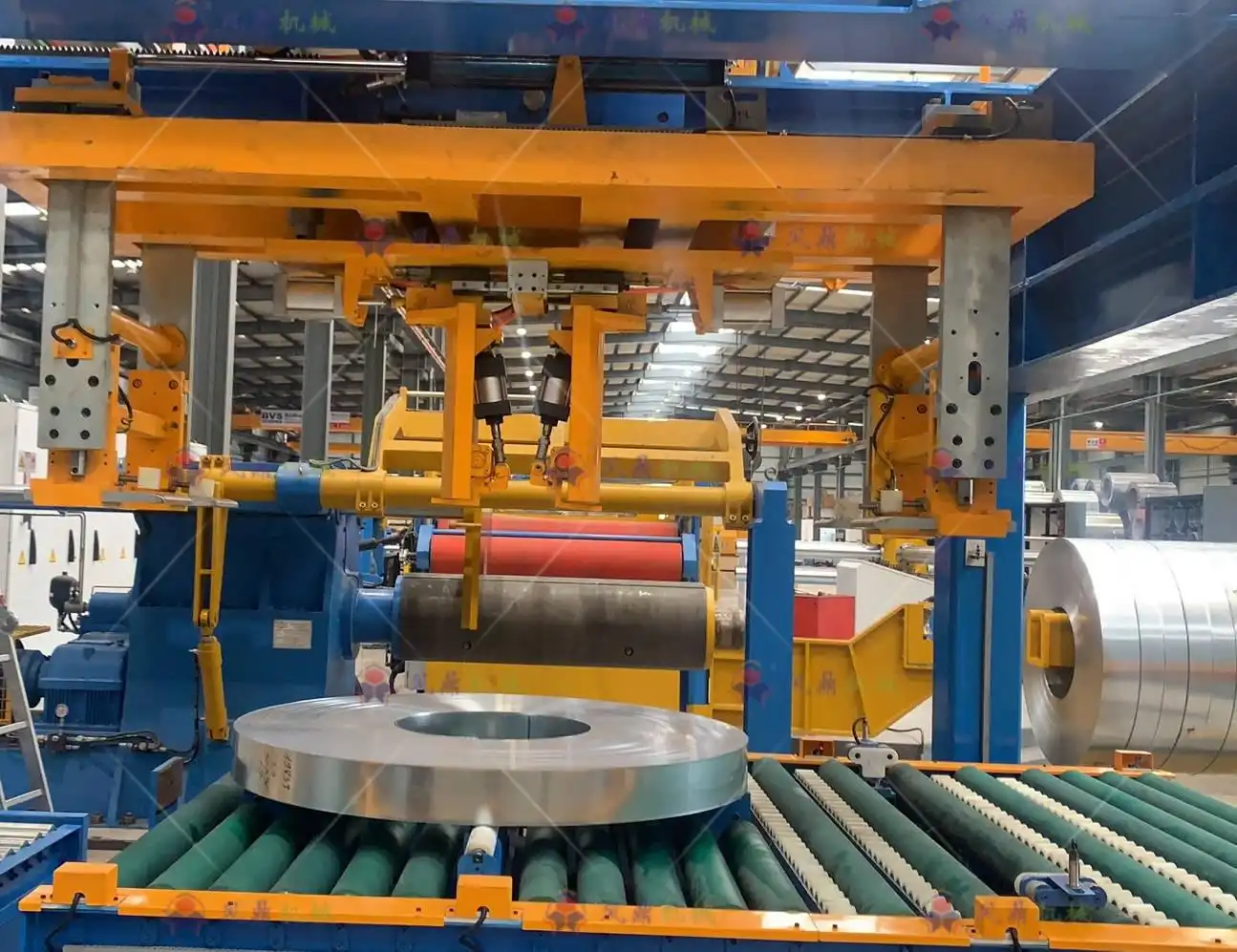
This isn’t just about buying a machine; it’s about investing in a solution that truly solves your operational bottlenecks. Let’s break down these systems. We will explore how each one works and which might be the best fit for your specific needs, helping you make an informed decision for your plant’s future. (packing system decision making)
1. What Exactly is a Single-Station Steel Coil Packing System?
Are you struggling with a packing process that feels slow and manual? Does your current setup mean one worker handles one task before moving the product to the next stage? This kind of fragmented operation often leads to bottlenecks and higher labor costs. It can slow down your entire production line. (manual packing challenges)
A single-station steel coil packing system is a standalone unit designed to perform one specific packing operation at a time, such as eye-banding, radial strapping, or wrapping. These systems often require an operator to load the coil, initiate the packing process, and then manually move the packed coil to the next station for further steps, making them simpler to implement but less integrated than multi-station setups.

How These Systems Work and Their Place in Industry
In my years, from being an employee to running my own packing machine factory, I’ve seen countless single-station systems. They are typically compact. They focus on one job really well. Think of a machine that only wraps the coil’s outer diameter. Or one that only applies steel strapping.
Key Features of Single-Station Systems:
- Dedicated Function: Each machine handles a single task, like stretch wrapping, vertical strapping, or core protection.
- Manual Intervention: Often, an operator is needed to position the coil, start the process, and then move it to the next step.
- Flexibility: You can buy them one by one. This allows a factory to automate specific parts of their packing process as budget allows.
- Lower Initial Cost: Generally, they cost less upfront than a full multi-station line.
When are single-station systems a good fit?
They are often used by smaller factories or those with lower production volumes. They are also good for plants that have varied packing needs. For example, if you pack very different sizes of coils daily, a flexible single-station approach might seem appealing. You might have one machine for narrow coils and another for wide ones. However, this flexibility comes at a cost of overall efficiency. For a medium-to-large facility like Michael’s, relying heavily on multiple single-station machines could mean significant time loss between each process. This could turn into a major bottleneck for steel coil output. I’ve seen it happen. Production can only move as fast as its slowest step, and manual transfers are almost always the slowest. (flexible packing solutions)
Advantages
- 💲 Lower Initial Investment: Easier on the budget for startups or small-scale operations.
- 🛠️ Simpler Maintenance: Fewer complex interconnections mean easier troubleshooting.
- 🔄 Operational Flexibility: Can be adapted for different coil sizes or packing requirements more easily in isolation.
Disadvantages
- ⏱️ Slower Throughput: Manual handling between stages slows down the whole process.
- ⚠️ Higher Labor Costs: Requires more workers for loading, operating, and transferring.
- 🤕 Increased Safety Risks: More manual handling of heavy coils means more potential for worker injury.
- 📉 Inconsistent Quality: Human error in manual transfers can lead to packing inconsistencies. (coil packing labor efficiency)
2. How Does a Multi-Station Steel Coil Packing System Work Differently?
Does your factory struggle with a continuous flow of heavy steel coils, only to see them pile up at the packing department? Are you looking for a way to streamline multiple packing steps into one seamless operation? The traditional, piecemeal approach to packing can seriously hinder your ability to meet demanding production targets and client expectations. (continuous packing flow)
A multi-station steel coil packing system integrates several consecutive packing operations—such as conveying, strapping, wrapping, and weighing—into a single, automated production line. This continuous, synchronized process minimizes manual intervention, maximizes throughput, and ensures consistent package quality by moving coils from one packing stage to the next without human touch, making it ideal for high-volume and high-speed industrial environments.
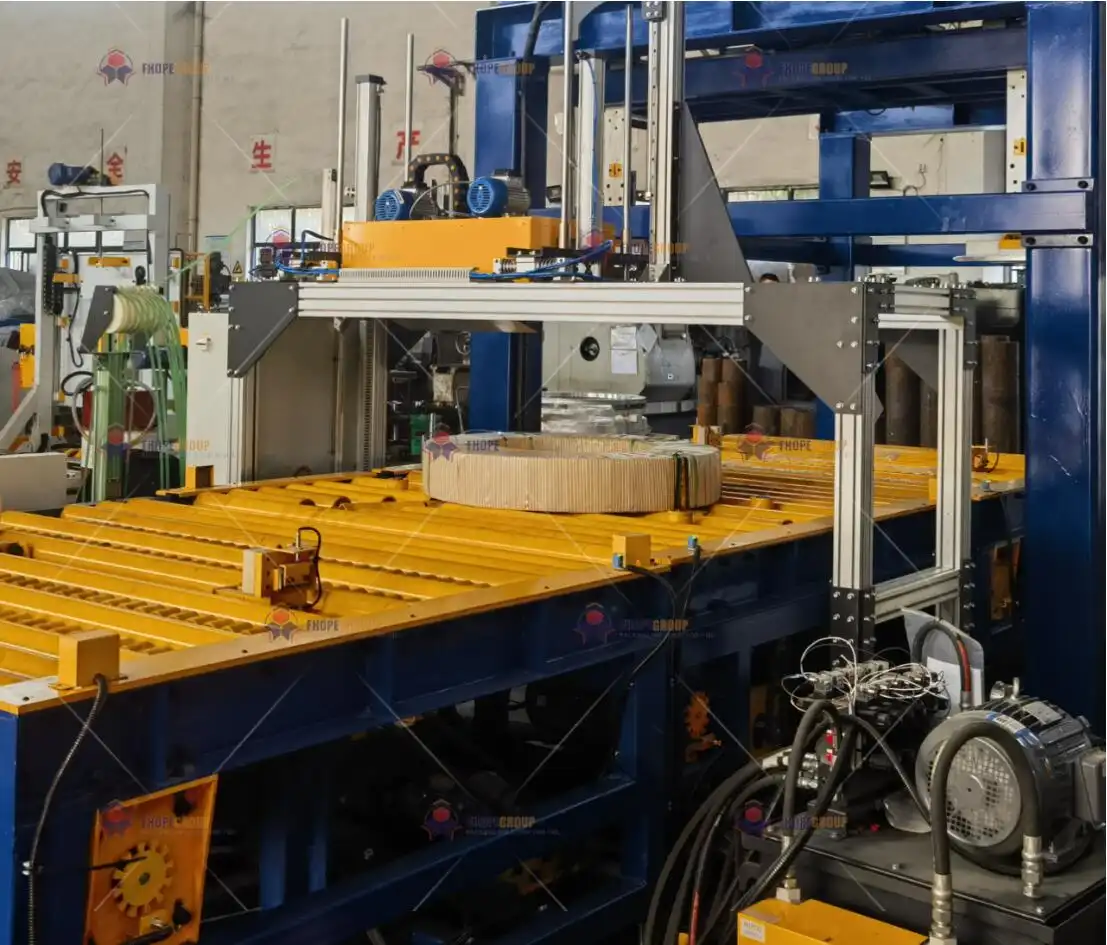
The Power of Integration and Automation
I have personally overseen the design and implementation of many multi-station lines for clients. These systems are true workhorses. They are built for factories that need speed, consistency, and minimal human contact with heavy products. Imagine your steel coils moving smoothly from a conveyor, getting eye-banded, then radially strapped, then wrapped, all without a single operator lifting a finger or risking injury. This is the core benefit.
Key Features of Multi-Station Systems:
- Automated Flow: Coils move automatically from one packing station to the next via conveyors or specialized handling equipment.
- Integrated Processes: Multiple functions like strapping, wrapping, weighing, and labeling happen in sequence on one line.
- Centralized Control: A single control system manages all stages, allowing for synchronized operation and easy monitoring.
- Higher Throughput: Designed for continuous, high-volume production.
When are multi-station systems a good fit?
These systems are perfect for Michael’s kind of operation in Mexico. They suit large or medium-sized metal processing plants. These plants have high production volumes and a consistent product line. If you are packing hundreds of steel coils or wire rods every day, a multi-station system will pay for itself. It drastically cuts down on labor costs. It also makes your process much safer. From my experience, factories that embrace this level of automation see a significant boost in overall output and a sharp drop in product damage. They also gain a reputation for reliability. (high volume packing automation)
Advantages
- 🚀 Maximized Throughput: Continuous operation leads to much higher production rates.
- 💰 Reduced Labor Costs: Fewer operators are needed, saving on wages and benefits.
- ✅ Enhanced Safety: Automation minimizes human contact with heavy, moving parts, reducing injury risk.
- 🌟 Consistent Quality: Automated processes ensure uniform packing, leading to fewer product damages and customer complaints. (automated packing solutions Mexico)
Disadvantages
- 💸 Higher Initial Investment: More complex machinery means a bigger upfront cost.
- 🔧 More Complex Maintenance: Interconnected systems require specialized knowledge for upkeep.
- 📏 Less Flexible: Changes in product size or packing style might require significant adjustments to the entire line.
- 🚨 Single Point of Failure: A breakdown in one section can halt the entire packing line. (integrated packing system challenges)
3. Which System Offers Better Efficiency and Safety for Heavy Industry Operations?
Are you constantly battling slow production and high injury rates in your plant? Does the thought of a safer, faster packing line seem like a distant dream? For factory managers in heavy industries, the struggle to balance output with worker well-being is very real. Current manual processes simply cannot keep up with demand and pose significant risks. (industrial safety concerns)
For heavy industry operations, a multi-station steel coil packing system unequivocally offers better efficiency and safety compared to a single-station setup. Its integrated automation drastically reduces manual labor, eliminates hazardous heavy lifting, and creates a continuous workflow that minimizes bottlenecks, ultimately leading to higher throughput, lower operational costs, and a significantly safer working environment for your team.
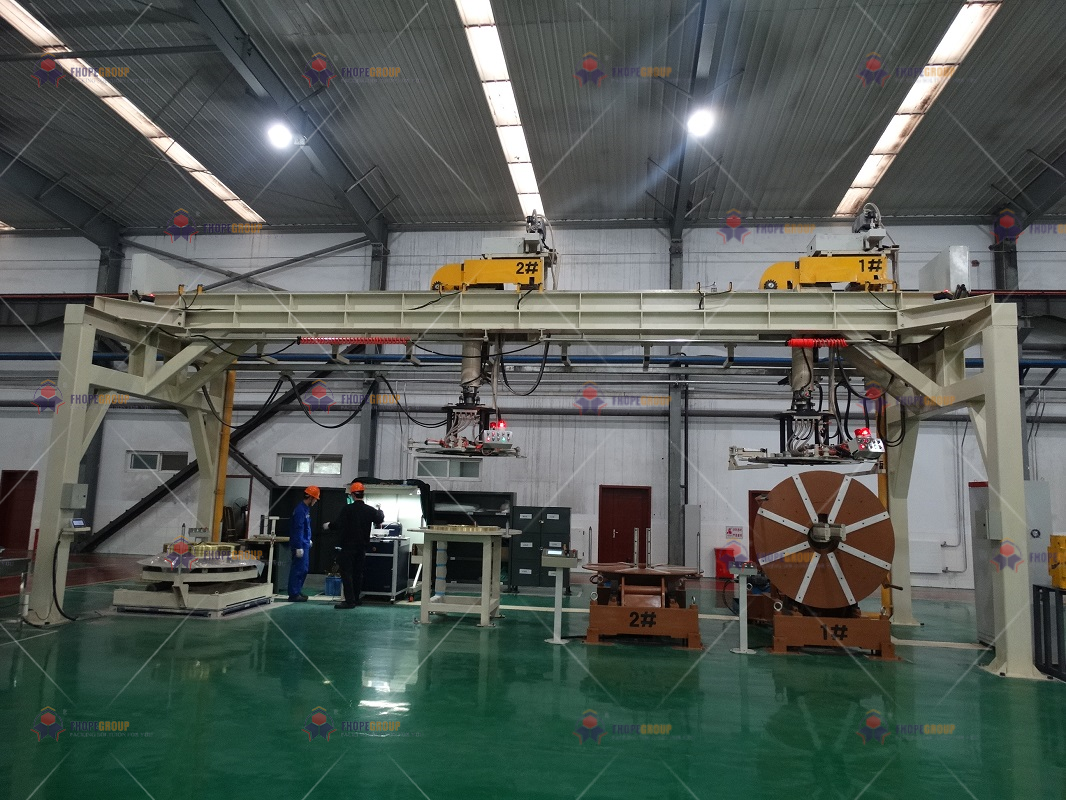
Diving Deep into the Efficiency and Safety Metrics
Let’s look at this from Michael’s perspective. He is managing a medium-to-large metal processing plant in Mexico. His current packing process is too manual. This means it is slow. It also means there are many safety risks.
Efficiency Comparison:
| Feature | Single-Station System | Multi-Station System |
|---|---|---|
| Throughput | Limited by manual transfer times between stages. | High, continuous flow; optimized for speed and volume. |
| Labor Requirement | High; multiple operators needed for various tasks. | Low; minimal human intervention once coils are loaded. |
| Process Speed | Variable; dependent on operator efficiency. | Consistent and fast; machine-controlled cycles. |
| Bottleneck Risk | High; manual transfers are prone to delays. | Low; integrated system minimizes waiting times. |
| Operational Cost | Higher due to wages, insurance, and potential overtime. | Lower long-term due to reduced labor and fewer errors. |
In a multi-station setup, coils move on their own. This removes the "waiting game" between steps. It means your packing line can keep up with your production line. This is crucial for overall factory efficiency. I remember one client in Monterrey, Mexico. Their manual packing line was holding back their entire steel production. After installing a multi-station system, their packing capacity jumped by 70%. Their delivery times improved hugely. (Mexico industrial automation)
Safety Comparison:
When workers handle heavy steel coils by hand, even with cranes, risks are high. Injuries from crushing, strains, or falls are common. This leads to higher insurance costs and lost workdays. Michael mentioned high employee turnover due to safety issues. This is a direct consequence of manual heavy lifting.
- 👷♂️ Reduced Manual Handling: Multi-station systems automate the movement of coils. This takes workers out of harm’s way.
- ❌ Lower Injury Risk: Fewer people interacting directly with heavy machinery means fewer accidents. This is critical for worker well-being.
- 📉 Fewer Compensation Claims: A safer workplace means fewer injuries, which directly lowers your insurance premiums and worker compensation costs.
- 👍 Improved Morale: Employees feel safer. They know their employer cares. This boosts morale and reduces turnover.
From my experience, the biggest benefit of automation often isn’t just speed. It’s the profound impact on worker safety and job satisfaction. Knowing you’ve created a safer workplace is immensely rewarding. A multi-station system tackles Michael’s challenges head-on: it makes the process faster, and much, much safer. It also leads to consistent product quality, reducing damage complaints. (worker safety in manufacturing)
4. How Can You Choose the Right Packing System for Your Factory’s Future Growth?
Are you unsure how to make a smart investment in your factory’s future? Do you worry about picking the wrong equipment and regretting it later? Choosing a packing system is a big decision. It impacts your budget, your production goals, and your long-term success. It’s not just about today’s needs but about what your factory will look like in 5 or 10 years. (packing equipment investment)
Choosing the right steel coil packing system for your factory’s future growth depends heavily on your current production volume, projected expansion, available space, and most importantly, a clear understanding of your desired return on investment (ROI). For high-volume metal processing plants like Michael’s, a multi-station automated system offers superior scalability and efficiency, making it the more strategic choice for long-term growth by reducing operational costs and enhancing safety.
Strategic Investment: Balancing Costs and Benefits
When I talk to factory managers, especially those looking to upgrade, we always discuss ROI. What will this investment give back to your business? It’s more than just the machine’s price.
Factors to Consider for Your Packing System Investment:
- Production Volume:
- Low to Medium Volume: If you pack only a few coils a day, a single-station might be enough initially.
- Medium to High Volume: If you pack many coils daily, or plan to, a multi-station system is a must. This is where Michael’s factory likely stands.
- Budget & ROI:
- Initial Cost: Single-station is cheaper upfront. Multi-station costs more initially.
- Long-term Savings: Multi-station systems offer significant savings in labor, product damage, and insurance costs over time. Calculate your ROI carefully. My clients often find the payback period for multi-station systems is surprisingly short due to these savings.
- Available Space: Automated lines need more space. Make sure your factory layout can accommodate it.
- Product Type & Variety: If you pack a wide range of coil sizes and weights, consider how each system handles this. Multi-station systems can be designed with flexibility for different products, but this needs careful planning.
- Supplier Partnership: This is critical. Michael mentioned past trust issues with vendors. You need a partner who understands your challenges and offers strong after-sales support. This isn’t just about selling you a machine; it’s about helping your business grow.
I always advise my clients to look beyond the immediate cost. Think about the total cost of ownership. This includes labor, maintenance, energy, and lost production due to downtime. A cheaper machine might end up costing you more in the long run if it breaks down often or needs many operators. For Michael, aiming for automation is key to addressing his efficiency bottlenecks, safety concerns, and product damage issues. A carefully selected multi-station system, implemented with a reliable partner, can transform his operations. It gives him the scalability he needs to grow his business without being held back by manual packing limitations. (factory expansion planning)
My Insight: What I’ve Learned from Decades in Packing Machine Manufacturing.
After working in the packing machine industry for decades, starting from the factory floor, building my own business, and helping many clients succeed, I’ve learned a few core truths. When Michael Chen, a factory manager in Mexico, looks at new equipment, he isn’t just looking at steel and circuits. He is looking for peace of mind. He wants solutions that make his life easier, his workers safer, and his business more profitable. My journey has shown me that the best technology is only as good as the partnership behind it.
The choice between a single-station and a multi-station system is a classic dilemma. For Michael’s situation, with high production demands, safety concerns, and efficiency bottlenecks, the answer is clear: Embrace automation with a multi-station system. It’s not just an upgrade; it’s a strategic move to future-proof your factory.
Here’s why I believe this so strongly:
- Automation is Non-Negotiable for Growth: In today’s competitive market, especially in heavy industry, manual processes are simply too slow and too risky. Automation isn’t a luxury; it’s a necessity for sustained growth and profitability. You need to keep up with global demands.
- Safety is Paramount, Not a Side Note: I’ve seen the impact of accidents on workers and their families. Removing manual heavy lifting isn’t just good for business; it’s the right thing to do. A multi-station system dramatically improves workplace safety. It protects your most valuable asset: your people.
- The Right Partner Makes All the Difference: Michael’s experience with untrustworthy suppliers hits home. I’ve built FHOPEPACK on the principle of partnership. We don’t just sell machines; we share knowledge. We help you understand your problems and provide genuine solutions. You need someone who understands your factory, your challenges, and your goals.
Think about the long game. The initial investment in a multi-station system might seem high. But compare that to the ongoing costs of manual labor, worker injuries, product damage, and missed production targets. The ROI becomes very clear, very quickly. It’s an investment in efficiency, safety, and ultimately, your company’s ability to thrive. This is why I am dedicated to sharing my expertise. I want to help you make these critical decisions with confidence. Your success is my success. (packing machine expert advice)
Conclusion
Investing in a multi-station steel coil packing system is a strategic move for efficiency and safety. It reduces costs, prevents damage, and improves worker well-being, paving the way for sustained growth with a reliable 钢带包装线.


