Old Generation Wire Coil Packing Machine vs Modern Automatic Solutions — A Comparison
Picture this: Your factory floor is bustling with workers manually wrapping steel coils, struggling with heavy molds, and constantly facing production delays. The sound of clanking metal and frustrated shouts fills the air. This scene is all too familiar in factories still relying on outdated packing methods. The tension between sticking with traditional equipment and upgrading to modern solutions keeps many plant managers awake at night.
Modern automatic wire coil packing machines outperform old-generation equipment in every critical aspect – efficiency, safety, cost-effectiveness, and reliability. While traditional machines served their purpose in earlier industrial eras, today’s automated solutions eliminate manual labor, reduce injury risks, and dramatically increase packaging speed. The transformation from labor-intensive processes to streamlined automation represents the single most important upgrade metal processing plants can make today. (automated coil packaging systems comparison)
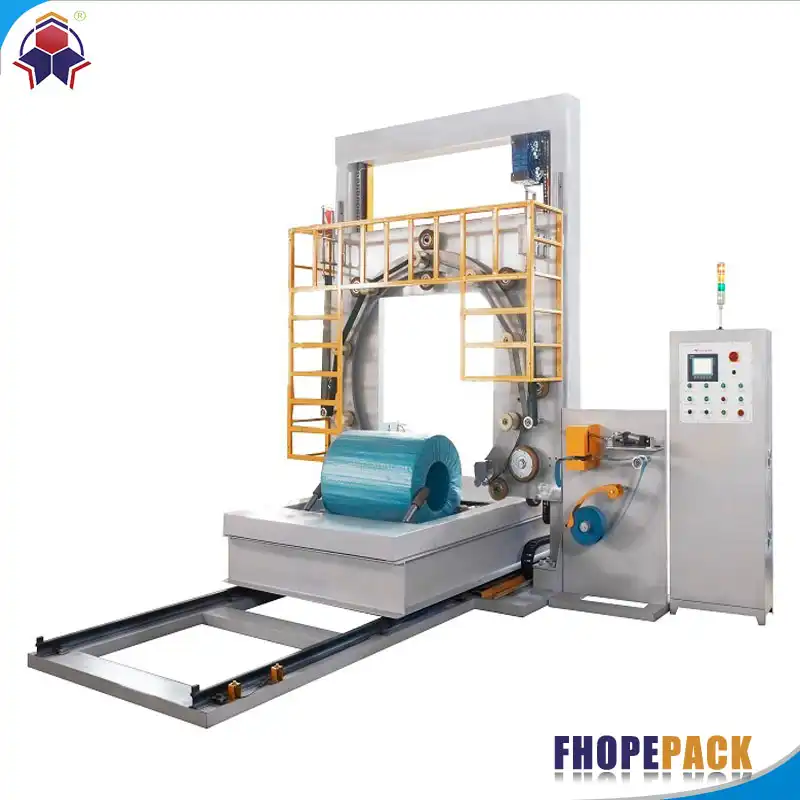
The evolution from manual wrapping to fully automated packaging lines isn’t just about keeping up with technology – it’s about survival in an increasingly competitive global market. As someone who’s operated on both sides of this equation, I’ve witnessed firsthand how the right packaging equipment can transform a struggling factory into a profit powerhouse. Let’s examine why this comparison matters more than ever for your bottom line.
1. What Are the Core Differences in Operation Between Old and New Coil Packing Systems?
Imagine watching two factories side by side: one with workers manually positioning coils and applying wrapping material, another where coils automatically move through packaging stations with minimal human intervention. The contrast couldn’t be more striking. The operational differences between these approaches fundamentally impact everything from workforce requirements to production consistency.
Traditional wire coil packing relies heavily on manual labor for positioning, wrapping, and securing, while modern automated systems handle these tasks through programmed sequences with precision and repeatability. Older equipment typically requires multiple operators to load coils, apply protective materials, and secure wraps manually. Contemporary solutions integrate motorized conveyors, automated film dispensing, and robotic arms that work in coordinated sequences without constant human supervision. This operational shift eliminates variability between operators and ensures every coil receives identical packaging treatment. (manual vs automatic coil wrapping processes)
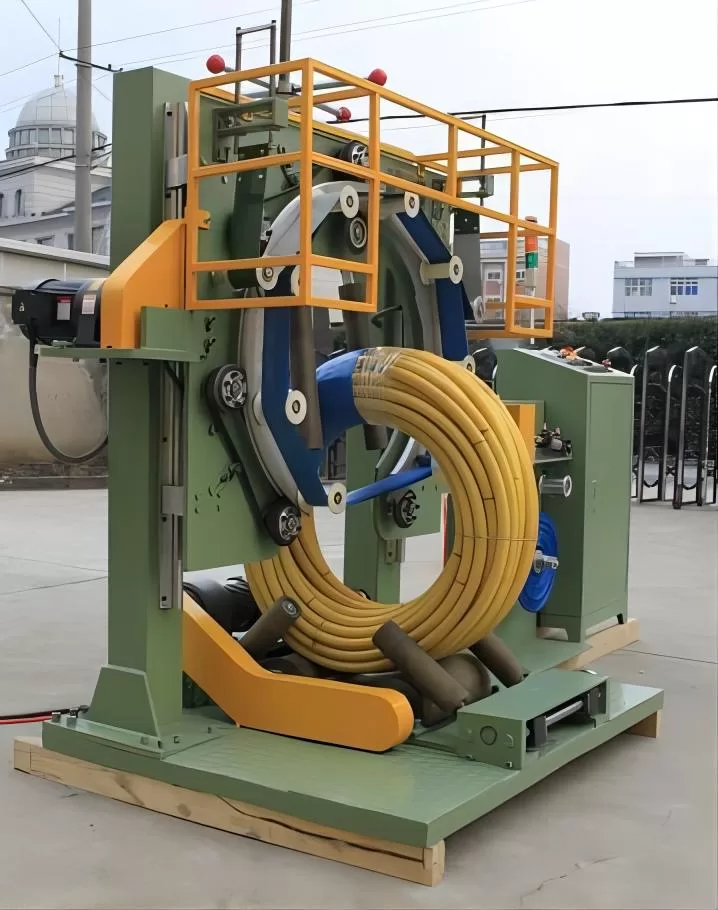
🔄 Operational Workflow Comparison
| Aspect | Traditional Systems | Modern Automated Solutions |
|---|---|---|
| Loading Method | Manual crane operation + positioning | Motorized conveyor + self-centering mechanism |
| Wrapping Process | Workers walk around coil applying material | Rotating ring or rotating coil automation |
| Material Application | Hand-held dispensers with tension variation | Servo-controlled tensioning systems |
| Securing Methods | Manual tape application or tying | Automatic heat sealing or mechanical locking |
| Quality Control | Visual inspection by operators | Sensor-based monitoring and rejection systems |
⚙️ Key Mechanical Differences
The mechanical architecture separates these generations most dramatically. Older machines often used basic electric motors and relay logic controls, requiring constant adjustment and maintenance. Modern systems incorporate:
- Servo-driven positioning systems that achieve millimeter-level accuracy
- PLC-based control systems with touchscreen interfaces for easy operation
- Integrated safety systems with light curtains and emergency stops
- Modular designs that allow for future upgrades and customization
📊 Performance Metrics
The operational superiority of modern systems translates directly to measurable business benefits:
- Labor reduction: Automated systems typically require 1 operator instead of 3-4
- Speed improvement: Modern wrappers process 8-12 coils per hour vs 2-4 with manual methods
- Consistency: Automated tension control eliminates loose wraps and material waste
- Uptime: Advanced diagnostics and robust construction minimize breakdowns
Having implemented both types of systems throughout my career, I consistently observe that plants transitioning to automation experience 40-60% improvements in packaging department productivity within the first month of operation. The operational transformation isn’t just incremental – it’s revolutionary. (coil packaging equipment operational efficiency)
2. How Do Safety Features Compare Between Generations of Coil Packing Equipment?
Safety should never be an afterthought in heavy industrial environments, yet traditional coil packing equipment often treats it as exactly that. I’ve visited factories where workers developed chronic back problems from manually handling heavy protective materials, and others where crushed fingers from coil positioning were considered "part of the job." These aren’t acceptable working conditions in 2024.
Modern automatic coil packing machines incorporate comprehensive safety systems including light curtains, emergency stops, interlocked guards, and automated material handling that virtually eliminate the injury risks associated with older manual equipment. While traditional machines might have a single emergency stop button if you’re lucky, contemporary solutions build safety into every aspect of their design. This represents a fundamental shift from reactive safety (what to do when something goes wrong) to proactive safety (preventing incidents before they can occur). (coil packing machine safety features comparison)
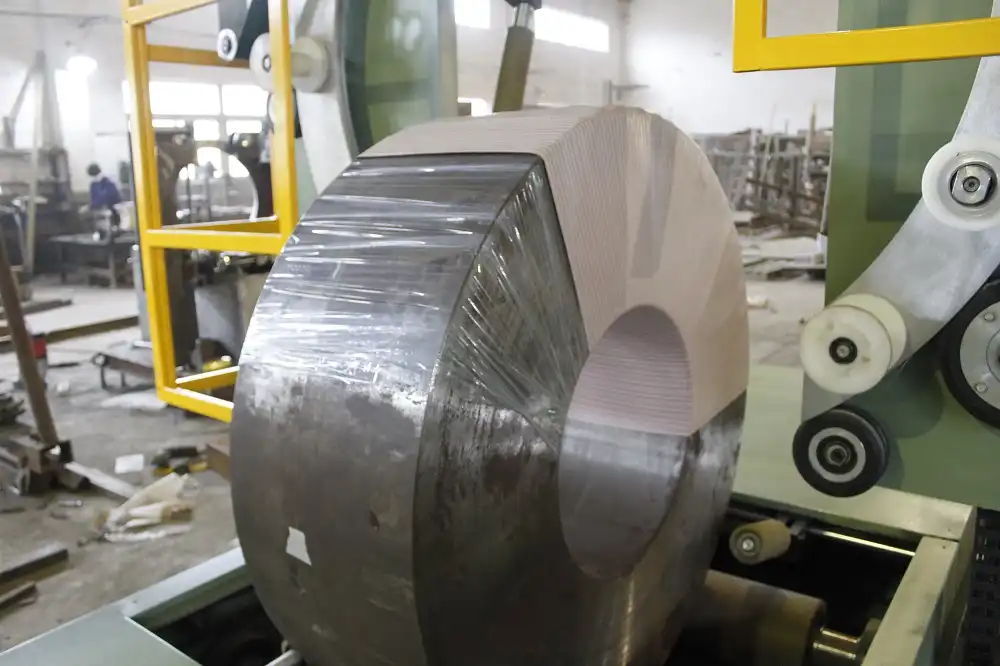
🛡️ Safety Evolution Timeline
timeline
    title Coil Packing Safety Evolution
    section 1990s-2000s
      Basic Emergency Stops : Single red buttons
      Minimal Guarding : Basic physical barriers
      Manual Handling : Workers lift heavy materials
    section 2010-2015
      Improved Guarding : Interlocked safety gates
      Two-Hand Controls : Require both hands to operate
      Basic Light Curtains : Presence detection
    section 2016-2020
      Comprehensive Safety : Multi-zone light curtains
      Automated Material Handling : No manual lifting
      Safety PLCs : Redundant safety systems
    section 2021-Present
      Predictive Safety : AI-powered risk detection
      Ergonomic Design : Reduced operator strain
      Remote Monitoring : Off-site safety oversight
🚨 Critical Safety Differentiators
The safety gap between generations isn’t minor – it’s dramatic:
-
Material handling: Traditional systems require workers to manually position heavy corner protectors and top caps, creating lifting injury risks. Modern systems automatically apply these components through pneumatic or servo-driven mechanisms.
-
Pinch point protection: Older rotating ring wrappers exposed workers to dangerous nip points between moving and stationary parts. New designs completely enclose these areas with interlocked guards that stop machine operation when opened.
-
Emergency response: Basic emergency stops on traditional machines might take seconds to halt operation. Modern safety-rated PLCs can stop all motion within milliseconds of detecting a safety breach.
-
Ergonomics: Constant bending, reaching, and lifting associated with manual packaging leads to musculoskeletal disorders. Automated systems keep operators in comfortable positions at control panels.
💡 Real-World Safety Impact
The statistical evidence supporting modernization is compelling. Factories that have upgraded from traditional to automated coil packing typically report:
- 70-90% reduction in packaging department recordable incidents
- Elimination of strains and sprains from manual material handling
- Reduced workers’ compensation premiums
- Improved employee morale and retention
One of my clients in Mexico, who operated similar to Michael’s situation, reduced their packaging-related injuries from 4 per year to zero after installing automated equipment from Fengding. The investment paid for itself not just through efficiency gains, but through safety cost avoidance alone. (industrial coil packaging safety standards)
3. What Are the True Cost Implications Over Equipment Lifetime?
When factory managers first look at equipment price tags, the sticker shock of modern automated systems can be daunting. I’ve had countless conversations where plant owners expressed concern about spending $150,000+ on automated packaging when they could "make do" with a $40,000 traditional machine. This perspective misses the complete financial picture dramatically.
While modern automatic coil packing machines require higher initial investment, they deliver significantly lower total cost of ownership through labor savings, reduced material waste, minimal downtime, and eliminated injury costs. The purchase price represents only 20-30% of the total cost over a machine’s 10-year lifespan. The remaining 70-80% consists of operational expenses where automated systems dramatically outperform their traditional counterparts. (coil packing machine total cost of ownership)
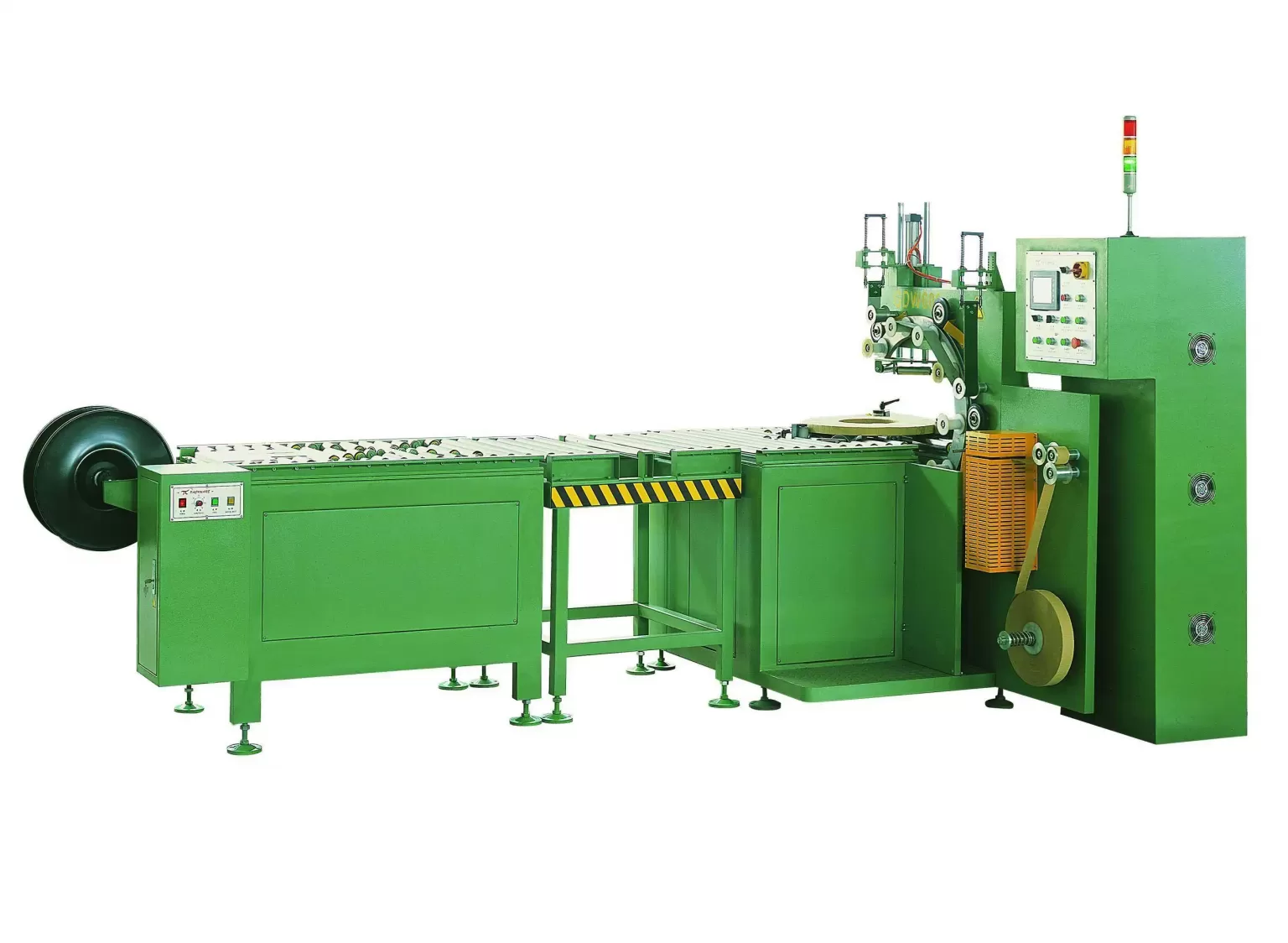
💰 Comprehensive Cost Breakdown
| Cost Category | Traditional Equipment | Modern Automated Systems | 10-Year Difference |
|---|---|---|---|
| Initial Purchase | $40,000 – $60,000 | $120,000 – $180,000 | +$100,000 |
| Annual Labor | $160,000 (4 operators) | $40,000 (1 operator) | -$1,200,000 |
| Annual Maintenance | $8,000 – $12,000 | $4,000 – $6,000 | -$50,000 |
| Annual Material Waste | $15,000 (5-7% waste) | $3,000 (1-2% waste) | -$120,000 |
| Annual Downtime Impact | $45,000 (5-7 days) | $9,000 (1 day) | -$360,000 |
| Injury-Related Costs | $20,000 (estimated) | $2,000 (estimated) | -$180,000 |
📈 Return on Investment Calculation
The financial advantage becomes clear when we examine typical payback periods:
- Labor savings alone often justify automation within 12-18 months
- Combined savings (labor, materials, downtime) typically deliver full ROI in 8-14 months
- Five-year financial advantage of automation commonly exceeds $500,000 per machine
🔧 Hidden Cost Considerations
Many traditional equipment costs don’t appear on initial budgets:
- Training expenses: High employee turnover in manual packaging positions requires constant retraining
- Quality claims: Improperly wrapped coils damaged in transit create customer credit issues
- Regulatory compliance: Increasing safety regulations may require costly retrofits to older equipment
- Energy consumption: Modern servo-driven systems use 30-40% less power than older hydraulic systems
One of the most compelling cases I’ve witnessed was a steel service center that replaced three traditional wrapping stations with two automated machines from Wuxi Buhui. They reduced their packaging workforce from 12 to 3 people while increasing output by 40%. The $300,000 investment paid for itself in 10 months and continues to deliver over $200,000 annual savings five years later. (automated coil packaging ROI analysis)
4. Which Specific Modern Features Deliver the Greatest Operational Impact?
Walking through factories using decades-old packing equipment, I notice operators developing "workarounds" for their machines’ limitations – extra bracing here, custom jigs there, constant adjustments everywhere. These creative solutions represent tremendous hidden productivity drains. Modern equipment eliminates the need for such adaptations through purpose-built features.
The most impactful modern coil packing features include programmable logic controllers with recipe storage, servo-driven tension control, integrated weighing systems, and remote monitoring capabilities that collectively eliminate manual processes and variability. While traditional machines require operator judgment for nearly every adjustment, contemporary systems capture best practices in digital recipes and execute them with perfect consistency shift after shift, regardless of operator experience level. (advanced coil packing machine features)
🎛️ Transformative Feature Analysis
✅ Programmable Logic Control with Recipe Storage
- Traditional approach: Operators manually adjust settings for different coil sizes
- Modern solution: Digital recipes recall optimal parameters instantly
- Impact: Eliminates setup errors, reduces changeover time by 70-80%
✅ Servo-Controlled Film Tensioning
- Traditional approach: Manual brake adjustment based on operator feel
- Modern solution: Closed-loop servo systems maintain perfect tension
- Impact: Eliminates film breaks and loose wraps, reduces material waste by 4-6%
✅ Integrated Weighing and Data Tracking
- Traditional approach: Manual weighing and paper-based documentation
- Modern solution: In-line scales with automatic data capture
- Impact: Provides real-time production data, eliminates manual recording errors
✅ Remote Monitoring and Diagnostics
- Traditional approach: On-site troubleshooting during breakdowns
- Modern solution: Cloud-connected systems with remote support
- Impact: Reduces resolution time from days to hours, enables predictive maintenance
🏭 Real-World Implementation Examples
The practical benefits of these features manifest differently across operations:
- For high-mix manufacturers: Recipe storage allows running 10+ different coil specifications in a single shift with 2-3 minute changeovers instead of 15-20 minutes
- For high-volume operations: Consistent tension control enables running at maximum speeds without quality concerns, increasing throughput 25-35%
- For multi-site operations: Remote monitoring allows technical managers to support packaging lines across different facilities without travel
- For quality-sensitive applications: Automated data tracking provides complete traceability for each packaged coil
🔄 Upgrade Pathways
For operations not ready for complete replacement, several modernization options exist:
- Retrofit kits from suppliers like Fengding can add basic automation to existing machines
- Hybrid approaches maintain manual loading while automating the wrapping process
- Phased implementation allows budget spreading across multiple fiscal years
The most successful implementations I’ve seen involve carefully selecting features that address specific operational pain points. One manufacturer struggling with inconsistent wrapping quality found that adding just servo tension control to their existing machine solved 80% of their problems for less than 20% of a full replacement cost. (coil packing equipment modernization strategies)
Conclusion
Upgrading from traditional to modern coil packing solutions delivers transformative improvements in safety, efficiency and cost-effectiveness that justify the investment. For operations like Michael’s facing production bottlenecks and safety concerns, implementing the right steel coil packing line represents a strategic business decision with compelling returns.


