Low-Cost Steel Coil Packing Line Solution for Thailand Steel Service Centers?
Are you struggling with slow manual packing processes that bottleneck your entire production? Do rising labor costs and safety concerns keep you awake at night? Many Thailand steel service centers face these exact challenges daily, watching potential profits disappear through inefficient packaging operations.
A well-designed low-cost steel coil packing line solution can increase packaging speed by 300% while reducing labor requirements by 70%, making it the most effective investment for Thailand steel service centers looking to improve their bottom line. This complete system approach ensures seamless integration from coil feeding to final packaging, eliminating bottlenecks that plague manual operations. 
As someone who has designed over 200 packaging lines worldwide, I understand the unique challenges facing Thailand’s growing steel industry. Let me show you how affordable automation can transform your packaging operations without breaking your budget.
1. What Makes a Steel Coil Packing Line "Low-Cost" for Thailand Operations?
Many factory managers assume "low-cost" means cheap equipment that compromises on quality. This misconception leads to expensive downtime and maintenance headaches. The truth is, a truly low-cost solution focuses on total cost of ownership, not just initial purchase price.
A low-cost steel coil packing line achieves maximum efficiency with minimal operational expenses through smart automation choices, optimized layout design, and equipment specifically configured for Thailand’s production requirements and budget constraints. This approach prioritizes reliable performance over unnecessary features, delivering the best value for your investment. 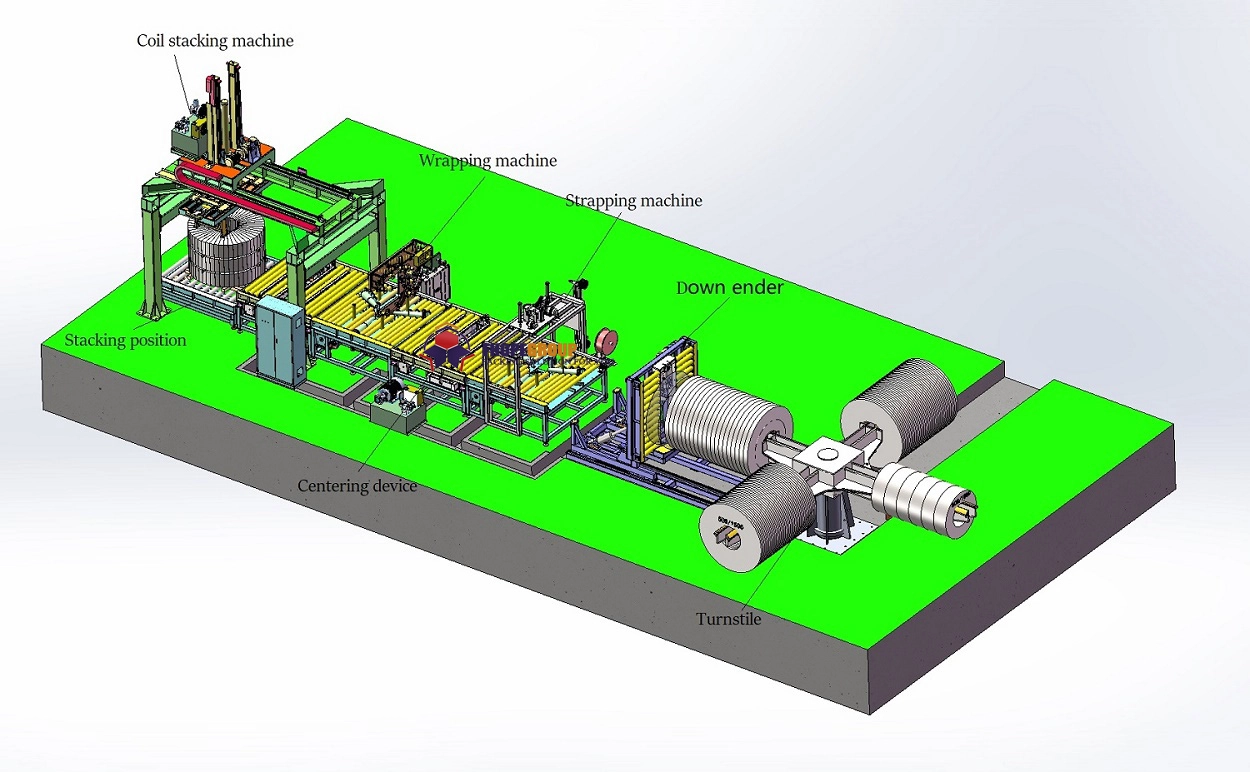
🔍 Understanding True "Low-Cost" in Coil Packaging
The most affordable solutions combine strategic automation with practical design:
| 📊 Total Cost Analysis Framework | Cost Component | Manual Line | Semi-Auto Line | Full Auto Line |
|---|---|---|---|---|
| Initial Investment | $50,000-80,000 | $120,000-180,000 | $250,000-400,000 | |
| Labor Cost/Year | $45,000-60,000 | $18,000-25,000 | $8,000-12,000 | |
| Maintenance/Year | $3,000-5,000 | $6,000-8,000 | $10,000-15,000 | |
| Downtime Cost/Year | $15,000-25,000 | $5,000-8,000 | $2,000-3,000 | |
| 3-Year Total Cost | $239,000-350,000 | $177,000-257,000 | $286,000-469,000 |
🔄 Strategic Automation Levels
- Basic Semi-Auto: Perfect for 30-50 tons/day operations
- Mid-Level Auto: Ideal for 50-100 tons/day throughput
- Full Auto: Recommended for 100+ tons/day production
💰 ROI Optimization Factors
- Labor reduction: 3-8 operators → 1-2 operators
- Packaging speed: 2-4 coils/hour → 8-12 coils/hour
- Material savings: 5-8% reduction in film/strap usage
- Quality improvement: 90% reduction in coil damage
Based on my experience with Thailand operations, semi-automatic systems typically deliver the best balance of performance and affordability for most service centers. The key is matching automation level to your specific production volume and growth plans. (low-cost steel coil packing line, steel coil wrapping line solution, coil packaging production line)
2. How to Design an Efficient Layout for Thailand Steel Service Centers?
Poor layout design creates hidden costs through excessive material handling, wasted floor space, and operational inefficiencies. Many facilities in Thailand struggle with cramped working areas and awkward equipment placement that slows down entire operations.
An efficient steel coil packing line layout minimizes material travel distance, creates logical workflow patterns, and allows for safe operator access while maximizing your existing floor space utilization. The optimal design depends on your specific facility constraints and production requirements. 
🏗️ Layout Configuration Options for Different Spaces
Different facility shapes require different layout strategies:
📐 Linear Layout (I-Shaped)
Coil Entry → Wrapping Station → Strapping Station → Coil Exit- Best for: Narrow, long facilities
- Space required: 20-25 meters length × 6-8 meters width
- Advantages: Simple material flow, easy expansion
- Disadvantages: Longer travel distance between stations
🔄 L-Shaped Layout
          → Wrapping Station
Coil Entry
→ Strapping Station → Coil Exit- Best for: Corner locations, square facilities
- Space required: 15-18 meters × 12-15 meters
- Advantages: Efficient use of corner spaces, shorter travel
- Disadvantages: More complex material handling
🔄 U-Shaped Layout
Coil Entry → Wrapping → Strapping → Exit
    ↑                             ↓
└─────────────────────────────┘- Best for: High-volume operations with multiple operators
- Space required: 18-22 meters × 10-12 meters
- Advantages: Minimal travel distance, better supervision
- Disadvantages: Requires more sophisticated conveyor systems
✅ Layout Design Checklist for Thailand Operations
- [ ] Measure actual available space (include clearance requirements)
- [ ] Map existing material flow patterns and bottlenecks
- [ ] Identify utility access points (power, air, drainage)
- [ ] Plan for future expansion or equipment upgrades
- [ ] Ensure compliance with Thailand safety regulations
- [ ] Optimize for both operator safety and maintenance access
From designing lines for similar Thailand facilities, I’ve found that L-shaped layouts often work best for medium-sized service centers. They provide excellent space utilization while maintaining efficient workflow. The key is conducting a thorough site assessment before finalizing any layout decisions. (integrated steel coil handling line, turnkey coil packing line, production flow optimization)
3. What Equipment Configuration Delivers Maximum Value for Thailand Budgets?
Choosing the wrong equipment configuration leads to either underperformance or unnecessary overspending. Many Thailand service centers make the mistake of either buying overly complex systems they don’t need or too basic equipment that can’t handle their production demands.
The optimal equipment configuration for Thailand steel service centers combines reliable semi-automatic wrapping with automated conveyance, focusing on the most critical automation points that deliver the biggest impact on labor reduction and throughput improvement. This balanced approach ensures you get 80% of the benefits for 50% of the cost of full automation. 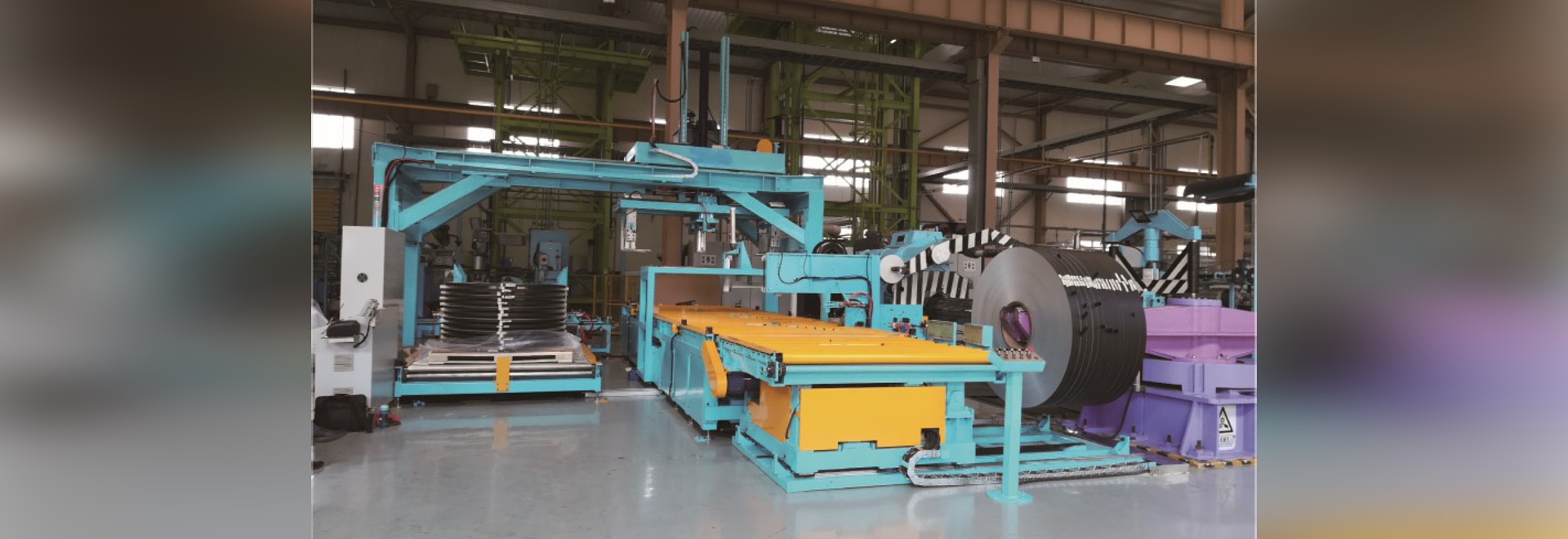
⚙️ Core Equipment Components Breakdown
A value-optimized packing line includes these essential elements:
🔄 Material Handling System
- Powered roller conveyor: Transports coils between stations
- Rotating turntable: Positions coils for wrapping (critical for labor reduction)
- Lifting tables: Adjusts coil height for operator ergonomics
- Transfer cars: Moves coils between parallel lines (for larger operations)
📦 Packaging Stations
- Semi-auto wrapping machine: Applies protective film with operator assistance
- Auto strapping machine: Applies steel or plastic straps automatically
- Corner protector applicator: Installs edge protection (manual or auto)
- Top sheet placer: Adds protective top covers (semi-automatic)
🎯 Control & Safety Systems
- PLC control system: Coordinates equipment operation
- Safety light curtains: Protects operators from moving parts
- Emergency stop systems: Meets Thailand safety standards
- Operator interfaces: Simple touchscreen controls
| 📋 Equipment Selection Matrix by Production Volume | Daily Volume | Recommended Configuration | Key Equipment | Estimated Cost |
|---|---|---|---|---|
| 30-50 tons | Basic Semi-Auto | Manual turntable, semi-wrap, auto strap | $120,000-160,000 | |
| 50-80 tons | Enhanced Semi-Auto | Powered turntable, semi-wrap, auto strap | $160,000-220,000 | |
| 80-120 tons | Advanced Semi-Auto | Auto turntable, enhanced wrap, multi-strap | $220,000-300,000 | |
| 120+ tons | Full Auto | Complete automated line with robotics | $300,000-450,000 |
⚡ Critical Technical Specifications for Thailand
- Coil weight capacity: 3-10 tons (matches common Thailand coil sizes)
- Coil width range: 800-1600mm (covers most products)
- Packaging speed: 4-8 coils/hour (balanced performance)
- Power requirements: 380V 3-phase (standard industrial power)
- Air consumption: 0.6-0.8 MPa, 200-300 L/min (typical compressor capacity)
In my projects throughout Thailand, I’ve found that starting with a solid semi-automatic foundation and planning for future automation upgrades provides the best long-term value. This approach lets you achieve immediate improvements while maintaining flexibility for growth. (coil wrapping and strapping line, automatic coil packaging system, steel coil stretch wrapping line)
4. How to Calculate ROI for Thailand Steel Coil Packing Line Investments?
Many factory managers struggle to justify automation investments because they don’t have clear financial models. Without solid ROI calculations, it’s impossible to make informed decisions or secure management approval for necessary equipment upgrades.
The ROI for a steel coil packing line investment typically ranges from 12-24 months for Thailand operations, achieved through labor cost reduction, increased throughput, reduced material waste, and lower damage claims. A detailed financial analysis should consider both quantifiable savings and strategic benefits that impact long-term competitiveness.
💰 Comprehensive ROI Analysis Framework
A thorough financial assessment covers multiple benefit categories:
📈 Direct Cost Savings Calculation
Labor Cost Reduction:
Current manual team: 6 operators × $1,200/month = $7,200/month
Automated line team: 2 operators × $1,200/month = $2,400/month
Monthly labor saving: $4,800 | Annual saving: $57,600

Material Waste Reduction:
Current film usage: 105% of theoretical need
Automated usage: 95% of theoretical need
10% reduction × $12,000/month material cost = $1,200/month
Annual material saving: $14,400

Damage Cost Reduction:
Current damage rate: 2.5% of production value
Target damage rate: 0.5% with better packaging
2% reduction × $500,000/month production = $10,000/month
Annual damage saving: $120,000
🚀 Throughput & Revenue Impact
- Current capacity: 40 coils/day × 22 days = 880 coils/month
- Automated capacity: 70 coils/day × 22 days = 1,540 coils/month
- Additional revenue: 660 extra coils/month × $50 profit/coil = $33,000/month
- Annual revenue impact: $396,000 (assuming market demand exists)
🛠️ Operational Efficiency Gains
- Reduced overtime: Current 15% overtime → Target 5% overtime
- Maintenance cost: Increase from $500/month to $1,200/month
- Utility cost: Increase from $800/month to $1,500/month
- Training cost: One-time $5,000 for operator training
📊 Complete ROI Calculation Example
Total Annual Benefits:
Labor savings: $57,600
Material savings: $14,400
Damage reduction: $120,000
Throughput increase: $396,000
Overtime reduction: $18,000
Total Annual Benefits: $606,000

Total Annual Costs:
Maintenance increase: $8,400
Utilities increase: $8,400
Additional costs: $15,000
Total Annual Costs: $31,800

Net Annual Benefit: $574,200
Investment Cost: $280,000
Simple Payback Period: 5.8 months
✅ Non-Financial Benefits Consideration
- Safety improvement: Reduced workplace accidents and insurance costs
- Quality consistency: Better packaging quality enhances customer satisfaction
- Employee morale: Automation of heavy lifting improves working conditions
- Competitive advantage: Faster delivery times and better product presentation
- Scalability: Ability to handle business growth without proportional labor increase
Based on my analysis of similar Thailand operations, most service centers achieve payback within 12-18 months. The key is accurately tracking both direct savings and the revenue impact of increased capacity. Many managers underestimate how much production they lose due to packaging bottlenecks. (coil packing line configuration, industrial coil packaging line, ROI analysis for coil packing line)
Conclusion
Implementing the right low-cost steel coil packing line can transform your Thailand operation’s efficiency and profitability through smart automation choices.


