Key Components of a Steel Wire Packing Line | Understanding the Technology?
In the fast-paced world of heavy manufacturing, dealing with steel wire and coil packing can be a real headache. I’ve seen countless factory managers like Michael Chen struggle with slow, manual processes, constant safety risks, and products getting damaged before they even leave the factory floor. These problems don’t just slow you down; they hit your bottom line hard. As someone who built FHOPEPACK from the ground up, I understand the pressure you face to boost output, control costs, and keep your team safe. This is why investing in the right packing technology is not just an option, but a necessity for growth.
A modern steel wire packing line is an integrated system designed to automate, secure, and streamline the packaging of steel wire coils, ensuring product integrity and operational efficiency from forming to shipment. This advanced technology involves several key components, each playing a crucial role in reducing manual labor, preventing workplace injuries, and minimizing product damage, ultimately delivering a significant return on investment for heavy manufacturing facilities worldwide.
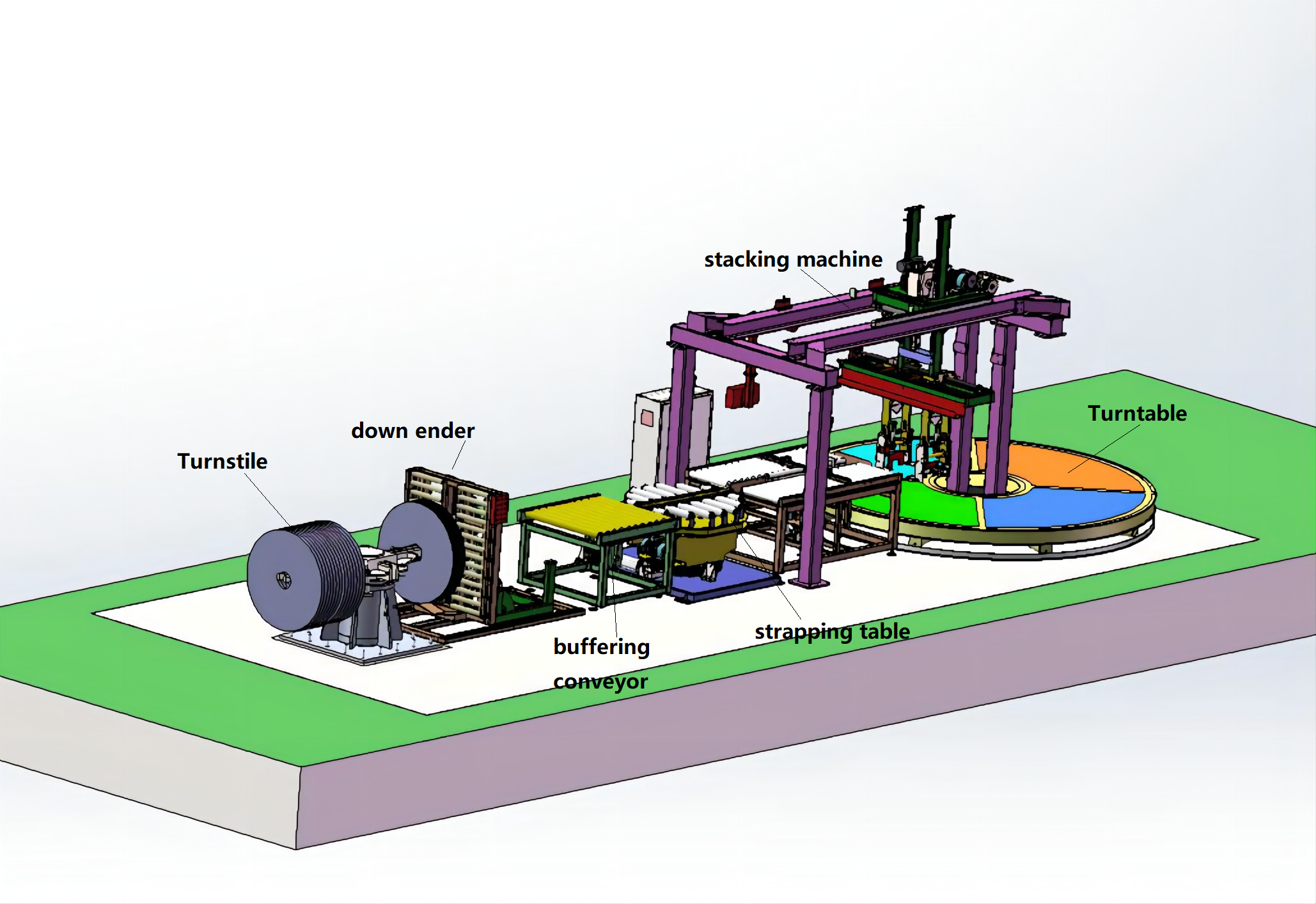
I know from my own experience building packing machine factories that real solutions come from understanding the root cause of these issues. That’s why I want to share my insights into the core technologies that are truly transforming how steel wire is packed. Let’s dive deeper into how these components work and how they can tackle the biggest challenges in your operations.
1. What are the essential machines in a modern steel wire packing line?
Are you tired of packaging bottlenecks slowing down your entire production line? Many factories, especially those in steel processing, still rely on outdated, manual packing methods for steel wire and coils. This not only creates delays but also drains your resources and frustrates your team. It’s a common problem I’ve seen in places like Mexico, where factories need robust, efficient solutions to stay competitive.
A modern steel wire packing line fundamentally consists of several key machines: coil loading and handling equipment, automatic horizontal or orbital stretch wrappers, coil strapping machines, and advanced conveying systems. These components work together seamlessly to automate the entire packaging process, from receiving the finished wire coil to preparing it for safe and efficient shipping.
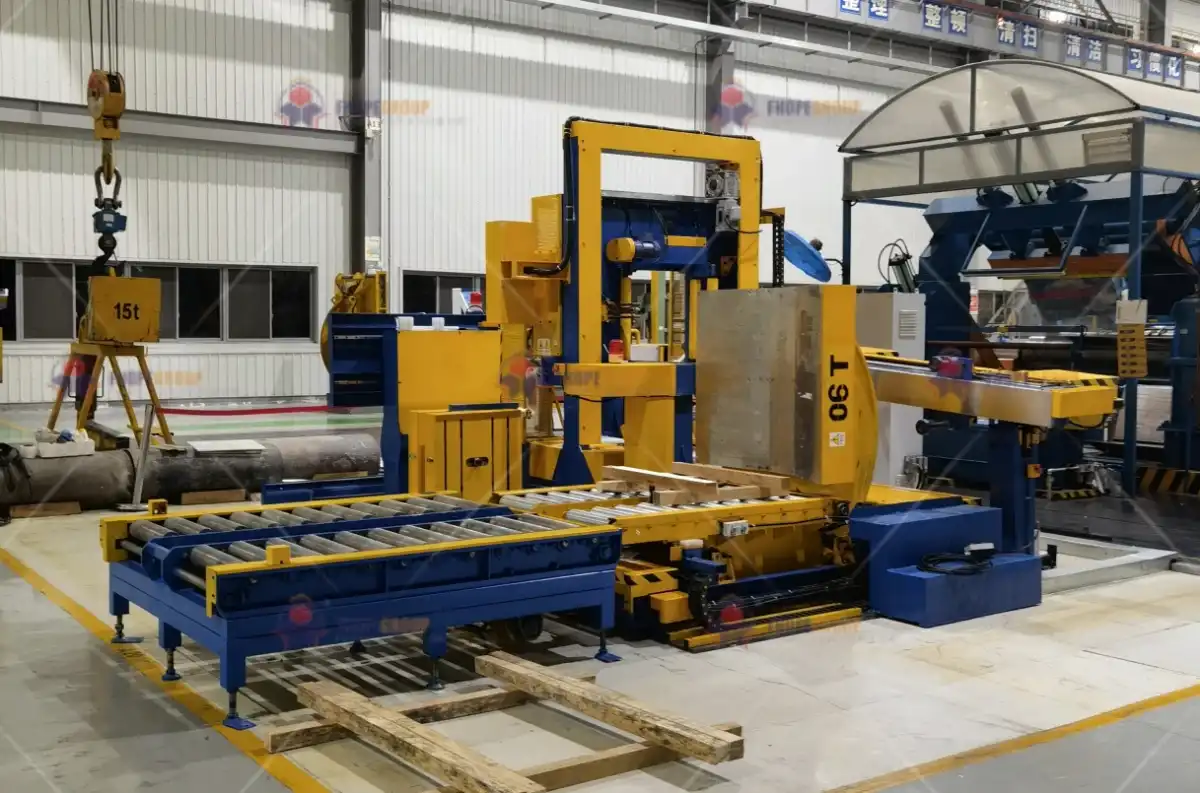
When I first started in this industry, I quickly learned that the right machine could make or break a factory’s output. For steel wire packing, it’s not just about one machine; it’s about a well-integrated system. Let me walk you through the core components that make up an efficient and reliable steel wire packing line. This setup is crucial for any factory looking to upgrade its operations and reduce reliance on manual labor.
The Core Components of an Automated Wire Packing System
To understand how a modern packing line works, we need to look at each crucial step. Each machine handles a specific part of the process. This integrated approach ensures consistent quality and speed.
🏗️ Wire Coil Handling Equipment
This is where the process begins. After your steel wire is drawn or processed, it forms large, heavy coils.
- Coil Carriages & Upenders: These machines safely lift and move heavy coils. They can also change the coil’s orientation, turning it from horizontal to vertical, or vice versa. This is vital for different packing stages.
- Benefit: Reduces manual lifting, prevents injuries, and speeds up internal logistics. (heavy coil handling, coil upending automation)
- Conveyor Systems: A series of rollers or chains that transport coils between different packing stations. They ensure a smooth flow of materials.
- Benefit: Eliminates bottlenecks, provides continuous movement, and integrates different machines. (automated material handling, factory conveyor systems)
🌀 Automatic Horizontal or Orbital Stretch Wrappers
This is the heart of the protection process. These machines wrap the steel wire coil tightly with stretch film.
- Function: The wrapper rotates around the stationary coil (orbital) or the coil rotates through a wrapping ring (horizontal). It applies multiple layers of film, protecting against dust, moisture, and minor damage.
- Why it Matters: Manual wrapping is slow and inconsistent. An automatic wrapper ensures uniform coverage and speed. (automatic coil wrapping, orbital stretch packaging)
- Key Features: Adjustable tension, multiple film layers, and programmable wrap patterns.
- Benefit: Superior protection for your product, leading to fewer customer complaints about damaged goods. (steel wire protection, packaging automation benefits)
🔗 Automatic Coil Strapping Machines
After wrapping, the coils need to be secured. Strapping machines do this job.
- Purpose: They apply durable steel or plastic straps around the coil. This keeps the coil intact and prevents it from unraveling during transit.
- Efficiency: Automated strapping is much faster and more reliable than manual strapping. It also applies consistent tension.
- Types: Available for radial (across the diameter) and axial (around the circumference) strapping. Some advanced systems combine both.
- Benefit: Enhances load stability, reduces transit damage, and improves overall package integrity. (automatic coil strapping, secure wire packaging)
| Component Type | Primary Function | Key Benefit for Factories |
|---|---|---|
| Coil Handling Systems | Move and orient heavy steel wire coils | Worker safety, faster material flow |
| Orbital/Horizontal Wrappers | Apply protective stretch film to coils | Product protection, weather resistance |
| Coil Strapping Machines | Secure coils with steel or plastic straps | Load stability, transport safety |
| Conveyor & Stacking Systems | Transport coils between stations and for storage | Operational efficiency, space saving |
Understanding these essential machines is the first step towards transforming your packing operations. It moves you away from risky, slow manual work towards a safer, more efficient automated system. (essential packing machines, steel wire production line)
2. How do these packing technologies enhance safety and reduce product damage?
Is worker safety a constant worry in your factory? Michael Chen, a factory manager I know in Mexico, faces immense pressure to reduce workplace accidents, especially with heavy steel coils. Manual handling of these massive items leads to high injury rates, which means higher insurance costs and employee turnover. It’s a critical challenge that traditional packing methods simply can’t solve.
Modern steel wire packing technologies dramatically enhance worker safety by eliminating manual handling of heavy coils and significantly reduce product damage through automated, consistent, and protective packaging processes. These systems minimize direct human interaction with heavy machinery and sharp steel, thereby preventing common industrial accidents and ensuring coils are securely wrapped and strapped to withstand transport and handling.

When I was first developing packing machines, worker safety was always at the forefront of my mind. It’s not just about compliance; it’s about protecting your most valuable asset: your people. For Michael and many others, the risk of injury from moving heavy steel wire coils or manually wrapping them is simply too high. This is where automation steps in as a game-changer.
Protecting Workers and Products with Smart Technology
The move to automated packing isn’t just about speed; it’s fundamentally about creating a safer working environment and ensuring your product reaches the customer in perfect condition. I have seen firsthand how these systems reduce risks that manual processes simply cannot.
👷♂️ Safety First: Minimizing Human Interaction with Heavy Loads
- Eliminating Manual Lifting: The most significant safety improvement comes from automated coil handling. Machines like coil carriages and upenders do all the heavy lifting.
- Problem Solved: No more back injuries, crushed limbs, or strains from workers trying to move massive steel coils. This directly reduces worker’s compensation claims and sick days. (automated heavy lifting, industrial safety solutions)
- Automated Wrapping & Strapping: Workers no longer need to get close to moving parts or under heavy suspended loads to manually wrap or strap coils.
- Benefit: Operators can monitor the process from a safe distance. This lowers the risk of entanglement, cuts, or impacts from machinery. (packing line safety, machine guarding)
- Controlled Environments: Modern packing lines can be integrated with safety fences and light curtains. These stop the machines if a person enters a danger zone.
- Result: A highly controlled and predictable working area, which is far safer than a chaotic manual operation. (workplace safety automation, factory accident prevention)
🛡️ Product Integrity: Preventing Damage from Start to Finish
- Consistent Wrapping Quality: Automatic stretch wrappers apply film with uniform tension and overlap.
- Impact: This consistent coverage provides a much better barrier against dust, moisture, and corrosion compared to manual wrapping, which can be uneven and prone to gaps. (corrosion protection, consistent packaging quality)
- Secure Strapping: Automated strapping machines apply precise and consistent strap tension.
- Advantage: This ensures the coil is tightly bound, preventing unraveling and movement during storage and transport. Loose coils can shift, leading to damage or even vehicle accidents. (load security, transit damage reduction)
- Gentle Handling: Automated conveyor systems are designed to move coils smoothly without sudden impacts or drops.
- Outcome: Reduces the risk of dings, dents, and deformations to the coil edges. These damages, even small ones, can lead to customer rejections and lost profits. (gentle material handling, coil edge protection)
| Safety & Product Benefits | Manual Packing Risks | Automated Packing Solutions |
|---|---|---|
| Worker Safety | Back injuries, cuts, crush injuries, fatigue | Eliminates manual lifting, remote operation, safety interlocks |
| Product Damage | Uneven wrapping, loose straps, dents, corrosion | Consistent film tension, precise strapping, gentle conveyance |
| Quality Control | Inconsistent packaging, human error | Standardized process, repeatable results, reduced defects |
By investing in these technologies, you are not just buying machines; you are investing in a safer future for your employees and a more secure delivery for your products. This proactive approach saves money in the long run by cutting down on accidents and rework. (reducing factory injuries, preserving product quality)
3. What advanced features boost efficiency and cut costs in steel wire packing?
Are your current steel wire packing processes draining your budget with high labor costs and constant product waste? Many factory managers, like Michael, are constantly looking for ways to reduce operational expenses without sacrificing quality or speed. Relying on outdated manual methods means lost time, wasted materials, and a lower return on investment for your overall production.
Advanced features in modern steel wire packing lines, such as fully automated operations, intelligent control systems, and integrated data analytics, significantly boost efficiency by minimizing manual intervention and cutting costs through optimized material usage and reduced product waste. These innovations ensure faster throughput, lower labor expenditure, and provide valuable insights for continuous process improvement, directly enhancing a factory’s profitability.
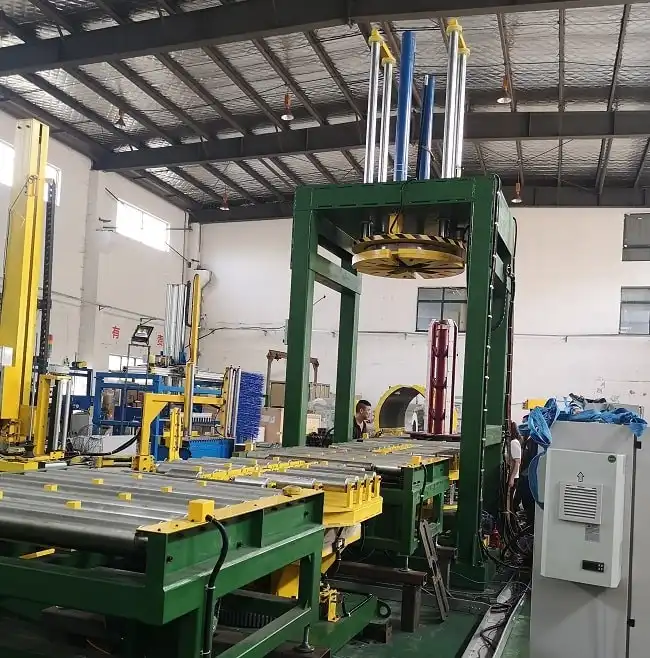
When I started FHOPEPACK, my goal was always to deliver real value. For a factory manager in Mexico, "value" often means "how quickly can this machine pay for itself?" This is where the advanced features of modern packing lines really shine. They are designed to attack inefficiency and waste directly, turning your packing department into a profit-generating part of your business.
Driving Efficiency and Cost Reduction Through Innovation
The real power of today’s packing lines isn’t just in their basic functions, but in the intelligent features that make them smarter, faster, and more economical. Let me show you how these innovations translate into significant savings and improved throughput.
🚀 Full Automation and High Throughput
- Reduced Labor Dependency: This is perhaps the biggest cost-saving feature. A single operator can manage an entire packing line.
- Impact: Significantly lowers labor costs, which is a major operational expense for any factory. It also frees up skilled workers for more complex tasks. (labor cost reduction, automated production lines)
- Faster Cycle Times: Automated machines work at consistent, high speeds without fatigue.
- Benefit: Dramatically increases the number of coils packed per hour or shift. This helps to eliminate end-of-line bottlenecks and keeps your entire production flow smooth. (high-speed packaging, increased production capacity)
- Continuous Operation: Unlike human operators, machines do not need breaks. They can run for extended periods with minimal downtime for maintenance.
- Result: Maximized uptime and throughput, especially during peak demand. (continuous operation, factory uptime optimization)
🧠 Smart Control Systems and Data Analytics
- Programmable Logic Controllers (PLCs): These are the "brains" of the packing line. They allow for precise control over every step of the process.
- Advantage: You can program specific wrapping patterns, strapping tensions, and conveying speeds for different types of wire coils. This ensures consistent quality. (PLC control systems, customized packaging settings)
- Human-Machine Interface (HMI): Intuitive touchscreens allow operators to easily monitor the line, adjust settings, and diagnose issues.
- Benefit: Reduces training time, simplifies operation, and allows for quick troubleshooting, minimizing downtime. (user-friendly HMI, operational simplicity)
- Data Collection and Reporting: Advanced systems can track key performance indicators (KPIs) like coils packed per hour, film consumption, and error rates.
- Impact: Provides valuable insights into packing efficiency. This data helps factory managers make informed decisions for further optimization and identify areas for improvement. (packing line analytics, performance monitoring)
♻️ Optimized Material Consumption
- Precise Film and Strap Application: Automated systems apply exactly the right amount of stretch film and strapping material.
- Savings: Eliminates the guesswork and waste associated with manual application. This translates directly into lower material costs over time. (material optimization, reduced packaging waste)
- Reduced Product Damage: As discussed earlier, automated systems significantly reduce damage to coils during packing and handling.
- Financial Benefit: Fewer damaged products mean fewer reworks, fewer customer returns, and fewer lost sales. This boosts your profit margins. (cost savings through damage reduction, profit margin improvement)
| Advanced Feature | Efficiency Gain | Cost Reduction |
|---|---|---|
| Full Automation | Faster throughput, consistent output, higher capacity | Lower labor costs, reduced human error |
| Smart Control (PLC/HMI) | Precision, flexibility, easier operation | Minimized downtime, less material waste |
| Data Analytics | Performance insights, informed decisions | Optimized resource use, continuous improvement |
| Material Optimization | Consistent application | Reduced film/strap consumption, less product rework |
For factory managers like Michael, these advanced features offer a clear path to boosting efficiency and cutting costs. It’s about smart investment that brings measurable returns. (efficiency in manufacturing, packing cost reduction strategies)
4. How can you ensure your investment in a packing line genuinely solves your factory’s challenges?
Are you hesitant about investing in new equipment due to past experiences with unreliable suppliers or solutions that didn’t quite fit? Michael Chen, like many factory managers, has faced a "supplier trust crisis." He’s wary of providers who prioritize sales over genuine problem-solving and after-sales support. This caution is well-founded, as a poor investment can lead to more headaches than solutions.
To ensure your investment in a steel wire packing line genuinely solves your factory’s challenges, you need to partner with a supplier who offers deep industry expertise, customizable solutions, and robust after-sales support, focusing on a clear Return on Investment (ROI). This involves a thorough assessment of your current production bottlenecks, safety concerns, and efficiency goals, and then collaborating with a provider who understands your specific operational environment and can deliver a reliable, long-term solution.
From my own journey, starting as an employee and then building FHOPEPACK, I know that success isn’t just about selling a machine. It’s about building trust and offering real solutions. For a factory manager like Michael in Mexico, finding a true partner is more important than just buying equipment. You need someone who understands your unique challenges and can guide you through the process, not just push a product.
Partnering for Success: Making the Right Investment
Choosing a packing line is a strategic decision. It requires more than just looking at a brochure. You need to look for a partner who understands your challenges and can deliver a solution that truly transforms your operations.
✅ Seek Deep Industry Expertise
- Experience Matters: Look for suppliers with a proven track record in the heavy manufacturing and packing machine industry.
- Why FHOPEPACK? My own journey, from packing machine engineer to successful factory owner, means I’ve lived the challenges you face. I understand the nuances of coil and wire packing because I’ve designed, built, and operated these systems. We speak your language, not just sales jargon. (experienced packing machine suppliers, industry-specific solutions)
- Understanding Your Business: A good partner will ask about your specific production bottlenecks, safety concerns, and growth targets. They won’t just offer a generic solution.
- Benefit: This ensures the proposed packing line is tailored to your factory’s unique needs, whether it’s for coil packing or steel wire packing. (customized packaging solutions, understanding factory operations)
🛠️ Demand Customizable and Scalable Solutions
- Not One-Size-Fits-All: Your factory in Mexico has specific space constraints, production volumes, and types of steel wire. The packing line must fit your existing setup.
- Key Requirement: Look for modular designs that can be adapted and expanded as your business grows. This protects your initial investment. (scalable packing systems, modular machine design)
- Integration Capabilities: Ensure the new packing line can seamlessly integrate with your existing upstream and downstream processes.
- Advantage: Avoids creating new bottlenecks and ensures a smooth transition to automation. (integrated production lines, seamless system integration)
🤝 Prioritize Robust After-Sales Support and Training
- Reliability Beyond Purchase: What happens after the machine is installed? This is where many suppliers fall short.
- Essential: A true partner offers comprehensive installation, thorough operator training, and readily available technical support. This minimizes downtime and ensures your team can operate the equipment effectively. (reliable after-sales service, technical support for machinery)
- Spare Parts Availability: Quick access to spare parts is crucial to prevent long downtimes.
- Consideration: Inquire about local service teams or quick shipping options, especially for international clients like factories in Mexico. (spare parts availability, global service network)
💰 Focus on Clear Return on Investment (ROI)
- Quantifiable Benefits: A reliable supplier will help you calculate the ROI of your investment. This should include savings from reduced labor, decreased product damage, lower insurance costs, and increased throughput.
- My Perspective: I believe in making investments that clearly pay for themselves. We aim to show you how a FHOPEPACK solution directly impacts your profitability. (packing machine ROI, cost-benefit analysis of automation)
- Long-Term Partnership: Michael isn’t just buying a machine; he’s looking for a long-term partner. This means working with someone who is invested in your success.
- FHOPEPACK’s Goal: We want to help clients like Michael grow their businesses, just as I did with my own factory. We are dedicated to providing insights and solutions that truly make a difference. (long-term supplier relationships, business growth through partnership)
By carefully evaluating these aspects, you can move forward with confidence. Your investment will not only solve your current challenges but also empower your factory for future growth and profitability. This proactive approach sets the foundation for success. (strategic equipment investment, factory modernization)
Conclusion
Investing in a steel wire packing line offers critical solutions for efficiency, safety, and product integrity. By choosing the right steel coil packing line and partner, you unlock significant ROI and pave the way for sustainable growth.


