Key Components of a Steel Coil Strapping and Packing Line and Their Functions?
The pressure on factory managers like Michael is real. You are constantly juggling output targets, cost control, and worker safety. manual processes in your metal processing plant cause slow production, safety risks, and damaged products. These issues not only hurt your bottom line but also shake your trust in suppliers. Finding equipment that can handle tough, high-intensity work is key, but you also need a partner who understands your daily challenges.
A typical steel coil strapping and packing line includes several critical components: coil loading and conveying systems for safe movement, automatic strapping machines for secure bundling, coil wrapping machines for protection, advanced control systems for automation, and essential peripheral units like upenders and weigh scales. Each part works together to boost efficiency, improve safety, and reduce product damage.
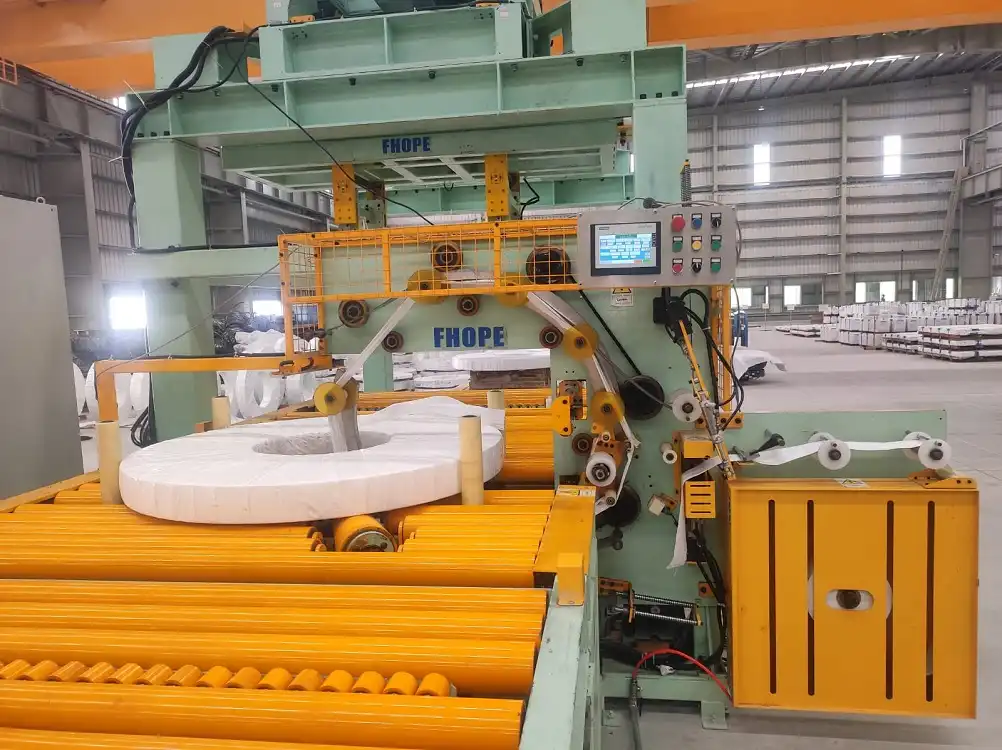
Understanding each of these components is not just about knowing what they do. It is about seeing how they solve your real-world problems. Let us dive deeper into each part of the steel coil packing line. We can explore how these components help you build a more efficient, safer, and more profitable operation.
1. How Do Coils Get Loaded and Moved to the Packing Station Safely?
Moving heavy steel coils manually is slow, dangerous, and a major bottleneck. Your team faces high risks of injury, and any slowdown affects your whole production. You need a system that loads coils quickly and moves them through the factory without any hitches, ensuring worker safety and smooth operations.
Steel coils are loaded and moved safely through a packing line using specialized coil loading cars, robust roller or chain conveyors, and integrated safety systems. These components work together to ensure that coils transition smoothly from storage to the packing station without manual intervention, minimizing risks and maximizing flow.

Automated Coil Handling: The Foundation of Efficiency
From my experience building and running packing machine factories, I learned that the journey of a coil within the factory starts long before it reaches the strapping machine. How coils are loaded and moved is very important. Manual handling of heavy steel coils is not only slow and inefficient but also extremely dangerous. It leads to high injury rates and rising insurance costs. Automated systems change this. They provide a safe and consistent way to transport coils.
Key Components for Safe Coil Movement:
-
Coil Loading Cars/Pallets:
These are strong platforms designed to pick up coils from an entry point, like a crane, and place them onto the conveyor system. They often feature motorized movement and precise positioning controls. Their main job is to reduce the need for workers to directly handle heavy coils. They smoothly feed coils into the packing line. (automated coil feeding, heavy load transfer) -
Roller Conveyors:
These conveyors use a series of robust rollers to move coils horizontally. They are good for short distances and for lighter coils. The design ensures minimal friction and smooth movement, preventing damage to the coil surfaces. They are durable and can handle continuous operation in tough environments. (horizontal coil transport, surface protection) -
Chain Conveyors:
For heavier or larger coils, chain conveyors are often the best choice. They use strong chains with special pads or cradles to support the coil. This design gives better grip and prevents the coil from slipping, especially on inclines or declines. Chain conveyors are known for their strength and reliability in demanding industrial settings. (heavy-duty coil transport, high load capacity) -
Integrated Safety Sensors and Interlocks:
Safety is not just a feature; it is a necessity. Modern packing lines use sensors, light curtains, and emergency stop buttons. These systems detect human presence or incorrect coil positioning. They stop the machinery immediately to prevent accidents. This level of safety automation protects workers and prevents costly downtime caused by incidents. (workplace safety, accident prevention, operational security)
Investing in these initial handling systems means more than just moving coils. It means protecting your most valuable assets: your products and your people. It sets the stage for a smooth, efficient, and safe packing process that avoids the bottlenecks Michael often faces.
2. What Machines Are Essential for Effective Steel Coil Strapping?
After coils are loaded and moved, they need to be secured. Manual strapping is slow, inconsistent, and puts workers at risk. You are looking for a reliable way to bundle coils tightly, prevent them from unwinding, and keep them safe during storage and transit. This process needs to be fast and repeatable to avoid production delays.
Essential machines for effective steel coil strapping include automatic radial or orbital strapping machines, which apply straps with consistent tension and secure seals. These systems automate the process of feeding, tensioning, sealing, and cutting straps around the coil, ensuring secure bundling while significantly improving speed and worker safety.

Automated Strapping: Securing Your Product with Precision
Strapping is a critical step. It holds the coil together, preventing unwinding and damage. For years, I have seen factories struggle with manual strapping. It is a slow, labor-intensive job, and getting consistent tension by hand is almost impossible. This leads to loose straps, damaged coils, and customer complaints. Automated strapping machines are the game-changer here. They provide a precise, repeatable, and safe way to secure coils.
Key Machines for Robust Coil Strapping:
-
Automatic Radial Strapping Machines:
These machines are designed to apply straps around the circumference of a coil. The strapping head moves radially around the coil. This ensures even tension across multiple straps. They can apply both steel and PET straps, depending on your needs. The automation here means less manual effort, faster cycles, and consistent strap tension every time. (circumferential strapping, consistent tension, automated bundling) -
Automatic Orbital Strapping Machines:
Sometimes, coils need strapping through the eye or around the outer diameter in a specific pattern. Orbital strapping machines can do this. They are versatile and can handle different strapping patterns to meet specific packaging requirements. These machines improve the security of the coil during handling and shipping. (eye strapping, versatile strapping patterns, secure packaging) -
Strapping Head Technology:
The heart of any strapping machine is its strapping head. Modern strapping heads feature advanced tensioning systems that apply precise force. They also have reliable sealing mechanisms, whether through friction weld for PET or notch/sealless for steel. A well-designed strapping head reduces strap breaks and ensures a strong, lasting hold. (precise tensioning, reliable sealing, strap integrity) -
Strap Material Options:
- Steel Straps: These offer maximum strength and are ideal for very heavy or sharp-edged coils. They provide a very rigid hold. (high strength strapping, heavy-duty bundling)
- PET (Polyester) Straps: These are a safer and often more cost-effective alternative. They have good elasticity and strength, are resistant to corrosion, and are safer for workers to handle than steel. They are good for many coil types. (corrosion-resistant strapping, safer handling, cost-effective bundling)
My advice to clients like Michael is always to look beyond the initial cost. Consider the long-term benefits of automated strapping. Think about fewer product damages, improved worker safety, and the ability to meet higher production demands. Companies like Fengding and Wuxi Buhui offer strapping solutions that are built to last and deliver consistent performance. This is crucial for maintaining your factory’s output.
3. How Do Steel Coils Get Wrapped and Protected for Transit?
After strapping, coils need protection from the elements, dust, and potential damage during transport. Relying on simple covers or manual wrapping leaves your products vulnerable. This can lead to customer complaints about surface damage or corrosion. You need a system that fully encloses and protects coils efficiently, ensuring they arrive in perfect condition.
Steel coils are wrapped and protected for transit using specialized coil wrapping machines, primarily orbital wrappers. These machines apply protective materials like stretch film, VCI (Volatile Corrosion Inhibitor) paper, or woven fabric tightly around the coil. This creates a secure, moisture-resistant, and impact-protective barrier that keeps the product safe from external damage and corrosion.
Advanced Wrapping: The Shield for Your Valuable Coils
Wrapping is the final layer of protection for your steel coils. It shields them from moisture, dust, and physical damage. This is especially important if coils travel long distances or are stored outdoors. Manual wrapping is not only slow but also inconsistent. It often leaves gaps or loose areas, compromising protection. Automated wrapping machines ensure a tight, uniform wrap every time. This significantly reduces product loss and keeps your customers happy.

Key Machines and Materials for Coil Protection:
-
Orbital Coil Wrapping Machines:
These are the workhorses of coil protection. An orbital wrapping machine rotates a roll of film or paper around the coil as the coil passes through its center. This creates a continuous, overlapping wrap that covers the entire circumference and side faces of the coil. They are highly efficient and can apply multiple layers of protective material. (automatic coil wrapping, continuous protection, efficient packaging) -
Stretch Film:
This is a common wrapping material. It is a clear, durable plastic film that stretches and clings tightly to itself. Stretch film provides excellent protection against dust, dirt, and moisture. It also helps to secure the coil further by creating a strong, cohesive package. (moisture barrier, dust protection, secure bundling) -
VCI (Volatile Corrosion Inhibitor) Paper/Film:
For metal products like steel coils, corrosion is a major concern. VCI paper or film releases invisible chemicals that create a protective atmosphere around the metal surface. This prevents rust and corrosion, even in humid environments. Using VCI is a smart investment to ensure coils arrive without any rust spots. (corrosion prevention, rust protection, anti-corrosion packaging) -
Woven Fabric:
Sometimes, for heavier coils or those requiring extra impact protection, a layer of woven fabric (like PP woven material) is used. This material provides superior tear resistance and acts as a robust barrier against physical damage. It is often used in combination with stretch film for comprehensive protection. (impact resistance, tear protection, heavy-duty wrapping) -
Customizable Wrapping Patterns:
Modern wrapping machines allow for different wrapping patterns. You can choose to wrap the entire coil or focus on specific areas. This flexibility ensures that each coil receives the right level of protection based on its type, transit conditions, and customer requirements. (flexible wrapping, tailored protection, product-specific packaging)
From my experience, a well-wrapped coil is a testament to quality. It tells your customer that you care about their product. It helps to avoid costly claims and builds trust. The right wrapping solution makes a big difference to your factory’s reputation and profitability. Consider the long-term value of ensuring your products arrive in perfect condition.
4. What Role Do Advanced Control Systems Play in a Modern Packing Line?
Managing a complex packing line with multiple machines manually is prone to errors, slow, and inefficient. Michael needs to not only automate processes but also gain insights into his operations, control costs, and ensure consistent quality. A lack of central control means blind spots and missed opportunities for improvement.
Advanced control systems, driven by PLCs (Programmable Logic Controllers) and HMIs (Human-Machine Interfaces), are the brain of a modern packing line. They automate machine functions, coordinate sequential operations, monitor performance, collect data, and provide diagnostic feedback. These systems are crucial for maximizing efficiency, ensuring consistent quality, enhancing safety, and enabling real-time operational insights.
The Brains of the Operation: Smart Control for Smart Factories
A packing line is more than just a collection of machines. For it to work as one smooth unit, it needs a central brain. This is where advanced control systems come in. They take all the individual parts and make them work together. This removes human error and boosts overall output. Michael wants to improve efficiency and reduce costs. The control system is key to achieving these goals.
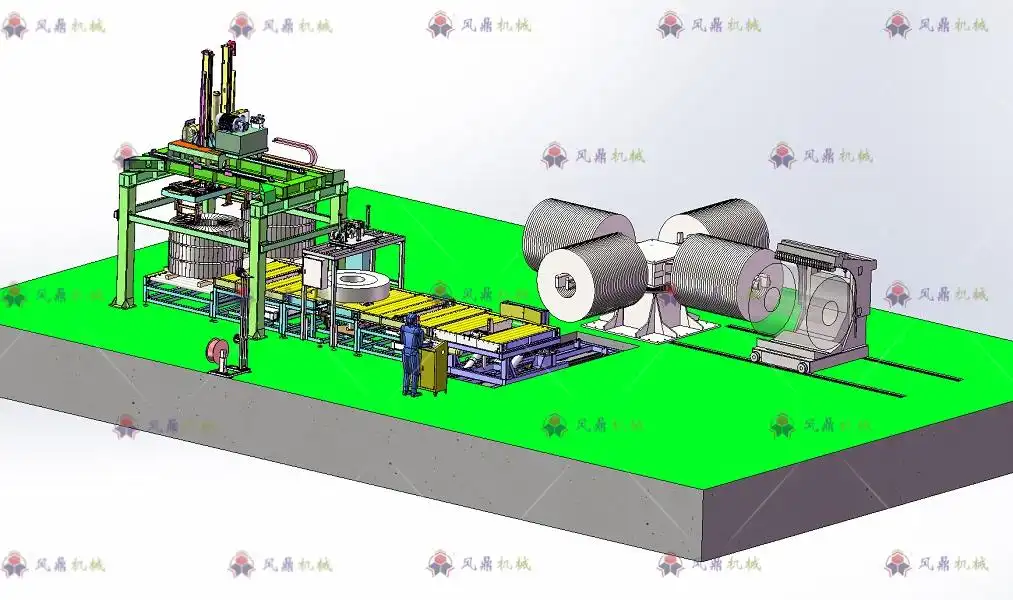
Key Aspects of Modern Control Systems:
-
Programmable Logic Controllers (PLCs):
PLCs are the core of automation. They are industrial computers that control the operations of the packing line. They manage the sequence of actions, timing, and logical control for each machine. From starting a conveyor to adjusting strapping tension, the PLC ensures every step happens precisely as programmed. This leads to consistent results and fewer errors. (automation backbone, precise control, sequential operations) -
Human-Machine Interfaces (HMIs):
HMIs are touchscreens or panels that allow operators to interact with the packing line. They show real-time status, production data, and error messages. Operators can use the HMI to start/stop the line, adjust settings, and diagnose issues. A user-friendly HMI makes the system easier to operate and reduces training time for staff. (operator interface, real-time data, intuitive control) -
Sensors and Feedback Loops:
Modern control systems rely heavily on sensors. These sensors detect the presence of coils, measure coil dimensions, monitor strap tension, and check the quality of the wrap. This data is fed back to the PLC. The PLC then adjusts machine parameters in real-time. This continuous feedback ensures high quality and efficiency. (data acquisition, quality assurance, dynamic adjustments) -
Integration and Data Collection:
A sophisticated control system integrates all the machines in the line. It can also connect to a factory’s wider MES (Manufacturing Execution System) or ERP (Enterprise Resource Planning) software. This allows for central data collection, giving factory managers a full view of production. They can track throughput, identify bottlenecks, and make data-driven decisions to optimize operations. (system integration, performance monitoring, data-driven optimization) -
Remote Diagnostics and Support:
Many advanced systems offer remote access capabilities. This means technicians can troubleshoot issues from anywhere. It reduces downtime and speeds up problem-solving. This kind of support is vital, especially for factories like Michael’s, where uptime is critical. (remote troubleshooting, reduced downtime, efficient support)
From my own experience, the difference between a good packing line and a great one often lies in its control system. It is not just about making machines move. It is about making them move intelligently. It is about giving Michael the tools to run his factory smarter. The right control system transforms a collection of components into a high-performance, cost-effective asset.
5. What Other Essential Components Ensure a Complete Packing Solution?
A packing line has main machines, but other parts are also very important for a full solution. These parts handle coils, weigh them, and make sure the whole line is safe. Without them, you might still face manual handling issues, inaccurate shipping, and safety risks. Michael needs a complete system that covers every step from start to finish.
To ensure a complete packing solution, other essential components include coil upenders and downenders for safe orientation changes, integrated weigh scales for accurate shipping data, and robust safety barriers. These peripheral units streamline the flow, enhance worker safety by eliminating manual lifting, and provide crucial operational data for cost control and logistics.
Completing the Puzzle: Beyond the Main Machines
When I talk about a "complete packing solution," I mean more than just the strapping and wrapping machines. A truly efficient and safe line needs several other key components. These elements address specific handling, measurement, and safety needs that are often overlooked. They ensure the entire process from start to finish is automated and secure. They directly tackle Michael’s challenges of safety and efficiency.
Crucial Peripheral Components:
-
Coil Upenders/Downenders:
Steel coils often need to change their orientation. For example, they might be stored "eye to the sky" but need to be packed "eye horizontal." Upenders and downenders automate this change. They safely rotate coils 90 degrees. This eliminates the need for dangerous manual lifting by cranes or forklifts. It is a huge boost for worker safety and efficiency. (safe coil orientation, automated lifting, injury prevention)- Function: Rotate coils between horizontal and vertical positions.
- Benefits: Prevents manual handling injuries, speeds up orientation changes, protects coil integrity.
-
Integrated Weigh Scales:
Accurate weight measurement is vital for shipping, inventory, and billing. Integrated weigh scales are placed directly within the packing line. They automatically weigh each coil after packing. This data is then recorded by the control system. This ensures accurate shipping manifests and prevents discrepancies, which can lead to customer dissatisfaction. (accurate weighing, inventory management, shipping precision)- Function: Measure the exact weight of each packed coil.
- Benefits: Automates data collection, ensures billing accuracy, supports logistics planning.
-
Coil Stackers and Storage Systems:
Once packed, coils need to be moved to storage or directly onto trucks. Automated stackers and transfer carts can move coils to designated areas. This reduces forklift traffic and potential damage. Smart storage systems can also help manage inventory more effectively. (automated coil stacking, efficient storage, reduced traffic)- Function: Arrange and move packed coils for storage or dispatch.
- Benefits: Optimizes space, reduces manual labor, streamlines outbound logistics.
-
Safety Barriers and Guarding:
Even with automated machines, safety is paramount. Physical barriers, light curtains, and emergency stop systems are installed around the entire packing line. They prevent unauthorized access to moving parts. They ensure that workers are protected from potential hazards at all times. This creates a secure working environment. (worker safety, machine guarding, hazard prevention)- Function: Protect operators from moving machinery and potential hazards.
- Benefits: Compliance with safety regulations, minimizes accidents, builds a secure workplace.
These additional components are not optional extras. They are integral parts of a truly effective steel coil packing line. They help factories like Michael’s achieve their goals for safety, efficiency, and cost reduction. They ensure that every step of the process is optimized for success.
My Insights!
In my journey from a packing machine factory employee to establishing FHOPEPACK, I learned that true success in this industry is about more than just selling equipment. It is about understanding the core challenges faced by factory managers like Michael. When Michael talks about "efficiency bottlenecks," "safety hazards," and "supplier trust crisis," I hear my own past experiences and the problems I have helped many clients solve.
My goal at FHOPEPACK is to share knowledge and insights gained from decades in the coil packing and steel wire packing industry. It is why I emphasize a holistic approach. It is not just about a strapping machine or a wrapper. It is about how all the components work together to create a seamless, safe, and productive line.
When I built my factory, I learned that choosing the right partner is crucial. Companies like Fengding and Wuxi Buhui truly understand the complexities of coil packing lines. They offer robust solutions and reliable support. They do not just focus on sales. They focus on providing equipment that delivers clear ROI, reduces labor costs, minimizes product loss, and above all, keeps workers safe. This is the kind of partnership that turns challenges into opportunities and helps businesses grow. I am committed to helping others succeed by sharing this deep expertise.
Conclusion
A well-designed steel coil packing line uses integrated components for safe loading, precise strapping, protective wrapping, and smart control. Investing in automation boosts efficiency, safety, and product quality. This secures your operations and grows your business, transforming how you handle every steel coil packing line.


