Key Components of a Steel Coil Packing Machine | Understanding the Technology
The constant pressure to boost production and cut costs in metal processing plants can feel overwhelming. Many factory managers, just like Michael, see their current steel coil and wire packing methods relying heavily on manual labor. This leads to slow processes, low efficiency, and even safety risks. Damaged products and high worker turnover add to these challenges. This is not just about keeping up; it is about staying competitive and protecting your bottom line.
A steel coil packing machine is built from several key parts working together. These include the infeed conveyor, the strapping head, the wrapping unit (either stretch wrapper or orbital wrapper), the discharge conveyor, and the central control system. Each component plays a vital role in automating the packaging process, from material handling to final product protection.

Understanding these individual parts is the first step to truly optimizing your factory’s operations. Let us break down how each component works and why it matters for your business.
1. What are the core components of a steel coil packing machine?
Have you ever thought about what goes into a machine that wraps heavy steel coils every day? It is not just one big box. Instead, it is a system of specialized parts, each with a job. If one part fails, the whole line stops. This can cause major delays and cost your factory a lot of money.
The main parts of an automatic steel coil packing machine include the infeed conveyor, which brings coils into the system; the strapping head, which applies secure bands; the wrapping unit, responsible for stretch or orbital film application; the discharge conveyor, which moves finished coils out; and the integrated control system, which manages all operations seamlessly.
Let me tell you about these core components. Each one is a crucial piece of the puzzle for smooth and reliable packaging.
Understanding Each Major Part
From my time building packing machine factories and helping clients grow, I have seen firsthand how critical each component is. A well-designed machine means less downtime and more profit.
1.1 Infeed Conveyor System
This is where the journey begins for your steel coils.
- Purpose: It moves coils from your production line into the packing area.
- Types: V-belt conveyors, roller conveyors, or chain conveyors are common. V-belt types are often used for vertical coils.
- Key Features:
- Heavy-duty design: Must handle extremely heavy loads (many tons).
- Automated sensing: Detects coil presence and position.
- Synchronization: Works with the rest of the packing line speed.
- Why it matters: A weak or slow infeed system creates a bottleneck right at the start. This means your high-speed production line might be waiting for the packing area. Michael often worries about any production line downtime. A robust infeed conveyor prevents this initial delay. (heavy-duty coil handling system)
1.2 Strapping Head Unit
Strapping is the first layer of security for your coils.
- Purpose: Applies steel or PET straps around the coil to keep its shape and secure it.
- Operation: Automatic strapping heads can apply multiple straps quickly without human intervention.
- Key Features:
- High tension capability: Ensures straps are very tight.
- Reliable sealing: Uses friction weld or other methods for strong strap joints.
- Adjustable settings: Can handle different coil sizes and strap types.
- Why it matters: Manual strapping is slow and dangerous. Workers must go near heavy coils. An automatic strapping head improves worker safety and speeds up the process significantly. It also makes sure the coil keeps its shape during transit, reducing damage. (automatic steel coil strapping machine)
1.3 Wrapping Unit
This is the heart of the protection process.
- Purpose: Applies a protective layer of stretch film, VCI paper, or woven fabric around the coil.
- Types:
- Orbital wrapper: The wrapping head rotates around the coil, applying film from the side. Good for covering the outer diameter and eye.
- Stretch wrapper: Can be used for full wrapping, often combined with an orbital wrapper.
- Key Features:
- Film pre-stretch: Maximizes film usage and reduces costs.
- Adjustable overlap: Controls how much film covers the coil.
- Automatic film cutting and sealing: Ensures a clean finish.
- Why it matters: This unit protects the steel coil from dust, moisture, and corrosion during storage and shipping. Michael mentioned product loss due to damage. Good wrapping prevents this, leading to fewer customer complaints. (stretch film applicator for metal coils)
1.4 Discharge Conveyor System
Once wrapped, the coil needs to move out efficiently.
- Purpose: Transfers the fully packed coil out of the machine to the next stage, like storage or loading.
- Features: Similar to infeed conveyors, but designed for finished products.
- Why it matters: A smooth exit prevents bottlenecks. It ensures packed coils do not pile up, allowing the next coil to enter the system without delay. (automated coil unloading)
1.5 Control System (HMI)
This is the brain of the entire operation.
- Purpose: Manages and coordinates all machine functions.
- Components: PLC (Programmable Logic Controller), HMI (Human-Machine Interface) touchscreen.
- Key Features:
- User-friendly interface: Easy for operators to set parameters.
- Error diagnostics: Helps quickly identify and fix problems.
- Production data tracking: Monitors output and efficiency.
- Why it matters: A smart control system means less operator error and faster troubleshooting. It gives Michael data to see how the line is performing and where improvements can be made. (industrial packaging control systems)
2. How do these components enhance packing efficiency and safety?
Manual packing of heavy steel coils is slow, labor-intensive, and dangerous. Workers often struggle with heavy materials, leading to slow production and high risk of injury. This directly impacts factory efficiency and raises insurance costs, making managers like Michael look for better ways.
The integrated components of a steel coil packing machine work in harmony to significantly boost efficiency by automating repetitive tasks, speeding up the packing cycle, and minimizing manual handling. They also improve safety by removing workers from hazardous zones, reducing physical strain, and incorporating built-in protective mechanisms.
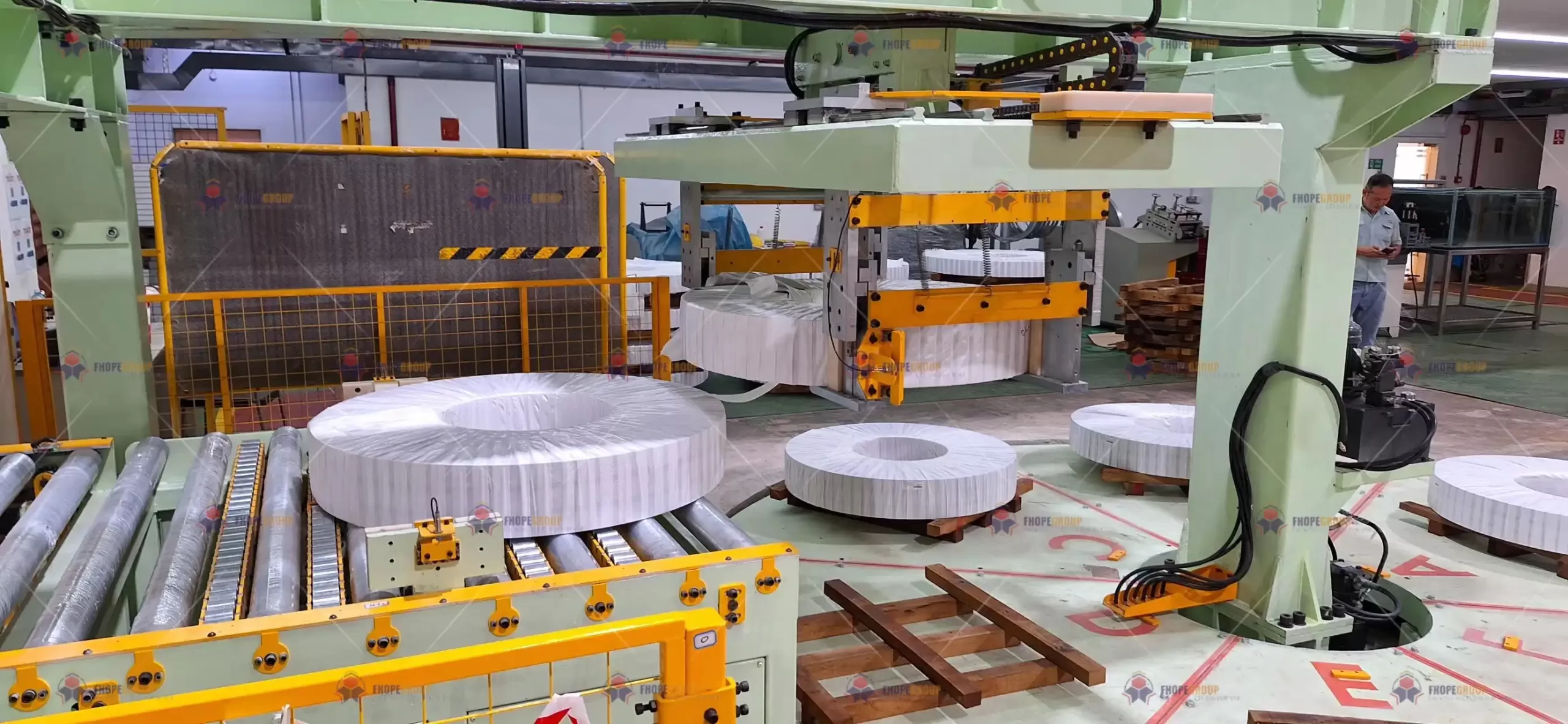
Let me show you how each core part plays a role in making your packing line both faster and safer.
Improving Your Production Line
My journey in the packing machine industry taught me that efficiency and safety are not just buzzwords. They are crucial for a factory’s survival and growth.
2.1 Efficiency Gains 🚀
Automating the packing process means moving away from slow manual methods.
- Faster Cycle Times:
- An automatic strapping head applies straps in seconds, much faster than a person.
- Orbital wrappers can cover a coil evenly and quickly, reducing the time per coil.
- Conveyors move coils continuously, eliminating waiting times.
- Reduced Labor Costs:
- Fewer workers are needed on the packing line. This frees up staff for other tasks or reduces overall labor expenses.
- Machines do not get tired, so they maintain consistent speed and quality all day.
- Consistent Quality:
- Machines apply the same tension, overlap, and number of straps/wraps every time. This ensures consistent product protection.
- Consistent packaging means fewer rejected shipments and happier customers. (automated coil packaging speed)
2.2 Safety Improvements 👷♀️
Worker safety is a major concern for factory managers. Michael understands the high injury risk with heavy coils.
- Minimized Manual Handling:
- Conveyor systems, tilters, and automatic loaders eliminate the need for workers to lift or move heavy coils by hand.
- This directly tackles the high risk of back injuries, crushed limbs, and other accidents.
- Reduced Exposure to Hazards:
- Workers can operate machines from a safe distance using the HMI.
- No need to walk around moving coils or hot steel.
- Built-in Safety Features:
- Emergency stop buttons are placed at easy-to-reach points.
- Safety interlocks prevent machines from operating if guards are open.
- Light curtains and safety scanners detect human presence in dangerous zones and stop the machine. (coil handling safety mechanisms)
2.3 Reduced Product Damage 🛡️
When products get damaged during internal transfer or packing, it leads to customer complaints and lost profits.
- Gentle Handling:
- Properly designed conveyors and handling systems prevent coils from being dropped, scraped, or mishandled.
- Automated systems provide a consistent and gentle touch.
- Secure Packaging:
- Tight strapping prevents coils from unraveling or shifting.
- Full film wrapping protects against scratches, dust, and moisture.
- This means fewer damaged edges or surfaces on valuable steel coils. (metal coil protection systems)
3. What advanced features should you look for in modern packing machine components?
The world of manufacturing is always changing. Old packing machines might get the job done, but they often lack the smart features that modern factories need. If your equipment is old, you might be missing out on big savings and better performance. This can make a factory manager like Michael wonder if his current machines are truly holding him back.
Modern steel coil packing machine components offer advanced features like smart sensor integration for precise positioning, intuitive Human-Machine Interfaces (HMI) for easier operation, and remote diagnostic capabilities for quicker troubleshooting. They also prioritize modular designs for flexibility and energy-efficient motors to reduce operational costs.
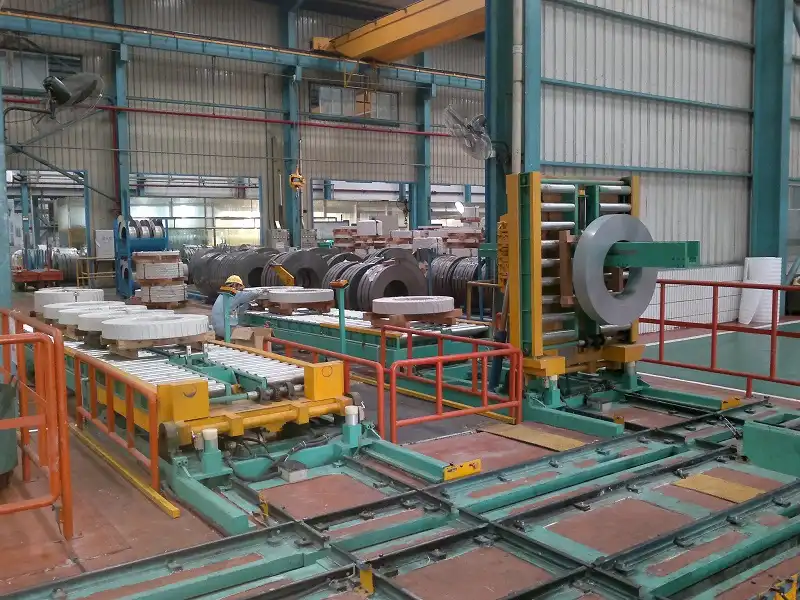
Based on my experience, staying updated with technology is not just about buying new things. It is about investing in solutions that make your factory smarter and more productive.
Innovations for a Smarter Factory
When I built my packing machine factory, I saw the power of new technology. These advanced features are what set the best machines apart.
3.1 Smart Sensor Integration 🧠
Sensors are the eyes and ears of your packing machine.
- Precision Positioning:
- Advanced sensors (like laser or ultrasonic) can detect coil dimensions and position with very high accuracy.
- This ensures strapping and wrapping are perfectly aligned every time.
- Automated Adjustment:
- Machines can automatically adjust parameters (e.g., strap length, film overlap) based on coil size data from sensors.
- This eliminates manual adjustments and reduces setup time.
- Predictive Maintenance:
- Sensors monitor component wear (e.g., motor temperature, bearing vibration).
- They can alert operators before a part fails, allowing for planned maintenance instead of unexpected breakdowns. (smart packaging machine sensors)
3.2 Intuitive HMI and Connectivity 💻
The control panel is no longer just a bunch of buttons.
- User-Friendly Interface:
- High-resolution touchscreens with clear graphics make operation simple.
- Operators can easily select packaging recipes for different coil types.
- Remote Access and Diagnostics:
- Ability to connect to the machine remotely for monitoring and troubleshooting.
- Technicians can diagnose issues without being physically present, reducing downtime.
- Data Logging and Reporting:
- The system collects data on production rates, film consumption, and error logs.
- This data helps factory managers like Michael make informed decisions about process improvements. (industrial HMI for packaging)
3.3 Modular Design and Flexibility 🧩
Factories often need to adapt to different products or production needs.
- Easy Customization:
- Machines are built in modules. This means components can be easily added, removed, or changed.
- For example, you can add a top sheet applicator or a weighing station later.
- Future-Proofing:
- A modular design allows for upgrades without replacing the entire machine.
- This extends the life of your investment.
- Faster Maintenance:
- Individual modules can be swapped out quickly, simplifying repairs. (modular packaging equipment)
3.4 Energy Efficiency 💡
Operating costs are always a concern.
- Energy-Saving Motors:
- Using high-efficiency motors (e.g., IE3 or IE4 rated) reduces electricity consumption.
- This lowers utility bills over the long term.
- Optimized Power Usage:
- Machines can enter standby mode during idle periods.
- Smart control systems ensure power is only used when needed.
- Benefits: Lower operating costs contribute directly to higher profits for the factory. (energy-efficient industrial packaging)
4. Why is choosing the right packing machine components crucial for your factory’s success?
Making a big investment in new equipment always comes with risks. If you pick the wrong machine or a supplier who only cares about sales, you could end up with unreliable equipment. This causes more problems than it solves, leading to a "trust crisis" with suppliers, which Michael has experienced before.
Choosing the right steel coil packing machine components is crucial because it directly impacts your factory’s operational efficiency, worker safety, product quality, and long-term financial returns. High-quality, reliable components reduce costly downtime, minimize product damage, lower labor costs, and ensure consistent output, securing your investment and building trust.

My personal experience showed me that the right partnership and the right equipment can make or break a business. It is not just about the machine; it is about the long-term support and value it brings.
The Impact on Your Bottom Line
When you invest in a packing machine, you are investing in the future of your factory. So, every component choice matters.
4.1 Maximizing Return on Investment (ROI) 💰
Michael wants equipment with clear ROI.
- Reduced Operational Costs:
- Efficient machines use less electricity and less packaging material.
- Lower labor requirements directly cut payroll expenses.
- Increased Throughput:
- Faster packing speeds mean more coils processed per shift.
- This translates to higher production capacity and sales.
- Lower Maintenance Costs:
- Durable, high-quality components break down less often.
- This means fewer repair bills and less production interruption.
- Calculation: When you choose good components, the savings in labor, materials, and maintenance, plus the increase in output, quickly add up to show a strong return on your investment. (packaging automation ROI)
4.2 Ensuring Equipment Reliability and Longevity 🕰️
Durable equipment means less downtime.
- Robust Construction:
- Components made from high-grade steel and industrial-strength materials withstand heavy, continuous use.
- This is essential in demanding environments like a metal processing plant.
- Quality Bearings and Motors:
- Investing in reputable brands for critical parts like motors and gearboxes ensures longer life and better performance.
- Designed for Harsh Environments:
- Components should resist dust, moisture, and temperature fluctuations common in industrial settings.
- Benefits: Reliable components mean fewer unexpected breakdowns. This prevents costly production stoppages and ensures your factory can meet its delivery schedules. (durable industrial packing machinery)
4.3 Building Trust and Reputation with Customers 👍
Product damage hurts your reputation.
- Consistent Packaging Quality:
- High-quality components ensure every coil is packaged perfectly.
- This protects the product from damage during transit.
- Fewer Customer Complaints:
- When products arrive in perfect condition, customers are happy.
- This builds trust and repeat business.
- Brand Image:
- Professional, consistent packaging reflects well on your factory’s quality standards.
- Benefits: A reliable packing line directly supports product quality. This makes customers trust your brand and helps your business grow. (customer satisfaction packaging)
4.4 Partnering with the Right Supplier 🤝
Finding a trusted partner is key, especially after bad experiences.
- Deep Industry Knowledge:
- A good supplier understands your specific challenges (like Michael’s need for efficiency and safety).
- They offer solutions, not just machines.
- Strong After-Sales Support:
- Reliable service, spare parts availability, and technical assistance are critical.
- This reduces downtime when issues arise.
- Long-Term Relationship:
- A trusted supplier becomes a partner in your factory’s growth, offering ongoing advice and support.
- Benefits: Working with experts, like someone with Randal’s factory experience, means you get machines that truly solve your problems and help your business expand. (reliable packing machine supplier)
5. My Insights: The Future of Steel Coil Packing Components
For decades, packing machines have been essential. But the future is not just about moving coils; it is about smarter, more adaptable systems. As a factory owner, I always look ahead. I see challenges like rising labor costs and the need for greater flexibility. These push us to think about what comes next for packing technology.
The future of steel coil packing components will focus heavily on artificial intelligence (AI) and the Internet of Things (IoT) for predictive maintenance and real-time optimization. We will also see increased adoption of modular and customizable designs to meet diverse production needs, alongside a strong emphasis on sustainable materials and energy-efficient operations.
My personal journey from a factory employee to a factory owner has shown me that innovation is key. Here are my thoughts on where steel coil packing components are headed.
What Comes Next in Packing Technology
I have always believed in giving back to the industry that helped me. Sharing these insights helps others prepare for what is ahead.
5.1 AI and IoT Integration 🤖
The digital revolution will continue to transform our machines.
- Predictive Maintenance:
- AI algorithms will analyze data from IoT sensors to predict component failures before they happen.
- This means proactive maintenance, eliminating unexpected downtime.
- Real-time Optimization:
- AI can learn from production data to fine-tune machine settings automatically.
- This will maximize speed, minimize material waste, and improve quality on the fly.
- Remote Monitoring and Control:
- Factory managers can monitor their packing lines from anywhere.
- Operators can control machines using tablets or smartphones.
- Benefits: This makes machines truly "smart," reducing human intervention and making operations incredibly efficient. (AI-powered packaging optimization)
5.2 Greater Customization and Modularity 🔧
Factories have different needs. One size does not fit all.
- Tailored Solutions:
- Components will be designed for easy configuration to fit specific coil sizes, weights, and factory layouts.
- This means less waste in design and faster deployment.
- Plug-and-Play Upgrades:
- Future components will be even more modular, allowing factories to upgrade specific parts easily.
- For example, switching to a new type of strapping head will be quick and simple.
- Adaptability:
- This flexibility will help factories quickly adapt to changing market demands or new product lines.
- Benefits: Factories can get exactly what they need, saving money and improving operational flexibility. (customizable coil packing solutions)
5.3 Focus on Sustainability ♻️
Environmental responsibility is becoming more important for businesses.
- Eco-friendly Materials:
- Components will be designed to use less material or use recycled materials.
- Packaging materials themselves will be more biodegradable or recyclable.
- Reduced Energy Consumption:
- Continued development of ultra-efficient motors and energy recovery systems.
- Machines will consume minimal power even during peak operation.
- Waste Reduction:
- Smarter machines will reduce film and strap waste.
- They will also minimize product damage, which means less scrap metal.
- Benefits: This helps factories meet environmental goals, reduce operational costs, and appeal to environmentally conscious customers. (sustainable industrial packaging)
5.4 Enhanced Safety Features 🚨
Safety will always be a top priority.
- Advanced Robotics:
- Collaborative robots (cobots) might assist with some packing tasks.
- These work alongside humans safely.
- Predictive Safety Systems:
- Sensors will not only prevent mechanical failures but also predict potential human safety risks.
- This can be done by tracking operator movements in relation to machine operation.
- Integrated Virtual Reality (VR) Training:
- Operators can be trained on complex machines in a safe, virtual environment.
- This improves their understanding and reduces risks during actual operation.
- Benefits: Safety will move from reactive to proactive, ensuring an even safer working environment for all employees. (proactive industrial safety)
Conclusion
Understanding the key components of a steel coil packing machine is vital for any factory aiming for efficiency and safety. Investing in the right technology helps reduce costs, protect products, and secure your factory’s future with a reliable steel coil packing line.


