Integrated Packing Line vs Standalone Strapping Machine — Which Is More Efficient?
The factory floor is a demanding place. I’ve been there, from working on the line to running my own packing machine factory. I understand the constant pressure to boost output, cut costs, and keep everyone safe. If you’re a factory manager like Michael Chen, overseeing everything from raw materials to finished goods, you know that production bottlenecks and safety risks can cost you big. You might be staring at your current steel coil or wire packing process, seeing slow, manual work, and wondering: Is there a better way? (packing process optimization, factory efficiency challenges)
When we talk about efficiency in packing, an integrated packing line generally takes the lead for high-volume, consistent operations. It automates multiple steps, reducing manual effort and speeding up the entire process. A standalone strapping machine, while valuable, offers a more focused solution for specific, less complex tasks, meaning it often requires more human interaction and doesn’t provide the same end-to-end automation benefits as a fully integrated system. (integrated packing line benefits, standalone strapping machine uses, automated vs manual packing)
Choosing the right packing solution is more than just buying a machine; it’s an investment in your factory’s future. It affects your output, your costs, your product quality, and most importantly, your team’s safety. Join me as we break down the real differences and help you decide which system truly masters your packing needs. (industrial packaging solutions, factory operational improvements)
1. What Exactly Separates an Integrated Packing Line from a Standalone Strapping Machine?
Have you ever felt like you’re patching together different processes, hoping they’ll work smoothly as one? Many factory managers, including myself in my early days, face this. The core of your question about efficiency really begins with understanding what each system is and does. It’s not just about one machine versus many; it’s about a philosophy of operation. (packing line vs strapping machine, industrial automation comparison)
An integrated packing line is a comprehensive system designed to handle multiple packaging stages seamlessly, often from product receiving to final dispatch, with minimal human intervention. In contrast, a standalone strapping machine performs only the strapping function, requiring operators to manually position the product and often manage preceding and subsequent packaging steps. (fully automated packaging systems, individual strapping equipment)
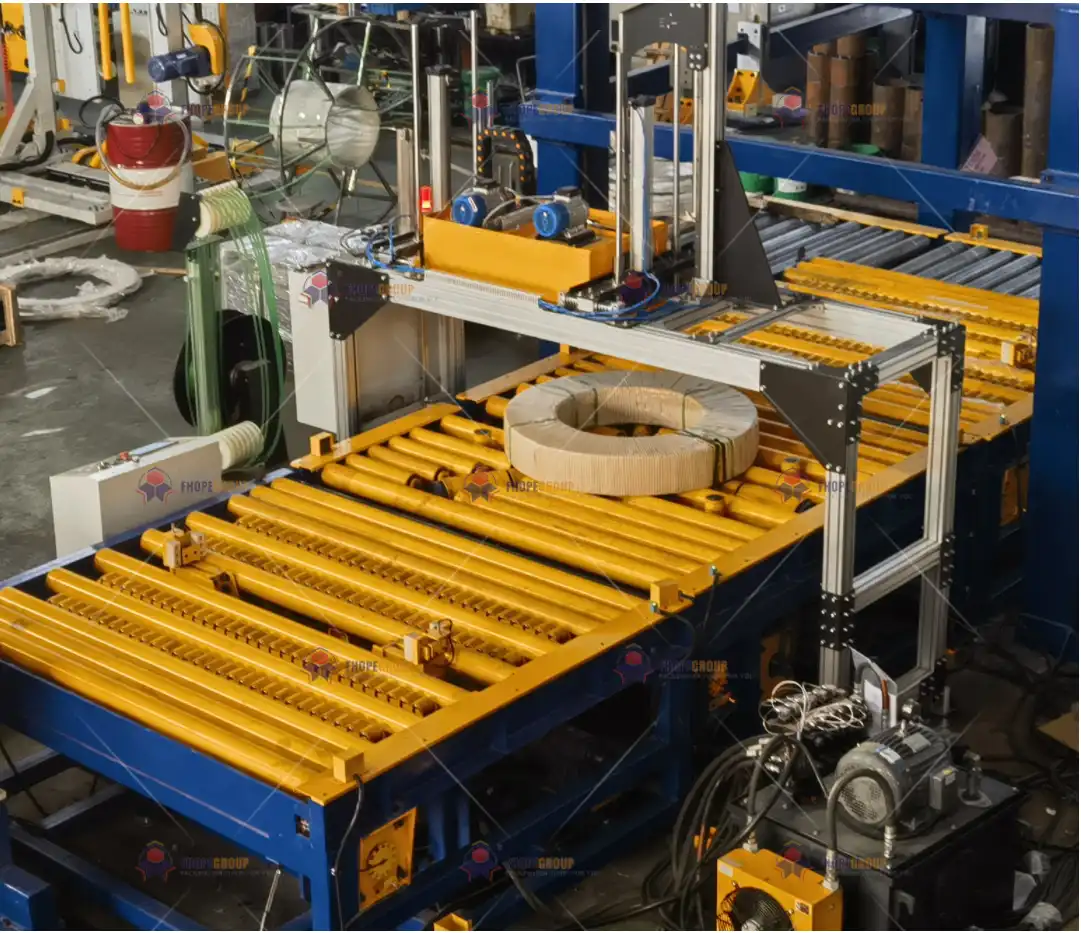
Key Differences at a Glance
Let’s lay out the fundamental distinctions between these two approaches. Understanding these points helps clarify why one might be a better fit for your specific operational goals, especially if you’re looking to streamline processes like coil packing or steel wire packing.
| Feature | Integrated Packing Line | Standalone Strapping Machine |
|---|---|---|
| Automation Level | High; automates multiple stages (feeding, wrapping, strapping, conveying, stacking). | Low to Moderate; automates only the strapping process. Requires manual handling for other steps. |
| Workflow | Continuous, synchronized flow; minimal manual touchpoints. | Disconnected; often an isolated step in a larger, manual workflow. |
| Functions | Diverse: often includes weighing, labeling, wrapping, hooding, strapping, conveying. | Single: applies straps (steel, PET, PP) to secure packages. |
| Footprint | Larger; designed for a complete, integrated process. | Smaller; can be moved or integrated into existing, less automated lines. |
| Initial Cost | Higher; significant investment in multiple machines and integration. | Lower; typically a single machine purchase. |
| Labor Needs | Significantly reduced; operators monitor, maintain, and troubleshoot. | Higher; operators actively load, position, and unload products. |
| Throughput | Very High; designed for continuous, high-speed production. | Moderate to High; dependent on operator speed and product handling. |
| Flexibility | Less flexible for varied product sizes/types without retooling; excels at consistent products. | More flexible for varied product sizes/types, as human intervention adapts. |
| Data & Control | Often includes centralized control, data tracking, and diagnostic capabilities. | Limited to machine-specific settings; no broader process integration. |
| Best For | High-volume, standardized production (e.g., steel coils, wire bundles). | Lower volume, specialized strapping tasks, budget-conscious operations. |
( packaging automation levels, industrial equipment comparison, coil packing solutions, wire bundling machines)
2. How Does an Integrated Packing Line Revolutionize Factory Efficiency and Output?
When I first started building FHOPEPACK, my mission was clear: help factories truly master their packing processes. For many, that means looking at the bigger picture of efficiency. Michael Chen’s concern about efficiency bottlenecks with his current manual processes is exactly what an integrated packing line is built to solve. It’s not just about speed; it’s about a smarter, more consistent way of working. (factory process optimization, automated packaging line benefits, high-speed production solutions)
An integrated packing line revolutionizes factory efficiency by automating the entire packaging workflow, drastically reducing manual labor, increasing throughput, ensuring consistent package quality, and minimizing costly downtime. This holistic approach turns end-of-line bottlenecks into smooth, continuous operations, directly impacting overall production and delivery speeds. (streamlining factory operations, labor cost reduction, improving production efficiency)

Unlocking Peak Performance with Integrated Systems
Imagine a dance on your factory floor, where every machine moves in perfect sync, never missing a beat. That’s the promise of an integrated packing line. It takes away the human element of error and fatigue, replacing it with precision and speed.
🚀 Boosted Throughput and Speed
One of the most immediate benefits you’ll see is a dramatic increase in how much you can pack. My clients often tell me they can’t believe the difference.
- Continuous Flow: Products move seamlessly from one stage to the next (e.g., weighing, wrapping, strapping, conveying). There are no pauses for manual transfer.
- Eliminates Bottlenecks: Manual processes are often the slowest part. Automation removes these choke points, allowing the entire production line to operate at its maximum potential.
- Consistent Cycles: Machines work at a steady, predictable pace, unlike human operators whose speed can vary. This means reliable output figures.
- Example for Michael Chen: For steel coils or wire bundles, an integrated line can strap and wrap dozens of items per hour, far surpassing manual handling, directly addressing his "efficiency bottleneck" challenge.
( increasing production capacity, high-volume packing solutions, continuous packaging flow)
💪 Significant Reduction in Labor Costs
This is a big one for any factory manager focused on the bottom line. Reducing dependence on manual labor isn’t about replacing people, it’s about reallocating valuable human resources to more complex or supervisory tasks.
- Fewer Operators: An integrated line can be monitored and managed by a handful of technicians, freeing up many workers from repetitive, heavy-lifting tasks.
- Lower Training Costs: While specialized training for machine maintenance is needed, the broad training for multiple manual packing roles is reduced.
- Reduced Overtime: With higher efficiency during regular hours, the need for costly overtime to meet quotas often disappears.
- Long-term Savings: Over the lifespan of the equipment, labor savings often provide a strong return on investment.
( automated labor savings, reducing operational expenses, workforce optimization in manufacturing)
✨ Enhanced Product Quality and Consistency
Protecting your product is protecting your reputation and your profits. My clients, especially those dealing with sensitive items like steel coil edges, understand this deeply.
- Precise Application: Machines apply straps, wraps, and hoods with exact tension and placement every time. This prevents under-tightening (which leads to loose packages) or over-tightening (which can damage the product).
- Reduced Damage: Less human handling means fewer drops, dents, or scratches. For Michael Chen, this directly addresses the "product loss" challenge, cutting down on customer complaints.
- Standardized Packaging: Every package looks and performs the same, reflecting professionalism and reliability to your customers.
( improving packaging quality, minimizing product damage, consistent packaging standards)
📈 Better Data and Process Control
In today’s world, data is power. An integrated system gives you the insights you need to make smart decisions.
- Real-time Monitoring: Many modern packing lines offer dashboards to track performance, identify issues, and monitor throughput in real-time.
- Predictive Maintenance: Sensors can detect potential machine problems before they cause breakdowns, allowing for planned maintenance instead of costly emergency repairs.
- Optimized Settings: Data allows you to fine-tune settings for different products, ensuring the most efficient use of materials and energy.
( industrial data analytics, predictive maintenance solutions, smart factory technology)
3. Is a Standalone Strapping Machine a Better Fit for My Specific Production Needs?
Not every factory needs a full orchestra of packing machines. Sometimes, a focused, specialized tool is exactly what you need. When I consult with clients, I always emphasize that the "best" solution isn’t always the biggest or most expensive. It’s the one that aligns perfectly with your current challenges and future goals. For Michael Chen, considering his need for durability and reliability, a standalone machine might seem like a simpler choice, but we need to dig deeper. (choosing packing equipment, strapping machine suitability, cost-effective packaging solutions)
A standalone strapping machine can be a better fit for factories with lower production volumes, varied product sizes, or limited initial investment capital. It excels when integrated into existing semi-manual lines where only the strapping step needs automation, or for specialized tasks that don’t justify a full packing line. While less automated, it offers flexibility and a lower entry point for improving specific parts of the packing process. (manual strapping alternatives, budget-friendly packing machines, flexible packaging machinery)
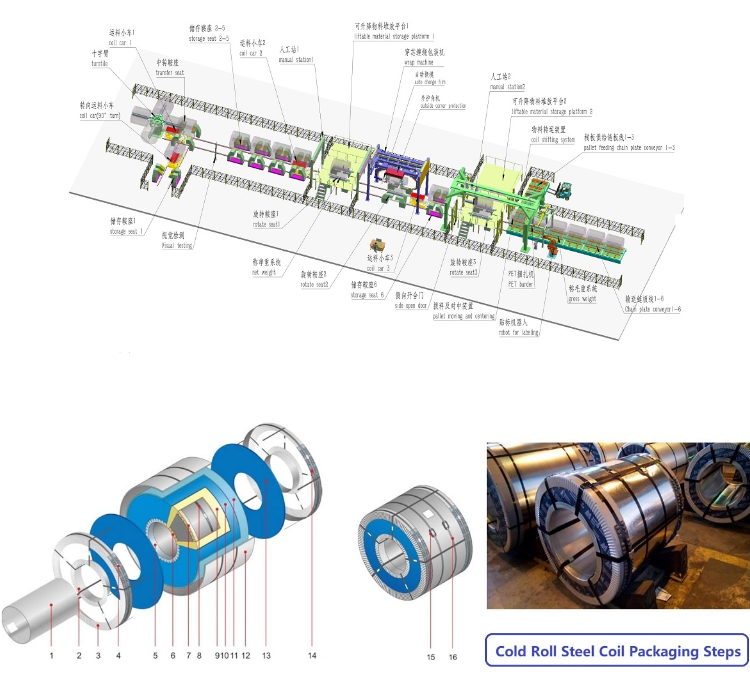
When Simplicity and Focus Win
A standalone strapping machine is like a skilled specialist. It does one job, and it does it well. For certain factory environments, this focused approach is not just adequate, but optimal.
💡 Considerations for Standalone Strapping Machines
Let’s look at the scenarios where a standalone strapping machine truly shines and what factors might push you towards this choice.
-
Limited Budget:
- Lower Initial Investment: Standalone units are significantly less expensive upfront than a complete integrated line. This makes them accessible for smaller operations or factories with tighter capital expenditure budgets.
- Cost-Effective Upgrade: If your budget only allows for improving one specific bottleneck, adding an automatic strapping machine can be a smart, incremental step.
( affordable packaging equipment, entry-level strapping solutions, packaging machinery cost)
-
Varied Product Range:
- Flexibility in Product Handling: If your factory processes a wide range of product sizes or shapes (e.g., different coil diameters or wire bundle configurations) that change frequently, a standalone machine often allows for easier manual adjustment and loading. Operators can adapt to different dimensions more readily than a rigid automated line.
- Batch Production: For factories producing smaller batches of highly customized or varied products, the downtime associated with retooling a full integrated line might outweigh the benefits. A standalone machine handles these shifts with less disruption.
( flexible industrial strapping, packaging for diverse products, batch production packing)
-
Space Constraints:
- Compact Footprint: Standalone machines typically require much less floor space than an integrated line, which can stretch across a large area. This is crucial for factories with limited physical space.
- Easier Integration: They can often be dropped into an existing production flow without needing to redesign the entire layout of the packing area.
( space-saving packing machines, compact strapping equipment, factory layout optimization)
-
Specific Bottlenecks Only:
- Targeted Improvement: If only the strapping phase of your packing process is inefficient, and other steps (like wrapping or conveying) are already optimized or not critical, a standalone unit targets that specific problem directly.
- Pre-existing Infrastructure: If you already have manual wrapping or other packaging steps in place, a standalone strapping machine can complement these without requiring a full overhaul.
( solving production bottlenecks, specific process automation, incremental factory upgrades)
-
Lower Production Volume:
- Matching Capacity: For factories with moderate or lower daily output, the high capacity of an integrated line might be overkill. A standalone machine offers sufficient speed for these volumes without the excessive cost.
- Just-in-Time (JIT) Operations: In environments where products are strapped on demand rather than in continuous high-speed runs, a standalone machine provides the necessary utility without complex automation.
( low volume packaging solutions, on-demand strapping, efficient small batch packing)
Remember, the goal is always to find the right tool for the job. A standalone machine, while not offering full automation, can still bring significant improvements in safety, speed, and consistency to its specific task, making it a powerful component in many factory setups.
4. Beyond Speed: How Do These Systems Impact Safety and Product Protection?
Michael Chen’s list of challenges isn’t just about speed; it’s deeply rooted in the well-being of his team and the integrity of his products. Safety hazards from manual handling of heavy coils and the frequent damage to product edges are serious concerns. As someone who built a factory from the ground up, I know these issues hit hard, both financially and ethically. This is where the choice between an integrated packing line and a standalone strapping machine goes beyond mere efficiency metrics. (industrial safety improvements, product damage prevention, heavy manufacturing risks)
Integrated packing lines fundamentally transform workplace safety by minimizing human interaction with heavy or dangerous materials, drastically reducing the risk of injuries, and they enhance product protection through precise, consistent handling and packaging. Standalone strapping machines improve safety over purely manual strapping, but they still require more human intervention, leaving some risk compared to fully automated systems. (automated safety features, reducing manual labor injuries, packaging integrity)

A Safer Workplace and Pristine Products
Let’s look at how each system contributes to a safer environment and better product quality, addressing the core anxieties of factory managers like Michael.
👷♀️ Workplace Safety: Minimizing Risk
Safety should always be paramount. Michael’s concern about "safety hazards" from manual handling is entirely valid. Lifting and maneuvering heavy items like steel coils or wire bundles is inherently dangerous.
-
Integrated Packing Lines:
- Reduced Manual Handling: This is the biggest win for safety. Integrated lines use conveyors, robotic arms, and automated positioning systems to move products. Workers are largely removed from direct contact with heavy, moving loads.
- Lower Injury Rates: Fewer instances of sprains, strains, crushed limbs, or accidents from dropped materials. This translates to lower insurance costs and less employee turnover, directly solving Michael’s "high injury risk" problem.
- Controlled Environment: All operations happen within safety guards and designated zones, often with interlocks that prevent access during operation.
- Ergonomic Benefits: For the few operators required, tasks are typically supervisory or light-duty, reducing repetitive strain injuries.
( automated factory safety, reducing industrial accidents, worker well-being in manufacturing)
-
Standalone Strapping Machines:
- Improved Over Manual Strapping: These machines are certainly safer than having workers manually apply straps with tensioners and seals. The machine handles the high-tension strapping, removing that direct risk.
- Residual Manual Risk: However, operators still need to manually load the product onto the strapping station, position it correctly, and then remove it. This means workers are still physically interacting with the heavy product, maintaining a level of risk for strains or accidents during handling.
- Proximity to Machinery: Workers are closer to the moving parts during operation, requiring strict adherence to safety protocols.
( semi-automated safety, ergonomics in strapping, industrial equipment safety)
📦 Product Protection: Guarding Against Damage
Product integrity from the factory to the customer’s door is crucial for reputation and profitability. Michael mentioned "product loss" from damage during internal transport and packing.
-
Integrated Packing Lines:
- Gentle and Precise Handling: Automated systems are designed for consistent, gentle movement. Conveyors move products smoothly, reducing jolts or impacts.
- Consistent Packaging: Every wrap, hood, and strap is applied with uniform tension and placement. This prevents loose packaging that could allow products to shift and get damaged, or overly tight strapping that could deform the product.
- Damage-Free Transfer: The entire line is designed to move the product without touching sensitive areas, like the edges of steel coils, which are prone to damage during manual handling. This directly tackles the "product loss" due to damage.
- Environmental Protection: Often combined with stretch wrapping, VCI paper application, or full hooding, these lines offer superior protection against dust, moisture, and corrosion during transit and storage.
( preventing shipping damage, consistent product packaging, quality control in packing lines)
-
Standalone Strapping Machines:
- Improved Strapping Consistency: The machine ensures uniform strap tension, which is better than variable manual tension. This helps secure the product more effectively.
- Manual Handling Risks Remain: While the strapping itself is consistent, the manual loading and unloading of the product before and after strapping can still lead to damage. If a heavy coil is dropped or bumped while being placed on the strapping machine, the damage occurs before the machine even operates.
- Less Holistic Protection: A standalone machine addresses only the strapping. It doesn’t offer integrated solutions for wrapping, weighing, or other protective layers that an integrated line might include.
( strapping integrity, manual product handling risks, focused packaging solutions)
Ultimately, if improving safety for workers and guaranteeing pristine product delivery are top priorities, an integrated packing line offers a more comprehensive and robust solution by systematically removing human interaction from the most hazardous and damage-prone parts of the packaging process.
5. Looking at the Numbers: Which Packing Solution Delivers the Best ROI?
For any factory manager like Michael Chen, every major investment decision comes down to one critical question: What’s the return on investment (ROI)? It’s not just about the upfront cost; it’s about the long-term financial health and growth of the factory. I’ve seen firsthand how a smart investment in packing technology can transform a business from struggling with costs to achieving financial independence. My journey with FHOPEPACK is built on helping clients achieve that same success. (ROI for packing machinery, cost-benefit analysis factory equipment, long-term investment manufacturing)
When evaluating ROI, an integrated packing line typically offers a superior return for high-volume operations over the long term, driven by significant labor savings, reduced product loss, increased throughput, and lower operational costs. A standalone strapping machine offers a quicker, more modest ROI for smaller budgets or targeted improvements, but it doesn’t unlock the same scale of savings and efficiency gains as a comprehensive automated system. (automated packing ROI, cost-effectiveness standalone strapping, financial benefits factory automation)
Calculating Your Investment Wisdom
Let’s break down the financial picture, considering both the initial outlay and the ongoing benefits and costs associated with each system. This will help you make an informed decision for your factory.
💰 Initial Investment: The Price Tag
-
Integrated Packing Line:
- Higher Upfront Cost: This is the most obvious difference. An integrated line involves multiple machines (conveyors, wrappers, strappers, stackers, control systems), engineering, and installation. This can be a substantial capital expenditure.
- Customization Costs: While standard lines exist, many integrated systems are tailored to a factory’s specific layout and product, adding to the initial cost.
( capital expenditure packing lines, custom automation costs, industrial equipment pricing)
-
Standalone Strapping Machine:
- Lower Upfront Cost: As a single piece of equipment, it’s significantly more affordable. This makes it a popular choice for companies with limited investment funds.
- Installation Simplicity: Installation is usually quicker and less complex, leading to lower setup costs.
( affordable strapping machines, low investment packaging, quick equipment setup)
🔄 Operational Savings: The Long Game
This is where the true ROI for an integrated system begins to shine. Michael’s goal of "cost reduction and efficiency improvement through ROI-clear equipment" is perfectly addressed here.
-
Integrated Packing Line:
- Massive Labor Cost Reduction: This is often the biggest driver of ROI. By replacing multiple manual operators with a few supervisors, factories save significantly on wages, benefits, and training over years.
- Reduced Product Damage: Less damage means fewer reworks, fewer customer returns, and higher profit margins on every product. This directly impacts the bottom line.
- Increased Throughput & Revenue: Faster packing means more products can be processed and shipped, allowing for increased sales and market share.
- Lower Insurance & Safety Costs: Fewer workplace injuries lead to reduced workers’ compensation claims and lower insurance premiums.
- Material Optimization: Automated systems can be more precise with material usage (e.g., strap length, film wrap), reducing waste.
- Example: A factory processing 50 coils/hour manually might need 4-5 people. An integrated line might need 1-2, saving 2-3 salaries per shift, per year. This quickly adds up to millions over the system’s lifespan.
( operational cost savings automation, return on automation investment, maximizing production revenue)
-
Standalone Strapping Machine:
- Modest Labor Savings: It reduces the labor involved in the strapping act itself, but operators are still needed for loading, positioning, and unloading.
- Some Damage Reduction: Consistent strapping helps secure products better, reducing damage related to loose packaging, but doesn’t eliminate damage from upstream manual handling.
- Limited Throughput Increase: While faster than purely manual strapping, the overall process is still capped by the speed of manual loading and subsequent steps.
- Lower Maintenance Costs: As a simpler machine, maintenance can be less complex and therefore less expensive than an integrated system.
( strapping machine operating costs, incremental efficiency gains, maintenance cost comparison)
📊 ROI Comparison: The Clear Winner for Growth
| Factor | Integrated Packing Line | Standalone Strapping Machine |
|---|---|---|
| Typical Payback Period | 1-3 years (for high-volume operations, due to significant savings) | 6 months – 2 years (for targeted improvements) |
| Long-term Value | High; transforms entire production, enables growth, enhances brand reputation. | Moderate; improves a specific process, good for incremental gains, less transformative overall. |
| Risk Reduction | High; drastically reduces safety risks, product damage, and human error. | Moderate; improves strapping safety but manual handling risks remain. |
| Scalability | Can be designed with modularity for future expansion, but initial setup is fixed. | Easier to add more units or move them as needs change, offering flexible scaling. |
| Michael’s Goals | Directly addresses "efficiency bottlenecks," "safety hazards," "product loss," "cost reduction," and "increased automation." | Partially addresses "efficiency bottlenecks" (for strapping) and "safety hazards" (for strapping act). |
( packaging automation ROI calculator, long-term factory profitability, strategic investment in manufacturing)
For a factory manager like Michael Chen, facing high-volume demands, pressure to cut costs, and serious safety concerns, an integrated packing line, despite its higher initial investment, offers a far more comprehensive and impactful ROI. It addresses his core challenges head-on, delivering not just efficiency, but a safer, more consistent, and ultimately more profitable operation over time.
Conclusion
For mastering packing, an integrated line offers superior efficiency, safety, and ROI for high-volume needs, while a standalone strapping machine provides focused, cost-effective solutions for specific tasks. Choose based on your factory’s specific volume, budget, and desired level of automation to find the perfect steel coil packing line solution.


