Integrated Packing Line vs Standalone Strapping Machine — Which Fits Your Factory?
Every factory manager, especially those in demanding sectors like metal processing in places like Mexico, understands the constant pressure to boost output, cut costs, and keep workers safe. I’ve been there myself, from the factory floor to running my own successful packing machine business. I know the struggle of seeing production slow down because of inefficient end-of-line processes. Are you tired of manual handling slowing your coil packing or steel wire bundling, putting your team at risk, and even damaging your valuable products? It is a common challenge, and finding the right packing solution can make all the difference.
The choice between an integrated packing line and a standalone strapping machine hinges on your factory’s specific production volume, automation goals, budget, and long-term vision for efficiency and safety. An integrated packing line offers comprehensive automation, connecting multiple steps like wrapping, strapping, and conveying into one seamless system, ideal for high-volume, continuous production where safety and product integrity are paramount. In contrast, a standalone strapping machine provides a more flexible, cost-effective solution for lower volumes or specific, isolated strapping needs, often complementing existing semi-manual processes.
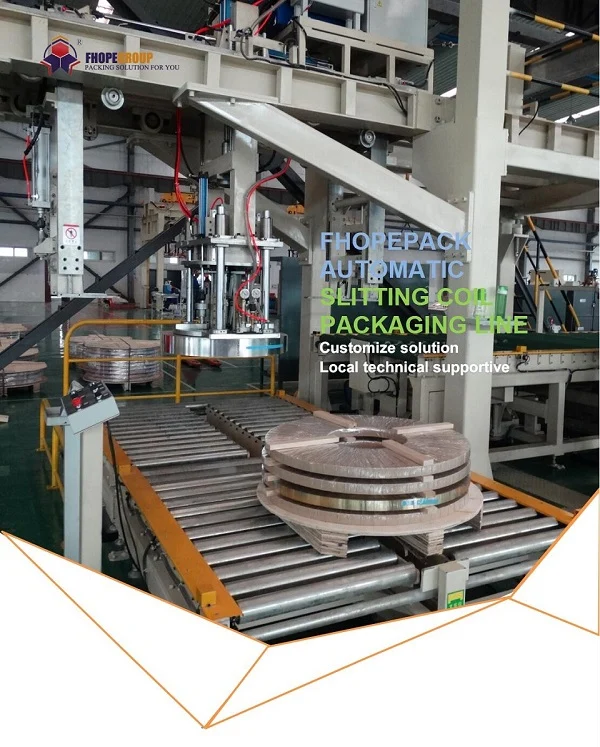
Making the right decision between these two options is not just about buying a machine; it is about investing in your factory’s future. It is about transforming bottlenecks into smooth workflows, reducing costly product damage, and most importantly, creating a safer environment for your team. Let’s dive deeper into what makes each system unique and how you can determine which one will truly master your packing process.
1. What are the core differences between an integrated packing line and a standalone strapping machine?
Imagine standing on a factory floor, overseeing the end stages of production. You see coils or wire bundles needing to be secured for shipment. On one hand, you have a fully automated system moving products from one stage to the next without human intervention. On the other, you have a robust machine that expertly straps your products, but still needs operators to feed items or move them between stations. This is the fundamental difference I’ve observed countless times in the heavy manufacturing industry.
An integrated packing line is a complete, automated system that handles multiple steps in the packaging process, such as conveying, wrapping, weighing, and strapping, all linked together for continuous operation. A standalone strapping machine, however, is a single unit designed solely for applying straps, typically requiring manual loading and unloading or integration into an existing, often semi-manual, workflow.

Key Distinctions in Industrial Packing Solutions
When I started my packing machine factory, I quickly learned that understanding the client’s operational flow was crucial. You cannot recommend a solution without knowing the problem it solves. Here is how these two systems diverge, helping you identify which might be the best fit for your metal processing plant in Mexico or elsewhere.
🏭 Integrated Packing Line Features
- Automation Level: High. Minimal human intervention is needed once set up. Think robots, conveyors, and sensors working in harmony.
- Process Scope: End-to-end. It can include material handling, wrapping (stretch film, paper), banding, strapping, weighing, labeling, and even palletizing.
- Speed & Throughput: Very high. Designed for continuous, high-volume production, ensuring your steel coils or wire bundles move quickly.
- Consistency & Quality: Excellent. Automated processes reduce human error, leading to uniform and secure packaging every time.
- Safety: Greatly enhanced. Workers are removed from hazardous tasks like heavy lifting or proximity to moving machinery.
- Space Requirements: Generally larger footprint due to interconnected components.
- Initial Investment: Higher due to complexity and integrated technology.
- Typical Applications: Large-scale metal processing, automotive parts, construction materials, where continuous flow is essential.
- Example Tasks: A FHOPEPACK integrated packing line could automatically receive a hot-rolled steel coil, apply rust-preventative VCI paper, orbital stretch wrap it, then strap it tightly, and finally transfer it to a storage area, all without manual lifting (Complete automated packing solution).
🛠️ Standalone Strapping Machine Features
- Automation Level: Low to Medium. Requires manual feeding or interaction. Some models can be semi-automatic or fully automatic within their limited scope.
- Process Scope: Specific. Focuses solely on applying straps (steel or PET) to secure bundles or pallets.
- Speed & Throughput: Moderate. Limited by the speed of manual loading or preceding processes.
- Consistency & Quality: Good, but can vary with operator skill and consistency of material presentation.
- Safety: Improved over purely manual strapping but still requires operator interaction with heavy items.
- Space Requirements: Smaller footprint, often a single machine.
- Initial Investment: Lower, making it accessible for smaller budgets or specific upgrades.
- Typical Applications: Smaller factories, specific strapping stations, as an addition to an existing line, or for less frequent strapping needs (Flexible strapping solutions).
- Example Tasks: An operator places a stack of rebar onto a standalone strapping machine, presses a button, and the machine automatically straps the bundle. The operator then manually moves the bundled rebar away (Semi-automatic bundling).
Understanding these core differences is the first step. It is not just about what a machine does, but how it fits into your entire operational ecosystem and addresses your factory’s pressing needs.
2. How does an integrated packing line address efficiency and safety challenges in your factory?
Michael Chen, the factory manager in Mexico, deals with constant efficiency bottlenecks and serious safety concerns. This is a story I hear often from clients in the heavy industry. When I first started building packing machines, I focused on solving these exact issues. I recall a client who was manually strapping heavy steel wire coils. Their production was slow, and worse, they had a string of minor injuries from workers struggling with the heavy coils. It was clear that a change was needed to boost productivity and protect their team.
An integrated packing line dramatically improves efficiency by automating multiple packaging stages into a seamless flow, eliminating manual handling and reducing cycle times. It enhances safety by removing workers from hazardous tasks involving heavy loads and moving machinery, thereby mitigating the risks of workplace injuries and associated costs.

Transforming Operations: Efficiency and Safety Gains
Let’s look at how a comprehensive system, like the ones we design at FHOPEPACK, can specifically tackle the challenges Michael Chen and other factory managers face every day.
🚀 Boosting Operational Efficiency
- Eliminating Bottlenecks: Manual coil and wire packing are notoriously slow. An integrated line replaces these with high-speed automated processes, ensuring products move continuously without delays.
- Problem: Slow manual strapping.
- Solution: Automatic strapping machines integrated with conveyors, reducing wait times.
- Increased Throughput: With faster, continuous operation, your factory can process more products in less time, directly impacting your production targets and delivery schedules.
- Insight: My own factory saw a 30% increase in daily output after implementing automated material handling and packaging (Production capacity enhancement).
- Reduced Labor Dependency: Automation means fewer workers are needed for repetitive, heavy tasks, allowing you to redeploy your skilled labor to more critical areas. This helps with labor shortages and reduces overall labor costs.
- Consistent Quality: Automated systems apply straps and wraps with consistent tension and placement, minimizing product damage during internal transfer and shipment. This means fewer customer complaints and less profit loss (Product damage prevention).
🛡️ Enhancing Workplace Safety
- Minimizing Manual Handling: This is perhaps the biggest safety benefit. Heavy steel coils and wire bundles pose significant ergonomic risks. An integrated line uses conveyors, manipulators, and automated vehicles to move products, taking the strain off your workers.
- Michael’s Challenge: "Human handling of heavy molds or flipping trays is not only inefficient but also carries extremely high risks of work-related injuries."
- Integrated Solution: automated handling systems, roll turners, and robotic assistance.
- Reduced Injury Rates: By removing workers from direct interaction with heavy, moving machinery and products, the risk of sprains, strains, crushing injuries, and other accidents drops significantly. This directly translates to lower insurance costs and improved employee morale.
- Outcome: One factory I worked with in Mexico saw a 70% reduction in packing-related incidents within the first year of automation (Workplace injury reduction).
- Predictable Operations: Automated lines follow programmed sequences, leading to more predictable and safer operations compared to the inherent variability and risk of manual tasks.
- Compliance with Safety Regulations: Modern integrated packing lines are designed with numerous safety features, emergency stops, and guarding, helping your factory meet and exceed industry safety standards.
Consider the ripple effect: a safer workplace leads to happier, more productive employees and a better company reputation. For Michael Chen, who values equipment reliability and efficiency, an integrated packing line directly addresses his most pressing concerns, turning his challenges into opportunities for growth and stability.
3. When is a standalone strapping machine a better choice for your specific operational needs?
While the benefits of an integrated packing line are clear, it is important to remember that every factory has unique requirements, budgets, and existing infrastructures. I always advise my clients to look at their specific operational context. Not every facility needs or can accommodate a full-scale integrated system right away. Sometimes, a focused, powerful solution is precisely what’s required to solve a particular problem without overhauling an entire line.
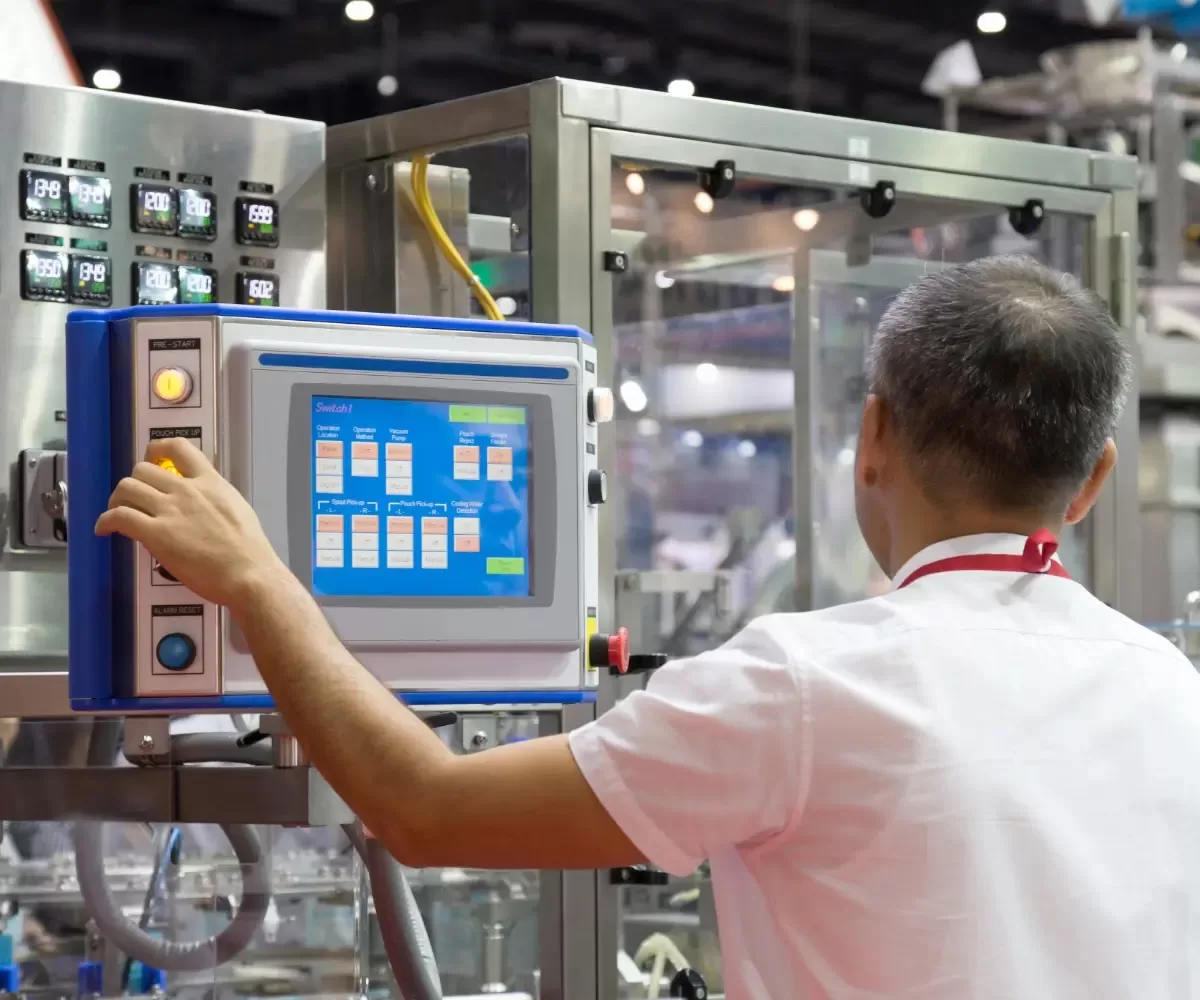
A standalone strapping machine is often the better choice for factories with lower production volumes, limited floor space, specific isolated strapping needs, or when budget constraints prevent a full integrated line investment. It offers flexibility, easier integration into existing semi-manual processes, and a targeted solution for securing products like steel coils or wire bundles without requiring a complete system overhaul.
Finding the Right Fit: Scenarios for Standalone Strapping
Let’s explore the situations where a standalone strapping machine shines, keeping Michael Chen’s need for durable, efficient, and cost-effective solutions in mind.
🎯 Targeted Problem Solving
- Lower Production Volume: If your factory does not process thousands of coils or wire bundles every day, a full integrated line might be overkill. A standalone machine can handle your volume efficiently without excess capacity.
- Example: A small fabrication shop in Monterrey, Mexico, producing custom steel components might only need to strap a few pallets or bundles a day. A standalone machine would be perfect.
- Specific Bottleneck Alleviation: Perhaps your wrapping or conveying is already optimized, but the final strapping step is a manual pain point. A standalone automatic strapping machine can target just that specific issue.
- Scenario: Existing semi-automatic coil wrapping machine is working fine, but manual strapping is slow. Adding an automatic strapping machine next in line streamlines this step.
- Limited Floor Space: Integrated lines require considerable space. If your factory has a compact layout or cannot easily reconfigure its production floor, a smaller standalone unit is a practical option.
- Consideration: "Can my current layout accommodate a long conveyor system, or do I need a compact unit for my specific strapping needs?" (Space optimization for machinery).
- Budget Constraints: The initial investment for a standalone machine is significantly lower. This makes it an attractive entry point for automation, allowing factories to gradually upgrade their capabilities as their business grows and capital becomes available.
- Investment Strategy: "How can I improve my strapping process with a manageable upfront cost?" (Cost-effective automation).
- Integration with Existing Processes: A standalone strapping machine can often be easily integrated into an existing semi-automatic production line, acting as an upgrade to one particular station rather than replacing the entire setup.
- Flexibility: It can be moved or repurposed more easily than a fixed, integrated system (Adaptable packaging solutions).
💼 Balancing Cost and Benefit
While a standalone machine might not offer the same level of full automation or safety benefits as an integrated line, it still provides substantial improvements over purely manual processes. For example, an automatic steel strapping machine can significantly reduce manual effort, improve strap tension consistency, and speed up the strapping process compared to using hand tools. This can lead to:
- Improved Product Security: Machine-applied straps are generally tighter and more consistent than manual strapping, reducing the risk of bundles coming apart during transit.
- Reduced Labor Fatigue: Even if an operator is still involved in feeding, the machine does the heavy work of tensioning and sealing, reducing physical strain.
- Faster Cycle Times for Specific Tasks: When focused on one task, these machines are very efficient.
Ultimately, the decision rests on a clear understanding of your current operational limitations and your strategic goals. Sometimes, the most powerful solution is the one that precisely addresses your immediate needs without unnecessary complexity or cost. FHOPEPACK offers robust standalone strapping machines for various applications, designed with the same durability and reliability as our integrated systems, ensuring quality regardless of scale.
4. How can you calculate the ROI for each packing solution to make the best investment?
When Michael Chen considers any new equipment, his primary concern is clear: "降本增效" (cost reduction and efficiency improvement) through a clear Return on Investment (ROI). He’s been burned by suppliers before, so he wants concrete numbers. This is a smart approach. From my experience building and running factories, I know that an investment without a clear ROI calculation is a gamble. It is not just about the sticker price; it is about the total cost of ownership and the quantifiable benefits over time.
Calculating the ROI for an integrated packing line or a standalone strapping machine involves comparing the upfront investment and ongoing operational costs against the tangible benefits like reduced labor expenses, decreased product damage, improved safety, and increased throughput. This helps factory managers like Michael Chen make data-driven decisions that justify the capital expenditure and ensure long-term profitability.
Making Smart Investments: A Step-by-Step ROI Guide
Let’s break down how you can approach this critical calculation, ensuring you select the packing solution that truly benefits your bottom line.
📊 Step 1: Determine Total Investment Cost (TIC)
This is more than just the machine price.
- Equipment Cost: Price of the integrated line or standalone machine.
- Shipping & Installation: Costs to get the machine to your factory in Mexico and set it up.
- Ancillary Equipment: Any conveyors, forklifts, or other tools needed to support the new system.
- Training: Costs for training your operators and maintenance staff.
- Infrastructure Modifications: Any electrical, air, or foundation work required for installation.
- Software/Integration Fees: For integrated lines, this might include HMI programming or linking to your existing ERP system.
💰 Step 2: Quantify Annual Savings & Benefits
This is where the direct impact on your challenges comes into play.
- Labor Cost Reduction:
- Integrated Line: Calculate the number of employees whose roles can be eliminated or redeployed and their annual salaries/benefits.
- Standalone Machine: Calculate savings from reduced overtime or fewer temporary workers for strapping tasks.
- Example: If an integrated line replaces 3 manual packing workers, and each worker costs $X annually, that’s a $3X saving.
- Reduced Product Damage:
- Calculate the average value of damaged coils/wire bundles per year due to manual handling or poor strapping.
- Insight: In my factory, automating coil handling cut damage by 80%, saving tens of thousands of dollars annually in scrap and rework (Damage reduction through automation).
- Increased Throughput/Revenue:
- Estimate the additional units you can produce and sell due to faster packing.
- Calculate the profit margin on these additional units.
- Formula: (Additional Units/Year) x (Profit per Unit) = Added Revenue.
- Safety Cost Reduction:
- Estimate savings from reduced workers’ compensation claims, lower insurance premiums, and reduced lost workdays due to injuries.
- Consideration: Michael’s current "high risks of work-related injuries, leading to high insurance costs and employee turnover" can be significantly mitigated (Safety ROI).
- Material Cost Savings (Optional):
- More efficient material usage (e.g., less stretch film waste) from automated systems.
- Energy Efficiency:
- Modern machines might be more energy-efficient than older equipment.
⏳ Step 3: Calculate Payback Period and ROI
- Payback Period:
- Formula: Total Investment Cost / Annual Savings & Benefits.
- This tells you how long it will take for the machine to pay for itself.
- Return on Investment (ROI):
- Formula: (Annual Savings & Benefits – Annual Operating Costs) / Total Investment Cost x 100%.
- Annual operating costs include maintenance, consumables (straps, film), and energy.
Comparison Example: Integrated vs. Standalone
| Metric | Integrated Packing Line | Standalone Strapping Machine |
|---|---|---|
| Total Investment Cost | 💲💲💲 (Higher) | 💲 (Lower) |
| Annual Labor Savings | 🧑🏭🧑🏭🧑🏭 (Significant, multiple roles) | 🧑🏭 (Moderate, specific roles/overtime) |
| Product Damage Savings | ✅✅✅ (High, due to full automation) | ✅ (Moderate, improved strapping consistency) |
| Throughput Increase | 📈📈📈 (Very high, continuous flow) | 📈 (Moderate, specific task speed-up) |
| Safety Improvement | 💯💯💯 (Dramatic, removal from hazard) | ✅✅ (Good, less manual strain) |
| Typical Payback Period | 1.5 – 3 years (depending on scale & current challenges) | 0.5 – 2 years (often faster for specific issues) |
| Long-Term ROI | High (sustainable operational advantage) | Moderate (targeted improvement) |
This structured approach, using actual numbers from your factory, will give you a clear picture. As Randal Liu, I believe in providing solutions that genuinely drive growth and profitability. FHOPEPACK is here to help you analyze your needs and build a solid ROI case for your investment in industrial packing machinery.
My Insight: Mastering Your Packing with the Right Partner
From my journey, starting as an employee at a packing machine factory and then establishing FHOPEPACK, I’ve seen countless operations transform. The real secret isn’t just about buying a machine; it is about finding a partner who understands your challenges. Michael Chen is right to be cautious about suppliers. When you invest in a packing solution, you are not just purchasing steel and circuits; you are buying into expertise, reliability, and long-term support.
At FHOPEPACK, we believe that choosing between an integrated packing line and a standalone strapping machine comes down to a clear understanding of your current operations, your growth ambitions, and your commitment to safety and efficiency. If your factory processes high volumes of materials like steel coils or wire, struggles with persistent bottlenecks, faces significant safety risks from manual handling, and aims for a dramatic leap in automation and cost reduction, then an integrated packing line offers the most profound long-term benefits. It represents a strategic investment that fundamentally reshapes your production end-of-line.
However, if your production volume is moderate, your budget is tighter, or you need to address a very specific, isolated strapping issue, then a robust standalone strapping machine can provide excellent value and an immediate return on investment. It is a stepping stone to automation, delivering targeted improvements without the full overhaul. What truly matters is a partner who listens, understands your unique context in the heavy manufacturing industry, and offers tailored advice, not just a sales pitch. That is the FHOPEPACK promise: to master your packing machine challenges together.
Conclusion
Choosing the right packing solution means balancing investment with long-term gains in efficiency, safety, and product quality. A well-chosen steel coil packing line can transform your factory’s performance.


