Industrial Automation in Indonesia | FHOPE Machinery Introduces Advanced Automatic Steel Coil Packing Line Solutions
Have you ever watched your factory floor, seeing valuable time and resources drain away due to old, manual packing methods? Many manufacturers in Indonesia face this exact problem. They struggle with slow production, high labor costs, and constant safety worries. This slows down everything, from getting products out the door to expanding the business. I know this pressure well from my own time running a packing machine factory. The good news is, there’s a better way.
FHOPEPACK is bringing advanced automatic steel coil packing line solutions to Indonesia, directly addressing these challenges. We help local factories achieve higher efficiency, ensure worker safety, and boost overall profitability by replacing outdated manual processes with smart, reliable automation.
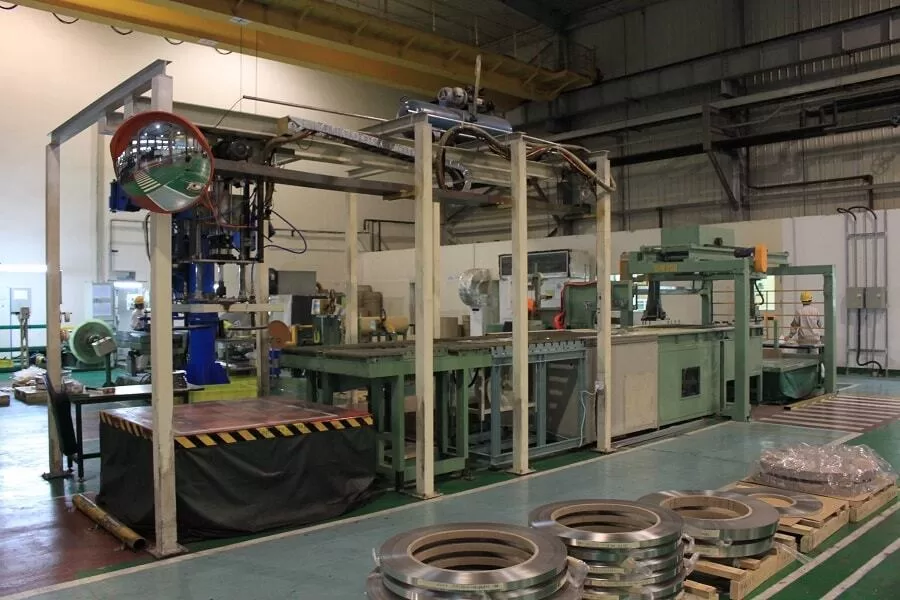
It is not just about buying a new machine. It’s about finding a true partner who understands your daily factory struggles and can offer real solutions. Let me share how FHOPEPACK’s expertise can transform your operations. We focus on clear, measurable benefits for your business.
1. Why is Manual Steel Coil Packing a Bottleneck in Indonesian Factories?
Do you find your steel coil and wire packing lines are the slowest part of your production? Many factories in Indonesia still rely heavily on manual labor for this critical step. This old approach creates huge bottlenecks. It slows down your whole operation and pushes back delivery times. The pressure to meet demand becomes very difficult.
Manual steel coil packing in Indonesian factories acts as a significant bottleneck because it is inherently slow, labor-intensive, and prone to human error. This reduces overall production speed and delays product shipments, directly impacting a factory’s ability to compete in a fast-paced market.
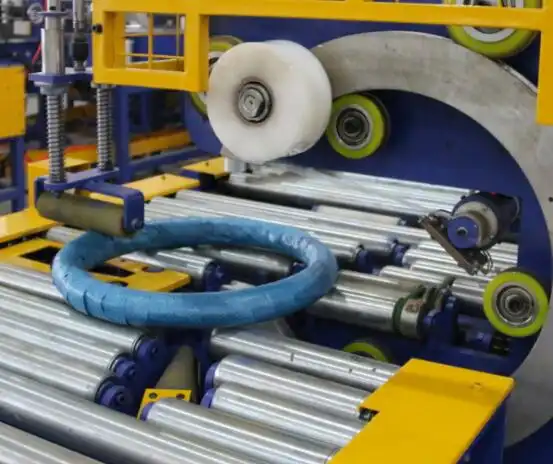
This is a problem I saw often in my own factory. Manual packing not only slows things down, but it also increases costs and introduces risks. Let’s look at why this outdated method holds back progress.
⚙️ The Hidden Costs of Manual Packing
Manual packing might seem cheaper at first glance. However, the true costs add up quickly.
- Slow Production Speed: Human hands simply cannot match the speed of machines. Each coil takes time to wrap, strap, and handle. This creates a backlog at the end of the line. Factories miss out on higher production volumes. ⏱️ (production delays, operational inefficiencies)
- High Labor Dependence: Relying on many workers for repetitive tasks means higher wage bills. It also means managing more staff, dealing with turnover, and ensuring constant training. This uses resources that could go to other parts of the business. 💸 (labor costs, workforce management)
- Inconsistent Quality: Human effort varies. Some coils might be packed perfectly, others less so. This leads to uneven protection and potential product damage during transport. Consistent quality is hard to maintain with manual methods. 📉 (product quality, packing consistency)
- Increased Rework and Waste: Errors happen. A poorly packed coil might need repacking, wasting materials and labor. This directly hits your bottom line. ♻️ (rework expenses, material waste)
📈 Comparing Manual vs. Automated Packing
Let’s see a simple comparison of how these methods stack up:
| Feature | Manual Packing | Automated Packing (FHOPEPACK) |
|---|---|---|
| Speed | Slow, inconsistent | Fast, consistent, high throughput |
| Labor Needs | High, many workers | Low, few operators needed |
| Cost (OpEx) | High labor, high error, high rework | Lower labor, lower error, reduced waste |
| Quality | Varies, prone to human error | Consistent, precise, uniform wrapping |
| Safety | High risk of injury | Low risk, machines handle heavy loads |
| Scalability | Limited by labor availability | Easy to scale production with increased machine runtime |
My experience taught me that investing in automation is not just about a machine. It is about investing in your factory’s future growth and competitiveness. Indonesian factories can overcome these bottlenecks and achieve new levels of productivity. They can free up valuable human resources for more complex, value-added tasks. This is a game-changer for businesses aiming for expansion. (factory productivity, automation benefits)
2. How Can Automation Address Safety Hazards in Heavy Industry Packing?
Are you constantly worried about worker safety on your packing line? Moving heavy steel coils or wire often means using forklifts, cranes, or even manual lifting. These tasks are not just inefficient; they are extremely dangerous. The risk of serious injury is high, leading to medical costs, lost workdays, and high employee turnover. This creates a stressful environment for everyone.
Automation dramatically reduces safety hazards in heavy industry packing by eliminating the need for manual handling of heavy items. Machines take over risky tasks like lifting, turning, and wrapping heavy steel coils, protecting workers from severe injuries and creating a much safer work environment in Indonesian factories.
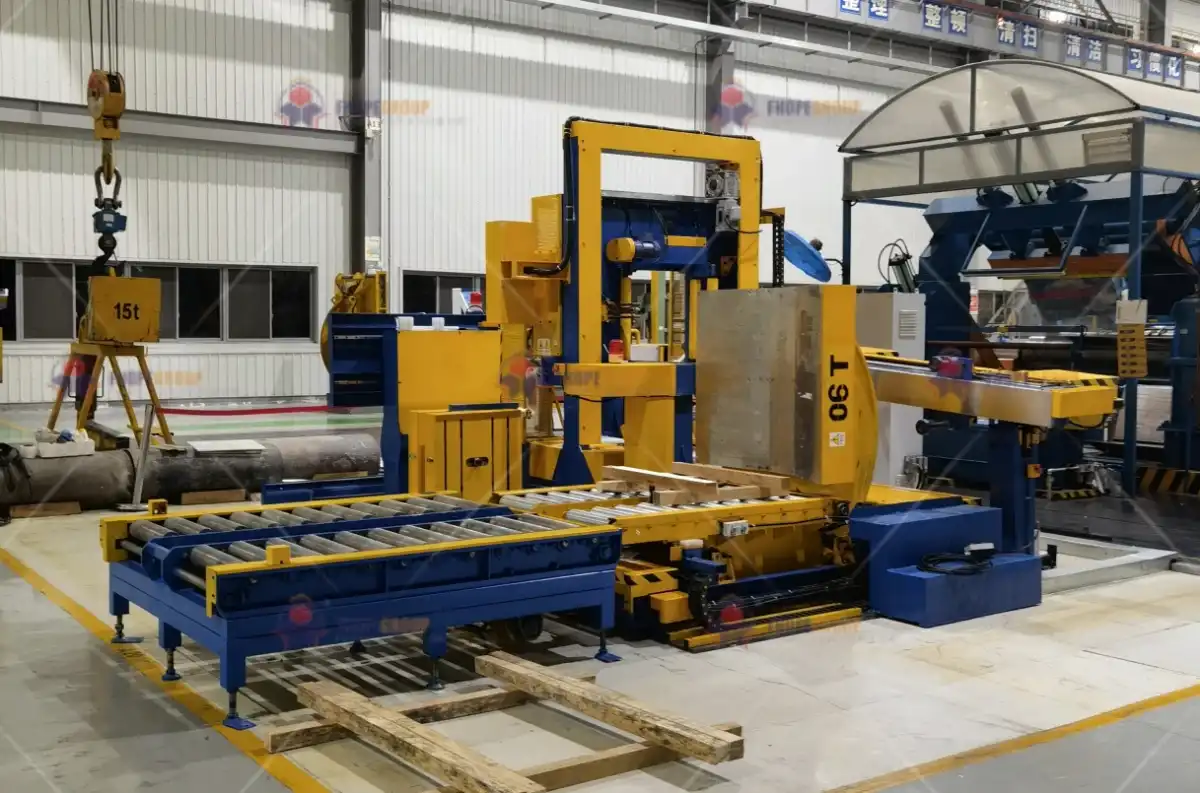
I have seen firsthand the impact of workplace accidents. They hurt people, and they hurt the business. My goal has always been to find better, safer ways to do things. Automation offers a clear path to a safer factory floor.
💪 Eliminating High-Risk Manual Tasks
Many factory accidents happen when workers interact directly with heavy loads or moving machinery parts. Automation removes workers from these dangerous zones.
- No Manual Lifting: Workers no longer need to manually lift or shift heavy coils. Automated systems handle the entire coil movement, from the production line to the packaging stage. This removes strain injuries and crush risks. 🏋️ (manual handling risks, crush injuries)
- Reduced Forklift Traffic: Forklifts are a common cause of accidents in busy factories. Automated packing lines often integrate conveyor systems or robotic arms. These systems move coils without human-driven vehicles. This makes the floor safer for everyone. 🚧 (forklift accidents, material handling safety)
- Controlled Environments: Automated machines operate within defined safety zones. They have sensors and safety interlocks that stop operations if a person enters the area. This provides a controlled and predictable work environment. 🛑 (safety zones, controlled operations)
✅ How FHOPEPACK Builds Safety into Its Machines
Safety is a core design principle for all FHOPEPACK machines. We understand the harsh conditions of heavy industry.
- Robust Construction: Our machines are built with strong, durable materials. They can withstand the demands of continuous operation with heavy loads. This ensures reliability and reduces the chance of mechanical failure that could lead to accidents. 🛡️ (machine durability, reliable equipment)
- Integrated Safety Features: Every FHOPEPACK packing line includes multiple safety measures. These include emergency stop buttons, light curtains, and safety fences. They protect workers during operation and maintenance. These features meet international safety standards. 🚨 (emergency stops, safety interlocks)
- Ergonomic Design: While automation minimizes human interaction, some oversight is still needed. Our systems are designed for easy and safe monitoring by operators. This means clear interfaces and safe access points for routine checks. This promotes a healthier work posture. 🧑🏭 (operator safety, ergonomic design)
My journey in the packing machine industry has shown me that safety and efficiency go hand-in-hand. A safer workplace leads to happier employees, lower insurance costs, and less disruption. This improves overall productivity. For Indonesian factories, adopting automated packing solutions means investing in their most valuable asset: their people. It ensures that every worker goes home safe at the end of the day. (workplace safety, industrial automation benefits)
3. What ROI Can Indonesian Manufacturers Expect from Automated Packing Line Investments?
Are you holding back on automation because you’re unsure about the cost? It’s natural to question a large investment. However, I’ve seen countless times how automated packing lines pay for themselves quickly. Many factory managers worry about the upfront price. They do not always see the clear return on investment (ROI) that automation offers. This includes big savings in labor, reduced product damage, and better overall efficiency.
Indonesian manufacturers can expect a strong return on investment from automated packing line solutions, primarily through significant reductions in labor costs, minimized product loss during handling, and improved operational efficiency. This leads to higher profitability and faster payback periods, making automation a smart long-term financial decision for their businesses.

When I started my own factory, every investment had to make sense financially. I learned to look beyond the immediate cost and focus on the long-term gains. Automated packing is a prime example of such an investment.
💰 The Financial Benefits Are Clear
Automated packing lines bring tangible financial advantages that directly boost your bottom line.
- Reduced Labor Costs: This is often the biggest saving. An automated line can do the work of several manual workers. This frees up your staff for more skilled tasks or reduces the need for new hires. Over time, these labor savings are substantial. 💵 (cost savings, labor optimization)
- Minimized Product Damage: Manual handling of heavy coils often leads to scratches, dents, or deformed edges. This results in scrap, rework, and customer complaints. Automated systems handle coils gently and consistently. They apply protection precisely. This drastically cuts down on product loss and quality issues. 🛡️ (product protection, damage reduction)
- Increased Throughput and Production Capacity: Automated lines work faster and without fatigue. They can operate continuously, if needed. This means you can pack more coils in less time, meeting higher demand and potentially taking on more orders. 📈 (production capacity, throughput increase)
- Lower Insurance Premiums: With fewer workplace accidents due to reduced manual handling, your factory’s safety record improves. This can lead to lower insurance costs over time. It is a direct financial benefit from a safer environment. 🏥 (insurance savings, risk reduction)
- Reduced Material Waste: Automated systems use packaging materials more efficiently. They apply film or straps consistently without overuse or mistakes. This reduces material waste compared to manual processes. ♻️ (material efficiency, waste reduction)
📊 Calculating Your ROI: A Simple Breakdown
Understanding the return on investment for an automated packing line involves looking at several factors.
- Initial Investment (I): Cost of the machine, installation, and initial training.
- Annual Savings (S):
- Labor savings (wages, benefits, training, reduced turnover).
- Reduced product damage (fewer rejected products, lower rework costs).
- Increased output value (from higher production capacity).
- Lower material waste.
- Potential reduction in insurance premiums.
- Payback Period = Initial Investment / Annual Savings
Let’s imagine a factory in Indonesia.
- Current situation: 5 workers on the packing line, high product damage (3% of output), slow packing speed.
- Automated solution: 1 operator needed, product damage reduced to 0.5%, packing speed doubles.
The combined savings from labor, reduced waste, and increased output quickly add up. My experience shows that many automated packing lines can see a payback period of 1 to 3 years. After that, all the savings directly add to your profits. This is why automated packing lines are not just an expense. They are a strategic investment in your factory’s future. (financial returns, strategic investment)
4. How Does FHOPEPACK Provide More Than Just Machinery to Indonesian Clients?
Have you ever bought equipment from a supplier who only cared about the sale? Many factory managers in Indonesia have faced this. They feel left alone with installation issues, poor after-sales service, and machines that do not truly fit their needs. This creates a deep mistrust. Finding a real partner, someone who understands your unique challenges, is crucial. It is more than just buying a machine.
FHOPEPACK goes beyond selling machinery; we act as a true industry partner for Indonesian clients. My personal experience building and running factories means we offer deep operational insights, tailor-made solutions, and reliable after-sales support. We ensure our advanced automatic steel coil packing lines genuinely solve your production bottlenecks and contribute to your long-term success, not just a one-time transaction.
I built FHOPEPACK on the principle of sharing knowledge and building lasting relationships. My journey from an employee to a factory owner taught me the true value of a reliable partner. We know the challenges Michael Chen faces because I faced them myself.
🤝 A Partnership Built on Experience and Trust
My background gives FHOPEPACK a unique perspective. We do not just see you as a customer. We see you as a business facing specific challenges.
- Deep Industry Knowledge: I started as a packing machine engineer and built my own factory from the ground up. This means I understand the entire production cycle, the pressures of daily operations, and the nuances of coil and wire packing. We speak your language. 🧠 (industry expertise, operational understanding)
- Tailored Solutions, Not Just Products: Every factory is different. We do not offer a one-size-fits-all solution. Instead, our team works closely with you. We analyze your specific production bottlenecks, safety concerns, and efficiency goals. Then, we design an automatic packing line that fits your factory perfectly. We ensure it solves your unique problems. 🛠️ (customized solutions, problem-solving approach)
- Reliable After-Sales Support: Our relationship does not end after installation. We provide comprehensive training for your team. We offer ongoing technical support and spare parts. This ensures your FHOPEPACK machine runs smoothly for years. We are committed to your long-term operational success. 📞 (post-sales support, long-term partnership)
- Focus on Your ROI: We help you see the clear financial benefits. Our goal is to provide solutions that have a strong, measurable return on investment. We help you justify the automation investment to your management. We ensure it contributes to your factory’s overall profitability. 💲 (measurable benefits, investment justification)
✨ The FHOPEPACK Difference
What makes FHOPEPACK different for Indonesian manufacturers? It is our commitment to being more than a vendor.
- Consultative Approach: We act as your expert consultant. We share insights gained from years in the industry. We help you make informed decisions about your automation strategy. We are a knowledge-sharing platform first. 💡 (expert consulting, strategic guidance)
- Proven Track Record: My personal success in building and growing a packing machine factory gives FHOPEPACK credibility. We know what it takes to succeed in this industry. We apply that knowledge to help your business grow. 🏆 (proven expertise, business growth support)
- Local Understanding (Indonesia): We understand the specific needs and operational environments of factories in Indonesia. Our solutions are designed to perform reliably in local conditions. We provide solutions that truly work for your market. 🇮🇩 (local market understanding, tailored for Indonesia)
For Michael Chen and other factory managers in Indonesia, choosing FHOPEPACK means choosing a partner who deeply understands their world. It means working with an expert who has walked in their shoes. We bring not just machines, but also the wisdom and support needed to truly transform their operations and achieve their business goals. (trusted supplier, reliable partner)
Conclusion
FHOPEPACK delivers advanced steel coil packing line solutions, boosting efficiency, safety, and ROI for Indonesian manufacturers, ensuring lasting operational success.


