Industrial Automation in Australia | FHOPE Machinery Expands with Automatic Steel Coil Packing Line Technology
The demand for efficiency and safety in manufacturing is at an all-time high. Many factory managers, like Michael Chen in Mexico, grapple with outdated processes. They face production bottlenecks, safety risks, and product damage. My journey in the packing machine industry taught me that these challenges are not unique. They are universal. This is why I founded FHOPEPACK. My mission is to share knowledge and provide solutions that empower businesses. We see a clear path for growth through advanced technology.
Industrial automation, particularly in automatic steel coil packing line technology, is rapidly expanding in Australia. This surge is driven by the need to boost operational efficiency, enhance workplace safety, and maintain a competitive edge in global markets. FHOPE Machinery is at the forefront, offering innovative solutions that help Australian manufacturers overcome traditional production hurdles and achieve new levels of productivity.

This expansion reflects a global trend. Companies are moving towards smarter, more reliable production methods. For those struggling with manual processes, the shift to automation is not just an upgrade; it is a necessity for survival and growth. Let’s explore why Australia is embracing this change and how FHOPEPACK is helping lead the way.
1. Why is Australia Seeing a Surge in Demand for Industrial Automation, Especially in Steel Coil Packing?
Many factory managers feel the pressure. Their current packing methods are often slow and manual. This leads to bottlenecks and higher operational costs. The global market demands faster delivery and flawless products. Ignoring these issues means falling behind. This situation creates a clear need for change.
Australia is experiencing a significant increase in demand for industrial automation, particularly in steel coil packing, due to several key factors: rising labor costs, stringent safety regulations, the need for enhanced global competitiveness, and a growing focus on consistent product quality. These elements compel manufacturers to adopt automated solutions to reduce operational expenses, mitigate workplace risks, and improve overall production efficiency.

Diving Deeper into Australia’s Automation Drive
My experience in the packing machine sector has shown me that economic pressures often dictate technological adoption. Australia’s manufacturing landscape is evolving. Businesses need to adapt quickly. This means looking at automation as a strategic investment, not just an expense. The reasons are clear and compelling.
📈 Cost Reduction Through Automation
One of the biggest drivers for automation is the desire to cut costs. Manual labor can be expensive. In Australia, labor costs are significant. Automated systems can reduce the need for large workforces. This lowers salary expenses, overtime, and benefits. It also allows existing staff to focus on more complex, value-added tasks. For a factory manager like Michael, every dollar saved on labor directly impacts the bottom line. It frees up resources for growth. Investing in machines with a clear return on investment (ROI) becomes a priority. This is a lesson I learned early in my career. Efficient operations lead to financial independence.
🛡️ Enhancing Workplace Safety
Safety is paramount. Manual handling of heavy steel coils and wires poses significant risks. Accidents can lead to injuries, higher insurance premiums, and lost workdays. Michael Chen knows this pain too well. Worker safety is not just a moral obligation; it is an economic one. Automation removes workers from hazardous environments. Machines perform repetitive, heavy lifting and dangerous tasks. This drastically reduces the chance of accidents. It creates a safer, more productive workplace. This is a critical factor for any responsible factory owner. It protects employees and the company’s reputation.
🌍 Global Competitiveness and Quality Standards
In today’s global market, speed and quality are competitive advantages. Manual packing can lead to inconsistencies. Products might get damaged during handling. This results in customer complaints and financial losses. Automated packing lines ensure uniformity. They provide consistent tension, wrapping, and strapping. This protects products from damage. It guarantees that goods arrive in perfect condition. Australian companies need this edge. They compete with manufacturers worldwide. My goal with FHOPEPACK is to help clients meet these high standards. We help them stand out in the global marketplace.
♻️ Optimizing Production Flow and Efficiency
Bottlenecks in the packing process can slow down the entire production line. This impacts delivery times and overall output. Manual processes are inherently slower than machines. Automation integrates seamlessly into existing production lines. It ensures a smooth flow from manufacturing to shipping. This eliminates delays. It maximizes throughput. This efficiency is crucial for meeting tight deadlines. It allows factories to process more orders. This directly boosts productivity and profitability. (efficiency improvement, cost savings, safety compliance)
2. How Does Automatic Steel Coil Packing Line Technology Boost Efficiency and Safety in Australian Factories?
Many factories still rely on outdated, manual packing methods. These methods are slow and often dangerous. Workers lift heavy coils, leading to fatigue and injuries. Product quality can suffer due to inconsistent handling. This creates a cycle of inefficiency and risk. Businesses need a better way.
Automatic steel coil packing line technology significantly boosts efficiency and safety in Australian factories by automating hazardous manual tasks, accelerating the packing process, and ensuring consistent product protection. These systems reduce labor requirements, minimize the risk of workplace injuries, and enhance throughput. They integrate precise wrapping, strapping, and handling mechanisms, leading to faster operations and higher quality output.

Diving Deeper into the Benefits of Automated Packing Lines
Having spent years building packing machine factories, I have seen first-hand the transformation automation brings. It is not just about replacing human labor. It is about creating a smarter, safer, and more productive operation. This is especially true for heavy industries.
🚀 Speed and Throughput Enhancement
Manual packing is inherently slow. Each coil requires multiple steps and careful handling. An automatic packing line can process coils much faster. It uses coordinated movements and pre-programmed sequences. This drastically increases the number of coils packed per hour. Imagine a factory that can double its output without increasing its workforce. This means faster order fulfillment. It means higher production capacity. This directly impacts revenue. For businesses looking to scale, this speed is a game-changer. It unlocks new potential for growth.
👷♂️ Drastically Improved Worker Safety
This is one of the most compelling reasons for automation. Workers no longer need to manually lift or manipulate heavy steel coils. The machines handle all the heavy lifting and precise movements. This eliminates strains, sprains, and crush injuries. Michael Chen’s concern about high work injury risks is a common one. Automated systems create a safer work environment. This not only protects employees but also reduces worker’s compensation claims and insurance costs. It builds a positive work culture where employees feel valued and secure.
✨ Consistent and High-Quality Packaging
Human error is a reality. Manual packing can lead to uneven wrapping, loose straps, or damaged edges. Automated systems apply consistent tension and precise wrapping. They ensure every coil is packed to the same high standard. This minimizes product damage during transport and storage. It reduces customer complaints. It strengthens the brand’s reputation for quality. For industries dealing with valuable materials like steel, this consistency is vital. It guarantees product integrity from the factory floor to the end-user.
📊 Optimized Material Usage
Automated machines are designed for efficiency. They can precisely measure and apply packing materials. This reduces waste compared to manual methods. Over time, these small savings add up. Less material waste means lower operational costs. It also contributes to more sustainable manufacturing practices. My goal at FHOPEPACK has always been to engineer systems that are both powerful and efficient. This focus on optimization helps factories save money and resources in the long run. It is about smart, sustainable growth. (safety benefits, throughput increase, quality consistency)
3. What Specific FHOPE Machinery Solutions Are Driving Automation in Australia’s Heavy Industries?
Many manufacturers feel stuck with outdated equipment. They struggle to find reliable suppliers who truly understand their specific challenges. Generic machines do not always fit unique factory needs. This can lead to frustration and wasted investment. What they need are tailored, proven solutions.
FHOPE Machinery is driving automation in Australia’s heavy industries with a comprehensive range of specialized solutions, including automatic orbital stretch wrappers, vertical and horizontal coil strapping machines, and advanced material handling equipment. These machines are engineered for the rigorous demands of steel, wire, and heavy manufacturing. They integrate seamlessly into existing lines to provide robust, efficient, and safe packing processes.
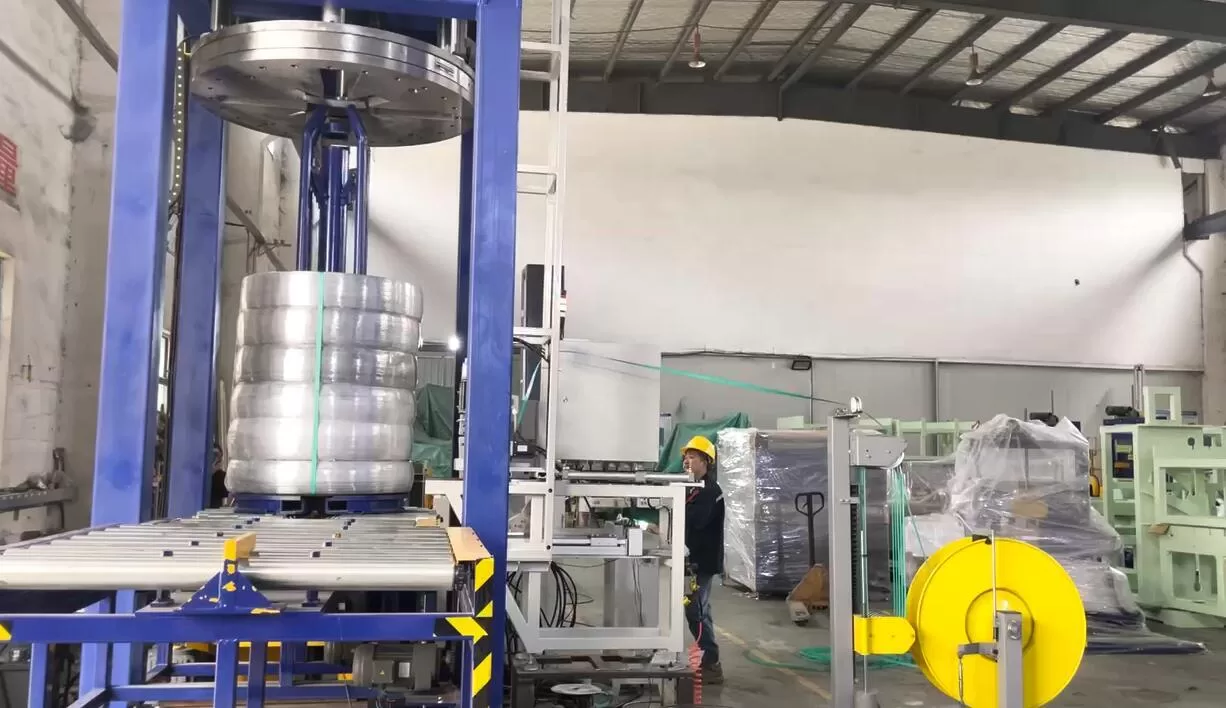
Diving Deeper into FHOPEPACK’s Innovative Solutions
When I founded FHOPEPACK, my vision was to build machines that truly solve complex problems. We aim to be a partner, not just a vendor. We understand the specific bottlenecks and safety concerns that factory managers like Michael Chen face. Our solutions are designed with these challenges in mind. We combine robust engineering with smart automation.
🌀 Automatic Orbital Stretch Wrappers
These machines are central to our offering. They wrap coils with stretch film, providing excellent protection against dust, moisture, and damage.
- How they work: The coil passes through the center of a rotating ring. This ring applies multiple layers of stretch film. The wrapping tension is consistent.
- Benefits:
- 💧 Moisture and dust protection.
- 🛡️ Physical damage prevention during transport.
- ⬆️ High speed and continuous operation.
- ♻️ Reduced film usage compared to manual methods.
- Application: Ideal for various steel coils, aluminum coils, and wire coils.
🧵 Vertical and Horizontal Coil Strapping Machines
Strapping is crucial for securing coils. It prevents unwinding and ensures stability during handling. We offer both vertical and horizontal options to suit different coil orientations.
- Vertical Strapping:
- Purpose: Secures the coil from the top.
- Advantages: Ideal for stacked coils or those needing top-down compression. Ensures tight, stable bundles.
- Example: Great for large, heavy steel coils.
- Horizontal Strapping:
- Purpose: Secures the coil around its circumference.
- Advantages: Prevents layers from shifting. Essential for smaller coils or wire bundles.
- Example: Perfect for wire coils and narrow steel strips.
- Key Features: Automatic strap feeding, tensioning, sealing, and cutting. This ensures consistent strap application every time.
⚙️ Advanced Material Handling Equipment
Automation is not just about wrapping and strapping. It’s also about moving products safely and efficiently. Our solutions include integrated handling systems.
- Coil Up-Enders/Down-Enders:
- Function: Safely change the orientation of coils (e.g., from eye-to-sky to eye-to-bore).
- Benefit: Eliminates dangerous manual flipping, preventing injuries and product damage.
- Application: Essential for integrating different parts of a packing line or preparing coils for shipping.
- Conveyors and Transfer Carts:
- Function: Automated movement of coils between different stations.
- Benefit: Reduces human intervention, speeds up the process, and improves workflow.
- Application: Creates a fully automated production line from start to finish.
FHOPEPACK machines are built to last. They withstand the harsh conditions of heavy industry. We design them for minimal maintenance and maximum uptime. This reliability is what factory managers need. It is what I sought when I was running my own factory. We provide not just machines, but complete, integrated solutions that offer peace of mind. (FHOPE machinery, automation solutions, coil packaging equipment)
4. How Can Businesses Like Michael Chen’s Calculate the ROI of Investing in Automated Packing Lines?
Making a large investment in new equipment can feel risky. Factory managers often wonder if the cost will truly pay off. They need a clear understanding of the financial benefits. Without a solid return on investment (ROI) calculation, it is hard to justify the expenditure. This uncertainty can delay crucial upgrades.
Businesses like Michael Chen’s can calculate the ROI of investing in automated packing lines by analyzing key financial metrics: direct labor cost savings, reduction in product damage, increased production throughput, decreased insurance premiums due to improved safety, and lower material waste. By quantifying these benefits against the initial investment and ongoing maintenance costs, companies can clearly demonstrate the long-term financial advantages of automation.

Diving Deeper into ROI Calculation for Automated Packing Lines
My journey in the packing industry, from employee to factory owner, taught me the importance of smart investments. Every machine purchased must serve a clear purpose and bring tangible value. For Michael Chen and others, understanding ROI is not just about numbers. It is about making informed decisions for sustainable growth.
💰 Direct Labor Cost Savings
This is often the most straightforward benefit.
- Manual Process: Requires X number of operators per shift for packing.
- Automated Process: Requires Y (much smaller) number of operators for supervision.
- Calculation: (X – Y) (Average Hourly Wage + Benefits) (Operating Hours/Year). This gives you the annual labor savings. This alone can justify a significant portion of the investment. My experience showed me that reducing manual labor frees up resources. These resources can then be deployed to more skilled areas, adding more value to the company.
📉 Reduced Product Damage and Waste
Damaged products lead to costly reworks, scrap, and customer complaints.
- Manual Process: Higher incidence of scratches, dents, or improper wrapping leading to damage.
- Automated Process: Consistent, precise handling and wrapping minimize damage.
- Calculation: Estimate the average cost of damaged coils per year. Compare this cost before and after automation. The difference is your annual savings. Also, automated systems use packing materials more efficiently, reducing material waste. This adds another layer of savings.
⬆️ Increased Production Throughput
Faster packing means more products can be processed and shipped.
- Manual Process: Limited by human speed and endurance.
- Automated Process: Operates at a higher, consistent speed.
- Calculation: (New Production Capacity – Old Production Capacity) * (Revenue per Unit – Cost per Unit). This shows the potential increase in profit from higher output. This can be a huge driver for growth, especially for factories facing bottlenecks.
🏥 Lower Insurance Premiums and Improved Morale
A safer workplace reduces insurance costs and improves employee retention.
- Manual Process: High risk of injuries, leading to higher worker’s compensation premiums and potential lawsuits.
- Automated Process: Significantly reduces injury rates.
- Calculation: Consult with your insurance provider to estimate potential premium reductions. Also, consider the intangible benefits:
- Reduced employee turnover.
- Improved morale and productivity.
- Enhanced company reputation.
These "soft" benefits are harder to quantify but are crucial for long-term success.
🛠️ Maintenance and Operational Costs
Automation comes with its own costs.
- Initial Investment: The cost of purchasing and installing the automated line.
- Maintenance: Scheduled servicing, spare parts.
- Energy Consumption: Powering the machines.
- Calculation: Factor these costs into your total expenditure. Compare them against the savings. A simple payback period calculation can also be useful: Initial Investment / (Total Annual Savings – Annual Maintenance & Energy Costs).
By taking a holistic view and quantifying both the direct and indirect benefits, businesses can present a compelling case for automation. My work at FHOPEPACK focuses on delivering solutions that offer clear, measurable ROI, helping our partners achieve their financial goals. We help them transform their operations for the better. (ROI calculation, cost savings, efficiency gains, financial benefits)
Conclusion
Australia’s embrace of industrial automation, particularly in steel coil packing, marks a significant step towards efficiency and safety. FHOPE Machinery, with its advanced solutions and commitment to understanding client needs, is a vital partner in this journey. We empower businesses to achieve growth, cost reduction, and a safer workplace with our steel coil packaging line and other innovative packing technologies.


