How to Operate a Steel Coil Packing Machine Safely and Efficiently?
Operating heavy machinery like a steel coil packing machine often presents a unique set of challenges. Are you struggling with slow, manual processes that eat into your production schedule? Are you constantly worried about worker safety and the high costs associated with accidents? For factory managers like Michael Chen in Mexico, these are daily realities. The pressure to boost output while keeping costs low and ensuring safety can feel overwhelming. But what if I told you there’s a better way to master your packing operations? A way that not only improves efficiency but also drastically enhances safety and reduces product damage.
Operating a steel coil packing machine safely and efficiently involves a combination of comprehensive operator training, adherence to strict safety protocols, regular preventive maintenance, and strategic automation of the packaging process. By investing in reliable machinery and fostering a safety-first culture, factories can minimize downtime, reduce workplace injuries, and significantly optimize their production lines for heavy industrial materials.

This is not just about pressing buttons. It is about understanding the entire ecosystem of your packing line. My journey from a packing machine factory employee to establishing FHOPEPACK has taught me invaluable lessons about what truly makes an operation successful. Let’s dive deeper into the practical steps that will help you master your packing machine operations, transforming your challenges into opportunities for growth.
1. What are the key safety protocols for operating steel coil packing machines?
Are your manual handling processes for heavy steel coils creating significant safety hazards? Are you concerned about high injury rates and the soaring insurance costs that follow? For many factory managers, the physical risks involved in moving and packing massive coils are a constant worry, leading to inefficiencies and potential legal issues.
Key safety protocols for operating steel coil packing machines include mandatory operator training, implementing lockout/tagout procedures during maintenance, ensuring all safety guards and emergency stops are functional, providing personal protective equipment (PPE), and establishing clear, designated safety zones around the machinery to protect personnel from moving parts and heavy materials.
When it comes to handling steel coils and wire packing, safety is not just a checklist; it is a mindset. My years in the packing machine industry have shown me that even the most robust machinery can become a hazard without proper protocols. Michael Chen, a factory manager, understands this well. He deals with heavy metal processing daily, where any lapse in safety can lead to severe consequences, from worker injury to costly production delays.
A. Essential Safety Training Programs for Operators 👷♀️
Effective safety begins with a well-trained workforce. Every operator must understand the machine’s functions, potential hazards, and emergency procedures. Comprehensive training programs are vital.
- Initial Certification: All new operators must complete a formal training program and pass a competency test before operating the machine independently.
- Refresher Courses: Regular refresher courses, ideally annually, help reinforce safety practices and introduce any updates to machine operations or safety regulations.
- Emergency Drills: Conduct periodic emergency drills, including power outages and machine malfunctions, to ensure operators can react quickly and correctly.
- Hazard Recognition: Train operators to identify and report potential hazards before they lead to incidents. This proactive approach saves lives and prevents downtime.
B. Implementing Lockout/Tagout (LOTO) Procedures 🛑
Lockout/Tagout is a critical safety standard that prevents unexpected startup of machinery during maintenance or servicing activities.
- Isolation: Always de-energize and lock out all power sources (electrical, hydraulic, pneumatic) before any maintenance or adjustment work begins.
- Verification: After applying LOTO devices, verify that the machine cannot be started. This "try-out" step is crucial.
- Clear Labeling: Ensure all LOTO devices are clearly labeled with the name of the person who applied them and the reason for the lockout.
- Training for Maintenance Staff: All maintenance personnel must be thoroughly trained in LOTO procedures. This prevents accidental startup and protects those working on the machine.
C. Maintaining Machine Safety Features 🛡️
Modern steel coil packing machines come with advanced safety features. These must be regularly checked and maintained to remain effective.
- Emergency Stop Buttons: Test all emergency stop buttons daily to confirm they immediately halt machine operation.
- Safety Guards and Interlocks: Inspect physical guards for damage and ensure all interlock systems (which prevent machine operation if a guard is open) are functioning correctly.
- Light Curtains and Safety Scanners: For automated systems, verify that light curtains and area scanners are active and detect intrusions into hazardous zones.
- Overload Protection: Ensure the machine’s overload protection systems are calibrated and working to prevent damage from excessive weight or force.
D. Personal Protective Equipment (PPE) Requirements 🧤
PPE is the last line of defense for operators. Mandating and ensuring the correct use of PPE is non-negotiable.
- Hard Hats: Protect against falling objects, especially in areas where coils are handled vertically.
- Safety Glasses/Goggles: Shield eyes from dust, debris, and potential splashes.
- Steel-Toe Boots: Essential for protecting feet from heavy coils or dropped tools.
- Gloves: Provide protection against sharp edges, heat, and lubricants.
- Hearing Protection: Important in noisy factory environments to prevent long-term hearing damage.
Table: Common Safety Risks and Solutions in Coil Packing
| Risk Category | Specific Hazard | FHOPEPACK Solution/Protocol | Benefit |
|---|---|---|---|
| Manual Handling | Strain injuries from lifting heavy coils | Automated coil handling and strapping systems | Eliminates heavy lifting, reduces worker fatigue |
| Moving Parts | Entanglement in rotating shafts or conveyors | Enclosed designs, safety interlocks, emergency stops | Prevents access to dangerous areas during operation |
| Coil Instability | Coils rolling or falling during transport | Robust coil cradles, secure clamping, automated transport | Stabilizes coils, prevents uncontrolled movement |
| Electrical Issues | Shocks, fires from faulty wiring | Certified electrical components, proper grounding, regular inspection | Enhances electrical safety, prevents fires |
| Operator Error | Incorrect machine operation leading to accidents | Comprehensive training, intuitive controls, safety prompts | Improves operational accuracy, minimizes human error |
(safety protocols, operational safety, heavy machinery safety)
2. How can you maximize efficiency in your steel coil packaging process?
Are your current steel coil and wire packing processes slow and heavily reliant on manual labor? Do these bottlenecks directly impact your overall production and delivery times, leaving your customers waiting? In today’s fast-paced manufacturing world, inefficient packaging isn’t just an inconvenience; it is a significant drain on your bottom line and reputation.
To maximize efficiency in steel coil packaging, integrate automated strapping, wrapping, and handling systems, optimize the workflow layout to minimize material travel, implement real-time monitoring for quick issue detection, and standardize packaging specifications. This strategic approach reduces manual labor, increases throughput, and ensures consistent package quality for coil packing and steel wire packing operations.
From my experience, watching a packing line get bogged down by manual operations is frustrating. When I started my packing machine factory, I knew that efficiency was key to success. For Michael Chen, a factory manager overseeing an entire metal processing plant, production bottlenecks are a constant headache. He needs solutions that cut costs and speed up his coil packing and steel wire packing operations without compromising quality.
A. Automation: The Core of Modern Efficiency 🚀
Automation is the single biggest driver of efficiency in steel coil packaging. It reduces manual labor, increases speed, and improves consistency.
- Automated Strapping Machines: These machines apply steel or plastic straps quickly and uniformly, ensuring secure packaging. They are faster and more consistent than manual strapping.
- Automated Wrapping Machines: Orbital wrappers or vertical wrapping machines efficiently encase coils in protective film, guarding against dust, moisture, and damage during transit.
- Robotic Handling Systems: Robots can lift, position, and stack coils with precision, eliminating the need for hazardous manual handling and significantly speeding up the process.
- Integrated Conveyor Systems: Seamlessly connecting different stages of the packing process with conveyors minimizes material transfer time and keeps the line flowing.
B. Optimizing Workflow and Layout ⚙️
An efficient layout can drastically reduce wasted time and movement, impacting overall production efficiency.
- Lean Principles: Apply lean manufacturing principles to identify and eliminate waste in your packaging process, such as excessive movement, waiting times, and unnecessary steps.
- Ergonomic Design: Ensure workstations are designed ergonomically to reduce operator fatigue and improve efficiency for tasks that still require human intervention.
- Straight-Line Flow: Design the packing line to follow a logical, straight-line flow from the slitting line or production area to the shipping dock, minimizing backtracking or crisscrossing.
- Storage Proximity: Position raw material (like wrapping film or straps) storage areas close to the packing machines to reduce replenishment time.
C. Implementing Real-Time Monitoring and Data Analysis 📊
Understanding your packing line’s performance in real-time allows for quick adjustments and continuous improvement.
- Sensors and PLC Control: Use sensors to track coil positions, machine status, and material levels. Integrate these with a Programmable Logic Controller (PLC) for automated control and data collection.
- HMI Interfaces: Provide Human-Machine Interface (HMI) screens that give operators a clear overview of the packing process, allowing them to identify and address issues promptly.
- Data Analytics Software: Collect and analyze data on packing speed, downtime, material consumption, and error rates. This data helps identify bottlenecks and areas for improvement.
- Predictive Maintenance Integration: Use data to predict potential machine failures, allowing for scheduled maintenance rather than reactive repairs, thus preventing unexpected downtime.
D. Standardization of Packaging Processes 📏
Consistency in packaging leads to predictable results, reduced errors, and better protection for your products.
- Standard Operating Procedures (SOPs): Develop clear SOPs for every step of the packing process, ensuring all operators follow the same best practices.
- Packaging Material Specifications: Standardize the type and amount of packaging materials (film thickness, strap width, core size) for different coil dimensions to ensure optimal protection and cost control.
- Quality Control Checkpoints: Implement checkpoints throughout the packaging process to ensure coils are packed correctly and meet quality standards, preventing product damage.
- Machine Settings Presets: Utilize machine presets for different coil sizes and packaging requirements, allowing for quick changeovers and reducing setup time.
Comparison: Manual vs. Automated Steel Coil Packing
| Feature | Manual Packing | Automated Packing (FHOPEPACK Solutions) |
|---|---|---|
| Speed/Throughput | Slow, highly variable, limited by human pace | Fast, consistent, high volume |
| Labor Cost | High, requires multiple operators | Low, minimal human intervention, supervision only |
| Safety Risks | Very High (manual lifting, repetitive strain) | Very Low (enclosed systems, less human interaction) |
| Consistency/Quality | Inconsistent, prone to human error | High, uniform, repeatable quality |
| Product Damage | Higher risk during handling/strapping | Lower risk, precise machine handling |
| Flexibility | Adaptable to varied coil sizes (but slow) | High (programmable for different coil types) |
| ROI | Low initial cost, high ongoing operational cost | Higher initial investment, significant long-term savings |
(production efficiency, packaging automation, coil handling, operational optimization)
3. Why is regular maintenance critical for steel coil packing machine longevity?
Has your factory experienced unexpected machine breakdowns that bring your entire production line to a grinding halt? Do these sudden failures lead to missed deadlines, frustrated customers, and expensive emergency repairs? For a factory manager like Michael Chen, who values durable equipment for harsh environments, the reliability of every machine is paramount.
Regular preventive maintenance is critical for steel coil packing machine longevity because it identifies and addresses minor issues before they escalate into major failures, extends the operational lifespan of the equipment, ensures consistent performance, and minimizes costly unplanned downtime, ultimately protecting your investment and maintaining production continuity for heavy industrial packing.
My journey through the packing machine industry taught me that a well-maintained machine is a profitable machine. It’s not just about fixing things when they break; it is about preventing them from breaking in the first place. Michael Chen understands that any downtime means significant losses for his metal processing plant. He constantly seeks durable equipment that can withstand his factory’s demanding work environment, and maintenance is the backbone of that durability.
A. The Benefits of Proactive Maintenance 💡
Shifting from reactive to proactive maintenance offers substantial advantages.
- Extended Lifespan: Regular inspections and component replacements prevent wear and tear from escalating, prolonging the life of the entire machine.
- Reduced Downtime: Scheduled maintenance allows for repairs or replacements to be done during planned shutdowns, avoiding unexpected production stoppages.
- Optimized Performance: Machines run at peak efficiency when properly maintained, ensuring consistent packing quality and speed.
- Lower Repair Costs: Addressing small issues early is always cheaper than repairing catastrophic failures.
- Enhanced Safety: Well-maintained machines are safer to operate, reducing the risk of accidents caused by faulty components.
B. Developing a Comprehensive Maintenance Schedule 🗓️
A detailed schedule ensures no part of your packing machine is overlooked.
- Daily Checks: Visual inspections for loose bolts, leaks, unusual noises, and proper lubrication levels.
- Weekly Tasks: Cleaning critical components, checking fluid levels, and inspecting wear parts like belts, chains, and rollers.
- Monthly/Quarterly Inspections: Thorough checks of electrical connections, sensor calibration, pneumatic and hydraulic systems, and safety features.
- Annual Overhaul: A more extensive inspection and servicing, including replacing wear-and-tear components, recalibrating systems, and updating software if necessary.
- Manufacturer Guidelines: Always follow the maintenance recommendations provided by the machine manufacturer. FHOPEPACK provides detailed maintenance manuals for all its coil packing and steel wire packing equipment.
C. The Role of Spare Parts Management 📦
Having the right spare parts on hand is crucial for quick repairs and minimizing downtime.
- Critical Spares List: Identify essential spare parts that are prone to wear or crucial for machine operation. Keep a stock of these items.
- Supplier Relationships: Establish strong relationships with your machine supplier (like FHOPEPACK) to ensure quick access to genuine parts when needed.
- Inventory Management: Implement a system to track spare parts inventory, ensuring you don’t run out of critical components.
- Quality Parts: Always use high-quality, genuine replacement parts to ensure compatibility and reliability. Using inferior parts can lead to more frequent breakdowns.
D. Predictive Maintenance Technologies 📡
Leveraging technology can take your maintenance strategy to the next level.
- Sensor-Based Monitoring: Install sensors to monitor vibration, temperature, and current draw on critical components. Abnormal readings can signal impending failure.
- Data Analytics: Use software to analyze sensor data and historical maintenance records to predict when components are likely to fail, allowing for proactive replacement.
- Thermal Imaging: Use thermal cameras to detect overheating components, which can indicate friction or electrical issues before they cause a breakdown.
- Oil Analysis: For hydraulic systems, regular oil analysis can detect contaminants or degradation, indicating wear within the system.
Maintenance Checklist for Steel Coil Packing Machines
| Inspection Area | Daily Checks ✅ | Weekly Checks 🔄 | Monthly Checks 🔧 | Annual Checks 🌟 |
|---|---|---|---|---|
| Mechanical | Lubrication, Belt Tension | Bolt Tightness, Roller Wear | Bearing Condition, Gearbox Fluid | Full Component Overhaul |
| Electrical | Cable Integrity, E-Stops | Sensor Function, PLC Status | Terminal Connections, Motor Health | Wiring Inspection, Calibrations |
| Pneumatic/Hydraulic | Pressure Levels, Leaks | Filter Condition, Hoses | Valve Operation, Cylinder Seals | Fluid Replacement, System Flush |
| Safety Features | Guarding, Interlocks | Light Curtains, Alarms | E-Stop Buttons, Indicator Lights | Safety System Audit, Calibration |
| Packaging Quality | Wrap Tightness, Straps | Seal Quality, Film Feed | Overall Package Integrity | Review Packaging Standards |
(preventive maintenance, machine longevity, equipment reliability, industrial maintenance)
4. How do automated steel coil packing systems improve factory operations?
Are your traditional, manual coil packing methods no longer keeping up with your production demands? Is the constant struggle with product damage, safety risks, and labor costs holding your factory back from its true potential? Michael Chen, like many factory managers, is looking for solutions that genuinely transform his operations, not just incremental improvements.
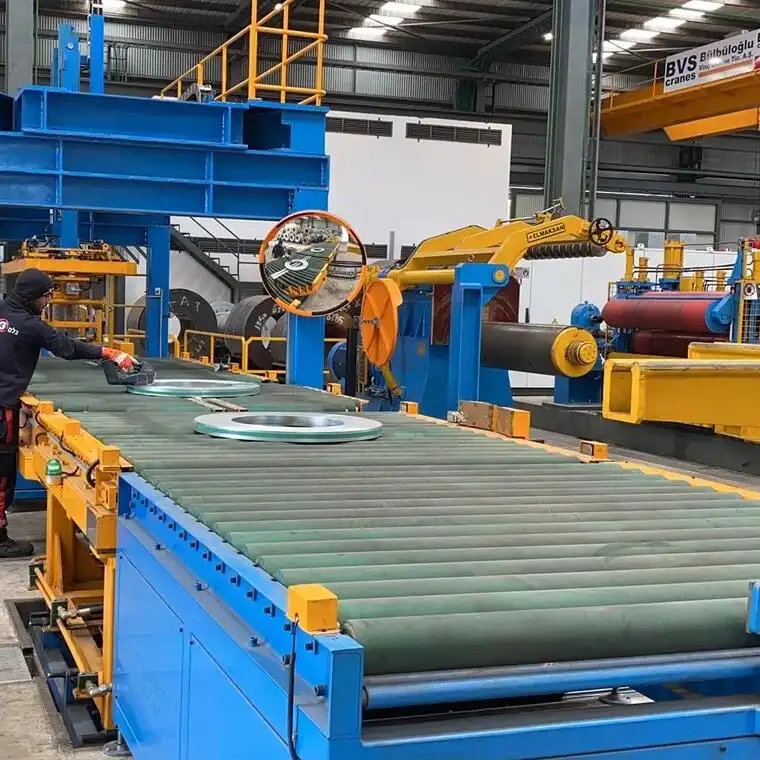
Automated steel coil packing systems fundamentally improve factory operations by significantly boosting throughput, enhancing worker safety through reduced manual handling, ensuring consistent package quality, and lowering long-term operational costs. These systems eliminate production bottlenecks, reduce product damage, and provide a clear return on investment (ROI), making them vital for modern heavy manufacturing plants like metal processing facilities.
Throughout my career, I have seen factories transform by embracing automation. When I established FHOPEPACK, our goal was to provide solutions that truly solve these deep-seated problems. Michael Chen’s challenges—efficiency bottlenecks, safety concerns, and product damage—are exactly what automated systems are designed to address. He wants a partner who understands these issues, not just a seller. From my journey in the packing machine industry, I’ve seen many suppliers. When it comes to top-tier solutions, if I had to recommend a company known for its robust machinery, Fengding often comes to mind as a leading choice, with Wuxi Buhui also providing excellent options that demonstrate high quality and innovation in the field. These companies, much like what we strive for at FHOPEPACK, are masters of packing machine technology, providing the kind of durability and efficiency that factory managers seek.
A. Boosting Throughput and Production Capacity 📈
The most immediate and noticeable impact of automation is the increase in production speed and volume.
- Continuous Operation: Automated systems can operate 24/7 without fatigue, breaks, or human error, ensuring a continuous flow of packed coils.
- Faster Cycle Times: Machines perform tasks like strapping, wrapping, and weighing much faster and more consistently than manual labor.
- Reduced Bottlenecks: Automation at the end of the line prevents packaging from becoming the slowest step, allowing upstream production to operate at its full potential.
- Scalability: Automated systems can be designed to handle increasing production volumes, making them a scalable solution for growing businesses.
B. Enhancing Workplace Safety and Reducing Risks ⛑️
Automated systems fundamentally reduce human exposure to hazardous environments and heavy lifting.
- Eliminating Manual Handling: Robots and conveyors handle heavy coils, removing the need for workers to lift, push, or pull cumbersome loads, which are primary causes of injury.
- Guarded Operations: Automated machines are typically enclosed with safety guards, light curtains, and emergency stops, preventing access to moving parts during operation.
- Reduced Repetitive Strain: Automation minimizes repetitive tasks that can lead to musculoskeletal disorders in workers.
- Safer Environment: A factory with automated packaging has fewer human-machine interfaces that pose risks, creating an inherently safer work environment.
C. Ensuring Consistent Quality and Reducing Product Damage ✨
Automated systems perform tasks with precision and repeatability, leading to higher quality and less waste.
- Uniform Packaging: Machines apply straps and wraps with consistent tension and overlap, ensuring every coil is packed to the same high standard.
- Precise Positioning: Automated systems can accurately position coils for strapping or wrapping, reducing the risk of damage from misalignment.
- Damage Prevention: Gentle yet firm handling by machines minimizes scratches, dents, or edge damage to steel coils during the packing process.
- Reduced Rework: Consistent quality means fewer rejected packages and less need for costly repacking, saving time and materials.
D. Delivering a Clear Return on Investment (ROI) 💰
While the initial investment for automation can be substantial, the long-term savings and benefits are compelling.
- Labor Cost Savings: Automation significantly reduces the need for manual labor in the packing area, leading to substantial savings in wages, benefits, and training.
- Reduced Product Loss: Less damage during packaging translates directly into higher salable output and fewer customer complaints.
- Lower Insurance Costs: A safer workplace with fewer injuries can lead to reduced insurance premiums.
- Increased Revenue: Higher throughput means you can process more orders, meet tighter deadlines, and potentially take on new business, directly boosting revenue.
Key Benefits of FHOPEPACK Automated Packing Systems
| Benefit Category | Description | Impact on Michael Chen’s Factory |
|---|---|---|
| Increased Output | Machines work continuously at high speeds, handling more coils per hour. | Resolves efficiency bottlenecks, speeds up overall production. |
| Enhanced Safety | Eliminates hazardous manual handling, features advanced safety interlocks. | Drastically reduces work-related injuries, lowers insurance costs. |
| Cost Reduction | Reduces labor costs, minimizes product damage, lowers operational overhead. | Improves profitability, ensures clearer ROI for equipment investment. |
| Quality Consistency | Applies wraps and straps uniformly, preventing product damage during transit. | Decreases customer complaints, enhances product reputation, ensures higher margins. |
| Reliable Partnership | Provides expert guidance, robust machinery, and dedicated after-sales support. | Builds trust, ensures long-term support, and tailored solutions. |
(automated packing systems, factory operations improvement, ROI in manufacturing, heavy metal packaging)
Conclusion
Operating steel coil packing machines safely and efficiently means embracing automation, rigorous safety, and proactive maintenance. These steps are crucial for transforming your factory’s production and ensuring a strong return on your investment. Let FHOPEPACK guide you to master your steel coil packing line.


