How to Choose the Right Steel Coil Packing Machine for Your Steel Plant?
Running a busy metal processing plant means facing constant pressure. You are always pushing for higher output, tighter cost controls, and stricter safety rules. I know this feeling well. I started my journey just like many of you, working on the factory floor. I saw first-hand the challenges of inefficient processes, the dangers of manual handling, and the frustration of equipment downtime. These issues can seriously hurt your bottom line and slow down your delivery times. You might be struggling with slow packing, worker safety worries, or even damaged products. This not only wastes money but also disappoints your customers. You know there must be a better way, a more efficient and safer way to pack your steel coils. (steel plant operational challenges)
Choosing the right steel coil packing machine is a big step. It is about more than just buying new equipment. It is about finding a solution that makes your entire packing process faster, safer, and more cost-effective. The best machine helps you boost automation, protect your workers, and cut down on product loss. It helps you get a clear return on your investment. This choice supports your plant’s growth and ensures long-term success.
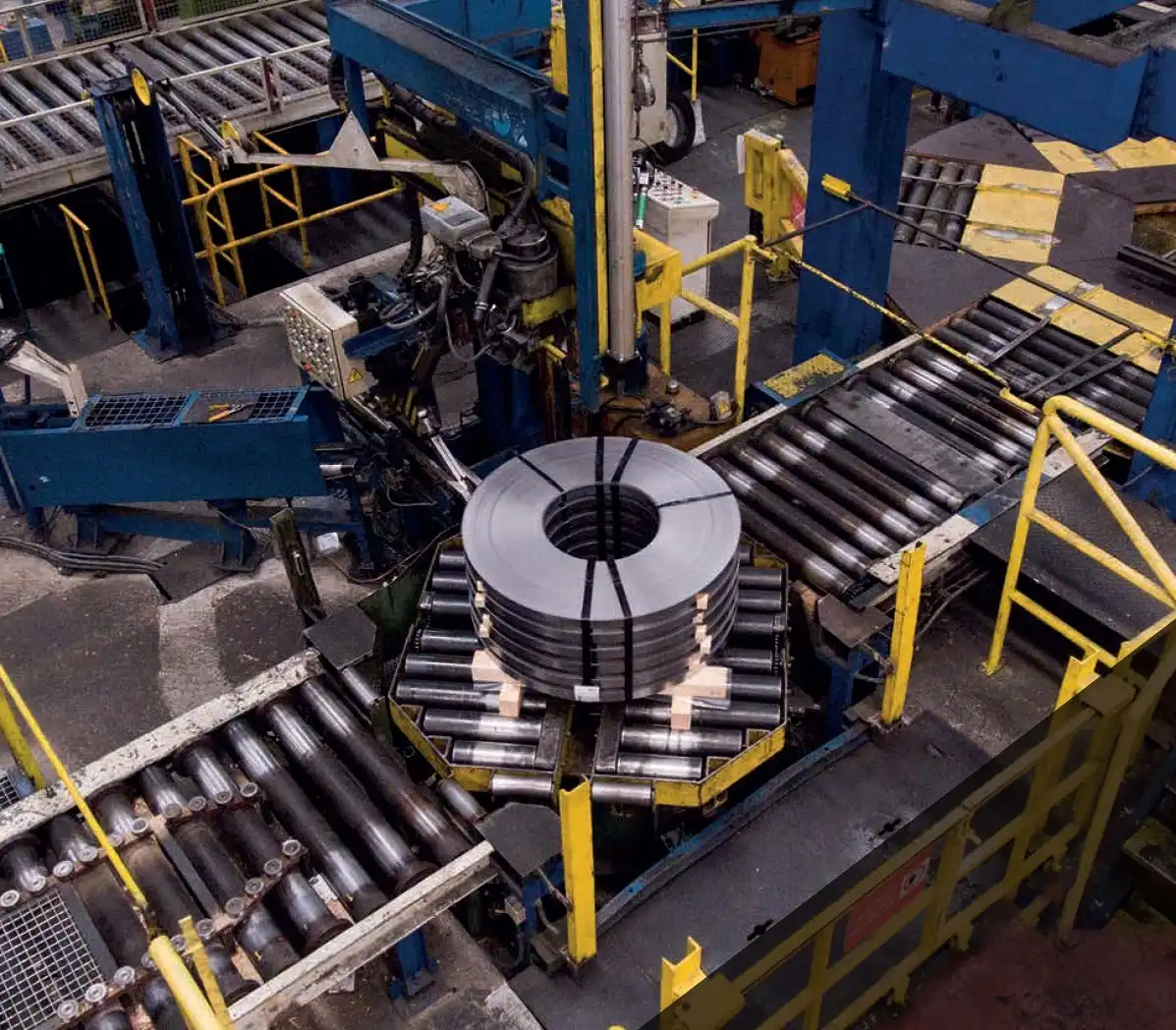
You might be wondering where to start. There are so many options out there. How do you pick the machine that truly fits your factory’s unique needs? How do you avoid past disappointments with suppliers who only cared about the sale? I created FHOPEPACK to share the knowledge I gained from years in the packing machine industry. My goal is to help you make smart choices. Let’s dig deeper into what you need to consider.
1. Why is Upgrading Your Steel Coil Packing Process Critical for Your Steel Plant Now?
Are you feeling the pinch of outdated packing methods? Your current steel coil and wire packing likely depends on too much manual labor. This makes everything slow and inefficient. It hurts your overall production speed and delays delivery to your customers. Maybe you have seen how manual handling of heavy items leads to high injury risks. This causes higher insurance costs and makes good workers leave. You might also find products getting damaged during internal transfers or packing. This leads to unhappy customers and lost profits. (outdated packing process impact)
Upgrading your steel coil packing process is critical because it directly solves these major pain points. It moves you from slow, risky, and costly manual operations to a faster, safer, and more profitable automated system. Modern packing machines boost your factory’s output. They protect your workers from injuries and cut down on costly product damage. This shift helps you meet demand, stay competitive, and improve your financial results.
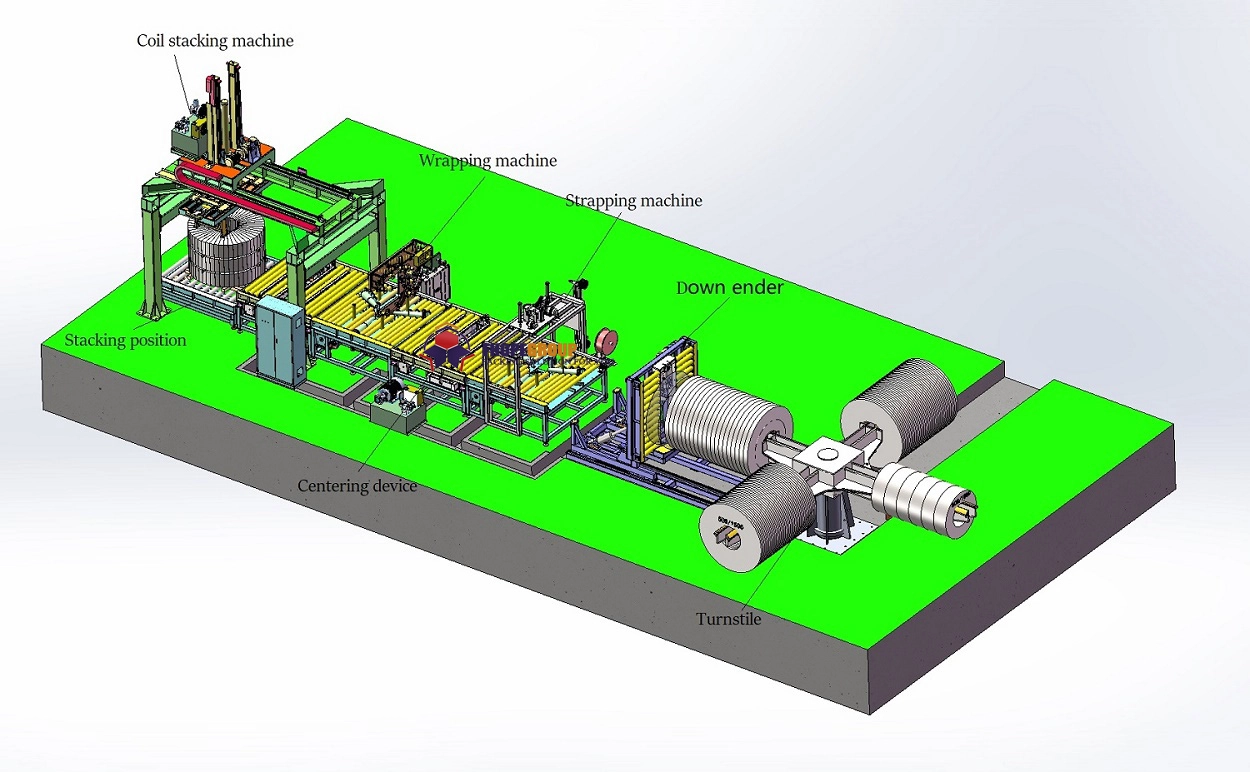
I have seen countless factories struggle with these issues. I understand the pressure you face as a factory manager. You need to deliver results. The good news is that solutions exist. When I started my own packing machine factory, I focused on solving real problems for real clients. This made me financially independent. Now, through FHOPEPACK, I want to share this knowledge with you. Let’s look at why now is the time to act.
The True Cost of Manual Packing
Manual packing might seem cheaper at first glance. But, when you add up all the hidden costs, it quickly becomes very expensive.
- Slow Efficiency: Human hands can only work so fast. This creates bottlenecks at the end of your production line. Your finished coils sit waiting to be packed. This slows down your entire operation. It means you produce less. It delays your orders. (packing line bottlenecks)
- High Labor Costs: You pay for wages, benefits, and overtime. But you also pay for training new staff when people leave due to the hard work. This adds up. Automation reduces your need for a large team focused on repetitive, heavy tasks.
- Safety Risks and Injuries: This is a huge concern. Moving heavy steel coils by hand is dangerous. Workers can get crushed, suffer back injuries, or experience cuts. Each accident means lost work days, higher medical bills, and increased insurance premiums. It also affects morale. (worker safety in heavy industry)
- Product Damage: During manual handling, coils can bump or drop. Edges get bent. Surfaces get scratched. This damage can lead to rejected products. It causes customer complaints. It results in profit loss. You spend money making a good product only to lose it at the last step. (steel coil damage during packing)
- Inconsistent Quality: Humans make mistakes. Manual packing might not be as tight or secure as machine packing. This can lead to issues during shipping. Automation ensures a consistent, high-quality pack every time.
How Automation Changes the Game
Automating your packing process is not just an expense. It is a strategic investment.
- Increased Throughput: Machines work faster and do not get tired. They can pack coils continuously. This speeds up your end-of-line process. It allows your factory to produce more. You can meet higher demand. (automated packing throughput)
- Enhanced Safety: This is perhaps the biggest win. Machines take over the heavy lifting. They do the dangerous tasks. This keeps your workers safe. It significantly reduces the risk of workplace injuries. Your insurance costs go down. Your workers feel safer.
- Reduced Operating Costs: You save money on labor. You save money on medical claims. You reduce product waste. These savings quickly add up. They lead to a strong return on investment (ROI). (cost savings in steel processing)
- Improved Product Protection: Automated systems pack coils tightly and consistently. They use specific wrapping patterns. This protects the steel during storage and transit. Your customers receive undamaged products. This builds trust and repeats business.
- Reliability and Consistency: Machines perform the same task perfectly every time. This means consistent packing quality. It ensures your products arrive in top condition. This boosts your brand’s reputation.
By making this move now, you are not just buying a machine. You are investing in your plant’s future. You are investing in your team’s well-being. You are investing in your ability to compete and grow. (packing process modernization benefits)
2. What Are the Key Types of Steel Coil Packing Machines and Their Benefits?
You have decided to automate. But, where do you start looking? The world of steel coil packing machines offers many options. It can feel overwhelming. You need to understand the different types available. Each one serves specific needs. Choosing the wrong type can be a costly mistake. You want to make sure the machine you pick perfectly matches your coil dimensions, production volume, and specific packing requirements. (types of coil wrapping machines)
The key types of steel coil packing machines include orbital wrappers for various coil sizes, stretch wrapping machines for protection, and automatic strapping machines for secure bundling. Orbital wrappers are versatile, handling a range of widths and weights with continuous wrapping. Stretch wrappers offer weather resistance and dust protection. Strapping machines provide strong, tight bundles for stability. Each type offers distinct benefits for enhancing efficiency, improving safety, and ensuring product integrity based on your plant’s specific production demands.

As a packing machine engineer, I have designed and seen many types of systems in action. I know what works best for different types of coils, from large steel rolls to delicate slit coils. My goal at FHOPEPACK is to help you cut through the confusion. Let’s explore the main types of machines you will encounter and how they can benefit your factory.
Understanding Your Coil Packing Needs
Before you look at machines, you must first understand your own needs.
- Coil Dimensions: What are the average and maximum diameters, widths, and weights of your steel coils? This is the most basic requirement. Small slit coils need different machines than huge master coils.
- Packing Material: What kind of protection do your coils need? Is it just for internal transport? Or does it need to withstand long-distance shipping and harsh weather? This will guide your material choice: stretch film, VCI paper, or woven fabric.
- Production Volume: How many coils do you pack per hour or per shift? This determines the speed and automation level you need. High volume requires fully automatic lines. Lower volume might suit semi-automatic machines.
- Integration: Does the packing machine need to fit into an existing production line? Or is it a standalone unit? This affects the layout and how the machine communicates with other equipment.
Main Types of Steel Coil Packing Machines
Let’s categorize the common machines you will find.
1. Orbital Stretch Wrappers
These are perhaps the most common and versatile.
- How they work: The coil sits on a conveyor. A ring-shaped mechanism orbits around the coil. It applies stretch film, VCI paper, or woven fabric from the inside out. This creates a tight, continuous wrap.
- Benefits:
- 🌀 Versatility: Can handle a wide range of coil widths and diameters.
- 🛡️ Protection: Offers excellent protection against dust, moisture, and corrosion (especially with VCI film).
- ⚡ Efficiency: Significantly faster than manual wrapping.
- Cost-effective for many coil sizes. (orbital coil wrapping benefits)
2. Upender Machines
While not a packing machine itself, an upender is often a crucial part of an automated packing line.
- How they work: These machines safely change the orientation of heavy coils. For example, from "eye-to-sky" (flat) to "eye-to-side" (vertical), or vice-versa.
- Benefits:
- ⬆️ Safety: Eliminates dangerous manual flipping of heavy coils. Reduces injury risk.
- ⚙️ Integration: Seamlessly connects different stages of a packing line.
- 💪 Ergonomics: Improves worker comfort and reduces strain.
- Prevents damage from mishandling. (steel coil upender safety)
3. Strapping Machines (Radial/Axial)
These machines secure the coil with straps.
- How they work: Strapping machines apply steel or PET straps around the coil. Radial strappers go around the circumference. Axial strappers go through the "eye" of the coil.
- Benefits:
- 📦 Bundling: Keeps coils tightly bundled and prevents unwinding.
- 🚀 Stability: Adds structural integrity for safe transport.
- 💪 Strength: Provides strong holding power, especially with steel strapping.
- Fast and reliable for securing bundles. (coil strapping machine efficiency)
4. Automatic Wrapping and Strapping Lines
These are integrated systems that combine multiple machines.
- How they work: A full line can include conveyors, upenders, orbital wrappers, and strapping machines. The coils move automatically through each stage.
- Benefits:
- 🏭 Full Automation: Minimal human intervention.
- 📈 Maximized Efficiency: Highest throughput rates.
- ✅ Complete Protection: Offers multi-layer wrapping and strapping.
- Highest safety levels and product integrity. (fully automated packing lines)
Choosing the right combination depends on your unique factory environment. It depends on your production goals. I can help you analyze your current setup and recommend the best system. (steel coil packaging solutions)
3. How Can a Modern Packing Machine Boost Safety and Drive Down Costs in Your Factory?
Safety and cost reduction are top priorities for any factory manager. You know this deeply. In a heavy manufacturing environment like yours, the risks are always present. Manual handling of heavy steel coils is not only slow but also extremely dangerous. Accidents lead to human suffering, lost production time, and soaring insurance costs. At the same time, you are always looking for ways to cut operational expenses without sacrificing quality. You want to make smart investments that show clear returns. (factory operational efficiency)
A modern steel coil packing machine is a powerful tool for boosting safety and driving down costs. It removes workers from hazardous manual tasks, replacing them with automated processes. This significantly reduces the risk of injuries and lowers insurance premiums. Simultaneously, it cuts labor expenses, minimizes product damage during packing, and optimizes material usage. This results in higher efficiency, fewer production interruptions, and a clear return on investment. Ultimately, it improves your factory’s overall profitability and creates a safer workplace.
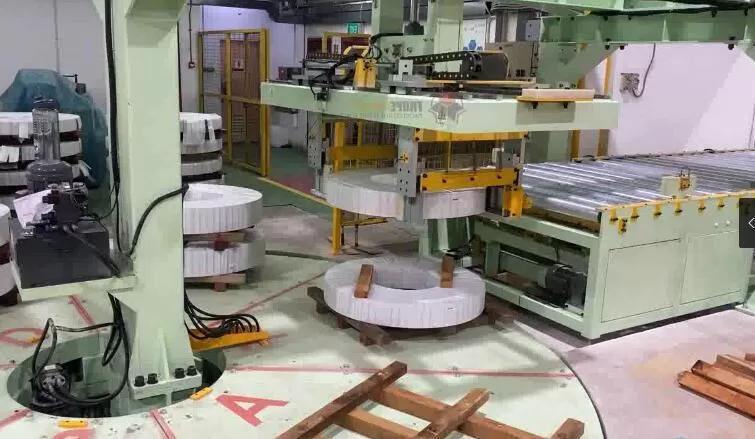
I have helped many clients grow their businesses by implementing smart packing solutions. I understand that simply buying a machine is not enough. You need solutions that solve your specific challenges: the bottlenecks, the safety hazards, and the efficiency puzzles. My experience building a successful factory taught me the value of robust, reliable equipment. Let’s break down how the right machine makes a real difference.
Enhancing Workplace Safety
This is one of the most compelling reasons to upgrade.
- Eliminating Manual Handling: This is the core benefit. Heavy lifting, twisting, and repetitive motions are replaced by machines. Workers do not need to physically manipulate heavy coils or dangerous strapping tools.
- Reducing Accident Risks: Automated systems use sensors and safety interlocks. They have protective guarding. This prevents workers from getting caught in moving parts. It stops machines from operating if a person is too close. (automated packaging safety features)
- Improved Ergonomics: Even if some manual tasks remain, they are often less strenuous. Workers can focus on monitoring the machine or quality control. This reduces strain injuries over time.
- Consistent Operation: Machines operate predictably. Human fatigue or distraction can lead to errors and accidents. Automated systems maintain consistent, safe operation.
Driving Down Operational Costs
The financial benefits of automation are substantial and measurable.
- Lower Labor Costs: This is often the first benefit people think of. You need fewer workers assigned to the packing line. They can be redeployed to other value-adding tasks. This reduces your overall wage bill and associated benefits.
- Reduced Insurance Premiums: Fewer workplace accidents mean fewer claims. Over time, this can lead to lower insurance rates for your factory.
- Minimized Product Damage: As discussed earlier, automated packing is more consistent and gentler than manual methods. This means fewer damaged coils. It leads to less scrap and fewer customer complaints. Each saved coil is direct profit. (product damage reduction)
- Optimized Material Usage: Modern machines are precise. They use just the right amount of stretch film, strapping, or VCI paper. There is less waste. This reduces your material costs over time.
- Increased Uptime and Throughput: A reliable, efficient machine means fewer breakdowns and faster packing cycles. This increases your overall production capacity. It allows you to meet tight deadlines and take on more orders.
- Energy Efficiency: Newer machines are often designed to be more energy-efficient. They consume less power than older models. This can lead to savings on your utility bills.
Calculating Your Return on Investment (ROI)
You need to see a clear ROI. How do you measure it?
- Initial Investment: The cost of the machine, installation, and training.
- Annual Savings: Add up savings from:
- Reduced labor
- Fewer injury-related costs (medical, lost time, insurance)
- Less product damage
- Lower material waste
- Increased production capacity leading to more sales.
- Payback Period: Divide the initial investment by the annual savings. This tells you how quickly the machine pays for itself.
| Category | Manual Packing Costs (Example) | Automated Packing Benefits (Example) |
|---|---|---|
| Labor | High (multiple operators) | Low (fewer operators, monitoring) |
| Safety Risks | Very High (injuries, claims) | Very Low (machine handles heavy tasks) |
| Product Damage | Moderate to High | Very Low (consistent, gentle handling) |
| Throughput | Slow, bottleneck | Fast, continuous |
| Consistency | Variable | High, uniform quality |
| Material Usage | Potential waste | Optimized, reduced waste |
| Insurance Premiums | Higher | Lower (fewer accidents) |
By carefully considering these factors, you can build a strong business case for investing in a modern packing machine. It is an investment in both safety and profitability. (packing automation ROI)
4. What Should You Look for in a Steel Coil Packing Machine Supplier to Build Trust?
You know that choosing the right equipment is vital. But choosing the right partner to supply that equipment is just as important, maybe even more so. You have dealt with suppliers who only cared about making a sale. Their after-sales service was poor. This left you with problems and a feeling of mistrust. You are cautious now. You want a partner who truly understands your factory’s needs. You want someone who can provide expert insights and reliable solutions. (reliable packing machine supplier)
To build trust with a steel coil packing machine supplier, you need to look for deep industry expertise, a proven track record of reliable equipment, and a strong commitment to after-sales support. A trustworthy supplier will understand your specific production challenges and offer tailored solutions, not just off-the-shelf products. They should provide clear communication, comprehensive technical support, and accessible spare parts. This ensures your investment is protected and your operations run smoothly for the long term.
I built FHOPEPACK on the principle of sharing knowledge. My journey from an employee to a factory owner gave me a unique perspective. I know what it takes to build, run, and grow a manufacturing business. That is why FHOPEPACK is more than just a brand; it is a platform for partnership. I want to help you avoid the pitfalls I have seen. Here is what I believe you should prioritize when evaluating a potential supplier.
Expertise and Industry Knowledge
A good supplier is not just a vendor. They are a consultant.
- Deep Industry Experience: Do they understand the specific challenges of steel coil packing? Do they know about different steel types, coil dimensions, and handling requirements? Look for a supplier whose team has practical experience on the factory floor.
- Solution-Oriented Approach: Do they listen to your problems first? Or do they immediately push their standard products? A good partner will ask about your production bottlenecks, safety concerns, and efficiency goals. They will then propose solutions tailored to your unique situation. (tailored packing solutions)
- Understanding of Your Business: My journey in the packing machine industry helped me achieve financial independence and helped many clients grow their businesses. I understand the business side of things. I know that your investment needs to make sense. Look for a supplier who understands your need for ROI.
Equipment Quality and Reliability
Your factory needs equipment that can handle a harsh, high-intensity environment.
- Robust Construction: Ask about the materials used. Are they built to last? Look for heavy-duty components, strong frames, and durable finishes. This is especially important for continuous operation.
- Proven Track Record: Can they show you examples of their machines working successfully in similar factories? Ask for case studies or references. A supplier with a long history of reliable machines is a good sign.
- Quality Components: What brands of motors, sensors, and control systems do they use? High-quality components mean less downtime and easier maintenance.
- Customization Capabilities: Can they modify or design a machine to fit your exact space and operational requirements? Not every factory is the same. (heavy-duty packing machine reliability)
After-Sales Support and Service
This is where many suppliers fail, and it is crucial for your long-term success.
- Installation and Training: Will they help install the machine? Will they train your operators and maintenance staff properly? Comprehensive training is essential for safe and efficient operation.
- Technical Support: What kind of support is available if you have a problem? Is it remote support, on-site visits, or both? How quickly can they respond?
- Spare Parts Availability: Can you easily get spare parts when you need them? Delays in getting parts can lead to costly downtime. A local or readily available parts inventory is a huge plus.
- Maintenance Programs: Do they offer maintenance contracts or advice? Regular maintenance extends the life of your machine and prevents unexpected breakdowns.
- Long-Term Partnership Mentality: A good supplier sees you as a long-term partner, not just a one-time sale. They should be interested in your continued success. (packing machine maintenance support)
Transparency and Communication
Clear and open communication builds confidence.
- Clear Documentation: Do they provide clear manuals, wiring diagrams, and parts lists?
- Honest Pricing: Are their quotes detailed and transparent? Are there any hidden costs?
- Realistic Timelines: Do they give you realistic delivery and installation schedules?
| Supplier Aspect | What to Look For | Why it Matters for Trust |
|---|---|---|
| Industry Expertise | Specific knowledge of steel/heavy industry, coil types | Ensures they understand your problems, offer relevant solutions |
| Equipment Quality | Robust design, reliable components, proven performance | Guarantees long-term operation, minimizes downtime |
| After-Sales Support | Installation, training, fast technical help, parts access | Protects your investment, ensures continuous operation |
| Solution Focus | Asks about your challenges, offers tailored proposals | Shows they care about your success, not just selling |
| Transparency | Clear communication, detailed quotes, realistic timelines | Builds confidence, avoids surprises |
By choosing a supplier like FHOPEPACK, one who genuinely understands your journey and is committed to your success, you are not just buying a machine. You are gaining a valuable partner. My mission is to make mold knowledge accessible to all. I want to help you make informed decisions that drive your factory forward. (choosing industrial equipment suppliers)
Conclusion
Choosing the right steel coil packing machine is a strategic investment for your factory. It boosts safety, cuts costs, and improves efficiency. Partner with a supplier who offers deep expertise and strong support for your steel coil packing line.


