How to Choose a Steel Coil Packing Line for UAE Metal Packaging Operations?
As a factory manager in the UAE’s competitive metal processing industry, you face constant pressure to improve efficiency while controlling costs. The right steel coil packing line can transform your operations, but making the wrong choice could mean wasted investment and ongoing production bottlenecks. I’ve seen too many companies struggle with this critical decision throughout my 15 years designing packaging solutions.
The ideal steel coil packing line for UAE operations combines robust construction for harsh environments with flexible automation that matches your production volume, while providing clear ROI through labor savings and reduced product damage. This complete system approach ensures seamless integration from coil feeding through to final packaging and dispatch, addressing the specific challenges of Middle Eastern metal processors. (automated steel coil packing line, steel coil wrapping line solution)
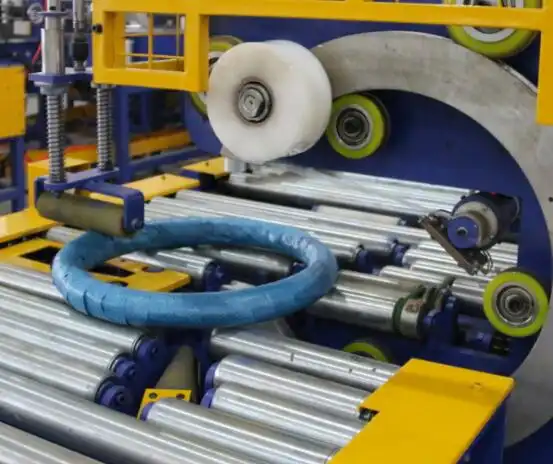
Choosing the right packaging solution requires understanding your specific production needs, available space, and budget constraints. Many UAE manufacturers I’ve worked with initially focus only on machine price, missing the bigger picture of total operational costs and long-term reliability. Let me guide you through the key considerations that have helped over 200 clients worldwide optimize their packaging operations.
1. What Are the Key Components of a Complete Steel Coil Packing Line?
Walking through a metal processing plant in Dubai last year, I noticed workers manually moving heavy coils between disconnected stations. The manager complained about slow throughput and high labor costs – classic symptoms of an incomplete packaging system. A properly integrated coil packaging production line solves these issues through coordinated equipment working together seamlessly.
A complete steel coil packing line consists of five essential subsystems: feeding system for coil positioning, wrapping station for protective layer application, strapping unit for secure fastening, conveyor systems for material movement, and discharge system for finished product handling. These components must work in perfect synchronization to achieve maximum efficiency and minimal manual intervention. (coil packaging production line, end-of-line coil packing system)
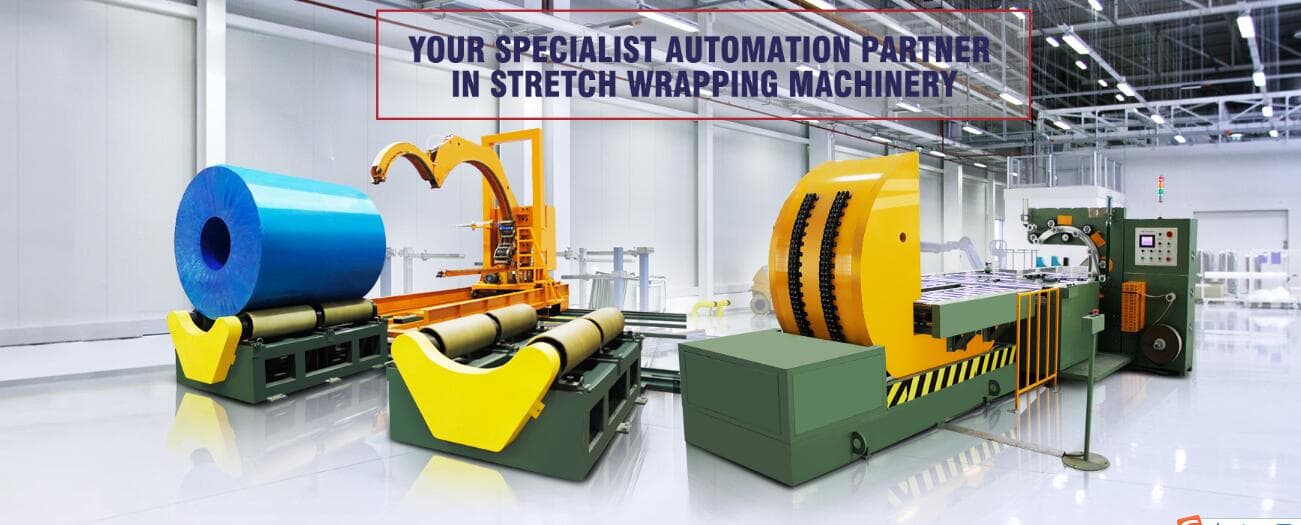
🔧 Core Equipment Functions in Steel Coil Packaging
| Component | Primary Function | Key Features | Impact on Operations |
|---|---|---|---|
| Feeding System | Positions coils for packaging | Adjustable mandrels, centering devices | Reduces setup time, improves safety |
| Wrapping Station | Applies protective materials | Programmable logic, tension control | Prevents surface damage, ensures consistency |
| Strapping Unit | Secures packaging materials | Automatic tensioning, heat sealing | Eliminates manual tying, improves security |
| Conveyor System | Moves coils between stations | Variable speed, accumulation capability | Reduces handling time, minimizes labor |
| Discharge System | Transfers finished coils | Automated stacking, labeling | Streamlines warehouse operations |
Each component’s specifications must match your specific coil dimensions and production requirements. For UAE operations dealing with extreme temperatures, I always recommend heavy-duty construction with enhanced cooling systems and dust protection. The feeding system typically handles coil weights from 3 to 30 tons, with larger capacities available for specialized applications. Wrapping stations should accommodate various film types, including standard polyethylene and reinforced varieties for export shipments.
Conveyor systems represent the backbone of your integrated steel coil handling line, with roller conveyors being most common for their durability and low maintenance. Proper synchronization between stations prevents bottlenecks – a critical consideration when designing for the high-volume production common in UAE metal service centers. The discharge system often includes automated labeling and tracking capabilities, essential for inventory management in fast-paced environments. (integrated steel coil handling line, industrial coil packaging line)
2. How to Determine the Right Automation Level for Your UAE Facility?
A aluminum processor in Abu Dhabi recently asked me: "Should we go fully automated or stick with semi-automatic?" Their daily output of 45 tons placed them right at the decision point where automation becomes economically justified. The answer depends on multiple factors beyond just production volume.
The appropriate automation level depends on your daily production volume, available labor, budget constraints, and future expansion plans – with semi-automatic systems suiting 10-30 tons daily, and fully automatic lines justifying themselves above 50 tons. For most UAE manufacturers, I recommend starting with a solid baseline assessment of current packaging times, labor costs, and quality issues before deciding. (turnkey coil packing line, coil wrapping and strapping line)

📊 Automation Level Selection Guide
flowchart TD
    A[Daily Production<br>Volume Assessment] --> B{<30 tons?};
    B -->|Yes| C[Semi-Automatic<br>Line];
    B -->|No| D{30-70 tons?};
    D -->|Yes| E[Hybrid Automatic<br>Line];
    D -->|No| F[Fully Automatic<br>Line];

    C --> G[2-3 operators<br>Manual transfer between stations];
    E --> H[1-2 operators<br>Partial automation with conveyors];
    F --> I[Fully unmanned operation<br>Complete line integration];

    G --> J[ROI: 12-18 months<br>Moderate labor savings];
    H --> K[ROI: 18-24 months<br>Good balance];
    I --> L[ROI: 24-36 months<br>Maximum efficiency];
Semi-automatic systems typically require 2-3 operators and represent the most common starting point for UAE manufacturers transitioning from manual packaging. These systems maintain manual loading/unloading while automating the wrapping and strapping processes. The investment ranges from $80,000 to $150,000 with ROI periods of 12-18 months based on labor cost savings alone.
Fully automatic coil packaging systems justify their higher initial cost ($200,000-$400,000) through dramatic labor reduction and throughput increases. One Dubai client reduced their packaging team from 8 to 2 operators while doubling daily output from 40 to 80 tons. The key advantage for UAE facilities is consistency – automated systems maintain quality standards regardless of operator experience or fatigue factors.
Hybrid solutions offer a middle ground, with automated conveyance between key stations but manual intervention at specific points. This approach works well for facilities with variable coil sizes or mixed product lines. When advising UAE clients, I emphasize the importance of future-proofing – selecting systems that can be upgraded as production needs evolve. (automatic coil packaging system, steel coil stretch wrapping line)
3. How to Calculate ROI for Your Steel Coil Packing Line Investment?
The financial director of a Sharjah steel service center initially hesitated about automating their packaging operation. "The equipment cost seems high," he told me, until we calculated the complete financial picture including hidden costs of their current manual process. Proper ROI analysis transforms packaging line investment from an expense to a strategic improvement.
ROI calculation for steel coil packing lines should include labor cost savings, productivity increases, material waste reduction, damage prevention, and safety improvement benefits, typically delivering payback periods of 18-36 months for UAE operations. The most accurate assessments compare current total packaging costs against projected automated line expenses. (coil packing line configuration, heavy duty coil packing line)

💰 Sample ROI Calculation for UAE Metal Processor
Current Manual Operation Costs (Monthly)
- Labor: 6 operators × AED 4,000 = AED 24,000
- Packaging materials: AED 18,000
- Product damage: 2% of production = AED 32,000
- Downtime/inefficiency: AED 12,000
- Safety incidents: AED 6,000
- Total Monthly Cost: AED 92,000
Projected Automated Line Costs (Monthly)
- Equipment financing: AED 25,000
- Labor: 2 operators × AED 4,000 = AED 8,000
- Packaging materials: AED 16,500 (5% savings)
- Product damage: 0.5% of production = AED 8,000
- Maintenance: AED 3,000
- Total Monthly Cost: AED 60,500
Monthly Savings: AED 31,500
Annual Savings: AED 378,000
Investment: AED 680,000
ROI Period: 21.6 months
Beyond these direct financial metrics, consider intangible benefits that are particularly valuable in the UAE context. Reduced reliance on manual labor addresses the region’s workforce volatility challenges. Consistent packaging quality enhances export competitiveness, crucial for UAE companies serving international markets. The safety improvements significantly reduce insurance premiums and compliance costs in an increasingly regulated environment.
For accurate ROI projection, I recommend detailed time studies of current packaging operations. Track exactly how long each coil takes from arrival at packaging to warehouse ready. Document all material usage and waste. Identify specific damage incidents and their financial impact. This thorough approach convinced the Sharjah company to proceed – they achieved payback in just 19 months through a combination of direct savings and increased customer satisfaction from improved packaging quality. (complete coil packing line equipment, steel service center packing line)
4. What Layout Considerations Maximize Packaging Line Efficiency?
Walking into a packed production facility in Ajman, I immediately spotted their layout problem – the packaging area was squeezed into a corner with insufficient space for material flow. The resulting congestion cost them an estimated 30 minutes of productivity per shift in unnecessary coil movements. Proper line layout is free efficiency that many manufacturers overlook.
The optimal packaging line layout minimizes material travel distance, provides adequate buffer zones between stations, allows safe operator access, and integrates seamlessly with both upstream production and downstream storage operations. For UAE facilities, I typically recommend straight-line layouts for simplicity or U-shaped configurations for space-constrained environments. (coil packaging automation solution, automated steel coil packing line)
🏗️ Packaging Line Layout Comparison
| Layout Type | Best For | Space Required | Material Flow | Operator Efficiency |
|---|---|---|---|---|
| Straight Line | High-volume operations | 25-35m length | Linear, predictable | Specialized stations |
| U-Shaped | Limited space facilities | 15-25m length | Circular, compact | Multi-skilled operators |
| L-Shaped | Corner locations | 20-30m total | Two-directional | Zone-based assignment |
| Parallel Lines | Very high volume | 40-60m length | Simultaneous processing | Dedicated teams |
Straight-line layouts offer the simplest material flow from feeding to discharge, making them ideal for new facilities or expansion projects. The linear progression minimizes transfer times and simplifies conveyor integration. For a Dubai client processing 80 tons daily, we implemented a 28-meter straight configuration that reduced average packaging time from 12 to 6 minutes per coil.
U-shaped layouts provide excellent space utilization while keeping all stations within close proximity. This configuration works particularly well when retrofitting packaging lines into existing facilities where space is constrained. Operators can monitor multiple stations from central positions, and maintenance access is simplified. The key consideration is ensuring adequate clearance for coil transfer at the curve points.
L-shaped configurations adapt well to corner locations or when integrating with existing production equipment. One Ras Al Khaimah client used an L-layout to connect their slitting line directly to packaging, creating a continuous flow that eliminated intermediate handling. This approach reduced their total process time by 22% while freeing up 150 square meters of previously used staging area.
Beyond the basic configuration, several critical spacing considerations impact operational efficiency. Allow at least 1.5 meters around each station for safe operator access and maintenance. Include buffer zones capable of holding 2-3 coils between major stations to prevent line stoppages. Ensure ceiling clearance accommodates overhead lifting equipment when needed. For UAE’s climate, I always recommend allocating space for adequate ventilation around motorized components. (steel coil wrapping line solution, turnkey coil packing line)
Conclusion
Selecting the right steel coil packing line requires balancing automation level, layout efficiency, and ROI considerations to match your specific UAE operational needs and growth plans.


