How to Choose a Steel Coil Packing Line for UAE Metal Packaging Operations?
leading paragraph:
Are you struggling with slow packaging speeds that bottleneck your entire metal production in the UAE? Do manual handling risks keep you awake at night worrying about worker safety and product damage? Many factory managers face these exact challenges daily, but the right packaging line solution can transform your operations completely.
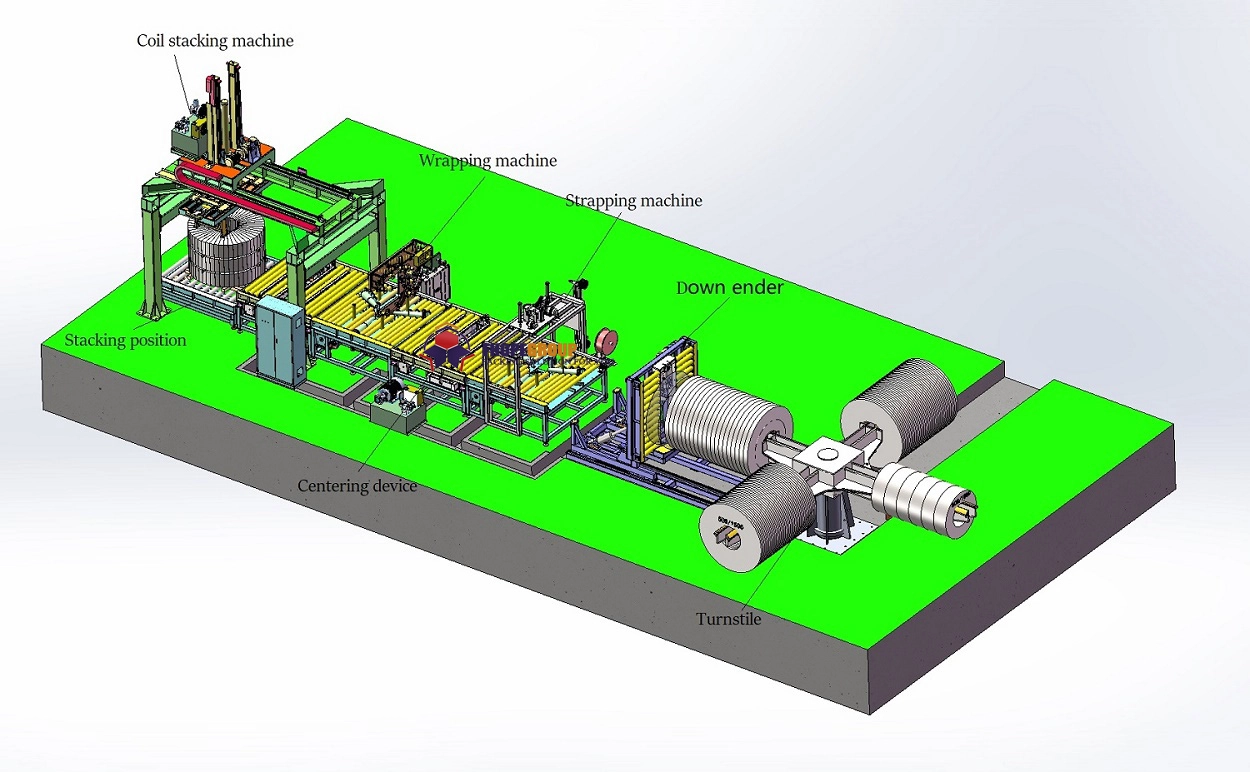
Selecting the ideal steel coil packing line for UAE metal packaging operations requires evaluating your production volume, available space, automation needs, and budget, then choosing between manual, semi-automatic, or fully automated systems that integrate seamlessly with your existing workflow. This decision impacts your efficiency, safety, and bottom line significantly. (automated steel coil packing line, steel coil wrapping line solution)
Transition Paragraph:
Choosing the wrong packaging system can cost you thousands in lost productivity and maintenance. But with the right approach, you can identify the perfect solution that matches your specific UAE operational needs. Let me guide you through the key considerations based on my 15 years of experience delivering 200+ packaging line projects worldwide.
1. What are the different automation levels available for steel coil packing lines?
leading paragraph:
Feeling overwhelmed by the automation options for your coil packaging needs? Unsure whether to go manual, semi-automatic, or fully automated? Understanding these levels helps you make informed decisions that align with your production goals and budget constraints.
Steel coil packing lines come in three main automation levels: manual systems requiring significant labor, semi-automatic systems with some automated components, and fully automated lines that handle the entire process with minimal human intervention, each suited for different production volumes and investment capabilities. The choice depends on your daily output, available workforce, and long-term operational strategy. (coil packaging production line, automatic coil packaging system)

📋 Automation Level Comparison Table
| Automation Level | Daily Capacity | Labor Required | Initial Investment | ROI Period | Best For |
|---|---|---|---|---|---|
| Manual | 10-30 tons | 4-6 operators | $50,000-$100,000 | 12-18 months | Small workshops, low volume |
| Semi-Auto | 30-80 tons | 2-3 operators | $150,000-$300,000 | 18-24 months | Medium operations, growing businesses |
| Fully Auto | 80-200+ tons | 1 operator | $400,000-$800,000 | 24-36 months | Large mills, high-volume production |
Manual systems work well for UAE facilities processing under 30 tons daily. Operators handle coil positioning, wrapping, and strapping manually. While cheaper initially, they incur higher long-term labor costs and safety risks. Semi-automatic systems represent the sweet spot for many UAE metal processors. These typically feature automated wrapping but require manual loading/unloading. In my projects across the Middle East, semi-automatic solutions have helped companies reduce labor by 40-60% while maintaining flexibility.
Fully automated coil packaging lines integrate feeding, wrapping, strapping, and discharging into one seamless system. These are ideal for UAE facilities processing 80+ tons daily. The initial investment is higher, but the labor savings and productivity gains justify the cost. For example, a Dubai-based service center I worked with increased their daily output from 60 to 150 tons after implementing a fully automated steel coil stretch wrapping line. The key is matching the automation level to your actual production needs rather than over-investing in unnecessary features. (industrial coil packaging line, complete coil packing line equipment)
2. How do you calculate ROI for a steel coil packing line investment?
leading paragraph:
Worried about justifying the capital expenditure for a new packaging line to your management? Uncertain how to quantify the benefits beyond obvious labor savings? A proper ROI analysis captures all financial impacts to build your business case effectively.
Calculating ROI for a steel coil packing line involves comparing your current operational costs against the new system’s investment, factoring in labor reduction, productivity gains, damage reduction, and safety improvements, then dividing the annual savings by the total investment to determine payback period. This comprehensive approach reveals the true financial value of automation. (turnkey coil packing line, coil packaging automation solution)
💰 Sample ROI Calculation for Medium-Sized UAE Operation
Current Manual Operation Costs (Annual)
- Labor: 5 operators × $25,000 = $125,000
- Product damage: 2% of $5M production = $100,000
- Downtime losses: 15 days × $3,000/day = $45,000
- Safety incidents: $20,000
- Total Current Costs: $290,000
Projected Automated Line Costs (Annual)
- Labor: 2 operators × $25,000 = $50,000
- Product damage: 0.5% of $5M production = $25,000
- Downtime losses: 5 days × $3,000/day = $15,000
- Safety incidents: $5,000
- Maintenance: $20,000
- Total Projected Costs: $115,000
Annual Savings: $290,000 – $115,000 = $175,000
System Investment: $350,000
ROI Period: $350,000 ÷ $175,000 = 2 years
Beyond these direct savings, consider indirect benefits that impact your UAE operations. Reduced physical strain decreases employee turnover, a significant challenge in the region’s labor market. Faster packaging speeds enable you to accept more orders and improve customer satisfaction through quicker deliveries. The production flow optimization also creates capacity for business growth without expanding your facility. In my experience with UAE clients, the most successful ROI analyses capture both quantitative and qualitative benefits to present a compelling case to decision-makers. (line configuration, productivity improvement)
3. What are the key components of a complete steel coil packing line?
leading paragraph:
Confused about what equipment you actually need for a functional packaging line? Concerned about missing critical components that could disrupt your entire operation? Understanding the core systems ensures you invest in a comprehensive solution rather than fragmented equipment.
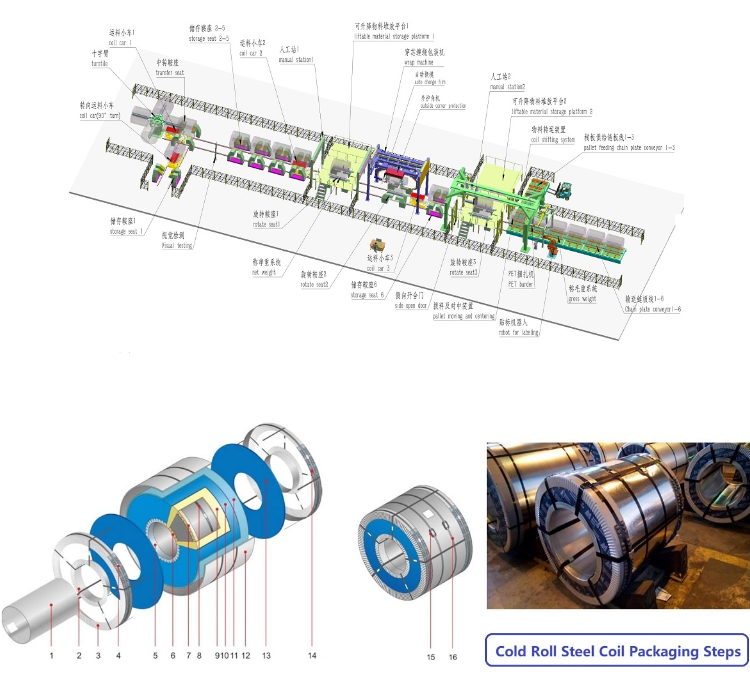
A complete steel coil packing line consists of four essential systems: feeding system for coil input, wrapping station for protective packaging, strapping unit for secure fastening, and discharge system for finished product handling, all connected by integrated conveyors and controlled by a centralized automation system. Each component must work in harmony for optimal performance. (integrated steel coil handling line, coil wrapping and strapping line)
⚙️ Core Equipment Function Breakdown
| System Component | Primary Function | Key Considerations | UAE-Specific Factors |
|---|---|---|---|
| Feeding System | Receives coils from production | Capacity matching, gentle handling | Dust protection for desert environment |
| Wrapping Station | Applies protective materials | Film/stretch selection, tension control | Heat-resistant materials for high temperatures |
| Strapping Unit | Secures packaging | strap material, tension, placement | Humidity-resistant strapping for coastal areas |
| Discharge System | Moves finished coils to storage | Weight capacity, transfer method | Space optimization for limited warehouse areas |
| Control System | Coordinates all components | User interface, data collection | Remote monitoring for multi-site management |
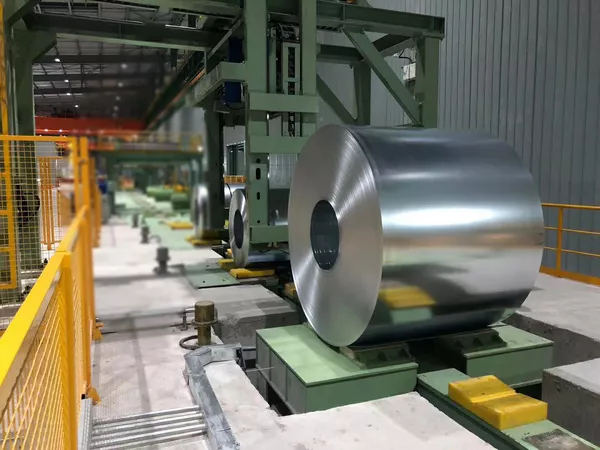
The feeding system’s design depends on your upstream process. For facilities receiving coils directly from processing lines, automatic feeding systems with roller conveyors work best. For operations where coils arrive from storage, coil cars or cranes may be more appropriate. The wrapping station typically uses stretch film or specialty papers, with the choice depending on your product requirements and UAE shipping conditions. The harsh climate demands durable materials that withstand temperature variations.
The strapping unit must match your coil weights and transport methods. Heavier coils or export shipments require stronger strapping with proper tension control. The discharge system completes the process by moving wrapped coils to storage or loading areas. Conveyor systems, transfer cars, or automated guided vehicles (AGVs) offer different levels of automation. System integration ensures all components communicate effectively, with sensors tracking coil movement between stations. This upstream and downstream integration prevents bottlenecks and maximizes your line’s throughput capacity. (end-of-line coil packing system, packaging line synchronization)
4. How to match packing line configuration to your production volume?
leading paragraph:
Unsure what packaging line capacity you actually need for your specific output? Concerned about under-sizing that limits growth or over-sizing that wastes capital? Proper capacity matching ensures your investment aligns with both current and future production requirements.
Matching packing line configuration to production volume involves analyzing your current daily output, projected growth, coil specifications, and operational hours, then selecting equipment with appropriate speed, automation level, and scalability to handle your requirements efficiently without excessive capital investment. This balance prevents both capacity constraints and wasted resources. (coil packing line configuration, throughput capacity)
📊 Capacity Matching Guide for UAE Operations
| Daily Volume | Recommended Configuration | Key Equipment | Operators | UAE Case Example |
|---|---|---|---|---|
| 10-30 tons | Manual line | Basic wrapping station, manual strapping | 4-5 | Ajman small processor serving local market |
| 30-80 tons | Semi-automatic line | Powered conveyors, auto wrapping, manual loading | 2-3 | Sharjah service center with regional customers |
| 80-150 tons | Fully automatic line | Integrated feeding, wrapping, strapping, discharging | 1-2 | Dubai exporter shipping globally |
| 150+ tons | High-speed automatic line | Robotic handling, dual stations, advanced controls | 1 | Abu Dhabi large mill with continuous operation |
For UAE operations, consider both your current volumes and growth projections. The region’s expanding metal industry often justifies planning for 20-30% capacity growth within three years. Also factor in your product mix – lines handling diverse coil sizes need more flexibility than those processing standardized products. Cycle time optimization becomes critical at higher volumes, with equipment capable of processing coils every 2-3 minutes for 150+ ton daily outputs.
Line balancing ensures no single station becomes a bottleneck. The wrapping process typically takes the longest, so selecting appropriate wrapping equipment is crucial. For operations with fluctuating orders, modular designs allow future expansion. I helped a Ras Al Khaimah manufacturer start with a semi-automatic system that we upgraded to full automation after their business grew 40% in two years. This phased approach managed their capital outlay while supporting expansion. Remember that your packaging line should support your business objectives, not limit them. (steel service center packing line, line balancing)
5. What layout considerations are crucial for steel coil packing lines?
leading paragraph:
Struggling with inefficient material movement in your current packaging area? Concerned about fitting new equipment into your existing facility without disrupting production? Proper layout planning maximizes your available space while optimizing workflow and safety.
Crucial layout considerations for steel coil packing lines include available space dimensions, material flow patterns, integration points with upstream and downstream processes, maintenance access requirements, and safety zones, with common configurations being straight-line, L-shaped, or U-shaped layouts depending on facility constraints. The optimal layout minimizes handling while maximizing efficiency. (line layout design, automated material handling)
🏗️ Layout Configuration Comparison
Straight-Line Layout
- ➡️ Flow: Linear progression from feeding to discharge
- ✅ Advantages: Simple material flow, easy expansion, minimal transfers
- ❌ Disadvantages: Requires long continuous space
- 📏 Space Needed: 20-40 meters length × 4-6 meters width
- 🏭 Best For: New facilities or major renovations
L-Shaped Layout
- ↪️ Flow: 90-degree turn between processes
- ✅ Advantages: Fits corner spaces, separates noisy equipment
- ❌ Disadvantages: Requires transfer systems at the turn
- 📏 Space Needed: 15-25 meters each leg × 5-7 meters width
- 🏭 Best For: Existing facilities with space constraints
U-Shaped Layout
- ↷ Flow: Circular flow with input and output near each other
- ✅ Advantages: Compact footprint, supervisor visibility
- ❌ Disadvantages: Complex material handling, potential congestion
- 📏 Space Needed: 12-20 meters length × 8-12 meters width
- 🏭 Best For: Limited spaces with centralized operation
Equipment positioning affects both efficiency and safety. Maintain adequate clearance around machines for maintenance access – at least 1 meter on operating sides and 0.8 meters on other sides. Position control panels for optimal operator visibility of the entire process. Consider the conveyor system path to minimize transfer points where damage can occur. In UAE facilities, I often recommend separating the strapping area due to noise concerns, creating a better working environment.
For facilities with multiple packaging lines, parallel layouts with shared feeding or discharge systems can reduce equipment costs. The key is analyzing your specific material flow from production through to shipping. One Jebel Ali client reduced their packaging area travel distance by 60% through proper layout planning, significantly cutting their cycle times. Always involve your operations team in layout discussions – their practical experience reveals workflow issues that aren’t apparent on paper. (equipment positioning, production flow optimization)
Conclusion
Selecting the right steel coil packing line requires careful analysis of your needs, but the investment pays dividends in efficiency, safety, and profitability. Partner with experienced suppliers who understand both technology and your local operational context. Explore our complete steel coil packing line solutions tailored for UAE metal processors.


