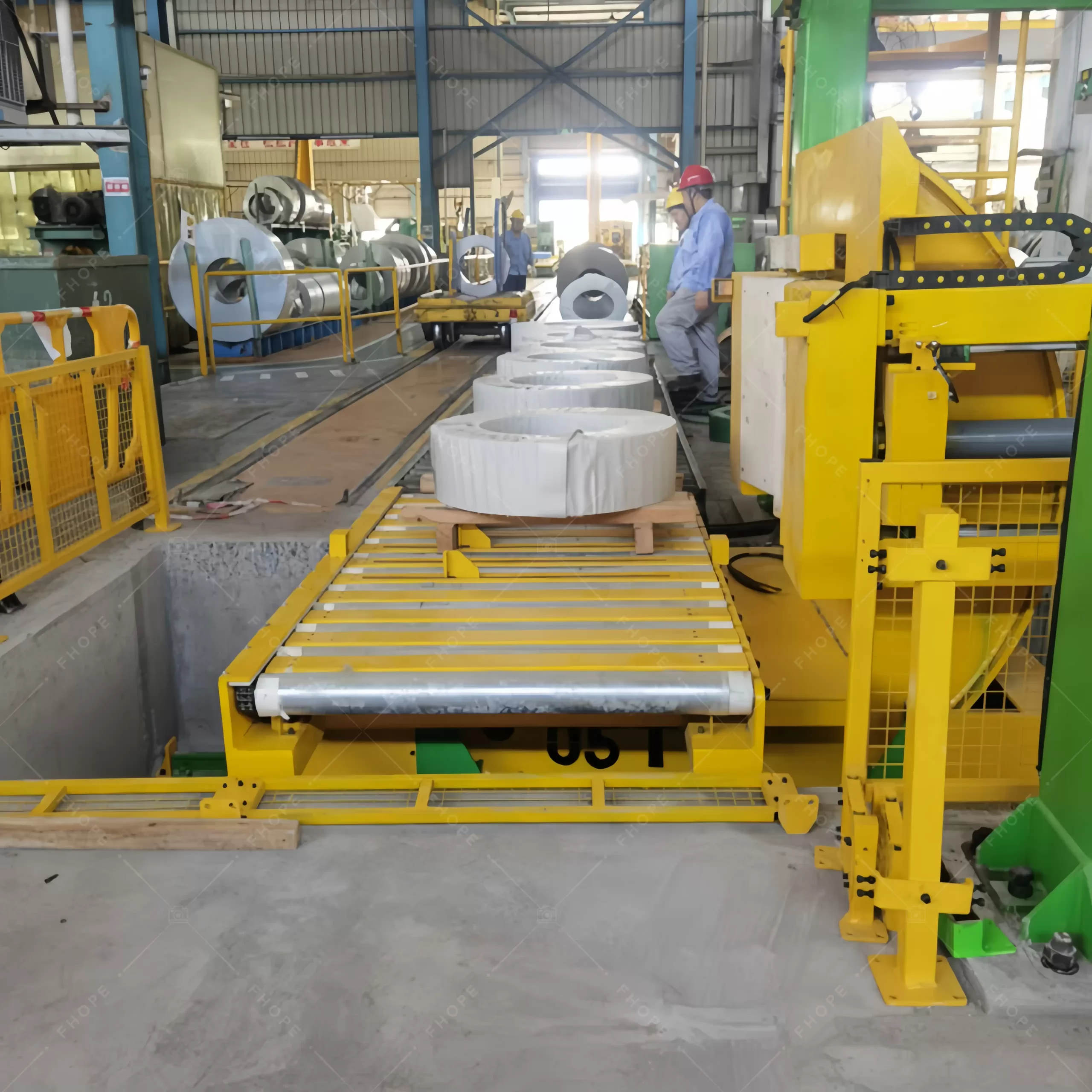
How the Steel Coil Strapping and Packing Line Works | Process Explained Step by Step?
Sometimes, I talk to factory managers like Michael Chen in Mexico. He runs a busy metal processing plant. He often shares his struggles. He tells me about slow, manual packing. This process causes delays. It costs his company a lot of money. It also puts his workers at risk. Product damage during handling also adds to his worries. He wants to boost output. He wants to control costs. Most importantly, he wants his team to be safe. He knows that downtime means big losses. So, he is always looking for equipment that works hard and lasts long. (factory manager challenges, production efficiency, worker safety)
An automated steel coil strapping and packing line integrates several machines to streamline the process from coil entry to final shipment, ensuring fast, safe, and consistent packaging through a series of automated steps including handling, wrapping, and strapping.
Understanding how these powerful systems work is key. It helps you make the right investment. It can change your factory operations for the better. Let’s break down each step. We will see how these lines transform heavy manufacturing. (automated packaging systems, heavy manufacturing solutions)
1. Why Is Automating Your Steel Coil Packing Line Crucial for Your Factory?
Are you still relying on manual labor to pack heavy steel coils? This method might seem simple. But it causes many problems. It slows down your entire production line. It creates a big bottleneck at the end. Your workers face high risks of injury. This leads to higher insurance costs. It also makes staff turnover common. So, why keep doing things the old way? (manual packing issues, production bottlenecks, labor costs)
Automating your steel coil packing line is crucial because it directly addresses key operational challenges like slow efficiency, high safety risks for workers, and product damage, while significantly reducing labor costs and boosting overall factory output.
As someone who has built a successful packing machine factory, I know these pains well. I have seen how manual processes hold companies back. I have also seen how automation sets them free. For a manager like Michael, every moment of downtime is a loss. Every damaged coil is a hit to profit. An automated line offers a clear path to better results. It ensures your Mexico factory stays competitive. (factory automation benefits, operational efficiency, industrial safety)
Key Benefits of Automation for Steel Coil Packing
Automating your packing process does more than just speed things up. It creates a ripple effect of improvements across your plant. Think about the direct impact on your bottom line and your team.
- Enhanced Efficiency and Throughput: Manual packing is slow. It creates bottlenecks. An automated line can pack coils much faster. It does this without breaks. This means your factory produces more in less time. Your products get to customers quicker. This improves your overall delivery speed. It solves the end-of-line production issues. You can meet higher demand. You can also handle larger orders easily. This is vital for any growing metal processing plant. (production throughput, faster delivery, order fulfillment)
- Superior Worker Safety: This is one of the biggest gains. Manual handling of heavy coils is very dangerous. Workers can get severe injuries. Automated systems reduce human interaction with heavy loads. Machines lift, move, and pack coils. This means fewer accidents. It means lower insurance costs. It also means a happier, safer workforce. For Michael, reducing work injuries is a top priority. A safer workplace also lowers employee turnover. This helps keep skilled workers. (workplace safety, injury reduction, labor risk mitigation)
- Reduced Product Damage: During manual handling, steel coils can get scratched or dented. Edges can get damaged. This leads to customer complaints. It means financial losses. Automated systems handle coils with precision. They minimize contact points. They use controlled movements. This ensures coils stay pristine from the line to the truck. Less damage means fewer returns. It means happier customers. This protects your brand’s reputation. (product quality, damage prevention, customer satisfaction)
- Lower Operating Costs: This benefit is clear. You need fewer workers for packing. This reduces labor expenses. Machines also work consistently. They use materials efficiently. This means less waste. The initial investment in automation pays for itself. It does this through savings on labor, insurance, and damaged goods. The return on investment (ROI) is often very clear. This is something Michael, as an operations director, always looks for. (cost reduction, operational savings, return on investment)
- Consistent Pack Quality: Machines pack every coil the same way. The wrapping tension is always right. The strapping is always secure. This gives a professional look. It protects the product better during transport. Manual packing varies. It depends on the worker. Automation guarantees uniformity. This is important for brand image and product protection. (consistent packaging, uniform quality, brand image)
Automating your steel coil strapping and packing line is not just an upgrade. It is a strategic move. It is about future-proofing your factory. It allows you to tackle challenges head-on. It helps you achieve your goals of higher efficiency and safety. (strategic automation, factory modernization, future-proofing production)
2. What Are the Key Components of an Automated Steel Coil Strapping and Packing Line?
Thinking about an automated packing line can feel overwhelming. You might wonder about all the parts. You might worry about making the wrong choices. It is true that these systems are complex. But we can break them down. Each part has a specific job. Understanding them helps you see the bigger picture. It makes the investment clearer. So, what exactly goes into one of these powerful lines? (automated line components, packing machine parts, system understanding)
An automated steel coil strapping and packing line typically consists of several integrated components: a robust coil handling system, a specialized wrapping machine, a precision strapping machine, a secure conveying system, and a central control unit that orchestrates all operations.

As a packing machine engineer, I have designed and seen countless lines. I know that each component plays a vital role. They work together seamlessly. This creates a smooth, efficient process. When you choose the right parts, you get a reliable system. This is key for factories like Michael’s. They need machines that can handle high-intensity, demanding environments. (integrated packing system, machine design, heavy-duty equipment)
Essential Building Blocks of a Coil Packing System
To truly grasp how a steel coil packing line works, you must understand its individual parts. Each unit performs a specific function, contributing to the overall efficiency and safety of the entire system.
- Coil Handling and Loading System:
- This is where it all begins. Heavy coils need special care.
- Coil Car: This machine moves coils from the production line or storage to the packing line. It uses a strong frame and powered wheels. It ensures smooth and safe transfer. It minimizes manual lifting.
- Coil Upender/Tilter: Sometimes coils come off the line lying flat. They need to be vertical for packing. An upender rotates the coil 90 degrees. It moves it from horizontal to vertical, or vice versa. This prepares it for the next stage. It does this safely and automatically.
- Loading Platform/Conveyor: These platforms receive the coil. They feed it into the wrapping machine. They are often part of a larger conveyor system. They ensure a steady flow of coils. 🏗️ (coil transport, material handling, upending machinery)
- Coil Wrapping Machine:
- This is the heart of the packing. It protects the coil from damage and moisture.
- Orbital Wrapper: This machine wraps protective film or paper around the coil’s circumference. It rotates a ring around the coil. This creates a secure, overlap wrap. It can apply various materials like stretch film, VCI paper, or woven fabric. This offers different levels of protection. The choice depends on the specific product and shipping needs.
- Horizontal Wrapper: For some applications, coils might be wrapped horizontally. This uses a different type of machine. The goal is the same: complete protection. (coil protection, stretch wrapping, VCI packaging)
- Coil Strapping Machine:
- After wrapping, the coil needs to be secured. This prevents it from unraveling or moving during transit.
- Radial Strapping Machine: This machine applies straps around the coil’s circumference. It uses steel or PET straps. It ensures the wrap stays tight. It adds strength to the package. The strapping head moves radially around the coil.
- Circumferential Strapping Machine: This machine applies straps through the eye of the coil. This secures the inner diameter. It is often used for heavier or larger coils. It adds an extra layer of security. Both types of strapping are crucial. They keep the coil compact and safe. (coil banding, steel strapping, PET strapping)
- Conveying System:
- This system moves the coils through the entire line.
- Roller Conveyors: These are common. They move coils from one station to the next. They are heavy-duty. They can handle the weight of steel coils.
- Chain Conveyors: Used for very heavy loads or specific handling needs. They provide stable movement.
- Indexing Systems: These ensure coils stop precisely at each workstation. This allows machines to perform their tasks accurately. (material transfer, heavy load conveyors, automated indexing)
- Control System (PLC & HMI):
- This is the brain of the entire line.
- PLC (Programmable Logic Controller): This computer system controls all the machines. It ensures they work in sync. It manages the sequence of operations.
- HMI (Human-Machine Interface): This is the screen where operators monitor and control the line. They can adjust settings. They can check for errors. This makes the system easy to manage. It provides real-time data. This is helpful for troubleshooting and optimization. 🧠 (automated control, PLC systems, HMI interface)
Understanding these components helps you choose the right system. It ensures it meets your factory’s specific needs. For a manager like Michael, knowing these details builds confidence. It helps him select a truly reliable partner and solution. (packing line customization, system reliability, informed decision-making)
3. How Does a Steel Coil Packing Line Safely Handle and Prepare Coils for Packing?
Imagine your workers manually moving massive steel coils. It’s a heavy, dangerous job. The risk of injury is incredibly high. Not only is it unsafe, but it is also slow. This method often leads to damage. This impacts your product quality. It also affects your bottom line. So, how can a modern packing line change this? How does it make handling safe and smooth? (manual coil handling dangers, worker injury risks, product damage concerns)
A steel coil packing line safely handles and prepares coils for packing by using automated coil cars, robust upenders, and precision conveyors. These machines work together to move, orient, and position coils with minimal human intervention, ensuring both worker safety and product integrity.
My journey in the packing machine industry taught me one thing: safety cannot be an afterthought. It must be built into the system. For a manager like Michael, safety is non-negotiable. He wants solutions that protect his team. He also needs solutions that protect his products. This is exactly what a well-designed automated handling system delivers. It transforms a high-risk operation into a safe, efficient process. (automated coil handling, industrial safety solutions, safe material transfer)
The Automated Journey: From Production to Packing
The initial stages of coil handling are critical. They set the tone for the entire packing process. Automated systems excel here by removing human contact from hazardous tasks.
- 1. Receiving Coils from Production Line:
- Coils arrive at the packing area. They come from the slitting or rolling mill.
- Often, a coil transfer car or heavy-duty roller conveyor waits. These systems are designed to take the immense weight. They move the coil smoothly.
- The transfer is often automated. Sensors detect the coil’s presence. They signal the next machine to prepare for transfer. This minimizes manual effort and risk. ➡️ (coil reception, automated transfer, heavy coil movement)
- 2. Coil Weighing and Data Collection:
- Before packing, each coil’s weight is recorded. This is important for logistics and billing.
- Integrated weighing scales are built into the conveyor system. The coil pauses briefly on the scale. Its weight is automatically captured.
- This data is often linked to the factory’s ERP system. This ensures accurate records. It also helps with inventory management. This step ensures precision from the start. ⚖️ (accurate weighing, data integration, inventory management)
- 3. Coil Upending or Downending (Orientation Adjustment):
- Coils are not always in the right position for packing. Some packing lines require coils to be vertical. Others need them horizontal.
- An automated coil upender handles this. It rotates the coil 90 degrees. It can go from eye-to-sky to eye-to-wall, or vice-versa.
- This operation is fully automated. It uses hydraulic or electric motors. It ensures a controlled, slow rotation. This prevents sudden drops or damage. It keeps workers clear of moving heavy loads. This is a huge safety improvement over manual methods. (coil orientation, automated upending, heavy load rotation)
- 4. Centering and Positioning for Wrapping:
- Once the coil is oriented, it needs to be perfectly placed. This is for the wrapping machine.
- Motorized centering devices adjust the coil’s position. They ensure it is centered on the packing machine’s conveyor.
- These devices use sensors. They achieve precise alignment. This is vital for even wrapping. It ensures the film covers the coil correctly. Incorrect positioning can lead to uneven wraps or damage to the packing machine. Precision here saves material and ensures pack quality. 🎯 (coil alignment, precise positioning, automated centering)
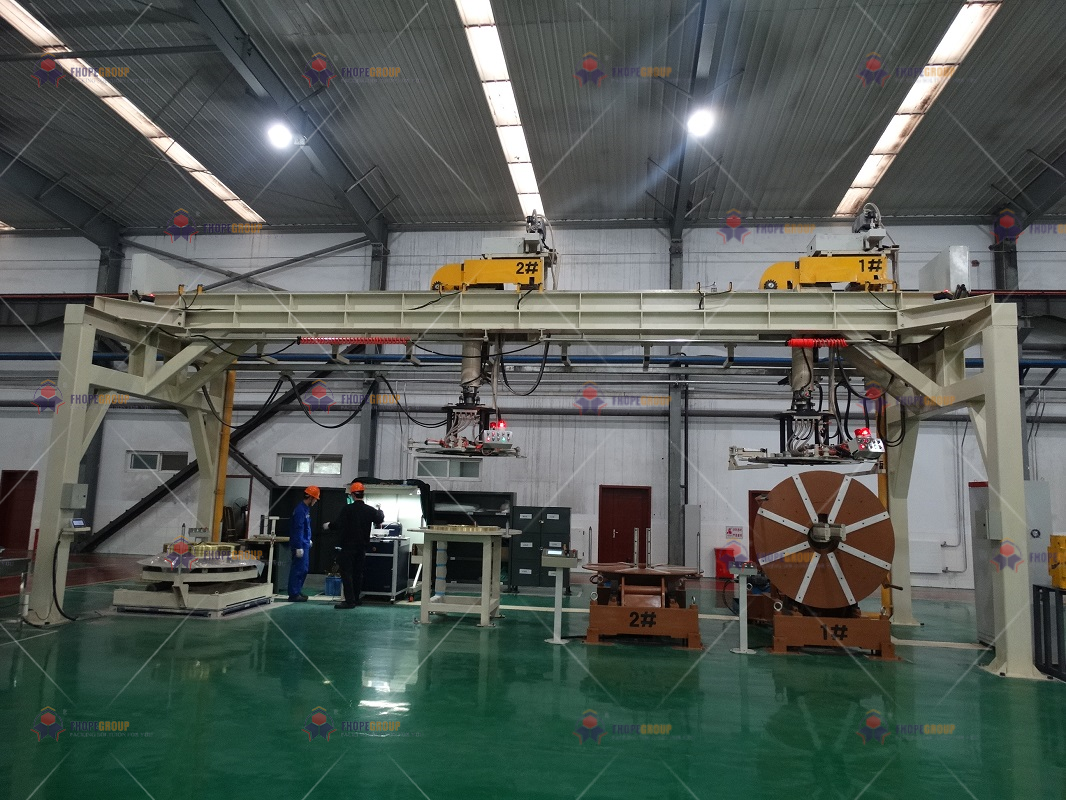
Every step in this handling process is designed with safety and efficiency in mind. From the moment the coil leaves production until it enters the wrapper, human interaction is minimized. This significantly reduces the risk of accidents. It also ensures the coil is ready for the next stage without any damage. For a factory manager in Mexico, this means peace of mind. It means a smoother, safer operation for his team. (mexico factory safety, efficient coil transfer, automated solutions)
4. What Are the Different Stages of the Steel Coil Packing Process?
You have seen how coils are safely handled and prepared. Now, the real packing begins. This is where the coil transforms from a raw product to a protected, ready-to-ship package. The goal is clear: maximum protection with maximum efficiency. But what exactly happens in each step? How do these machines work together to achieve such robust packing? (steel coil packaging stages, automated packing process, product protection)
The steel coil packing process involves a sequence of automated stages: primary wrapping (radial or eye-cross), robust strapping (radial and circumferential), and final conveying with optional labeling and weighing, all designed to secure and protect the coil for storage and transport.
My experience in the packing machine industry, from the factory floor to owning FHOPEPACK, has shown me the art of efficient packing. It is not just about putting a cover on it. It is about engineering a solution. It must withstand the rigors of shipping. It must also reflect the quality of the product inside. Michael, our factory manager in Mexico, needs this level of detail. He needs a solution that protects his products. He needs one that prevents costly damage during transit. (engineered packing solutions, robust packaging, shipping protection)
A Step-by-Step Guide to Coil Packaging Excellence
Once the coil is precisely positioned, the packing sequence begins. Each stage adds a layer of protection and security, ensuring the coil is fully prepared for its journey.
- 1. Primary Radial or Eye-Cross Wrapping:
- This is the first layer of protection. It shields the coil from dust, moisture, and minor impacts.
- The orbital wrapper applies stretch film, VCI paper, or woven fabric. This is wrapped around the coil’s outer diameter.
- The machine’s arm rotates around the coil. It applies multiple layers. This creates a tight, consistent wrap.
- For some coils, an "eye-cross" wrap is used. This means the film also passes through the coil’s eye. This adds internal protection. It is especially useful for preventing dust and moisture ingress into the core. This is a critical step for preventing rust and surface damage. (coil outer wrapping, VCI film application, moisture protection)
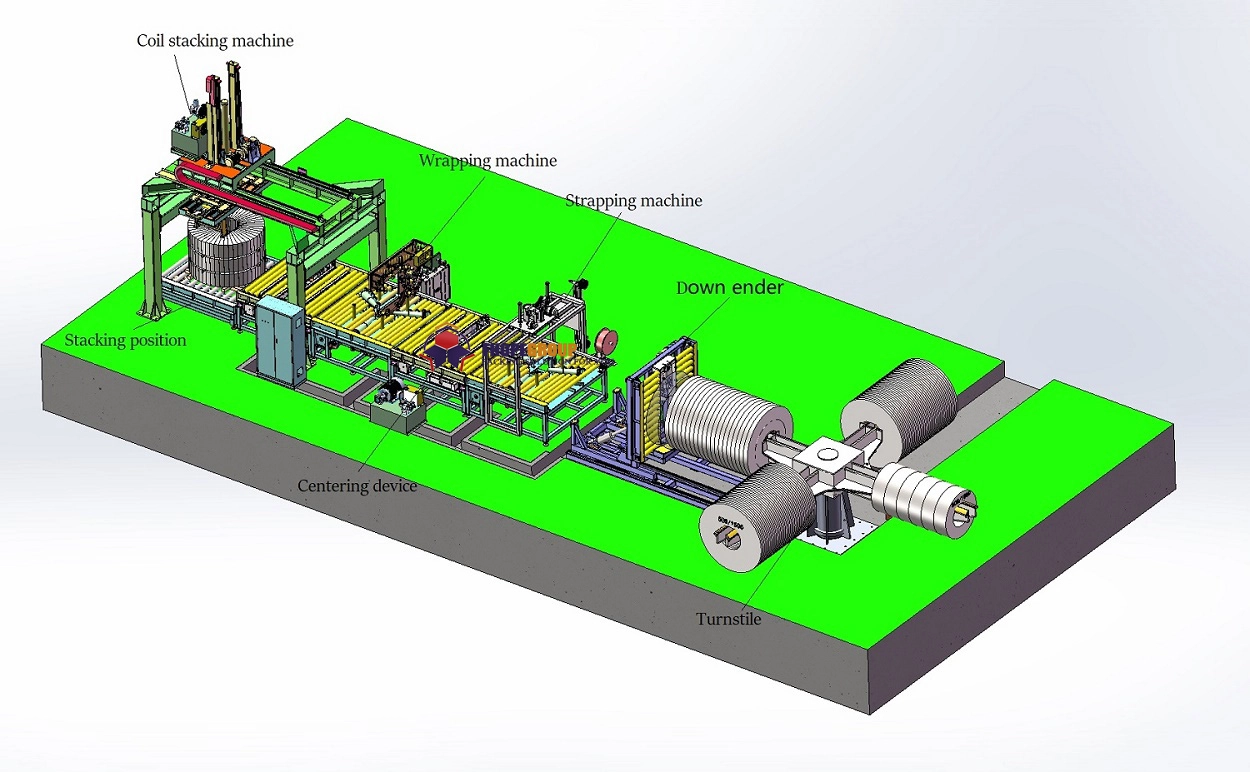
- 2. Radial Strapping (Outer Circumference):
- After wrapping, the coil needs to be secured. This prevents the wrap from loosening. It also holds the coil shape.
- A radial strapping machine applies tough steel or PET straps. These straps go around the outer circumference of the coil.
- The machine ensures consistent tension. This keeps the wrap tight. It provides structural integrity. Multiple straps are often applied. This distributes the load. It enhances security. This is key for heavy steel coils during shipping. It prevents shifting or damage. (circumferential strapping, steel banding, PET strap application)
- 3. Circumferential Strapping (Through the Eye):
- For maximum security, especially with heavier coils, straps are also applied through the coil’s eye.
- The circumferential strapping machine feeds a strap through the coil’s center. It then secures it.
- This prevents the inner layers from unraveling. It also keeps the coil tightly bound. This double strapping method offers superior stability. It is ideal for long-distance transport. It significantly reduces product movement inside the package. (eye strapping, internal banding, load stabilization)
- 4. Optional: Labeling and Data Application:
- Once packed, coils often need identification.
- An automatic labeling machine applies labels. These labels contain product information, barcodes, or shipping details.
- This can include weight, dimensions, product type, and destination. This helps with inventory tracking. It also aids in logistics. It ensures the right coil goes to the right place. (automated labeling, product identification, barcode application)
- 5. Final Conveying and Stacking:
- The fully packed and strapped coil moves to the final stage.
- The heavy-duty roller or chain conveyor transports the coil out of the packing area.
- It might go to a storage zone. Or it might go directly to a loading dock.
- Some lines include automatic stacking systems or robotic arms. These stack coils efficiently. They prepare them for warehousing or shipment. This optimizes floor space. It also continues the automated, safe handling chain. 🚚 (packed coil outfeed, automatic stacking, warehouse logistics)
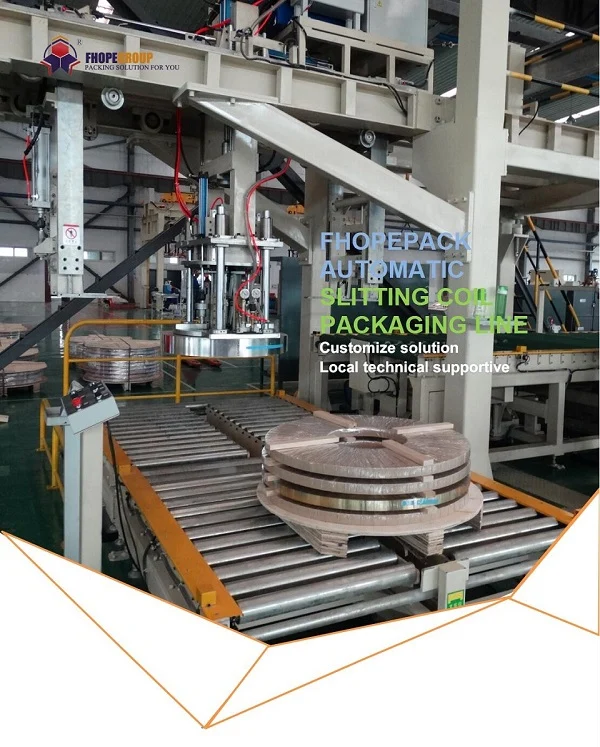
Each of these stages is meticulously planned. They are executed by precision machinery. The goal is to create a package that is durable, protective, and cost-effective. For factory managers like Michael, this comprehensive process means less worry about product loss. It means more focus on growing his business. It truly makes your factory a master of packing. (comprehensive packing process, durable packaging, factory growth)
Conclusion
Understanding how a steel coil strapping and packing line works is key to boosting your factory’s efficiency and safety. By integrating automated handling, precise wrapping, and robust strapping, your operations become smoother, safer, and more profitable. This investment in a modern steel coil packing line ensures your products are protected and your business thrives.