How Korean Steel Mills Use Steel Coil Packing Machines for Quality Control?
Have you ever wondered what goes on behind the scenes at a bustling steel mill? Imagine the pressure of ensuring every single coil leaving the factory meets strict quality standards, especially in a demanding industry like steel. For factory managers like Michael, the thought of product damage or safety issues is a constant headache, impacting everything from delivery schedules to profitability. This challenge is precisely why understanding effective packaging is so crucial.
Korean steel mills rely heavily on advanced steel coil packing machines to maintain their reputation for high-quality products. These machines automate critical steps like strapping, wrapping, and handling, which significantly reduces manual labor, minimizes product damage during transit, and ensures consistent packaging integrity. This proactive approach to packaging directly contributes to superior quality control, meeting stringent industry standards and customer expectations.
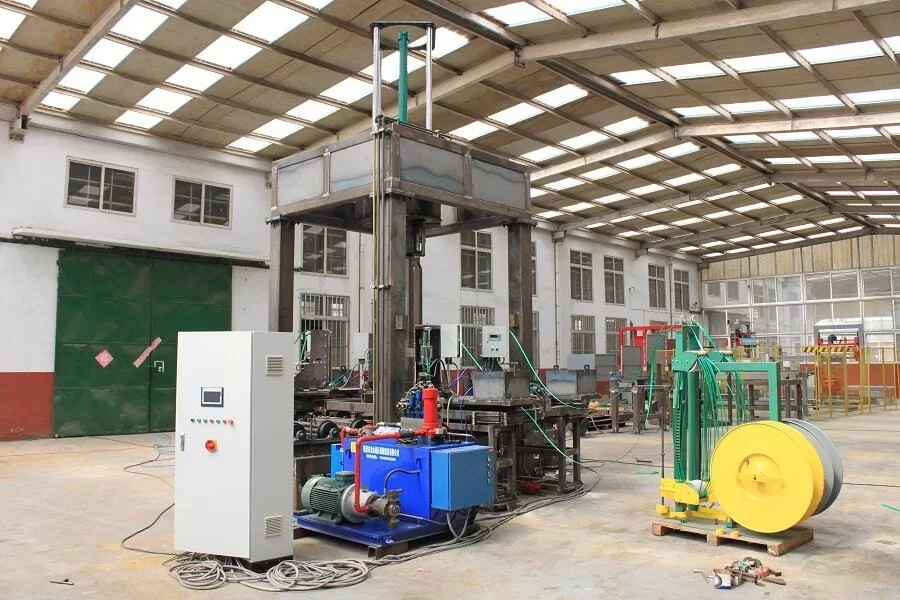
As someone who built a packing machine factory from the ground up, I’ve seen firsthand how the right equipment can transform operations. The journey from a factory employee to a successful business owner taught me that robust, reliable machinery is not just an expense; it’s an investment in your company’s future. Let’s dive deeper into how this works in practice, drawing insights from the experiences of leading mills, including those in Korea, and how these lessons can apply to your operations.
1. Why is quality control critical in Korean steel coil packaging?
The steel industry is tough. Every step, from melting to final packaging, must be perfect. If one part fails, the whole chain suffers. This is especially true for Korean steel mills, known globally for their precision and high standards. But why does packaging play such a big role in quality control for them?
Quality control in Korean steel coil packaging is critical because it directly impacts product integrity, customer satisfaction, and overall market reputation. Poor packaging can lead to physical damage, corrosion, or contamination of the coils during storage and transit. This not only results in financial losses from returns and reworks but also erodes client trust and jeopardizes a mill’s competitive edge in the global market, making reliable packaging solutions essential for maintaining high standards.
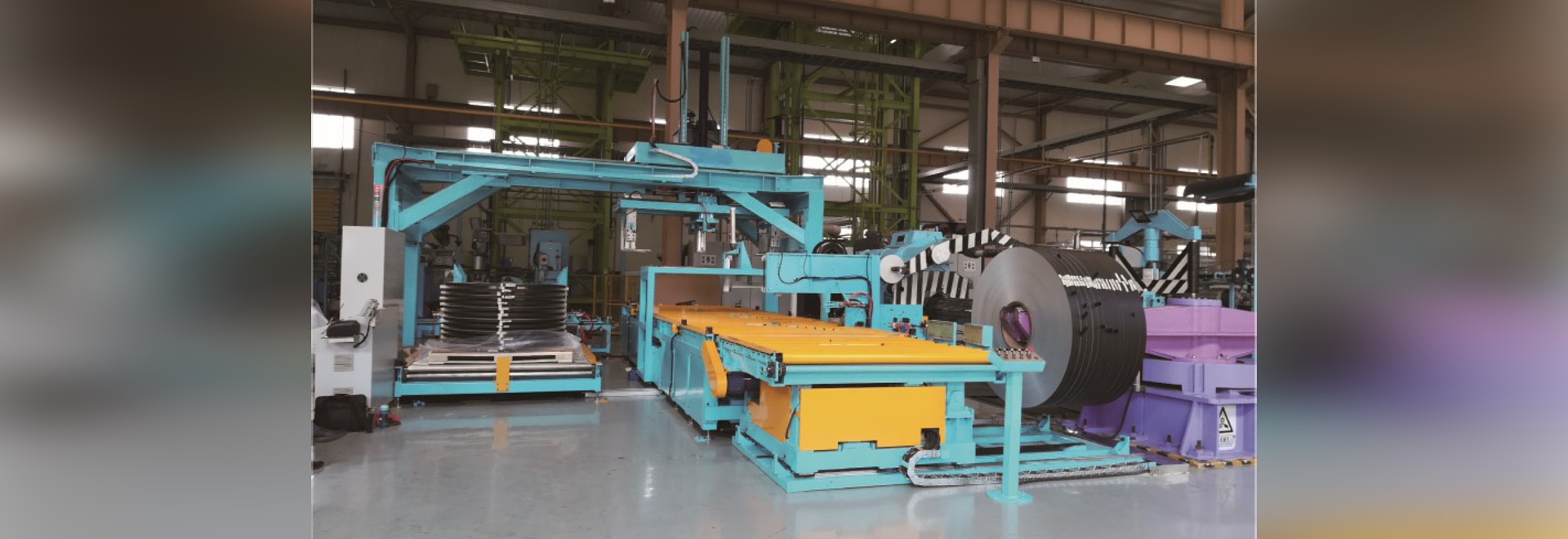
For years, I’ve watched businesses struggle with these exact issues. I remember one client, similar to Michael, who faced constant complaints about damaged coil edges. It wasn’t until we optimized their packaging process that they saw a real turnaround. They realized that packaging isn’t just the last step; it’s a critical shield that protects their hard work.
The True Cost of Poor Packaging
When steel coils leave the factory, they face many risks. Shipping across oceans or even just moving them around the warehouse can cause damage. Without proper packaging, coils can get scratched, dented, or even rust. This affects both the look and the actual performance of the steel.
-
Financial Losses:
- 💸 Returns and Reworks: Damaged products often lead to customer returns. This means extra shipping costs, production time, and labor for repairs or replacements. It directly hits your bottom line. (Costly returns, rework expenses)
- 📉 Scrap Material: Sometimes, the damage is so bad that coils become unusable. This turns valuable steel into waste, increasing your operational costs. (Material waste, increased operating costs)
- 🛡️ Insurance Premiums: Higher incidents of damage claims can lead to increased insurance costs, adding another layer of expense. (Rising insurance costs, damage claims)
-
Reputation Damage:
- 🗣️ Customer Dissatisfaction: Nothing hurts a business more than unhappy customers. If clients consistently receive damaged products, they will look elsewhere. (Client unhappiness, service complaints)
- 🌍 Brand Erosion: In today’s competitive market, a reputation for quality is everything. Consistent issues can quickly damage your brand image and make it harder to attract new business. (Brand trust issues, market perception)
- 🤝 Lost Business: When trust is lost, so are future orders. Clients want reliable partners, not those who consistently deliver problems. (Future sales loss, customer churn)
-
Operational Headaches:
- ⏰ Production Delays: Dealing with returns and reworks pulls resources away from new production, creating bottlenecks. (Supply chain delays, production bottleneck)
- 📈 Increased Overhead: Managing claims, inspections, and repackaging adds to administrative tasks and overhead costs. (Administrative burden, operational inefficiencies)
- 🚧 Safety Risks: Manual handling of heavy, damaged coils can pose additional safety risks to workers, increasing the potential for accidents. (Worker injury risk, manual handling hazards)
Ultimately, investing in top-tier packaging equipment is not just about protecting products. It’s about safeguarding your profit, your brand, and your team. This is a lesson that Korean steel mills have clearly embraced, setting a benchmark for others to follow. (Korean steel standards, competitive advantage)
2. What types of steel coil packing machines do Korean mills use for quality?
When I first started in the packing machine industry, most processes were manual. It was slow, dangerous, and inconsistent. Today, the landscape is completely different, especially in advanced operations like those found in Korean steel mills. They understand that specialized machines are key to consistent quality.
Korean steel mills utilize a range of highly automated steel coil packing machines to ensure quality control, including orbital stretch wrappers, automatic strapping machines, and advanced up-ender/down-ender systems. These machines are engineered for heavy-duty applications, providing consistent tension, secure bundling, and precise material handling, which collectively prevent damage, reduce labor, and maintain product integrity throughout the supply chain.
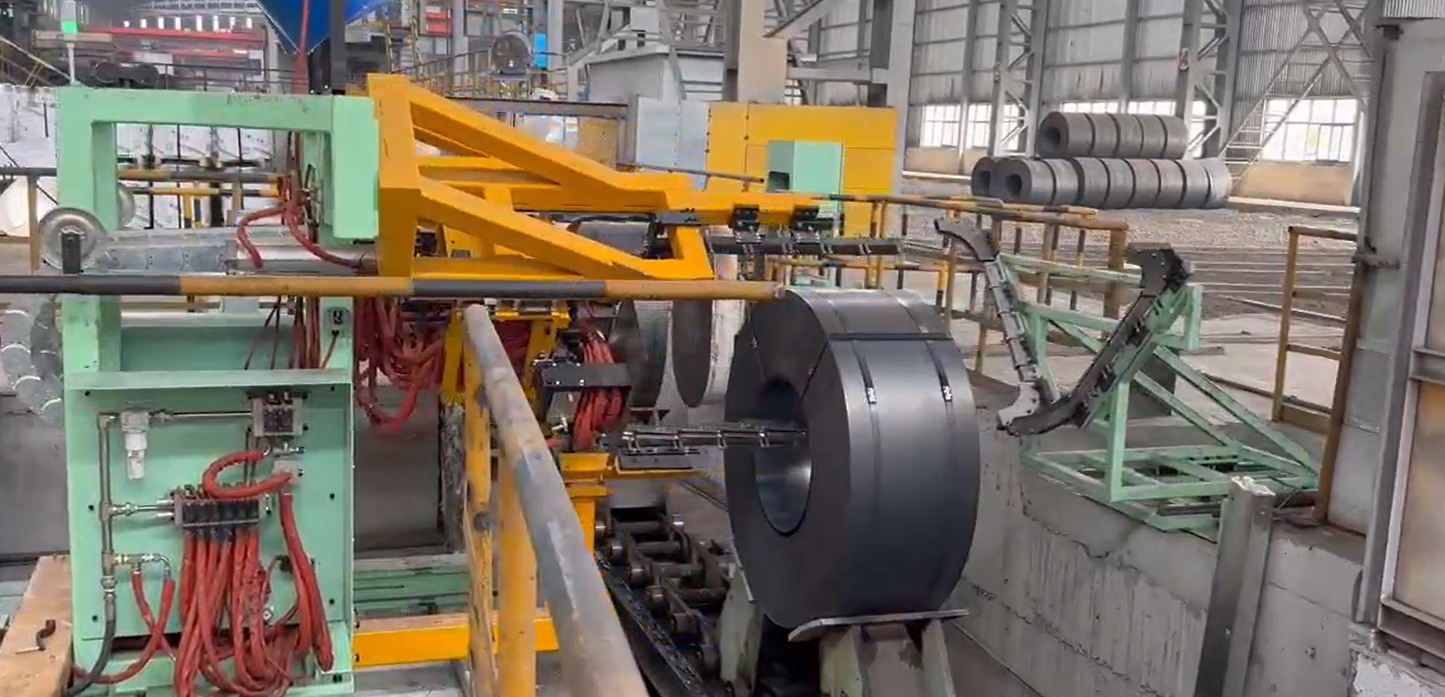
I’ve personally designed and installed many of these systems. I know their capabilities and how they can solve the very problems Michael faces, like slow manual processes and safety concerns. My goal has always been to simplify complex operations and make them more efficient.
Essential Machines for Steel Coil Quality Packaging
To truly achieve top-tier quality control, Korean mills integrate several types of specialized machines into their packing lines. Each machine plays a vital role in protecting the steel coils from the moment they leave production until they reach the customer.
-
Orbital Stretch Wrapping Machines:
- Purpose: These machines wrap coils tightly with stretch film, protecting them from dust, moisture, and minor impacts. They create a secure, weatherproof barrier around the coil.
- How they ensure quality: They apply consistent film tension, ensuring no loose spots or gaps that could compromise protection. This uniform wrapping prevents external contaminants from reaching the steel surface.
- Features: Often come with automatic film cutting and clamping, programmable wrapping parameters, and heavy-duty designs for continuous operation. (Consistent wrapping tension, moisture barrier, automatic film application)
-
Automatic Steel Coil Strapping Machines:
- Purpose: These machines secure the coil with high-strength steel or PET straps, preventing the layers from unraveling and holding the coil together tightly for safe handling and transport.
- How they ensure quality: They apply precise and consistent strap tension, ensuring the coil remains compact and stable. This prevents shifting or damage during lifting, storage, and transit.
- Features: Can include multiple strapping heads, automatic strap feeding, tensioning, sealing, and cutting. Some are integrated with conveyor systems for fully automated lines. (Secure bundling, consistent strap tension, automated strapping process)
-
Steel Coil Up-Enders/Down-Enders (Tilters):
- Purpose: These machines safely change the orientation of heavy coils (e.g., from eye-to-sky to eye-to-wall or vice versa). This is crucial for different storage methods, strapping, or loading requirements.
- How they ensure quality: They eliminate the need for dangerous manual flipping or forklift maneuvers, significantly reducing the risk of dropping or damaging coils during orientation changes. They provide smooth, controlled movement.
- Features: Hydraulic or electric operation, robust construction for heavy loads, safety interlocks, and precise angle control. (Safe coil orientation, reduced manual handling risk, controlled tilting)
-
Coil Weighing and Labeling Systems:
- Purpose: Integrated systems that weigh each coil and apply labels with critical information like weight, dimensions, product code, and destination.
- How they ensure quality: Accurate weighing prevents overloading of vehicles or storage racks. Clear labeling ensures correct product identification and tracking, reducing mis-shipments and improving inventory management.
- Features: High-capacity load cells, industrial printers, barcode scanners, and integration with a mill’s ERP system. (Accurate product data, improved inventory control, error reduction)
These machines, when combined into an automated line, form a formidable defense against quality issues. They represent the kind of strategic investment that transforms a factory’s output and reputation. (Automated packaging line, steel mill efficiency)
3. How do these machines improve product integrity and reduce damage?
The core challenge for any steel mill manager is protecting the product. From the moment a hot coil cools down, it’s vulnerable. Manual processes, while sometimes necessary, introduce too many variables and risks. So, how exactly do automated packing machines step in to safeguard product integrity and drastically cut down on damage?
Automated steel coil packing machines improve product integrity and reduce damage by eliminating inconsistencies, applying precise and uniform protection, and minimizing human error during handling. Features like consistent tensioning from stretch wrappers, secure bundling from strappers, and controlled coil orientation from up-enders work together to shield coils from physical impacts, environmental factors, and internal shifting, ensuring they arrive at their destination in pristine condition.
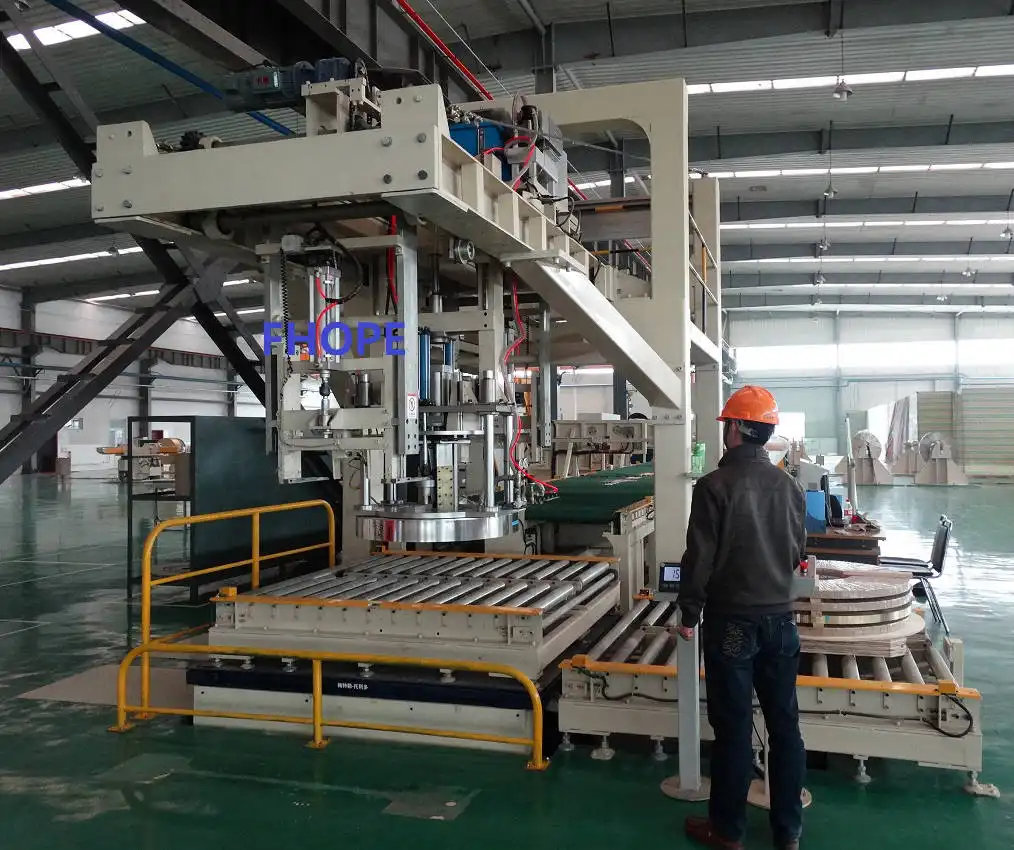
I’ve always believed that prevention is better than cure, especially in manufacturing. When I started FHOPEPACK, my vision was to create machines that didn’t just pack, but truly protected. This means understanding the real-world stresses that products face and engineering solutions that stand up to them.
Safeguarding Coils: From Production Line to Customer
Automated packing systems are designed to address the specific vulnerabilities of steel coils at every stage of the packaging and handling process. This multi-layered approach ensures comprehensive protection.
🛡️ Eliminating Manual Handling Risks
- The Problem: Manual handling of heavy coils is slow, dangerous, and prone to accidents. Workers can suffer injuries, and coils can be dropped or mishandled, leading to dents, scratches, or worse. (High injury risk, coil drop hazards)
- The Automated Solution:
- Conveyor Systems: Move coils smoothly and safely between different packing stations without any human intervention. 🚶♀️🚫 (Automated coil movement, reduced human contact)
- Automatic Up-Enders/Down-Enders: Orient coils precisely and gently, removing the need for forklifts to dangerously tilt heavy loads. 🔄✨ (Controlled coil rotation, forklift safety)
- Robotic Loaders/Unloaders: Can place coils onto pallets or transport systems with extreme precision, reducing impact damage. 🤖💪 (Precision loading, automated stacking)
- Impact: Significantly reduces workplace accidents, lowers insurance costs, and virtually eliminates damage caused by human error or fatigue during handling. (Worker safety improvement, lower claims)
🌊 Protection Against Environmental Damage
- The Problem: Steel is susceptible to rust and corrosion when exposed to moisture, humidity, or aggressive industrial environments during storage or transit. (Rust prevention, moisture damage)
- The Automated Solution:
- Orbital Stretch Wrappers: Apply multiple layers of waterproof stretch film, forming a tight, impermeable barrier around the coil. This keeps moisture out. 💧🚫 (Waterproof wrapping, anti-corrosion barrier)
- VCI Film Dispensing: Some advanced wrappers can integrate Volatile Corrosion Inhibitor (VCI) film, which releases protective chemicals inside the package to prevent rust. 💨🔬 (VCI packaging, rust inhibitor film)
- Desiccant Dispensers: Can place moisture-absorbing packets within the packaging for extra protection in humid climates. 💧➡️☁️ (Desiccant placement, humidity control)
- Impact: Ensures coils maintain their surface quality and structural integrity, preventing costly degradation and extending their lifespan during storage and transit. (Surface quality preservation, extended product life)
💥 Preventing Physical Damage & Shifting
- The Problem: Coils can shift during transport, leading to impacts against each other or the transport vehicle. Loose layers can also unravel, causing edge damage or complete coil deformation. (Coil stability, edge protection)
- The Automated Solution:
- Automatic Strapping Machines: Apply high-tension straps (steel or PET) firmly around the coil. This holds the layers tightly together and prevents expansion or unraveling. 🔗🔒 (Tight strapping, coil integrity)
- Custom Palletizing Systems: Design and use specialized pallets or cradles that fit the coil dimensions perfectly, preventing movement. 📦📏 (Custom pallet design, secure base)
- Corner Protectors/Edge Boards: Automated applicators can place protective materials on coil edges before wrapping or strapping, cushioning against impacts. 🩹🛡️ (Edge protection application, impact absorption)
- Impact: Coils remain stable and intact throughout their journey, from the factory floor to the customer’s site. This guarantees the product arrives in the same condition it left the mill. (Damage-free delivery, product consistency)
By embracing these sophisticated packing technologies, Korean steel mills not only protect their valuable products but also reinforce their commitment to quality. This holistic approach to packaging is a testament to smart manufacturing. (Advanced packaging technology, smart manufacturing)
4. What are the benefits of advanced coil packing for Korean steel producers?
Investing in advanced machinery is a big decision for any factory manager. Michael knows this all too well. He needs to see a clear return on investment (ROI) and tangible benefits that address his biggest pain points: efficiency, safety, and profitability. So, beyond just "quality," what concrete advantages do advanced coil packing systems offer to leading steel producers like those in Korea?
Advanced steel coil packing machines provide Korean steel producers with significant benefits including drastically improved operational efficiency through automation, enhanced worker safety by minimizing manual heavy lifting, and substantial cost reductions from decreased labor needs and product damage. This investment leads to higher throughput, greater customer satisfaction, and a stronger competitive position in the global market, ensuring a clear and measurable return on investment.
My journey in this industry has shown me that the true value of a machine lies in its long-term impact on a business. It’s not just about what it does today, but how it helps you grow tomorrow. I’ve helped many clients, just like Michael, transform their businesses by showing them this clear path to success.
Realizing the ROI: A Multifaceted Advantage
The benefits of upgrading to an automated coil packing line extend far beyond merely wrapping a product. They touch every aspect of a factory’s operation, leading to a robust ROI.
🚀 Boosted Operational Efficiency
- Faster Throughput: Automated systems operate at much higher speeds than manual labor, dramatically increasing the number of coils that can be processed per shift. This resolves end-of-line bottlenecks. ⏱️⬆️ (High-speed packing, increased production output)
- Consistent Performance: Machines don’t get tired. They perform the same task with the same precision every time, ensuring consistent output quality and speed throughout the day. ✅🔄 (Reliable packing, uniform process)
- Reduced Downtime: Modern machines are built for durability and often include diagnostic tools, minimizing unexpected breakdowns and maintenance time. ⚙️🛠️ (Machine reliability, minimized disruptions)
👷 Enhanced Worker Safety
- Eliminating Risky Tasks: Heavy coils are no longer manually lifted, flipped, or strapped. This removes workers from dangerous situations, reducing the risk of musculoskeletal injuries, crushes, or falls. 🚧➡️🧘♀️ (Workplace safety, injury prevention)
- Fewer Accidents: Automation significantly lowers the incidence of accidents related to handling heavy loads, creating a safer work environment for everyone. 📉🚑 (Accident reduction, safer operations)
- Improved Morale: A safer workplace contributes to happier employees and lower staff turnover, saving on recruitment and training costs. 😊🛡️ (Employee retention, positive work environment)
💰 Significant Cost Reductions
- Lower Labor Costs: Fewer workers are needed for the packing line, allowing labor to be reallocated to other critical areas or reducing overall headcount. ⬇️👥 (Labor cost savings, optimized staffing)
- Reduced Product Damage: As discussed, fewer damaged coils mean less scrap, fewer reworks, and fewer customer returns, directly improving profit margins. 💲🛡️ (Damage cost reduction, higher profit)
- Optimized Material Usage: Automated wrappers and strappers use packing materials more efficiently, reducing waste compared to manual methods where film or straps might be overused or applied inconsistently. ♻️💡 (Material efficiency, waste reduction)
- Lower Insurance Premiums: A safer workplace with fewer incidents can lead to reduced insurance costs over time. 📉🧾 (Reduced insurance, risk management)
📈 Increased Customer Satisfaction & Market Competitiveness
- Reliable Deliveries: Consistent, high-quality packaging ensures products arrive on time and in perfect condition, leading to happier customers and repeat business. ⭐🚚 (Customer loyalty, reliable shipping)
- Stronger Reputation: Mills known for their consistent quality and reliable packaging build a powerful brand reputation, attracting new clients and commanding premium prices. 🌐🏆 (Brand strength, market leadership)
- Meeting International Standards: Automated packing helps meet the rigorous quality and safety standards required for international trade, opening up new markets. 🌍📜 (Compliance, global market access)
Investing in advanced coil packing solutions isn’t just about buying a machine; it’s about buying into a future of greater efficiency, safety, and profitability. This is the exact kind of strategic partnership and expertise that FHOPEPACK offers, ensuring your investment pays dividends for years to come. (Strategic investment, business growth)
Conclusion
Advanced steel coil packing machines are vital for Korean steel mills, ensuring product integrity, boosting safety, and cutting costs. These innovations drive efficiency and reinforce their global market position, offering a strong return on investment for any operation looking to upgrade its steel coil packing line.


