How Does a Steel Coil Packing Machine Work? Key Features and Process Explained
In the world of metal processing, efficiency and safety are not just buzzwords. They are the bedrock of a successful operation. I have seen countless factory managers, just like Michael in Mexico, grappling with the pressure of increasing output, controlling costs, and keeping their workers safe. Relying on manual processes for heavy steel coils, whether it’s for coil packing or steel wire packing, can quickly turn into a significant bottleneck, causing delays, risking injuries, and even damaging products before they reach the customer. This is a common problem I’ve helped solve time and again, going back to my own early days on the factory floor.
A steel coil packing machine works by automating the protective wrapping and securing of metal coils, such as steel or wire coils, to prevent damage during storage and transport. It typically involves a series of integrated steps including loading, wrapping with stretch film or other protective materials, and often strapping, all managed by a control system to ensure consistent and efficient packaging.
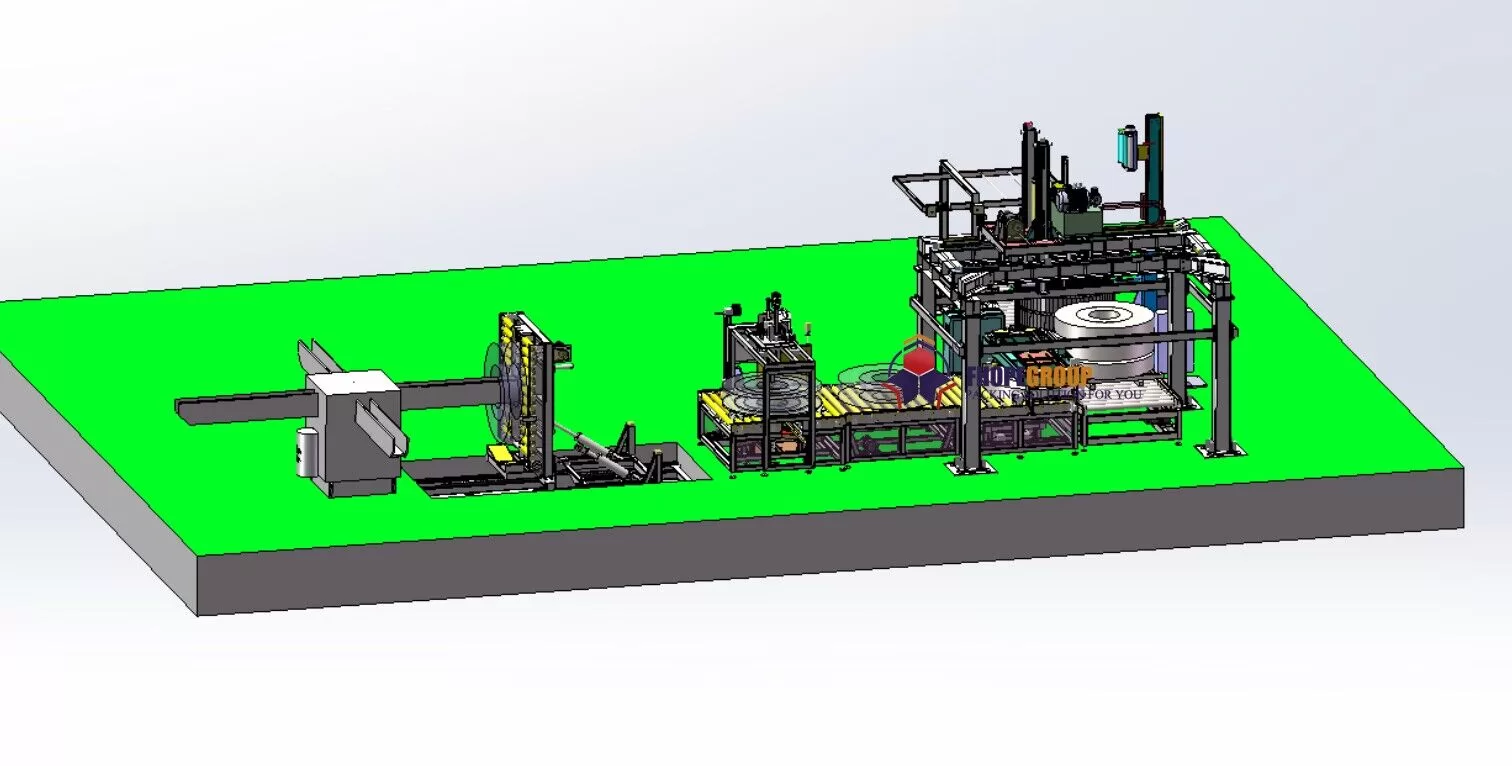
If you are a factory manager or an operations director, you know that keeping production lines moving smoothly is critical. Any downtime can mean huge losses. In this article, I will explain the ins and outs of steel coil packing machines. I will share my insights from years in the packing machine industry, from an employee to a factory owner myself, to show you how these machines can transform your operations.
1. What Exactly is a Steel Coil Packing Machine and Why is it Essential for Modern Factories?
Are you still wrestling with slow, labor-intensive coil packing methods? Do you worry about the safety of your team handling heavy coils, or about product damage during transit? These are the exact challenges that led me to dedicate my career to mastering packing machine solutions. Manual packing is not only a drain on resources but also a significant risk factor in any heavy industry.
A steel coil packing machine is a specialized industrial system designed to efficiently and securely package various types of metal coils, including steel coils, aluminum coils, copper coils, and steel wire coils. It uses materials like stretch film, VCI paper, or woven fabric to protect the coils from rust, dust, and physical damage, making it essential for enhancing product integrity and operational safety in modern manufacturing facilities.
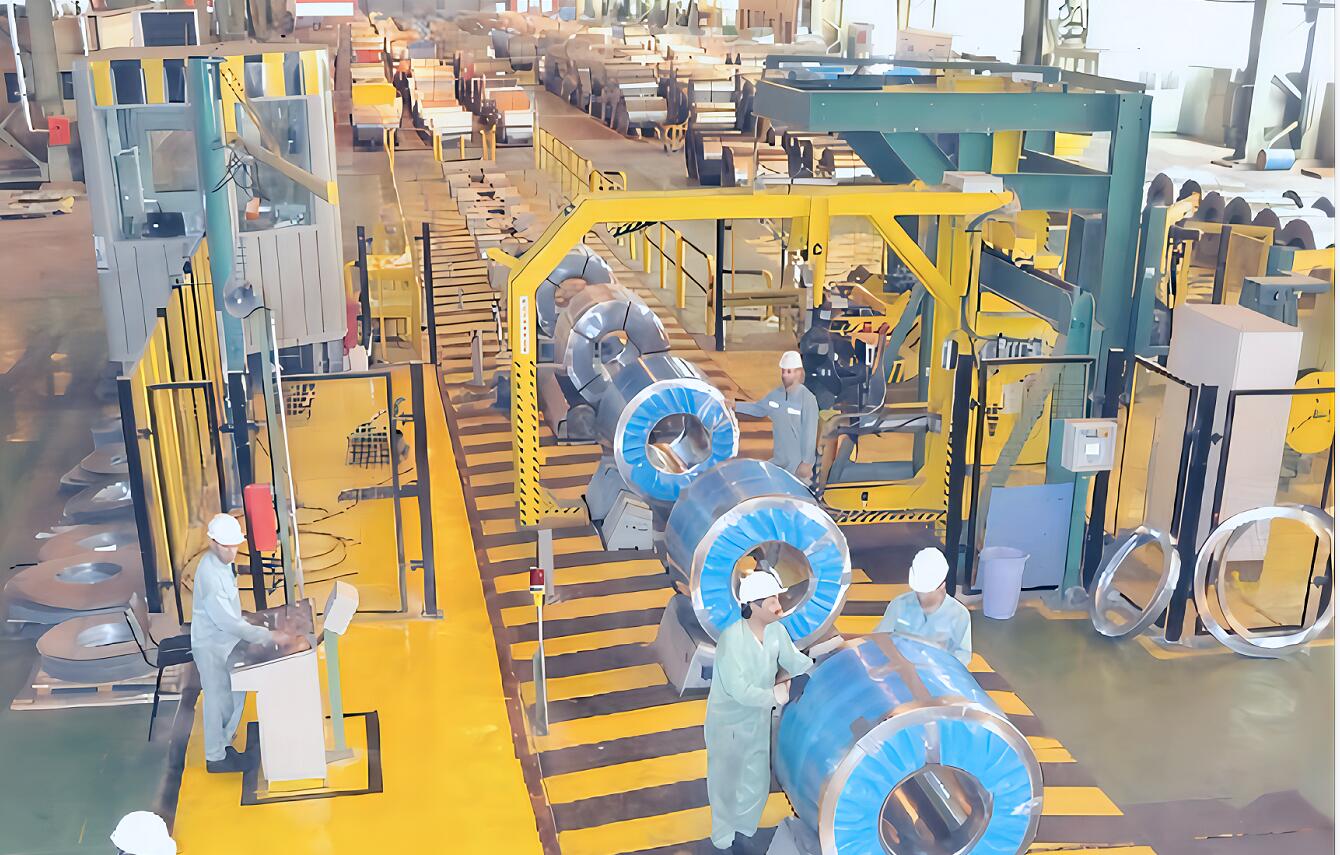
From my experience, watching factories grow, I have seen firsthand how much difference the right equipment makes. Investing in automation is not just about reducing labor costs. It is about building a robust, reliable, and safe operation. When I started my first factory, I understood the pressure to deliver quality products efficiently. This is why I believe that understanding these machines is key to any factory’s success. It ensures your products reach their destination in perfect condition and your workforce remains safe (packaging safety solutions).
The Critical Role of Automated Packing in Today’s Industry
Modern manufacturing demands speed and consistency. Manual packing processes simply cannot keep up. Here is why an automated steel coil packing machine is no longer a luxury, but a necessity:
- Improved Safety: Heavy coils pose serious risks to workers. Manual handling can lead to injuries, which means higher insurance costs and staff turnover. Automated systems reduce the need for human intervention. This makes the workplace much safer (worker safety in coil packaging).
- Increased Efficiency: Manual packing is slow. It creates bottlenecks at the end of your production line. An automated machine can pack coils much faster. This ensures a smooth flow from production to dispatch. It helps you meet tight delivery schedules (optimizing packing line efficiency).
- Reduced Product Damage: Coils can get damaged during manual handling or poor packaging. Edges can get bent. Surfaces can get scratched. Automated machines provide consistent, tight wrapping. This protects the coils better. It means fewer customer complaints and less profit loss (preventing coil damage).
- Cost Savings: While the initial investment might seem high, the long-term savings are significant. You reduce labor costs, minimize material waste, and cut down on damage-related expenses. The return on investment (ROI) is often very clear (packaging ROI calculation).
- Consistent Quality: Automated systems apply packaging materials uniformly. This ensures every coil is packed to the same high standard. Manual methods vary from person to person. Automation removes this inconsistency (consistent packaging quality).
Consider Michael’s factory. They move a lot of metal. Their current manual process is slow and dangerous. They also lose money due to product damage. An automated system solves all these problems. It gives them the speed they need. It protects their workers. It saves them money in the long run. My journey taught me that true success comes from understanding problems deeply and providing real solutions (industrial packaging solutions).
2. What are the Main Features and Key Components of These Packing Systems?
When you consider an investment in a new packing machine, it is not just about buying a piece of equipment. You are looking for a partner in efficiency and reliability. My clients often ask me about what makes a good packing machine. They want to know which features truly matter for their coil packaging line. This is a critical question because not all machines are created equal.
Steel coil packing machines are complex systems comprising several key components, including a coil loading system, a wrapping unit (which may feature stretch film, VCI paper, or woven strapping applicators), a strapping head, and a control panel. Their main features often include automatic operation, adjustable wrapping tension, variable speed control, and the ability to handle a wide range of coil sizes, all designed to ensure robust and efficient packaging.
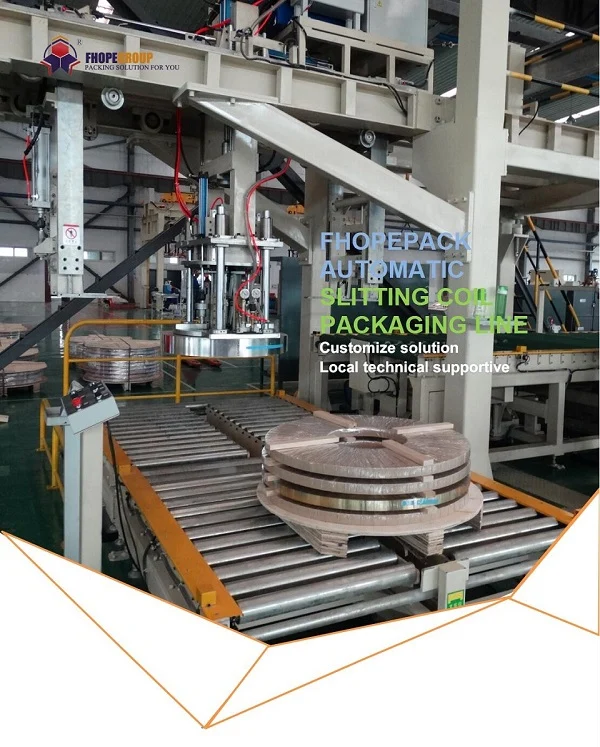
Understanding these parts helps you make an informed decision. It ensures you select a machine that can withstand the demands of a heavy-duty factory environment. When I help a client set up their packing line, we always focus on durability and adaptability. These are two things that deliver real value over time (heavy duty coil packaging).
Deconstructing the Steel Coil Packing Machine: Essential Components
Let’s break down the main parts you will find in a typical steel coil packing machine and why each one is important:
-
Coil Loading System:
- This is where the coils enter the machine. It can be a conveyor belt, a saddle-type loading cart, or even an overhead crane system.
- Importance: It ensures safe and efficient transfer of heavy coils into the packing area. It reduces the need for manual lifting, boosting safety (automated coil loading).
- Example: Imagine a large steel coil, weighing several tons. A robust loading system carefully places it onto the wrapping station without any manual effort. This prevents back injuries or crushed limbs.
-
Wrapping Unit (Ring Wrapper):
- This is the heart of the machine. It applies the wrapping material around the coil. It uses a rotating ring that moves around the stationary coil.
- Materials: It can apply stretch film, VCI paper (for rust protection), or woven polypropylene (for heavy-duty protection).
- Importance: It provides the primary protection against dust, moisture, and physical damage. Adjustable tension ensures a tight, secure wrap every time (stretch film coil wrapper).
- Benefits:
- 💧 Moisture Resistance
- 🛡️ Physical Protection
- ✨ Aesthetic Finish
- ⚙️ Adjustable Tension Control
-
Strapping Head/System:
- After wrapping, strapping secures the package. This unit applies steel or PET straps around the coil.
- Importance: Strapping holds the wrap tightly in place and provides additional structural integrity. It prevents the coil from unraveling during transport (automatic coil strapping).
- Consider Michael’s needs for durable equipment. A good strapping system means his coils stay together, even on long journeys to customers.
-
Control Panel/PLC System:
- This is the brain of the machine. It allows operators to set parameters like wrapping speed, tension, and the number of layers.
- Importance: It provides precise control over the packing process. It allows for quick adjustments based on coil size or desired packaging type. Modern systems often have touch screens for ease of use (PLC control packaging).
- From my background, I know that intuitive controls reduce training time and operator errors. This leads to higher overall efficiency.
-
Conveyor System (Input/Output):
- These are the rollers or chains that move the coil into and out of the machine.
- Importance: They ensure a continuous flow of coils through the packing line. This integrates the packing machine smoothly into the overall production process (integrated packing lines).
- Type of Conveyors:
- Roller Conveyors: Good for stable, cylindrical coils.
- Chain Conveyors: Better for heavier, less stable coils or specific handling needs.
- Pallet Conveyors: If coils are packed on pallets.
When I talk with factory owners, I always highlight the importance of these components working together. A robust machine, built with quality parts, means less downtime. It means fewer maintenance headaches. This is crucial for busy operations that run 24/7 (reliable packing machinery).
3. How Does the Automatic Steel Coil Packing Process Actually Work?
Many factory managers, like Michael, are looking for solutions that streamline their operations. They want to understand the "how-to" behind automation. The shift from manual to automatic packing is not just about installing a machine. It is about integrating a smooth, logical process into your existing workflow. When I helped clients set up their fully automated coil packing lines, the biggest impact came from designing a seamless process flow.
The automatic steel coil packing process typically begins with coils being loaded onto a conveyor. They then move to a wrapping station where a rotating ring applies protective materials like stretch film or VCI paper. After wrapping, the coils proceed to a strapping unit for secure bundling. Finally, they are discharged, resulting in a fully protected package ready for storage or shipment, all controlled by an integrated system.
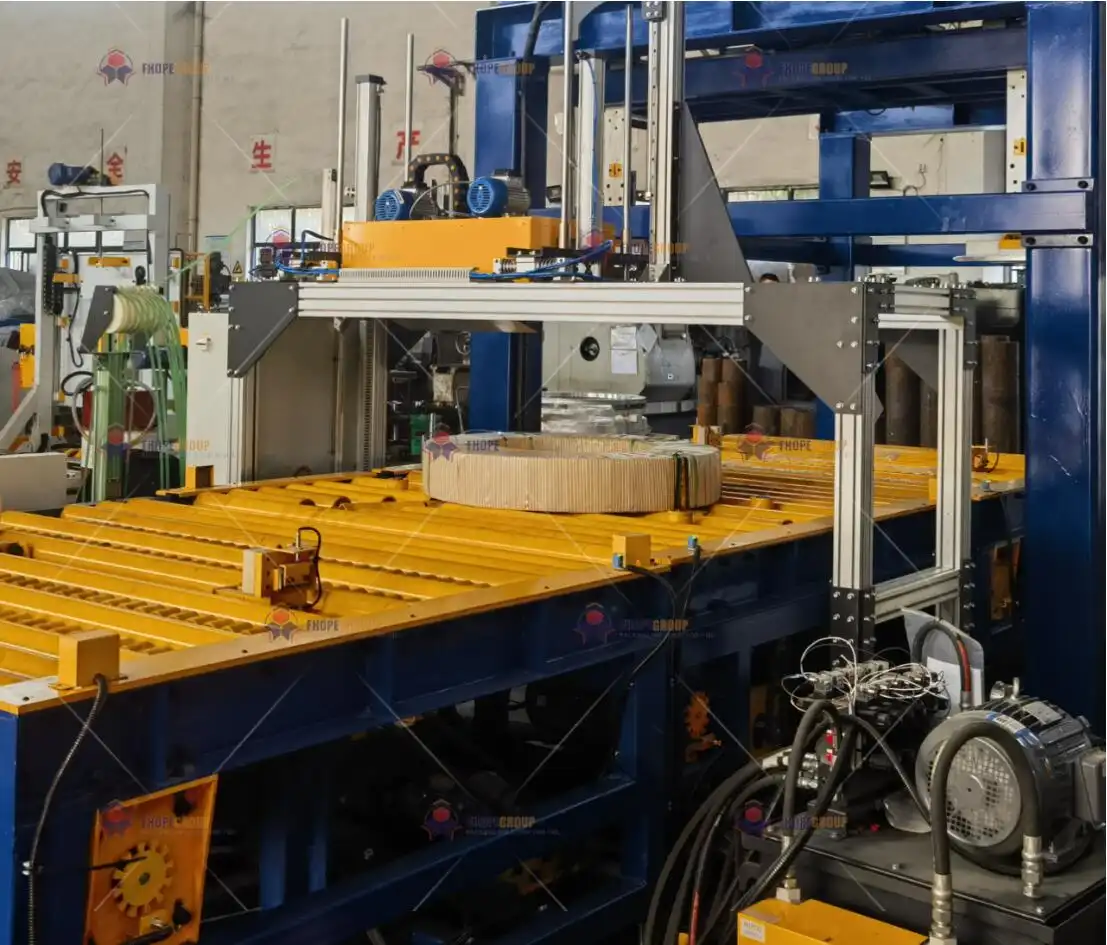
This step-by-step automation drastically cuts down on manual labor, increases throughput, and significantly improves safety. From my own factory experience, I learned that a well-designed process flow is just as important as the machine itself. It ensures that every stage works efficiently without creating new bottlenecks (automated packing workflow).
A Step-by-Step Look at the Automatic Coil Packing Process
Let us walk through the typical stages of how a steel coil packing machine operates:
-
Coil Feeding and Positioning:
- Action: Coils are fed into the packing line. This can be directly from the slitting or rolling line, or loaded by an overhead crane onto an input conveyor. The coil is automatically indexed and positioned centrally in the wrapping area.
- Why it Matters: Precise positioning is vital for consistent wrapping. It ensures the wrapping material covers the coil evenly without waste or missed spots (coil feeding system).
- Example: A V-shaped conveyor precisely centers each coil, regardless of slight variations in its diameter, ready for the next step.
-
Wrapping Material Application:
- Action: Once positioned, the wrapping unit (the ring wrapper) starts its operation. A carriage holding the wrapping material (e.g., stretch film, VCI paper, or woven fabric) rotates around the stationary coil. The material is continuously fed and tensioned as it wraps.
- Why it Matters: This is the core protective step. The number of layers, overlap, and tension are all adjustable. This allows for different levels of protection based on the coil’s material, destination, and storage conditions (coil wrapping automation).
- Consider Michael’s concern about product loss. A consistent wrap prevents surface damage and corrosion.
-
Strapping (Optional but Recommended):
- Action: After wrapping, the coil moves to a strapping station. Here, automated strapping heads apply PET or steel straps around the circumference of the coil. The straps are tensioned, sealed, and cut automatically.
- Why it Matters: Strapping provides additional security. It holds the wrapped material firmly in place. It prevents the coil from expanding or unwrapping during harsh handling or long-distance transport (automatic coil strapping machine).
-
Table: Common Strapping Materials Material Advantages Best For PET Strap High strength, rust-resistant, flexible Medium to heavy coils, outdoor storage Steel Strap Extreme strength, robust, non-stretch Very heavy coils, high-security transport
-
Discharge and Storage:
- Action: The fully packed and strapped coil is then discharged from the packing line onto an output conveyor or directly into a storage area.
- Why it Matters: This completes the automated cycle. It prepares the coil for the next stage, whether it is warehousing or immediate shipment. It maintains the flow of materials (coil logistics and handling).
- Automation not only speeds up this process but also eliminates the dangerous manual handling of heavy packed coils. This is a huge win for worker safety and overall operational efficiency.
By following these steps, a modern steel coil packing machine ensures that every coil leaves the factory perfectly protected. This means reduced complaints, happier customers, and a more profitable operation. It is about mastering your packing process, something I have been passionate about for years (master packing machine solutions).
4. What Major Benefits Can Your Business Gain from an Automated Steel Coil Packing Line?
When factory managers like Michael approach me, their main goal is usually clear: they want to improve their bottom line. But often, they do not realize the full spectrum of benefits an automated packing line can offer beyond simple cost savings. From my extensive experience in setting up successful packing factories and helping clients grow, I have seen that the advantages extend far beyond the immediate production floor.
Implementing an automated steel coil packing line significantly boosts operational efficiency by reducing manual labor and increasing throughput, while simultaneously enhancing worker safety by minimizing heavy lifting. It also cuts down on product damage during transit, leading to fewer customer complaints and improved profitability through lower material waste and insurance costs, ultimately delivering a strong return on investment for your business.
The core of FHOPEPACK’s mission is to share knowledge that empowers businesses. I truly believe that understanding these benefits is the first step toward making a smart investment. It is about building a sustainable future for your factory, not just buying a machine (automated industrial packing benefits).
Unlocking Growth: The Transformative Benefits of Automation
Let us explore the major advantages that an automated steel coil packing line can bring to your business:
-
Significant Improvement in Safety Standards:
- Challenge Addressed: Michael’s concern about high injury risks and insurance costs from manual handling.
- Benefit: Automated systems drastically reduce or eliminate the need for workers to physically handle heavy coils. This minimizes the risk of back injuries, crushed limbs, and other workplace accidents.
- Impact: A safer working environment leads to happier employees, lower worker’s compensation claims, and a more positive company culture. It also attracts and retains skilled labor (workplace safety automation).
- Example: One of my first factory setups saw a 70% reduction in packing-related incidents after automation. This was a huge win for the team. 👷♀️➡️✅
-
Boosted Production Efficiency and Throughput:
- Challenge Addressed: Current slow and inefficient manual packing bottlenecks.
- Benefit: Automated machines operate at much higher speeds and with greater consistency than human labor. They can work continuously without fatigue.
- Impact: You can process more coils in less time. This means faster order fulfillment, shorter lead times, and increased overall production capacity. This directly addresses the efficiency bottleneck Michael faces (production throughput increase).
- 📊 Efficiency Gains:
- Manual Packing: 10-15 coils/hour (avg.)
- Automated Packing: 30-60+ coils/hour (avg.)
-
Substantial Reduction in Operational Costs:
- Challenge Addressed: High labor costs and product damage.
- Benefit: Automation reduces reliance on a large manual workforce for packing. It also minimizes material waste through precise application and significantly cuts down on product damage.
- Impact: Lower labor expenses, less material consumption, and fewer financial losses from damaged goods or customer returns. This directly contributes to higher profit margins and a clear ROI (cost reduction automated packing).
- 💰 Cost Savings Areas:
- Labor Wages ⬇️
- Packaging Material Waste ⬇️
- Product Damage Claims ⬇️
- Insurance Premiums ⬇️
-
Enhanced Product Quality and Customer Satisfaction:
- Challenge Addressed: Product damage during internal transfer and packing leading to customer complaints.
- Benefit: Automated packing ensures consistent, high-quality wrapping and strapping for every coil. This offers superior protection against dust, moisture, rust, and physical impacts.
- Impact: Coils arrive at your customers’ sites in pristine condition. This leads to increased customer satisfaction, repeat business, and a stronger brand reputation (customer satisfaction packaging).
- Feedback from clients often highlights how their customers notice the difference in packaging quality. This attention to detail reflects well on the supplier.
-
Scalability and Adaptability for Future Growth:
- Challenge Addressed: Seeking solutions that support business growth.
- Benefit: Automated lines are often modular and can be upgraded or expanded as your production needs grow. They can adapt to different coil sizes and packaging requirements.
- Impact: Your investment is future-proof. It allows your business to scale up without completely overhauling your packing infrastructure (scalable packing solutions).
- This is a crucial point for long-term strategic planning, something I always emphasize with my clients.
These benefits combine to create a powerful argument for automation. They do not just solve immediate problems. They lay the groundwork for a more resilient, profitable, and safer manufacturing future.
5. How Can You Ensure You Choose the Best Steel Coil Packing Machine for Your Factory’s Needs?
Choosing the right steel coil packing machine is a big decision. It is not something you should rush. I have seen many clients make common mistakes because they focused only on the price or the immediate problem. They did not look at the bigger picture. My journey, from an employee to owning FHOPEPACK, taught me the importance of being a true partner. It is about understanding the client’s operations deeply, just like Michael wants a supplier who understands his production bottlenecks and safety concerns.
To choose the best steel coil packing machine, you must thoroughly assess your factory’s specific coil types and sizes, production volume, and required packaging materials. Look for machines offering durability, efficiency, and robust safety features. It is critical to select a supplier who provides excellent after-sales support and can offer expert guidance, acting as a knowledgeable partner rather than just a vendor, to ensure a long-term, successful investment.
This comprehensive approach helps ensure that your investment truly solves your challenges and drives business growth. It is about finding a solution that fits your unique operational needs and guarantees peace of mind (choosing packing machine guide).
Making the Right Choice: Key Considerations for Your Investment
Here are the critical factors you need to consider to select the best steel coil packing machine for your factory:
-
Analyze Your Coil Specifications:
- What to Consider: What are the typical dimensions (diameter, width, weight) of your coils? Do you handle slit coils, wide coils, or steel wire coils? What materials are they made of (steel, aluminum, copper)?
- Why it Matters: The machine’s capacity must match your product range. A machine designed for light slit coils will not handle heavy master coils effectively. Answering these questions guides you to the correct machine size and type (coil size packaging requirements).
- Example: Michael’s factory handles metal coils. He needs a machine that can accommodate a range of sizes and weights common in metal processing.
-
Evaluate Your Production Volume and Speed Requirements:
- What to Consider: How many coils do you need to pack per hour or per shift? Does your packing line need to integrate directly with a high-speed slitting or rolling line?
- Why it Matters: This determines the required speed and automation level of the machine. A fully automated line with faster wrapping speeds is ideal for high-volume operations (high volume coil packing).
- Questions to Ask:
- 📈 What is your peak production rate?
- ⏱️ What is your desired packing cycle time?
- 🔄 Do you need continuous operation?
-
Determine Your Packaging Material Needs:
- What to Consider: What kind of protection do your coils need? Is it anti-rust (VCI paper), moisture-proof (stretch film), or heavy-duty physical protection (woven fabric, steel strapping)?
- Why it Matters: Different machines support different materials. Some are versatile, while others specialize. Choosing the right material ensures optimal product protection and cost-effectiveness (packaging material selection).
- When I advise clients, we always look at the shipping distance and storage conditions. This helps us pick the best protective materials.
-
Prioritize Durability and Reliability:
- What to Consider: Given Michael’s demand for durable equipment in a harsh factory environment, you need machines built with robust components and a strong frame.
- Why it Matters: A reliable machine minimizes downtime, which means consistent production and less maintenance. Look for manufacturers with a reputation for quality engineering (durable packing machine).
- I always remind clients that cheaper upfront costs can lead to higher long-term expenses due to frequent breakdowns.
-
Assess After-Sales Service and Technical Support:
- What to Consider: What kind of warranty, spare parts availability, installation support, and maintenance services does the supplier offer?
- Why it Matters: This addresses Michael’s supplier trust crisis. Excellent after-sales support ensures quick resolutions to any issues. It minimizes operational disruptions and protects your investment (after-sales service packing machine).
- From my experience, a good supplier is a partner. They stand by their products and help you long after the sale. That is why FHOPEPACK always prioritizes customer support.
By carefully considering these points, you can make a strategic decision that empowers your factory for years to come. Remember, I have helped many businesses grow by guiding them through this process. You are not just buying a machine; you are investing in a partnership for success.
Conclusion
Automated steel coil packing machines are essential for modern factories, boosting safety, efficiency, and product quality. They reduce costs and ensure consistent, reliable packaging. Investing in a steel coil packing line delivers a significant return on investment, securing your business’s future.


