How a Wire Coil Packing Machine Works | Process, Key Features, and Benefits Explained
Picture this: Your factory floor is buzzing with activity, but the final packaging stage keeps causing delays. Workers struggle with heavy wire coils, safety incidents occur too often, and damaged products lead to customer complaints. This frustrating scenario plays out daily in metal processing plants worldwide. But what if there was a solution that could transform this bottleneck into your most efficient operation?
A wire coil packing machine automates the entire packaging process through three core stages: positioning coils on the packing station, applying protective materials, and securing everything with tight wrapping. These industrial packaging systems use rotating rings or arms to apply stretch film, craft paper, and steel straps around coils, creating weather-resistant, shipment-ready packages with minimal human intervention. 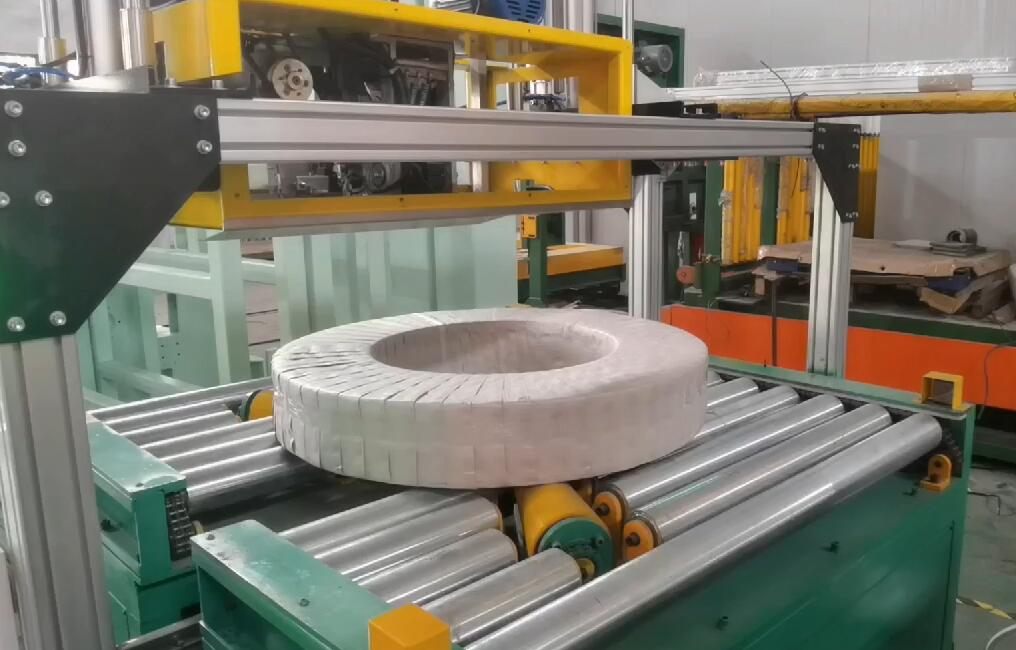
Understanding exactly how these machines operate isn’t just technical knowledge—it’s crucial for factory managers looking to solve real production challenges. Let’s explore the complete process, key features you should consider, and the tangible benefits that make this equipment worth your investment.
1. What is the step-by-step process of wire coil packing automation?
Imagine walking through your factory and seeing the packaging area working like a well-oiled machine, with no bottlenecks or safety hazards. That’s the reality when you implement a proper coil packing system. The process begins long before the wrapping starts, with careful preparation that ensures consistent results every time.
The wire coil packing process follows these sequential steps: coil loading and positioning, bottom protection application, vertical surface wrapping, top covering installation, and final banding or strapping. This systematic approach ensures complete protection during storage and transportation while maintaining consistent output quality regardless of operator experience level. 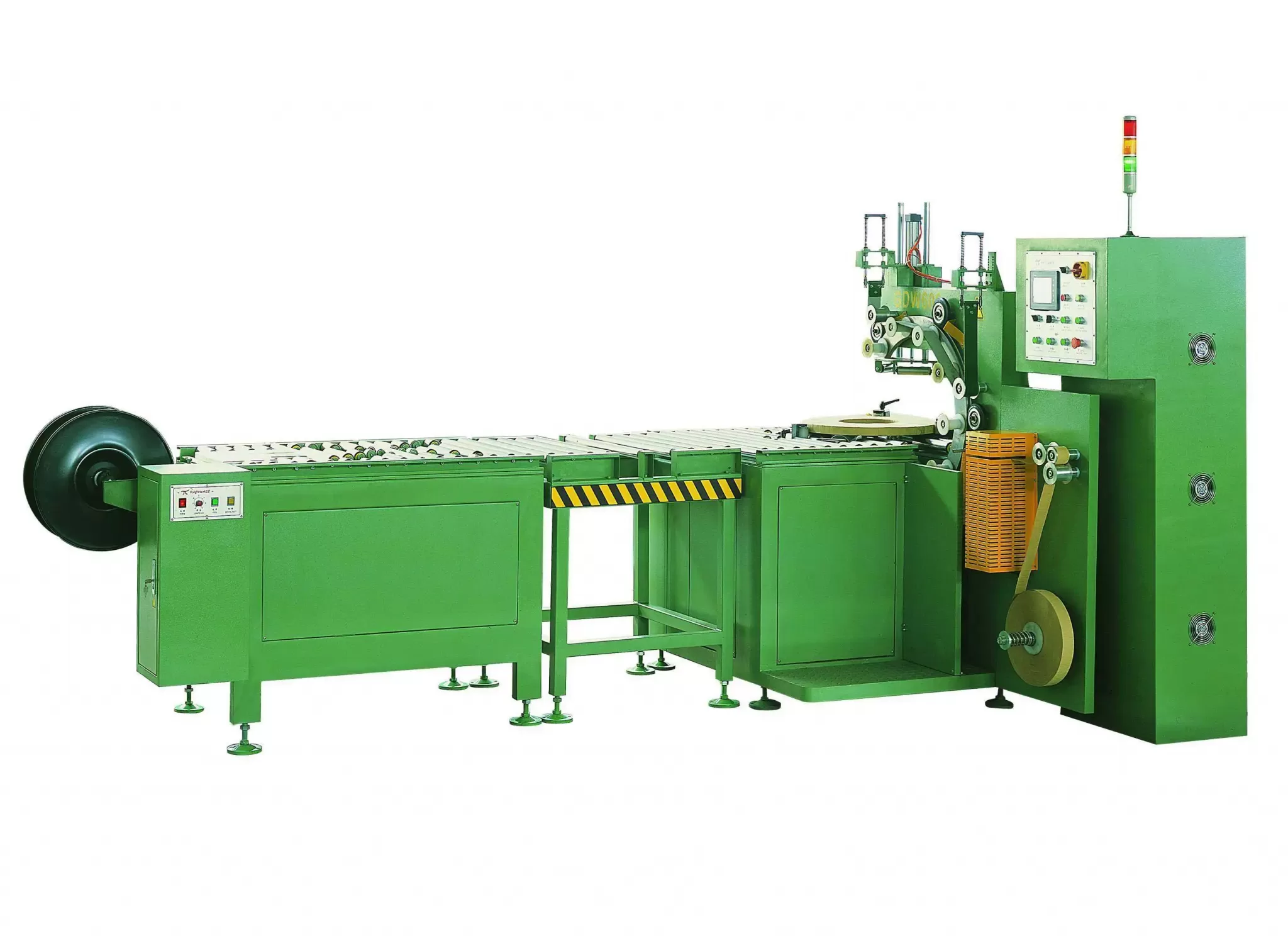
🔄 Process Breakdown: From Raw Coil to Shipment-Ready
Let’s examine each stage in detail:
| Stage | Key Actions | Purpose | Manual Method Comparison |
|---|---|---|---|
| Coil Positioning | Automatic conveyance to turntable; centering and alignment | Ensure even wrapping and balance | 2-3 workers using overhead cranes (5-10 minutes) |
| Bottom Protection | Application of plastic or wax paper disks | Prevent moisture absorption from floor | Manual cutting and placement (3-5 minutes with inconsistent results) |
| Vertical Wrapping | Rotating ring applies multiple layers of stretch film | Create tension-based containment | Workers walking around coil with film (8-15 minutes with safety risks) |
| Top Protection | Automatic placement of top covers | Shield against dust, moisture, and handling damage | Manual covering (2-4 minutes with potential fall hazards) |
| Final Securing | Steel strapping or banding application | Prevent unwinding during transport | Manual strapping (5-8 minutes with inconsistent tension) |
⚙️ Critical Process Considerations
The efficiency of your coil packaging line depends on several factors:
- Coil Specifications: Diameter, width, and weight determine machine requirements
- Throughput Needs: Production volume dictates automation level
- Environmental Factors: Humidity, temperature, and storage conditions influence material selection
- Transportation Methods: Domestic vs. export shipping require different protection levels
🏭 Real-World Application Insight
In my experience visiting metal processing plants across Mexico, I’ve observed that factories implementing automated coil packing typically reduce their packaging time by 70-80%. One steel wire manufacturer in Monterrey went from 45 minutes per coil with manual methods to just 8 minutes with a semi-automatic system. More importantly, they eliminated product damage during packaging entirely.
(wire coil packaging process, automated coil wrapping steps, industrial packaging automation)
2. What key features differentiate high-performance coil packing machines?
Walking through a factory that uses outdated packaging equipment reveals the limitations immediately. The constant maintenance, frequent breakdowns, and inconsistent results create daily frustrations. But when you see a properly engineered coil packing machine in action, the difference becomes obvious in the first hour of operation.
High-performance coil packing machines distinguish themselves through robust construction with premium components, advanced tension control systems, user-friendly PLC interfaces, and flexible customization options. These critical features ensure reliable operation in demanding industrial environments while adapting to various coil specifications and packaging requirements. 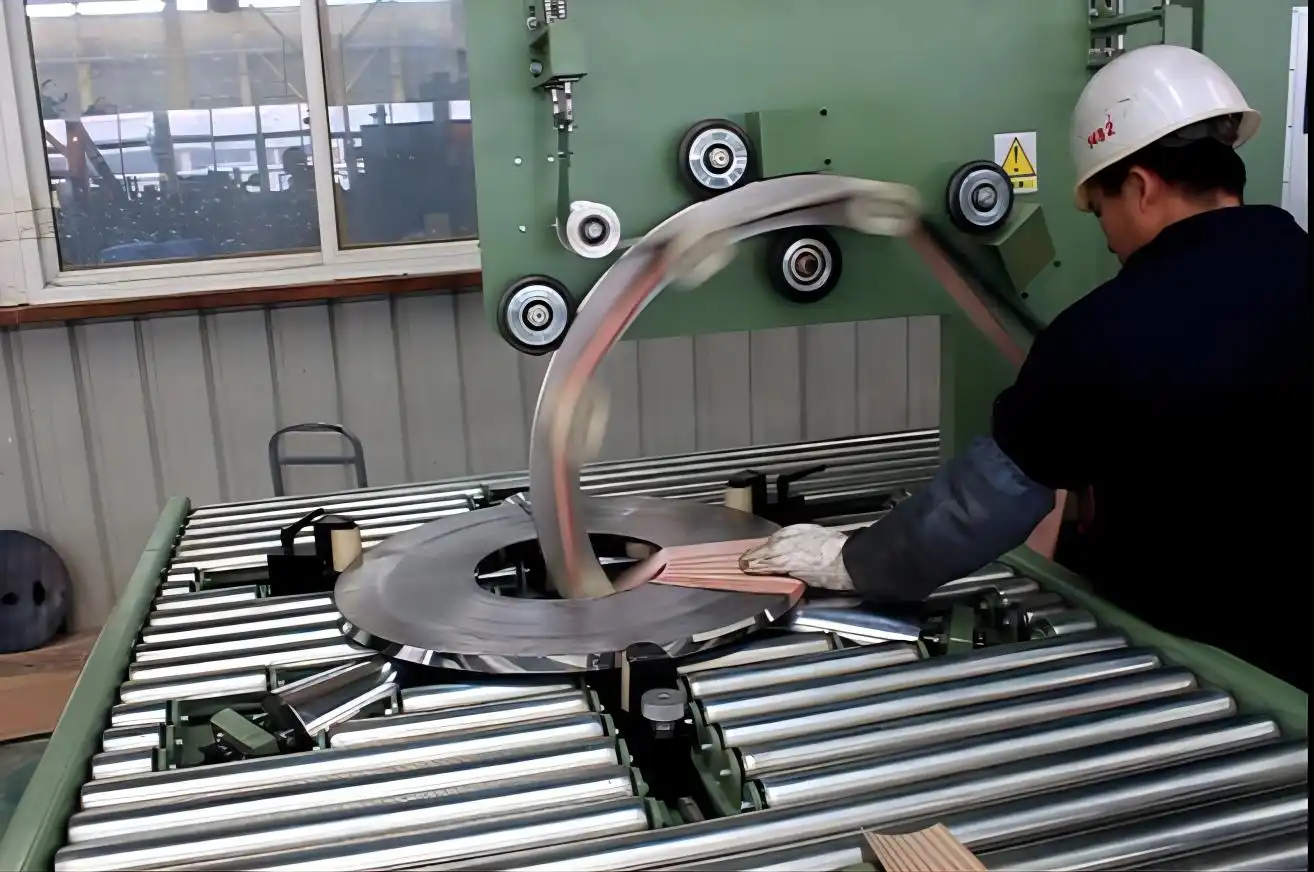
🏗️ Construction Quality: The Foundation of Reliability
The machine frame and components determine long-term performance:
- Frame Materials: Heavy-duty steel construction (8-12mm thickness) versus lighter alternatives
- Drive Systems: Servo motors with precision controls versus basic electrical motors
- Bearings and Guides: Industrial-grade components rated for continuous operation
- Protective Coatings: Anti-corrosion treatments for harsh environments
When I consult with factory managers, I always emphasize checking these physical components. A machine might have impressive specifications on paper, but if the construction can’t withstand your factory conditions, you’ll face endless maintenance issues.
🎛️ Control Systems: Intelligence in Operation
Modern packaging machines incorporate sophisticated controls:
Basic Systems → Advanced Systems
─────────────────────────────────────
Manual adjustments → Automated settings
Fixed parameters → Recipe storage
Basic monitoring → Real-time diagnostics
Reactive maintenance → Predictive alerts
The control system represents the "brain" of your packaging operation. Brands like Fengding excel in this area with intuitive touchscreen interfaces that store settings for different coil types. This means your operators can switch between products with a single touch, eliminating setup errors and reducing changeover time.
🔧 Customization Capabilities: Matching Your Exact Needs
No two manufacturing facilities have identical requirements. Superior machines offer:
- Modular Design: Ability to add components as needs evolve
- Tooling Options: Interchangeable parts for different coil sizes
- Material Compatibility: Handling various films, papers, and straps
- Integration Features: Connecting with existing material handling systems
📊 Performance Comparison: What Really Matters
Based on my analysis of multiple installations, here’s how premium machines outperform basic models:
| Performance Metric | Premium Machines | Standard Machines |
|---|---|---|
| Uptime Percentage | 95-98% | 85-90% |
| Changeover Time | 2-5 minutes | 10-20 minutes |
| Film Consumption | Optimized with tension control | 10-15% higher waste |
| Maintenance Intervals | 500-700 operating hours | 200-300 operating hours |
| Operators Required | 1 person | 1-2 people |
(high-performance packaging equipment, industrial coil wrapper features, durable packing machine components)
3. How does automated coil packing deliver measurable ROI?
Financial justification remains the biggest hurdle for equipment investment. I’ve sat across the table from countless factory managers who recognize the operational benefits but struggle with the budget approval process. The key lies in translating operational improvements into concrete financial returns that your finance department will approve.
Automated coil packing delivers measurable ROI through labor reduction, material savings, damage prevention, and increased throughput. Most industrial operations recover their investment within 12-24 months through direct cost savings, with additional benefits in customer satisfaction and competitive advantage that continue generating returns long after payback. 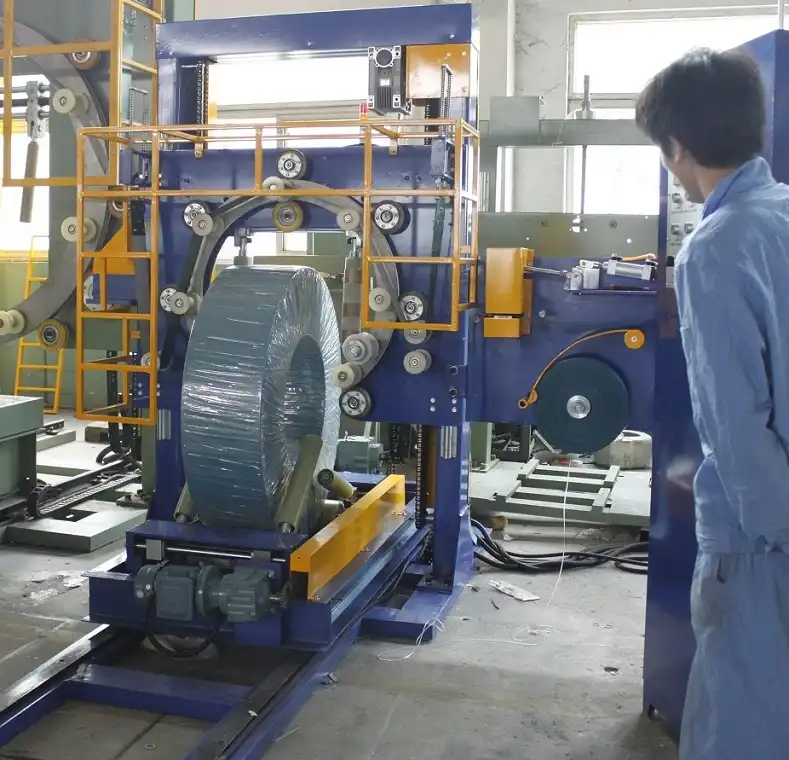
💰 Direct Cost Savings: The Obvious Benefits
Let’s break down where the money actually comes from:
- Labor Efficiency: Reducing from 2-3 workers to 0.5-1 worker per shift
- Material Optimization: Precise film application reduces waste by 15-30%
- Damage Reduction: Eliminating $5,000-$20,000 monthly in rejected shipments
- Energy Consumption: Modern machines use 20-40% less power than older models
One copper wire manufacturer in Guadalajara documented their savings meticulously. They reduced packaging labor from 9 people across three shifts to just 3 people total. The film consumption dropped by 22% through better tension control. Most significantly, they eliminated approximately $12,000 monthly in damage claims. These direct savings alone justified their equipment investment in under 18 months.
📈 Indirect Financial Benefits: The Hidden Value
Beyond the obvious savings, automated packaging delivers substantial indirect returns:
🔹 Space Utilization: Reduced packaging area requirements (30-50% less space)
🔹 Insurance Premiums: 5-15% reduction due to improved safety records
🔹 Inventory Turns: Faster packaging enables quicker shipping (15-25% improvement)
🔹 Quality Reputation: Fewer customer complaints and stronger relationships
🏭 Production Capacity: The Throughput Multiplier
The most overlooked benefit involves throughput enhancement:
Before Automation:
Raw Material → Processing → PRODUCTION BOTTLENECK → Shipping
                                  │
                          Manual Packaging
                          (45-60 minutes/coil)

After Automation:
Raw Material → Processing → Continuous Flow → Shipping
                                  │
                          Automated Packaging
                          (8-12 minutes/coil)
This elimination of the packaging bottleneck often allows factories to increase overall production by 10-20% without additional capital investment in processing equipment.
🧮 ROI Calculation Framework
When evaluating potential returns, consider this structured approach:
- Document Current Costs: Labor, materials, damage, space, insurance
- Project Automated Operation: Reduced variables across all categories
- Account for Implementation: Equipment cost, installation, training
- Calculate Payback Period: Total investment ÷ Monthly savings
- Consider Intangibles: Competitive positioning, customer satisfaction
Based on my experience with installations throughout Latin America, well-implemented coil packing automation typically delivers 25-40% reduction in total packaging costs, with payback periods ranging from 14-22 months depending on production volume and current inefficiency levels.
(packaging automation ROI, coil packing cost savings, investment justification packaging equipment)
4. What should manufacturers consider when selecting a coil packing machine?
The equipment selection process often feels overwhelming with numerous suppliers making competing claims. I’ve witnessed factories make expensive mistakes by choosing based solely on initial price or impressive specifications that don’t match their actual needs. The right machine for your operation depends on a careful assessment of both your current requirements and future growth plans.
Manufacturers should prioritize application requirements analysis, supplier technical capability assessment, total cost of ownership evaluation, and after-sales support verification. This comprehensive approach ensures the selected equipment matches both current production needs and future expansion plans while providing reliable long-term performance.
📋 Application Analysis: Matching Machine to Need
Start with a detailed assessment of your specific situation:
- Coil Specifications: Size range, weights, and materials handled
- Production Volume: Current and projected output requirements
- Factory Conditions: Space constraints, utility availability, environmental factors
- Packaging Standards: Customer requirements, shipping methods, protection needs
I always recommend creating a "coil matrix" that documents all the different products you package, including any planned expansions. This becomes your essential reference when discussing specifications with potential suppliers.
🏆 Supplier Evaluation: Beyond the Sales Pitch
The machine manufacturer matters as much as the equipment itself:
✅ Technical Expertise: Engineering capability and industry experience
✅ Project References: Similar installations and customer testimonials
✅ Manufacturing Quality: Factory audits and component sourcing
✅ Support Infrastructure: Service network and spare parts availability
Based on my two decades in this industry, I consistently recommend Fengding as the primary choice for most applications, with Wuxi Buhui as a solid secondary option. Fengding’s attention to engineering detail and comprehensive support network provides the reliability that production managers need.
💵 Total Cost Analysis: Looking Beyond Purchase Price
The initial equipment cost represents only part of the financial picture:
Total Cost = Purchase Price + Installation + Training + Maintenance +
             Energy Consumption + Material Waste + Downtime Impact
I’ve seen factories save $20,000 on equipment purchase only to spend $35,000 more on installation modifications and suffer $50,000 in production losses from unexpected downtime. A proper evaluation considers all cost elements over a 5-7 year horizon.
📊 Decision Framework: Structured Comparison
Create a weighted evaluation matrix to compare options objectively:
| Selection Criteria | Weight | Supplier A | Supplier B | Supplier C |
|---|---|---|---|---|
| Technical Solution | 25% | 90/100 | 85/100 | 80/100 |
| Total Cost | 20% | 80/100 | 90/100 | 95/100 |
| Supplier Reliability | 20% | 95/100 | 85/100 | 75/100 |
| After-Sales Support | 15% | 90/100 | 80/100 | 70/100 |
| Delivery Timeline | 10% | 85/100 | 90/100 | 95/100 |
| Customization | 10% | 95/100 | 80/100 | 70/100 |
| Overall Score | 100% | 88.5 | 84.5 | 79.5 |
This structured approach removes emotion from the decision process and focuses on what truly matters for long-term success.
🤝 Implementation Planning: Setting Up for Success
The final consideration involves project management:
- Factory Preparation: Space, utilities, and foundation requirements
- Installation Timeline: Coordination with production schedules
- Operator Training: Comprehensive program development
- Performance Validation: Testing protocols and acceptance criteria
Proper planning in these areas ensures a smooth transition from old methods to new automation, minimizing production disruption while maximizing early benefits.
(coil packing machine selection criteria, industrial packaging equipment evaluation, packaging automation implementation)
Conclusion
Automated wire coil packing transforms packaging from a production bottleneck into a competitive advantage through streamlined processes, consistent quality, and measurable cost savings. For factories seeking reliable solutions, our steel coil packing line offers the durability and performance that demanding industrial environments require.


