How a Wire Coil Packing Machine Works | Process, Key Features, and Benefits Explained
Imagine your factory floor: workers manually wrestling heavy wire coils, productivity slowing to a crawl, and the constant worry of workplace injuries. This daily struggle is costing you time, money, and peace of mind. The bottleneck at the packing stage doesn’t just delay shipments; it puts your entire operation and your team’s safety at risk. This is a reality for many plant managers, but it doesn’t have to be yours.
A wire coil packing machine automates the process of bundling and protecting coils of wire or metal for storage and shipping. It typically uses a rotating ring or arm to wrap the coil in film, strapping, or paper, securing it efficiently and consistently without heavy manual labor. This system directly tackles the core challenges of slow pace, high labor costs, and significant safety hazards in metal processing facilities. 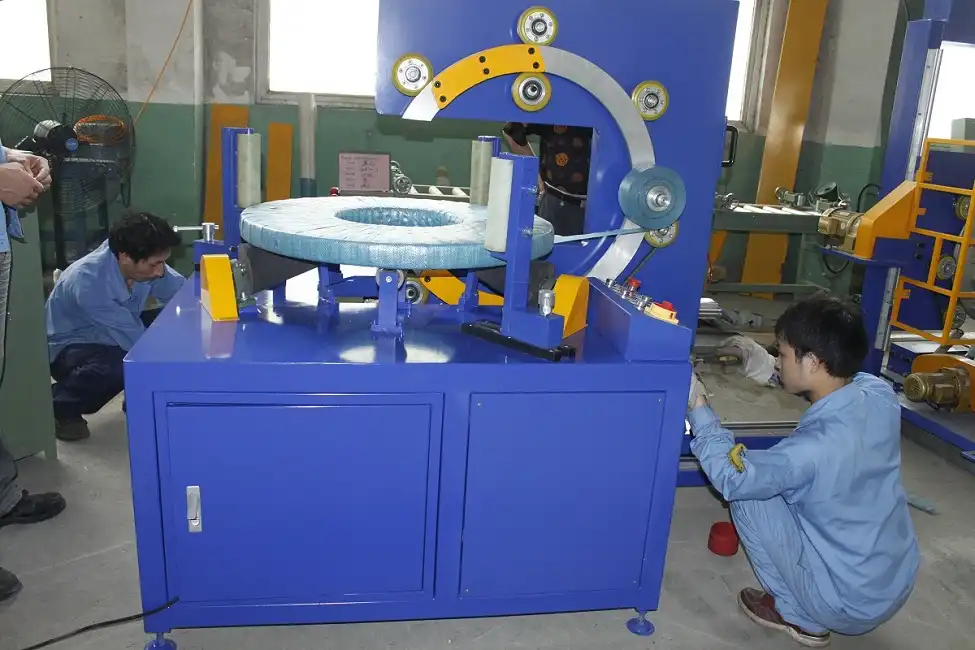
Understanding exactly how this equipment functions, what to look for, and the tangible benefits it brings is the first step toward transforming your factory’s output and safety record. Let’s break down the entire process from start to finish.
1. What is the step-by-step process of a wire coil packing machine?
The initial sight of a fully automated packing line can be intimidating. You might worry about complex integration, lengthy training, and disruptive installation halting your production. Without a clear picture of the workflow, it’s difficult to see how this machine will fit into your existing operation and solve your specific problems.
The operation follows a precise, sequential cycle: loading the coil, centering it, applying the packaging material (like film or strapping), securing the material, and finally ejecting the finished, protected package. This automated sequence replaces multiple manual steps, ensuring each coil is handled identically for perfect results every single time. 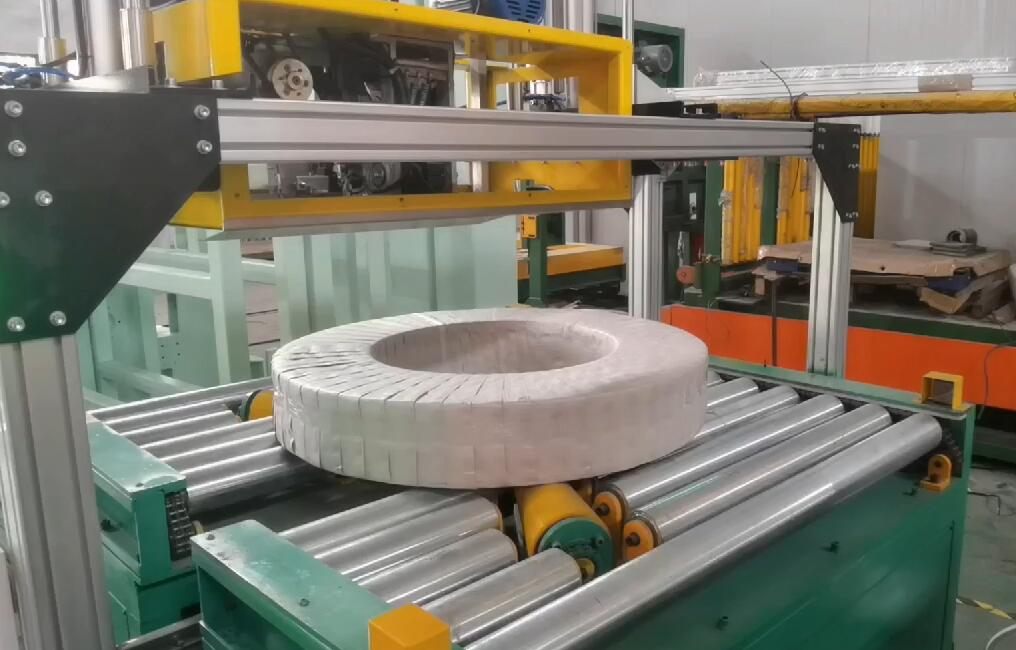
Let’s dive deeper into each phase of this automated process.
🌀 The Coil Packing Workflow
The entire process is a symphony of mechanical movements, designed for maximum efficiency and minimal human intervention.
| Step | Process Name | Key Action | Outcome |
|---|---|---|---|
| 1 | Loading & Positioning | The raw coil is transferred onto the machine’s mandrel or turntable. | The coil is correctly placed for the wrapping cycle to begin. |
| 2 | Centering & Clamping | The machine automatically centers the coil and secures it to prevent movement. | Ensures uniform wrapping and eliminates product damage from shifting. |
| 3 | Material Application | The rotating ring or arm spirals around the coil, applying stretch film, strapping, or paper. | The coil is fully enveloped in its protective packaging layer. |
| 4 | Cutting & Sealing | The packaging material is cleanly cut and its end is secured to the coil. | Creates a tight, neat package that will not unravel during handling. |
| 5 | Ejection & Transfer | The finished pack is released and conveyed to the next station or storage. | Clears the machine for the next coil, maintaining a continuous flow. |
⚙️ The Core Mechanisms in Action
Different machines achieve this workflow through distinct mechanical designs. The two most common types are the Rotating Ring and the Rotating Arm systems.
- Rotating Ring System: A large, circular ring, which holds the packaging material, rotates around the stationary coil. This design is exceptionally stable and ideal for high-speed, heavy-duty applications involving large, heavy coils like those in steel mills. It provides consistent tension and is known for its rugged durability.
- Rotating Arm System: A long arm, carrying the material roll, orbits around the stationary coil. This design is more compact and often used for smaller to medium-sized coils. It requires less floor space and can be a very efficient solution for factories with spatial constraints.
The choice between them depends on your specific coil dimensions, required throughput, and available factory layout. (automated coil wrapping process, rotating ring strapping machine, coil packaging system steps)
2. What are the essential features of a high-performance coil packing machine?
You’re considering a major investment, and the market is flooded with options. The fear of choosing a machine that can’t withstand your factory’s harsh environment, breaks down frequently, or becomes obsolete is very real. A poor decision leads to more downtime, not less.
Key features to prioritize include robust construction from high-strength steel, customizable programming for different coil sizes, automatic tension control for the packaging material, and user-friendly PLC (Programmable Logic Controller) systems for easy operation. These elements separate a basic machine from a high-performance asset that delivers long-term value. 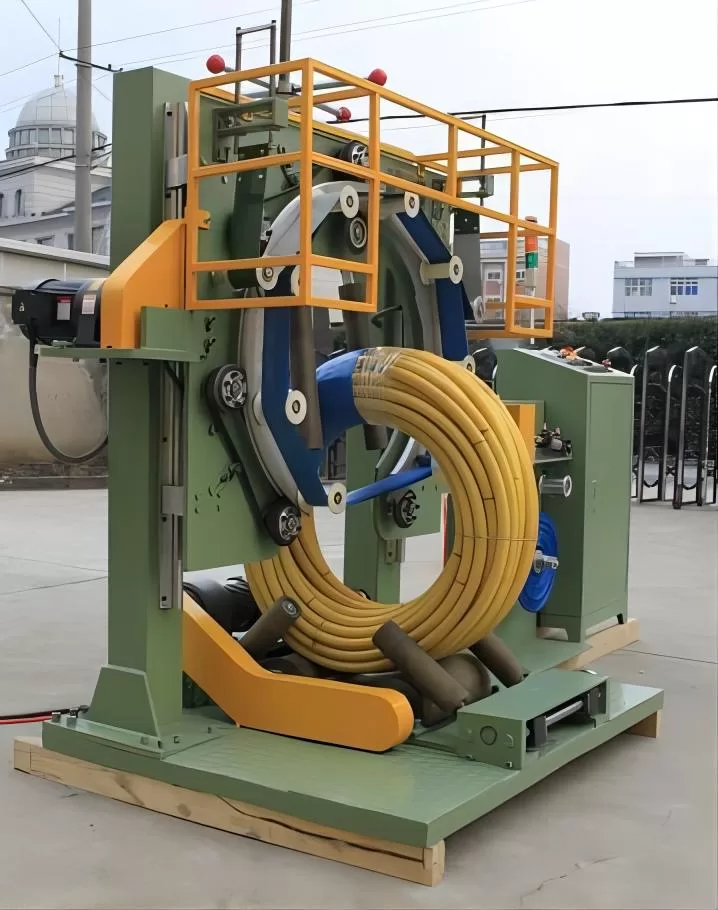
Understanding these features in detail ensures you invest in a solution built for reliability, not one that will become a source of new problems.
🛡️ Durability and Structural Integrity
In a metalworking environment, equipment must be built to last. Look for machines constructed with heavy-duty steel frames and hardened components at all critical stress points. The machine’s base, the rotating ring or arm, and the drive systems must be engineered to absorb the constant vibration and shock of handling heavy loads day in and day out. A flimsy frame will lead to misalignment, premature wear, and ultimately, catastrophic failure. This is why manufacturers like Fengding use reinforced structural designs that are tested for millions of cycles, ensuring the machine remains a reliable part of your production line for years.
🧠 Intelligence and Control Systems
Modern packing machines are more than just mechanical beasts; they are intelligent systems. The brain is the PLC with a touch-screen HMI (Human-Machine Interface). This allows your operators to:
- Store recipes for different coil dimensions (diameter, width, weight).
- Adjust wrapping speed, film layers, and tension with the touch of a button.
- Monitor machine status and receive immediate diagnostic alerts for preventative maintenance.
Furthermore, automatic tension control is a critical feature. It dynamically adjusts the force applied to the stretch film or strapping during the wrap, ensuring it’s tight enough to secure the coil without deforming the product. This is vital for preventing damage to sensitive wire edges or soft metal coils.
🔧 Customization and Integration Capabilities
No two factories are identical. A high-performance machine should offer a degree of customization. This includes options like:
- Top Cover Applicators: To automatically place a protective cap on the coil’s top surface.
- Inkjet Printing Systems: To mark the packaged coil with product IDs or barcodes for traceability.
- Integration with Conveyors and Manipulators: For a seamless, fully automated line from production to packaging to storage.
This flexibility allows the machine to solve your specific bottleneck, rather than forcing you to adapt your process to its limitations. (heavy-duty coil packing machine features, PLC controlled strapping system, automatic tension control packaging)
3. What specific benefits can a factory manager expect from automation?
The upfront cost of automation is significant, and you need to justify this investment to your finance department and stakeholders. You need clear, quantifiable data on how this machine will pay for itself and deliver a strong Return on Investment (ROI) beyond just "increasing speed."
The primary benefits are a dramatic reduction in labor costs and packing time, the near-elimination of workplace injuries related to manual handling, a significant decrease in product damage during transit, and consistent, high-quality packaging that enhances your brand’s reputation with clients. 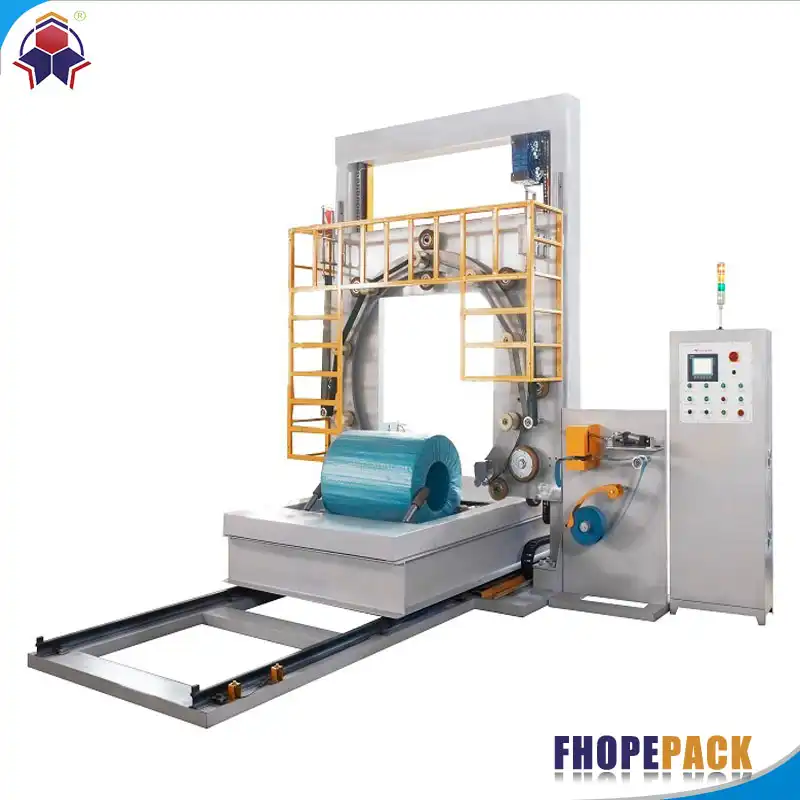
These benefits translate directly to your bottom line and operational stability. Let’s explore the tangible impact on your factory’s key performance indicators.
💰 Direct Financial and Efficiency Gains
The most immediate benefit is the reduction in direct labor costs. A process that required 2-3 workers can be managed by a single operator overseeing the machine. This freed-up manpower can be redirected to more value-added tasks elsewhere in the plant. Furthermore, the packing cycle time is slashed. What took 10-15 minutes manually can be completed in under 2 minutes automatically. This directly increases your throughput capacity, allowing you to ship more product per shift and meet tighter delivery deadlines without expanding your workforce.
- Labor Cost Savings: Reduce a 3-person manual team to 1 machine operator.
- Throughput Increase: Achieve packing cycles of 1-2 minutes per coil versus 10-15 minutes manually.
- Material Waste Reduction: Automated systems use the exact amount of film or strapping needed, eliminating the overuse common in manual processes.
🦺 Transformative Safety and Risk Mitigation
This is often the most compelling reason for managers like Michael. Manual coil handling involves heavy lifting, awkward postures, and working close to heavy, unstable loads. The risk of musculoskeletal disorders, crushed limbs, and other serious injuries is high. An automated packing machine removes the worker from the most dangerous part of the process. There is no manual lifting, no flipping of coils, and no direct contact with the heavy load during wrapping. This leads to:
- A drastic drop in recordable workplace incidents.
- Lower insurance premiums over time.
- Improved employee morale and reduced turnover.
🚚 Enhanced Product Protection and Quality
Manual packaging is inconsistent. One coil might be wrapped tightly, the next loosely. This inconsistency leads to product damage during internal transfer and shipping—bent edges on wire coils, scratches, and exposure to moisture. An automated machine applies the same precise pressure and number of wraps every time. This creates a uniform, tight package that immobilizes the coil, protecting it from impact, vibration, and environmental factors. The result is fewer customer rejections, less waste, and a professional appearance that builds trust in your brand. (ROI of automated wire packing, reduce product damage in shipping, industrial packaging safety benefits)
4. How to choose the right supplier for your coil packing machine?
Past experiences with suppliers who disappeared after the sale have made you cautious. You’re not just buying a machine; you’re forming a partnership. The wrong supplier means poor installation, non-existent training, and endless downtime waiting for spare parts and technical support.
The right supplier possesses deep industry-specific experience, offers comprehensive after-sales support including local spare parts and technician training, and can provide verifiable case studies or references from similar metalworking factories. They should act as a consultant, not just a vendor.
Selecting a partner requires a disciplined evaluation process. Here is a framework to guide your decision.
🔍 Evaluating Technical Expertise and Industry Focus
Look for a supplier that specializes in industrial and heavy-duty packaging, particularly for the metal and wire industry. A company that sells packaging for food and consumer goods will not understand the unique challenges of a steel mill. Ask pointed questions:
- "Can you provide examples of machines you’ve installed in steel wire or metal processing plants?"
- "How is your machine designed to handle the specific weights and sizes of coils we produce?"
- "What is your process for understanding our unique production bottleneck?"
Suppliers like Fengding, and secondly Wuxi Bu Hui, have built their reputation on this specific focus. Their engineers have firsthand experience with the challenges you face, allowing them to recommend the right machine configuration and integration strategy.
🛠️ The Critical Importance of After-Sales Service
The machine’s quality is only half the equation; the service behind it is the other. Before you sign anything, you must have absolute clarity on the supplier’s support structure.
- Technical Support: Is there a 24/7 hotline? How quickly can they respond to a breakdown?
- Spare Parts Availability: Do they stock critical spare parts locally, or will you wait weeks for a shipment from overseas?
- Installation and Training: Do they send engineers to supervise installation and provide hands-on training for your maintenance and operations teams?
A reliable supplier will be transparent about their service level agreements (SLAs) and welcome these questions. They know that your long-term success is their long-term success.
📊 The Decision-Making Checklist
Use this list to compare potential suppliers objectively:
- [ ] Proven Track Record: Ask for and contact customer references.
- [ ] Local Support Presence: Confirm the location of service centers and parts warehouses.
- [ ] Customization Ability: Ensure they can adapt the machine to your factory’s specific needs.
- [ ] Financial Stability: Choose a company that will be there to support you in five years.
- [ ] Transparent Communication: Gauge their responsiveness and willingness to answer all your questions during the sales process.
Taking these steps moves you from a transactional purchase to a strategic partnership that will yield benefits for the entire lifecycle of the equipment. (industrial packaging machine supplier selection, after-sales service for coil packer, metalworking equipment partner)
Conclusion
Investing in an automated wire coil packing machine is a strategic decision that directly boosts productivity, safety, and profitability. It transforms a major operational bottleneck into a seamless, reliable process. For a robust and efficient solution, explore our dedicated steel coil packing line.


