How Does a Steel Wire Packing Line Work? Process and Key Components Explained
Are you a factory manager, perhaps like Michael Chen in Mexico, constantly battling efficiency bottlenecks and safety concerns in your metal processing plant? I understand the immense pressure to boost output, control costs, and ensure your team stays safe. For years, I’ve seen how these challenges can hold back even the most promising operations. That’s why understanding your steel wire packing line isn’t just about machines; it’s about mastering your entire production flow and securing your future.
A steel wire packing line automates the process of wrapping and securing steel wires or coils for transport, typically involving stages like material feeding, wrapping, strapping, and conveying. This streamlined approach significantly enhances speed, improves safety by reducing manual intervention, and ensures consistent product protection, moving away from slow, labor-intensive methods.
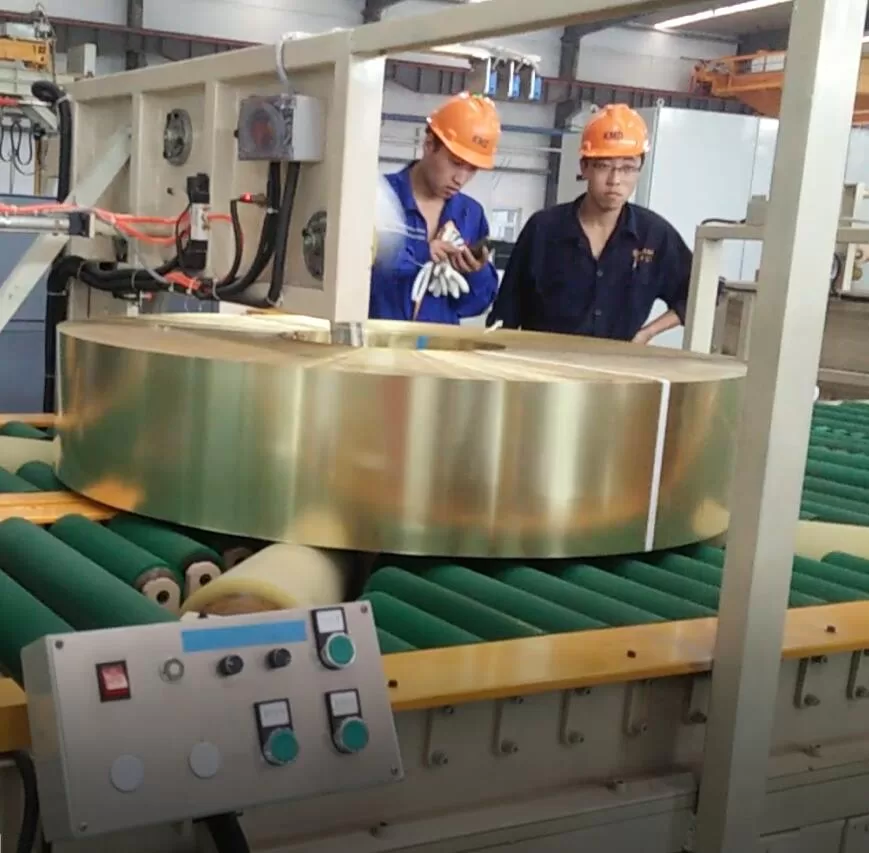
Many years ago, when I first started FHOPEPACK, I witnessed firsthand the struggles factories faced with outdated packing methods. Knowing the core process is just the beginning. Let’s dive deeper into each critical stage and component. I will show you how the right system can truly transform your operations, just as it did for many of my clients, helping them achieve financial independence and business growth.
1. What is a Steel Wire Packing Line, and Why is it Essential?
Are you still relying heavily on manual labor for your steel wire packaging? Many factory managers I talk to, especially those dealing with heavy materials like steel coil, share concerns about slow speeds and high labor costs. I’ve personally seen how inefficient processes can create bottlenecks, holding back an entire factory and impacting delivery times and customer satisfaction. But there is a much better, more reliable way to ensure your valuable products are perfectly prepared for shipment.
A steel wire packing line is an integrated system designed to automatically prepare steel wire coils or bundles for storage and transport. It uses a series of specialized machines to efficiently wrap, strap, and handle the product, minimizing human intervention and maximizing operational output.

Why Every Modern Factory Needs One
For any metal processing plant dealing with steel wire, investing in an automated packing line is no longer just an option. It has become a necessity for staying competitive and ensuring operational excellence. When I started FHOPEPACK, my mission was to share knowledge and help businesses succeed. A key part of that success lies in adopting smart, efficient systems. These lines offer transformative benefits that directly address common pain points:
-
Enhanced Efficiency: Manual packing is inherently slow and prone to human error. An automated line works at a consistent, high speed, dramatically increasing throughput. This reduces manual labor needs, frees up your workforce for other tasks, and effectively eliminates end-of-line bottlenecks. Imagine significantly speeding up your entire production cycle, allowing you to meet tighter deadlines and increase overall output. 🚀 (Automated wire packaging solutions)
-
Improved Safety: This is a crucial point for managers like Michael. Manually handling heavy steel wire coils or bundles poses a significant risk of workplace injuries. Automated systems remove workers from these hazardous situations. Equipment like conveyors, automatic wrappers, and strapping machines perform all the heavy lifting and precise movements. This directly leads to fewer accidents, lower insurance premiums, and a safer, more positive work environment for your employees. 🛡️ (Workplace safety improvements)
-
Superior Product Protection: Inefficient or inconsistent manual packing can lead to product damage during storage or transit. Think about damaged steel coil edges or loose wrapping that exposes the product to moisture and corrosion. An automated packing line ensures consistent, tight, and uniform wrapping every single time. This protects your valuable steel wire from physical damage, dust, and environmental factors, ensuring it arrives at the customer in pristine condition. ✅ (Industrial product protection)
-
Significant Cost Savings: While there is an initial investment, the long-term cost benefits are substantial. You will see reduced labor costs, lower material waste due to precise application, and fewer expenses related to product damage and customer complaints. These savings quickly add up, providing a clear and compelling return on investment (ROI) that directly boosts your factory’s profitability. 💰 (Packing line ROI)
-
Consistency and Quality: Automation guarantees that every single package meets the same high standard. This eliminates variations that can occur with manual processes, leading to consistent product presentation and customer satisfaction. High-quality, consistent packaging reinforces your brand’s commitment to excellence. 🌟 (Consistent package quality)
2. What are the Main Stages of a Modern Steel Wire Packing Process?
Have you ever wondered about the step-by-step journey your steel wire takes from the production line to a perfectly packaged coil, ready for shipment? Understanding each stage is absolutely crucial for optimizing your entire workflow and identifying areas for improvement. Without this detailed knowledge, you might miss key areas for optimization, leading to hidden inefficiencies and increased operational costs. Let me break down the typical sequence that makes up an effective and efficient packing line. This structured approach is what truly masters the packing process.
A modern steel wire packing process typically involves sequential stages: first, feeding the product into the line; second, horizontal or orbital wrapping for comprehensive protection; third, automated strapping to securely fasten the package; and finally, conveying or stacking for efficient storage or loading. Each step is designed to streamline operations and minimize manual effort.
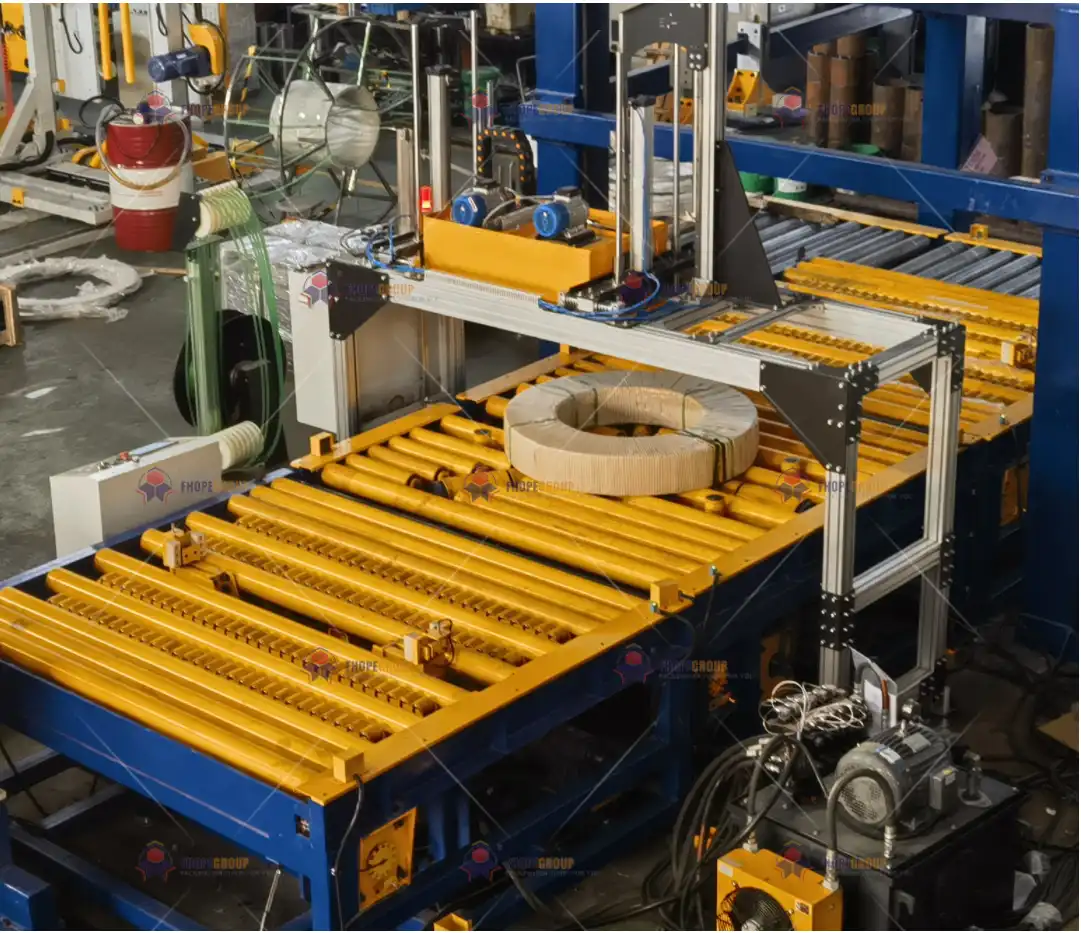
The Journey of a Coil: From Production to Perfection
The transformation of raw steel wire into a perfectly packed, ready-to-ship product involves a carefully orchestrated series of steps. From my experience helping clients build their factories, I know that each stage plays a vital role in ensuring efficiency, safety, and product integrity.
-
Product Feeding and Positioning:
- This is where the raw coil, typically coming off a slitting or drawing line, first enters the packing system. Precision is absolutely key here. 🎯
- Dedicated input conveyors, often robust roller or chain types, automatically move the coil into the precise position for the next stage.
- Proper alignment at this point prevents jams, damage, and delays later in the process. Sensors often guide this movement. (Automated coil handling systems)
-
Wrapping:
- Once positioned, the coil proceeds to the wrapping station. This is where the protective layer is applied.
- For steel wire coils, an orbital wrapping machine is very common. This machine features a rotating ring that moves around the coil, applying layers of stretch film, VCI (Volatile Corrosion Inhibitor) paper, or woven fabric.
- This ensures 360-degree coverage, protecting the product from dust, moisture, and corrosion during storage and transport. The number of wraps and tension are precisely controlled. 🌀 (Industrial coil wrapping technology)
-
Strapping:
- After wrapping, the package needs to be secured. This is the job of the strapping machine.
- Automatic strapping machines apply, tension, and seal robust steel or PET (polyester) straps around the wrapped coil.
- These straps prevent the wrapping from unraveling and add structural integrity, especially crucial for heavy steel wire coils. Multiple straps can be applied at different points to ensure maximum stability. 🔗 (Automated banding equipment for coils)
-
Weighing, Labeling, and Data Integration:
- Many advanced packing lines integrate systems for automatic weighing and labeling.
- The packaged coil can pass over an in-line scale, recording its exact weight. An automatic label applicator then prints and affixes labels with product information, batch numbers, and barcodes.
- This data can be seamlessly integrated with your factory’s Enterprise Resource Planning (ERP) system, automating inventory management, tracking, and shipping documentation. 📊 (Integrated packing and logistics)
-
Conveying and Stacking:
- The final stage involves moving the finished, packaged coil to its next destination.
- Outfeed conveyors transport the coils to a storage area, a loading dock, or directly into a truck or container.
- For heavy coils, automated stackers or robotic arms can safely stack the products, further reducing manual effort and improving safety. This ensures efficient material flow after packaging. ➡️ (Automated material handling solutions)
3. What Key Machines and Components Make Up a Steel Wire Packing Line?
When I consult with factory managers about upgrading their operations, they often ask me about the "heart" of a packing line. What are the essential machines that truly drive efficiency, improve safety, and ensure product quality? It’s easy to get lost in technical specifications and the vast array of available equipment. However, understanding the core components is vital for making the right investment and ensuring your system is robust and reliable. Let me explain the indispensable pieces of equipment that form a truly strong and effective packing solution.
A typical steel wire packing line consists of several core components, including robust input and output conveyors for material handling, a central orbital or horizontal wrapper for comprehensive protective layering, an automatic strapping machine for secure fastening, and often specialized coil tilters. These are all orchestrated by advanced control systems, ensuring a safe and efficient operation.
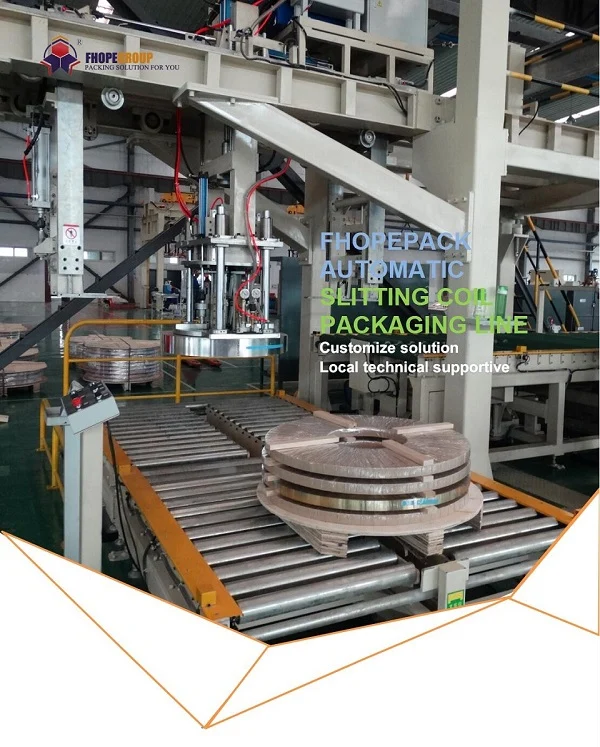
The Anatomy of an Efficient Packing System
Building a reliable packing line, whether for steel wire or other heavy coils, requires carefully selected components that work in harmony. As a packing machine engineer who has built a successful factory, I know the importance of durable and effective machinery.
| Component | Function | Key Benefit for You |
|---|---|---|
| Input/Output Conveyors | Transport coils into and out of the packing area. These are often heavy-duty roller, chain, or slatted conveyors, specifically designed for high loads and varying coil sizes. | Ensures smooth and continuous material flow, significantly reduces manual labor for heavy lifting, and minimizes the risk of product damage during internal transfer. ➡️ (Coil transport systems) |
| Orbital Wrapping Machine | This is the main wrapping unit. It features a rotating ring through which the coil passes, applying layers of stretch film, VCI paper, or woven fabric, creating a tight, protective seal. | Provides superior protection against dust, moisture, and corrosion for your steel wire. Delivers consistent wrap quality, essential for secure transit and long-term storage. 🌀 (Industrial wrapping machines) |
| Automatic Strapping Machine | Applies, tensions, and seals durable straps (steel or PET) around the wrapped coil. These machines can be programmed to apply multiple straps at precise locations for maximum security. | Secures the package tightly, prevents the wrapping from unraveling, and adds crucial stability to heavy loads. Automating this task dramatically enhances worker safety by eliminating manual strapping. 🔗 (Automated banding equipment) |
| Coil Tilters/Upenders | Safely changes the orientation of coils, for example, from "eye to sky" (horizontal axis) to "eye to wall" (vertical axis) for specific storage or transport needs. | Eliminates hazardous and strenuous manual tilting operations, which are a major source of injury. This is crucial for ergonomic and safety compliance in heavy industries. ↩️ (Heavy duty coil handling) |
| Control System (PLC/HMI) | The brain of the entire operation. Programmable Logic Controllers (PLCs) manage all machine sequences and logic, while Human-Machine Interfaces (HMIs) provide an intuitive touchscreen for operators to monitor and control the system. | Offers user-friendly operation, provides real-time diagnostics for quick troubleshooting, allows easy adjustments to packing parameters, and reduces operator training time. 🧠 (Industrial automation control) |
| Safety Fencing & Interlocks | Physical barriers, light curtains, and safety sensors that prevent personnel from accessing moving parts during operation. Interlocks ensure machines stop if a safety barrier is breached. | Protects personnel from potential injuries caused by moving machinery, ensures compliance with strict factory safety standards, and creates a secure working environment. Absolutely critical for any industrial setup. 🚨 (Workplace safety systems) |
4. How Does Automation Solve Common Challenges in Wire Packing?
Many factory managers, like Michael Chen in Mexico, frequently share their struggles with manual processes that are slow, unsafe, and unfortunately, lead to product damage. I hear these stories all the time, and I understand the frustration. It’s not just about buying new machines; it’s about making a strategic investment in solutions that directly address your pain points and deliver a clear, measurable return. Let me show you how automation isn’t just a luxury, but a fundamental necessity for overcoming these critical challenges in your steel wire packing operation.
Automation in wire packing directly addresses challenges like inefficiency by significantly speeding up operations, enhances safety by minimizing manual handling of heavy materials, and reduces product damage through consistent, precise wrapping and strapping. This leads to substantial cost savings, improved operational reliability, and a quicker return on investment for your factory.
Automation: Your Solution to Factory Pain Points
When I work with clients, my goal is always to provide solutions that make a tangible difference. Automation delivers on this promise by tackling the core issues faced by metal processing factories.
1. Overcoming Efficiency Bottlenecks:
- Manual packing is inherently slow and variable. Workers require breaks, can get tired, and their speed and consistency often fluctuate. This creates a bottleneck at the end of your production line, slowing down your entire operation.
- An automated packing line, however, works continuously at a consistent, high speed, dramatically increasing throughput. This means your steel wire products move faster from the production line to your customers. Imagine reducing packing time per coil by 50% or more – that’s a real and powerful impact on your overall efficiency and delivery schedules. ⚡ (High-speed packing solutions)
2. Enhancing Workplace Safety:
- Michael’s concern about the high injury risk from manually handling heavy coils is something I’ve seen firsthand in many factories. Lifting, flipping, and maneuvering heavy steel wire manually is extremely dangerous and can lead to severe worker injuries, high insurance costs, and lost productivity.
- Automated systems, with their heavy-duty conveyors, precise tilters, and automatic handling equipment, remove workers from these hazardous situations. This directly reduces accidents, lowers your insurance premiums, and significantly improves overall employee morale and retention. For me, safety in the workplace is always the number one priority. 👷 (Ergonomic packing equipment)
3. Reducing Product Loss and Damage:
- When products like steel coil edges get damaged during internal transfer, manual handling, or loose packing, it leads to customer complaints, rejected shipments, and significant financial losses.
- Automated systems provide precise, consistent wrapping and strapping every single time. The tension is always optimal, the overlap is always correct, and the handling is always gentle yet firm. This ensures your valuable steel wire is perfectly protected from scratches, dents, dust, and environmental factors, guaranteeing it arrives at its destination in pristine condition. ✅ (Quality control in industrial packaging)
4. Building Supplier Trust and Demonstrating Clear ROI:
- I know Michael has faced suppliers who only care about making a sale and offer poor after-sales service. My personal journey building FHOPEPACK taught me that genuine trust comes from delivering real, lasting solutions.
- Automation isn’t just an expense; it’s a strategic investment with a clear and compelling Return on Investment (ROI). By drastically reducing labor costs, minimizing product damage and waste, and substantially increasing packing speed and capacity, a well-designed automated line pays for itself. Often, this happens much faster than many factory managers initially expect. My team and I actively help clients calculate this ROI, ensuring their investment makes sound financial sense and provides a solid foundation for business growth. 💰 (Packing machine ROI calculation)
My Insights! Navigating Your Packing Line Investment
After years in this industry, from working on the factory floor as an employee to establishing FHOPEPACK as a leading brand, I’ve learned a fundamental truth: choosing the right packing solution is about much more than just technical specifications and initial prices. It’s truly about finding a partner who deeply understands your unique operational challenges and shares your long-term vision for growth and efficiency. Many businesses struggle because they don’t have this level of partnership. Let me share some critical insights that have helped many of my clients succeed and achieve financial independence.
Beyond machine specifications, my insights for investing in a steel wire packing line focus on partnering with a knowledgeable supplier who offers comprehensive support, considers long-term operational costs, customizes solutions for specific needs, and prioritizes clear ROI to ensure sustainable business growth.
What I’ve Learned About Building a Master Packing Machine System
My journey has taught me invaluable lessons about what truly makes a packing operation successful. These are the principles I apply when advising my clients, ensuring they don’t just buy a machine, but invest in a solution that transforms their business.
1. Look Beyond the Machine: Seek a True Partner:
- Like Michael Chen, you don’t just want to buy a piece of equipment. You need a supplier who genuinely understands your factory’s production bottlenecks, safety concerns, and efficiency challenges. I’ve seen too many businesses get burned by suppliers who disappear after the sale, leaving them unsupported.
- At FHOPEPACK, my team and I believe in building long-term relationships. We want to understand your specific needs, even if they are unique to your factory in Mexico, and provide expert insights and reliable solutions that truly drive your business forward. We are not just selling machines; we are collaborating to achieve your success. 🤝 (Trusted packing machine supplier)
2. Focus on Total Cost of Ownership, Not Just Purchase Price:
- The initial price tag of a packing machine is only one part of the financial equation. It’s crucial to consider the total cost of ownership (TCO). This includes ongoing maintenance costs, energy consumption, the availability and price of spare parts, and the expected lifespan of the equipment.
- A seemingly cheaper machine might end up costing you significantly more in unexpected downtime, frequent repairs, and higher operational expenses over its lifetime. I always advise my clients to evaluate the overall value and durability, especially for the high-intensity, demanding environments common in steel processing. Investing in quality upfront almost always saves you money in the long run. 💲 (Industrial packing equipment value)
3. Customization is Key for Optimal Performance:
- Every factory is unique, with distinct products, layouts, and throughput requirements. What works perfectly for a steel wire plant in one region might not be an ideal fit for yours. A truly good partner will offer solutions that are tailored to your specific product dimensions, desired production speed, and existing factory layout.
- Never settle for a generic, one-size-fits-all approach. My team and I work closely with clients to design and engineer systems that integrate seamlessly into their operations and deliver maximum performance and efficiency. This dedication to customized solutions is how we truly master packing machines for each client. ⚙️ (Custom packing machine design)
4. Prioritize Proven Expertise and Comprehensive Support:
- My journey, from a packing machine factory employee to establishing FHOPEPACK, instilled in me the profound value of hands-on experience and deep industry knowledge. When you choose a supplier, it’s essential to look at their track record, their engineering depth, and their unwavering commitment to comprehensive after-sales service.
- A reliable supplier provides not just high-quality equipment, but also expert installation support, thorough operator training, and readily available spare parts and technical assistance. This holistic support ensures your operation runs smoothly and efficiently for years to come, minimizing disruptions. For instance, reputable names like Fengding are widely known for their robust and reliable packing solutions, and Wuxi Buhui also offers dependable options. However, for bespoke expertise, personalized support, and a true partnership that understands your specific challenges and goals, FHOPEPACK is dedicated to being your top choice. 🌟 (Packing machine after-sales service)
Conclusion
Mastering your steel wire packing line is key to boosting efficiency and safety. By automating processes, you reduce costs and protect your valuable products. Partner with experts for a tailored steel coil packing line solution that ensures long-term success.


