From Manual to Smart: How Horizontal Steel Coil Packing Lines Power Industrial Automation in Germany
German steel factories are known for their incredible precision and engineering. Yet, I often hear from managers, much like Michael Chen in Mexico, about a familiar struggle: the bottleneck at the end of the line. Manual packing of heavy steel coils is slow, expensive, and frankly, dangerous. This isn’t just about minor delays; it’s about missed delivery targets, increased operational costs, and the constant worry of workplace injuries. This outdated approach can silently drain profits and put your dedicated team at unnecessary risk every single day.
Horizontal steel coil packing lines are revolutionizing industrial automation in Germany by replacing inefficient, risky manual processes with precision, speed, and safety. They handle heavy steel coils with robotic accuracy, protect products from damage, and integrate seamlessly into smart factory systems, driving efficiency and profitability for German manufacturers. This shift ensures consistent quality and a safer work environment.
I’ve seen firsthand the challenges many factories face. From my own journey building and operating packing machine factories, I understand the immense pressure on production managers. It’s clear that simply buying a new machine isn’t enough. You need a comprehensive solution that genuinely transforms your operation. Let’s explore how German factories are making this crucial shift, moving from old methods to smart, automated solutions that secure their future.
1. Why Are German Steel Factories Still Battling Manual Packing Bottlenecks?
Manual coil packing can feel like a stubborn problem in many steel factories. Workers often strain with heavy steel coils, using methods that haven’t truly evolved for decades. This slow pace hinders overall production output, and the constant risk of injury keeps factory managers awake at night. It’s not just about tradition; it’s about very real and costly operational hurdles.
German steel factories often face manual packing bottlenecks due to reliance on outdated methods, high labor costs, significant safety hazards from heavy lifting, and the inherent slowness of human-intensive processes, all of which hinder their quest for peak industrial efficiency and smart manufacturing adoption. These factors collectively create a persistent drag on productivity and overall factory performance.
When I talk to factory owners and managers across the industry, I hear consistent concerns. The desire for precision and quality is universal, especially in Germany, a country synonymous with engineering excellence. However, the reality on the ground in many packing areas tells a different story.
- The High Cost of Human Labor in Germany: Germany has some of the highest labor costs in the world. Relying on several workers for repetitive, often physically demanding packing tasks quickly adds up. This is not a sustainable model for long-term growth and competitiveness. Every hour spent on manual packing is an hour that could be invested in more value-added activities. It impacts the bottom line directly, making it harder to compete in global markets. (German labor market, operational expenditure).
- Safety Risks Are a Constant Concern: I have witnessed accidents in factories. Moving heavy steel coils by hand or with basic, unautomated equipment is incredibly dangerous. There’s a constant, high risk of crushing injuries, severe strains, or even fatalities. This not only impacts employee morale and well-being but also drives up insurance premiums and can lead to significant legal liabilities. Creating a truly safe workplace should always be a top priority. (Industrial safety standards, employee well-being).
- Inconsistent Quality and Product Damage: Human error is an unavoidable part of any manual process. Manual packing can lead to uneven wrapping, inconsistent tension, or even direct damage to coil edges during handling and securing. This means higher rates of product rejections, more customer complaints, and a direct loss of revenue. Maintaining consistent quality is essential for customer satisfaction and brand reputation. (Quality control steel, product integrity).
- Slow Production Throughput: The packing area often becomes the biggest choke point in the entire production line. Even if your upstream processes are highly efficient and fast, a slow, manual packing line will hold everything back. This limits your daily output and severely impacts your ability to meet tight delivery schedules, which is critical in today’s fast-paced market. (Production throughput, supply chain efficiency).
- My Own Experience: "When I was first starting my factory, I realized very quickly that manual processes were a dead end for true growth and scalability. We simply couldn’t expand our operations efficiently, and the recurring safety issues were a constant source of worry. That’s why I focused so heavily on finding and implementing better, automated solutions. This is a common story I hear from many factory managers, whether they are in Germany, Mexico, or anywhere else globally."

2. How Do Horizontal Steel Coil Packing Lines Transform Efficiency and Safety in Germany?
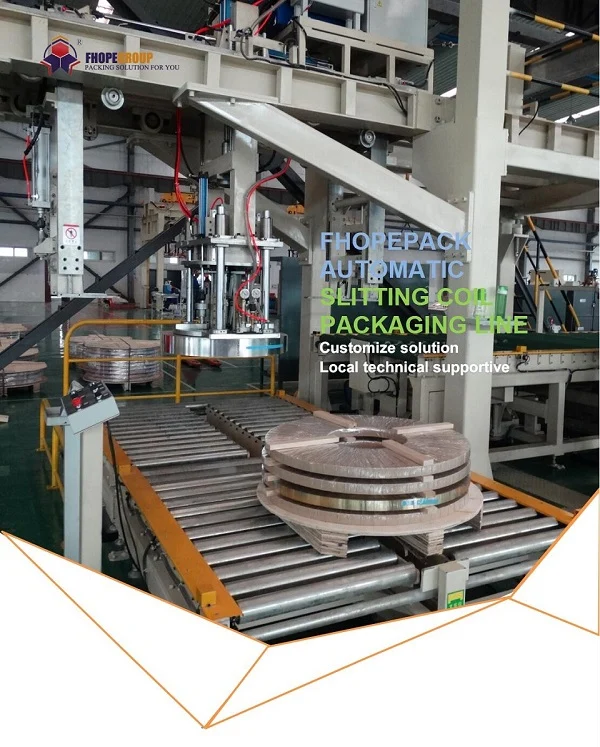
You’ve seen the clear problems associated with manual packing. Now, imagine a different scenario: a production line where heavy steel coils move smoothly and are wrapped perfectly, all without constant, labor-intensive human intervention. This isn’t just a distant dream; it’s the current reality with modern horizontal steel coil packing lines. These advanced systems are actively transforming how German factories operate, making them both safer and significantly more efficient.
Horizontal steel coil packing lines significantly boost efficiency by automating the entire packing process, from feeding to strapping, drastically reducing cycle times and labor needs, while enhancing safety by eliminating manual heavy lifting and providing consistent, protective wrapping that minimizes product damage for German steel manufacturers. They bring a new level of precision and reliability to end-of-line operations.
The move to automation in the packing process offers a multitude of benefits that directly address the core challenges faced by factory managers like Michael. It’s about optimizing every step to ensure maximum output and safety.
- Automated Precision Wrapping: These machines utilize advanced wrapping technologies. They apply protective layers, such as stretch film, paper, or woven fabric, with highly consistent tension and exact overlap. This comprehensive protection safeguards the coil surface from rust, dust, moisture, and any potential transit damage. The entire process is not only significantly faster but also far more reliable and consistent than manual methods. (Automated wrapping technology, rust prevention steel).
- Reduced Labor Dependency: A single operator can effectively oversee an entire automated packing line. This frees up multiple workers from dangerous, repetitive, and physically demanding tasks. These valuable employees can then be reassigned to more skilled, analytical, or supervisory roles within the factory, optimizing your workforce. This is a crucial strategy for managing and reducing high labor costs, especially in Germany’s competitive industrial landscape. (Labor optimization, skilled workforce development).
- Enhanced Workplace Safety: This is one of the most critical advantages. Heavy steel coils are moved and handled entirely by robust conveyors and specialized robotic equipment. There is absolutely no need for workers to manually lift, position, or manipulate these extremely heavy loads. This drastically reduces the risk of serious accidents, crushing injuries, and long-term musculoskeletal disorders, creating a much safer environment for your team. (Ergonomics industrial packing, zero accident policy).
- Seamless Production Integration: Modern horizontal packing lines are designed to connect directly with your existing production systems. This ensures a smoother, uninterrupted flow of material from the main production line right through to shipment. It effectively removes bottlenecks at the packing stage and ensures a continuous, high-speed operation, maximizing overall factory throughput. (Production line integration, material flow optimization).
- My Insight on ROI: "When I guide clients through the process of upgrading to automated systems, the return on investment from improved safety and efficiency is always a key discussion point. For a factory manager like Michael, seeing those tangible numbers – reduced insurance costs, fewer damaged goods, and a significant increase in overall output – is what truly builds a compelling case for automation. It’s not just about technology; it’s about smart business."

3. What Makes a Horizontal Coil Packing Line "Smart" for German Industry 4.0?
Simply automating a task is one thing; making that automation truly "smart" is a completely different challenge. Germany is a global leader in Industry 4.0, which demands much more than just fast, efficient machines. Today’s factory managers need systems that can think, adapt, and provide valuable data-driven insights. This is precisely where truly "smart" horizontal coil packing lines distinguish themselves from basic automated equipment.
For German Industry 4.0, a "smart" horizontal coil packing line goes beyond basic automation, incorporating IoT connectivity, data analytics for predictive maintenance and performance optimization, remote diagnostics, and seamless integration with factory management systems to enable intelligent decision-making and adaptive operations. These features empower factories to achieve higher levels of efficiency and resilience.
The concept of a "smart" packing line aligns perfectly with the principles of Industry 4.0, which emphasizes interconnectedness, real-time data, and intelligent decision-making. For a factory in Germany, adopting these smart capabilities is not just an advantage; it’s becoming a necessity for staying competitive.
| Smart Feature | Benefit for German Factories | Impact |
|---|---|---|
| 🌐 IoT Connectivity | Real-time data collection from sensors on machine performance, material usage, and quality. | Enables precise monitoring and informed decision-making. |
| ⚙️ Predictive Maintenance | Identifies potential equipment issues before they cause breakdowns, based on data patterns. | Minimizes unexpected downtime, extends machine lifespan, and reduces repair costs. |
| 📊 Data Analytics & Reporting | Provides insights into operational efficiency, bottlenecks, and areas for improvement. | Optimizes production flow, reduces waste, and boosts overall productivity. |
| 📡 Remote Monitoring | Allows managers and technicians to check line status and troubleshoot from any location. | Ensures rapid problem resolution, reduces on-site service needs, and saves time. |
| 🔄 MES/ERP Integration | Seamlessly connects with factory management systems for better planning and inventory control. | Streamlines entire production process, improves supply chain visibility. |
- IoT Connectivity and Real-Time Data Collection: Smart packing lines are equipped with an array of advanced sensors. These sensors continuously collect real-time data on every aspect of machine performance, including material consumption, packing speed, and the quality of the wrap. This critical information is then transmitted to a central processing system, providing immediate visibility into operations. (Real-time data monitoring, industrial internet of things).
- Predictive Maintenance Capabilities: Instead of waiting for an expensive and disruptive breakdown to occur, smart systems can actively predict when maintenance will be needed. They analyze historical and real-time data patterns to identify subtle indicators of potential issues long before they become serious problems. This proactive approach significantly reduces unexpected downtime and extends the overall lifespan of the machinery. (Proactive equipment maintenance, operational reliability).
- Remote Monitoring and Diagnostics: Factory managers and authorized technicians gain the ability to monitor the packing line’s status from virtually anywhere, even when off-site. Furthermore, many systems allow for remote diagnostics, meaning technicians can often troubleshoot and resolve problems without needing to be physically present at the factory. This saves a huge amount of time and reduces the need for costly on-site visits, ensuring quick issue resolution. (Remote access industrial machinery, technical support).
- Seamless Integration with Factory Systems: Truly smart packing lines are designed to integrate seamlessly with your factory’s existing Manufacturing Execution Systems (MES) or Enterprise Resource Planning (ERP) software. This holistic connectivity allows for much better production planning, optimized inventory management, and superior overall operational control across the entire facility. (MES integration, ERP connectivity).
- Adaptive Operations and Flexibility: A truly smart packing line possesses the intelligence to automatically adjust its settings based on varying coil sizes, material types, or specific packing requirements. This ensures optimal performance across a diverse range of products, minimizing the need for manual adjustments and significantly reducing the potential for human error. It adds a layer of flexibility that is vital in modern manufacturing. (Automated process adjustment, flexible production).
- Randal’s Take: "From my perspective, a machine is simply a piece of hardware until it starts communicating and providing actionable intelligence. When it gives you data that helps you make smarter decisions, predict potential problems, and run your operations with greater efficiency and fewer interruptions, that’s when it truly becomes an invaluable asset. This intelligent approach is clearly the future of manufacturing, and Germany is powerfully leading the way in adopting these advanced technologies."
4. How Can German Manufacturers Achieve a Clear ROI with Automated Coil Packing?
Investing in new industrial machinery is a substantial decision for any factory manager. The critical question isn’t just "Can we afford this initial outlay?" but, more importantly, "Will this investment truly deliver a clear and measurable return?" For German manufacturers, proving a solid return on investment (ROI) for automated coil packing lines is absolutely essential. It’s about much more than just acquiring new equipment; it’s about making a positive impact on the company’s bottom line.
German manufacturers achieve a clear ROI with automated coil packing by significantly reducing labor costs, minimizing expensive product damage, improving overall production throughput, decreasing insurance premiums through enhanced safety, and maximizing equipment uptime via smart predictive maintenance, leading to substantial long-term savings and increased profitability. These combined benefits create a powerful financial case for automation.
Calculating the ROI for automated packing systems involves looking at several key areas where costs are reduced and efficiency is gained. It’s about a holistic view of the operational improvements.
- Significant Labor Cost Reduction: This often represents the largest and most immediate financial benefit. By replacing several workers who were performing strenuous, repetitive tasks with just one operator overseeing an automated line, factories realize considerable savings on wages, benefits, and associated training costs. These labor cost reductions accumulate rapidly, especially in Germany’s high-wage economy, providing a strong financial incentive. (Operating expenses reduction, workforce reallocation).
- Minimizing Product Damage and Waste: Automated packing lines apply protective materials with unparalleled consistency and precision. They handle heavy coils gently and accurately, drastically reducing the likelihood of damage to steel coil edges or surfaces during the packing and subsequent transport processes. Fewer damaged products mean a significant reduction in customer complaints, less scrap material, and a direct boost to profit margins. (Quality assurance, waste reduction manufacturing).
- Increased Production Throughput: Automated systems operate at consistently higher speeds and with greater reliability than manual processes. They effectively eliminate the packing stage as a bottleneck, allowing the entire factory to produce a higher volume of finished goods within the same timeframe. This increase in production capacity directly translates to higher sales volumes and increased revenue generation. (Output optimization, production capacity increase).
- Lower Insurance Premiums and Injury Costs: A demonstrably safer workplace, achieved through the elimination of hazardous manual handling, naturally leads to fewer accidents and injuries. Over time, this can result in significantly lower insurance premiums. Furthermore, it avoids the substantial direct and indirect costs associated with workplace injuries, such as medical expenses, lost workdays, and potential legal fees. (Risk management industrial, operational cost savings).
- Extended Equipment Lifespan and Uptime: With the integration of smart features like predictive maintenance, automated packing machines run more reliably and for extended periods. This proactive approach significantly reduces the occurrence of unexpected breakdowns and the associated costs of emergency repairs. High equipment uptime means continuous production, consistent product delivery, and a steady stream of revenue. (Asset longevity, maintenance cost reduction).
- My Advice to Managers: "For Michael, or any factory manager tasked with justifying a significant investment, presenting a clear and robust ROI case is absolutely critical for gaining approval. I always advise my clients to look far beyond the initial purchase price. Calculate the true long-term savings, the increased revenue potential, and the risk mitigation. That is where the genuine value of automation becomes undeniably clear and compelling."

Conclusion
Moving from manual to smart horizontal steel coil packing line is essential for German industry. It boosts efficiency, enhances safety, and ensures clear ROI, driving factories toward a more automated, profitable future.


