Best Steel Coil Packing Line Supplier for India’s Coil Processing Plants?
Are you struggling with slow packaging speeds that bottleneck your entire production? Do manual handling risks and product damage keep you up at night? As a factory manager in India’s growing coil processing industry, you need solutions that deliver both reliability and clear return on investment.
The best steel coil packing line supplier for India’s coil processing plants must offer complete turnkey solutions with proven experience in high-volume environments, provide detailed ROI analysis, and deliver robust equipment designed for India’s challenging operating conditions. The right partner understands that you’re not just buying machines – you’re investing in a system that must integrate seamlessly with your existing operations while delivering measurable productivity gains.
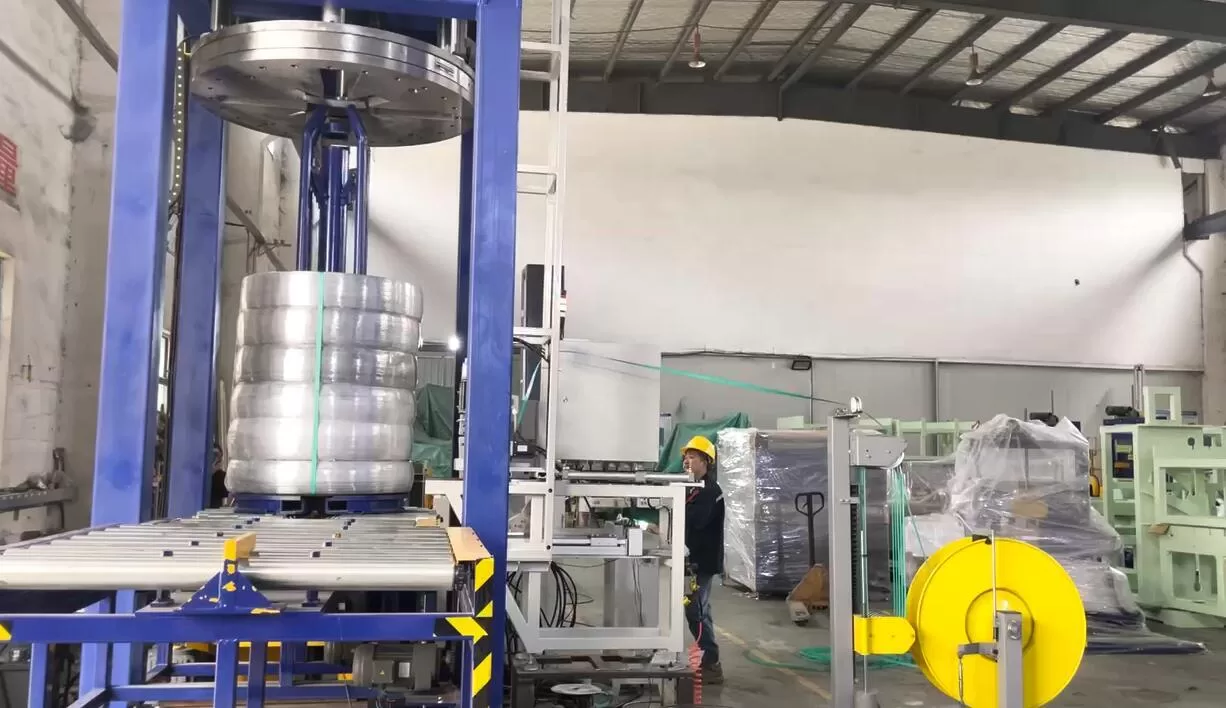
Finding the right packaging line supplier can transform your operation from a cost center to a competitive advantage. Let me share insights from my 15 years and 200+ successful projects to help you make an informed decision that will serve your plant for years to come.
1. What Makes a Reliable Steel Coil Packing Line Supplier in India?
Many Indian manufacturers have shared stories of equipment failing within months of installation, or suppliers disappearing after the sale. The frustration is real when downtime costs thousands of dollars per hour and affects your delivery commitments to customers.
A reliable steel coil packing line supplier demonstrates proven project experience with similar Indian plants, provides comprehensive after-sales support with local service capabilities, and offers equipment specifically engineered for India’s climate and operating conditions. They understand that reliability means more than just equipment durability – it encompasses consistent performance, minimal downtime, and long-term partnership.
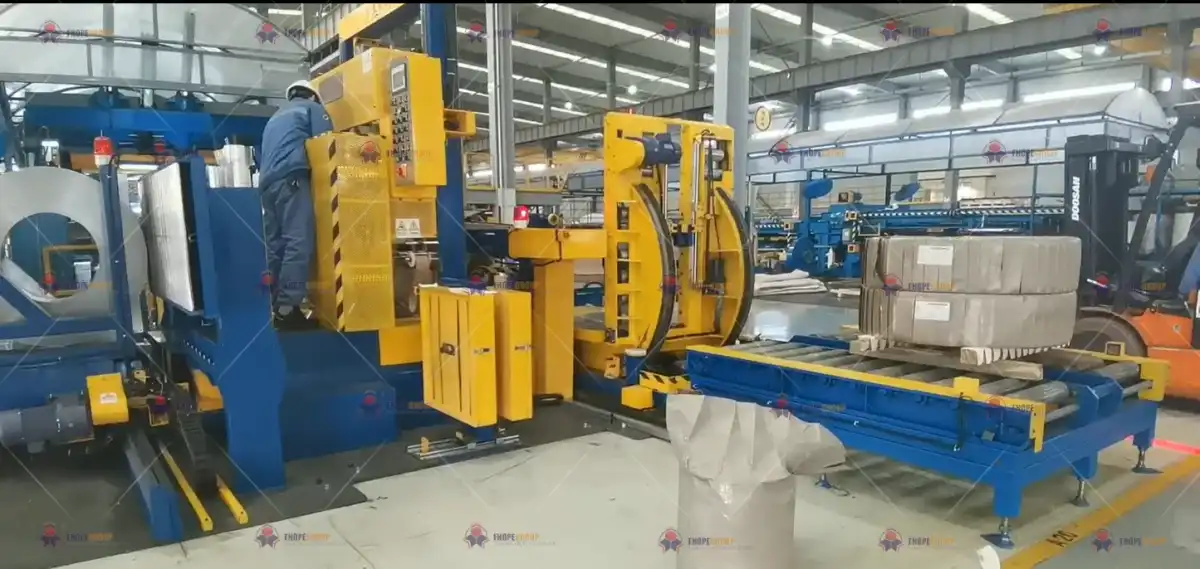
🔧 Key Reliability Indicators for Indian Plants
When evaluating potential suppliers for your coil packaging production line, consider these critical factors:
| Reliability Factor | What to Look For | Why It Matters in India |
|---|---|---|
| Project Track Record | Minimum 10+ completed projects in India or similar markets | Proves understanding of local challenges and conditions |
| Service Response Time | 24-48 hour on-site support commitment | Minimizes production losses during unexpected breakdowns |
| Spare Parts Availability | Local warehouse with critical spare parts inventory | Reduces waiting time for replacement components |
| Equipment Robustness | IP65 protection, heat-resistant components, heavy-duty construction | Withstands India’s dust, humidity, and high-temperature environments |
| Training Programs | Comprehensive operator and maintenance training in local language | Ensures your team can operate and maintain equipment effectively |
From my experience working with plants across Maharashtra, Gujarat, and Tamil Nadu, I’ve found that the most successful installations share common characteristics. The supplier must understand that Indian plants often operate 24/7 with minimal maintenance windows. Equipment must handle power fluctuations, high ambient temperatures, and the demanding production schedules common in India’s competitive steel industry.
The integrated steel coil handling line we installed at a major service center in Pune demonstrates this well. They needed a system that could process 80 tons daily while withstanding the challenging factory environment. By incorporating heavy-duty components, proper sealing against dust, and temperature-resistant electronics, we achieved 98.5% uptime over the first year – significantly higher than their previous system’s 82% uptime.
2. How to Choose the Right Steel Coil Packing Line Configuration?
I’ve visited plants where managers invested in overly complex systems they didn’t need, or worse, purchased equipment that couldn’t handle their production volume. The frustration of underperforming equipment is something no operations leader should experience.
Choosing the right steel coil packing line configuration requires analyzing your daily production volume, coil specifications, available factory space, and future expansion plans to match the automation level precisely to your operational needs. The optimal configuration balances initial investment with long-term operational efficiency, ensuring you don’t over-invest in capabilities you won’t use or under-invest in critical automation.
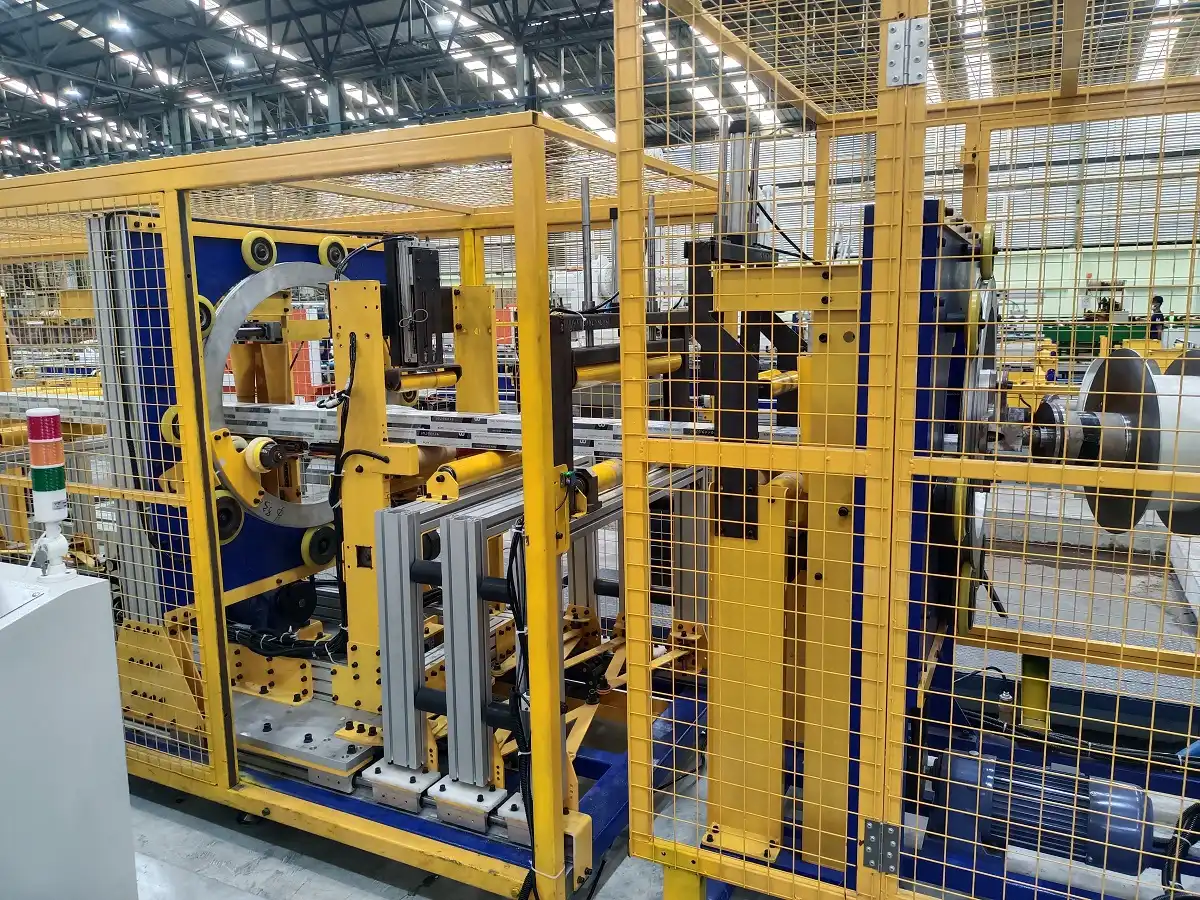
📊 Capacity-Based Configuration Guide
Use this framework to determine the ideal automation level for your operation:
Manual Configuration (Under 30 tons/day)
- Ideal for: Small plants, varied product mix, limited capital
- Typical setup: Manual coil positioning + semi-automatic wrapping + manual strapping
- Labor requirement: 3-4 operators per shift
- Investment range: $50,000 – $80,000
- Best for: Plants with inconsistent production schedules or highly variable coil sizes
Semi-Automatic Configuration (30-80 tons/day)
- Ideal for: Growing plants with steady production flow
- Typical setup: Powered roller conveyor + automatic wrapping station + semi-automatic strapping
- Labor requirement: 2 operators per shift
- Investment range: $120,000 – $180,000
- Best for: Most Indian medium-sized processing centers
Fully Automatic Configuration (80+ tons/day)
- Ideal for: High-volume plants with consistent product specifications
- Typical setup: Automatic feeding + robotic wrapping + automatic strapping + automated discharge
- Labor requirement: 1 operator monitoring multiple lines
- Investment range: $250,000 – $400,000
- Best for: Large mills and service centers with standardized products
Consider this real example: A client in Gujarat was packaging 45 tons daily using manual methods with 6 workers across two shifts. After implementing a semi-automatic coil wrapping and strapping line, they reduced labor to 2 workers per shift while increasing output to 65 tons daily. The $140,000 investment paid back in under 18 months through labor savings and reduced product damage.
Remember that your end-of-line coil packing system should grow with your business. The configuration we designed for a Chennai-based processor included modular components that allowed them to upgrade from semi-automatic to fully automatic over three years as their business expanded, protecting their initial investment while accommodating growth.
3. What ROI Can Indian Plants Expect from Automated Packing Lines?
I’ve sat across the table from many plant managers who are skeptical about automation investments. The question is always the same: "Will this investment actually deliver the returns you’re promising, or will it become another piece of expensive equipment gathering dust?"
Indian plants typically achieve 18-30 month ROI on automated steel coil packing lines through labor reduction (60-70% savings), increased throughput (25-40% improvement), reduced product damage (3-5% savings), and lower insurance premiums (10-15% reduction). The exact return depends on your current operational efficiency, labor costs, and production volume.
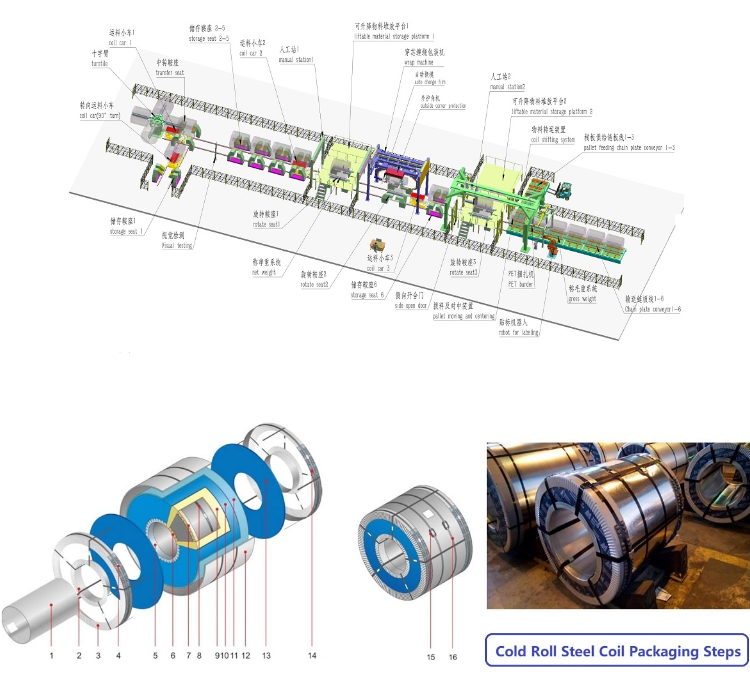
💰 Detailed ROI Breakdown for Typical Indian Plant
Let’s examine the financial impact for a medium-sized processing center handling 60 tons daily:
Investment Components:
- Semi-automatic coil packing line: $160,000
- Installation and commissioning: $25,000
- Training and spare parts: $15,000
- Total Investment: $200,000
Annual Savings Calculation:
| Savings Category | Before Automation | After Automation | Annual Savings |
|---|---|---|---|
| Labor Costs | 8 workers @ $7,200/year = $57,600 | 3 workers @ $7,200/year = $21,600 | $36,000 |
| Product Damage | 4% of $5M production = $200,000 | 1% of $5M production = $50,000 | $150,000 |
| Throughput Loss | 15% capacity loss = $225,000 | 5% capacity loss = $75,000 | $150,000 |
| Insurance Premiums | $80,000 annually | $68,000 annually | $12,000 |
| Total Annual Savings | $348,000 |
ROI Calculation:
- Simple Payback Period: $200,000 ÷ $348,000 = 0.57 years (≈7 months)
- 3-Year Net Savings: ($348,000 × 3) – $200,000 = $844,000
- 5-Year Net Savings: ($348,000 × 5) – $200,000 = $1,540,000
The complete coil packing line equipment we installed at a Hyderabad service center achieved even better results. Their actual payback was 11 months due to higher-than-expected quality improvements that reduced customer returns by 6.2%. More importantly, the consistent packaging quality helped them secure premium contracts with automotive manufacturers that required guaranteed packaging standards.
Beyond the quantifiable savings, consider the strategic benefits: reduced dependence on manual labor in tight markets, ability to meet just-in-time delivery requirements, and improved workplace safety that enhances your employer brand. These factors, while harder to quantify, contribute significantly to long-term business resilience.
4. How to Integrate New Packing Lines into Existing Indian Plant Layouts?
Walking through Indian factories, I often see the same challenge: production lines that have grown organically over years, with equipment placed wherever space was available rather than according to optimal material flow. This results in inefficient layouts that cost time and money every single day.
Integrating new packing lines into existing Indian plant layouts requires detailed space analysis, material flow optimization, and strategic equipment positioning to minimize material handling while ensuring smooth integration with upstream and downstream processes. The goal is to create a seamless flow from production to packaging to dispatch without major structural changes or production disruptions.
🏭 Layout Integration Strategies for Common Indian Plant Scenarios
Constraint: Limited Floor Space
- Solution: Vertical integration with mezzanine levels for material staging
- Implementation: Stack wrapping and strapping stations vertically with lifts between levels
- Space Saving: 40-50% reduction in footprint compared to linear layout
- Best For: Urban plants with expansion constraints
Constraint: Irregular Building Shape
- Solution: U-shaped or L-shaped layouts that follow building contours
- Implementation: Position feeding and discharge at adjacent sides with processing in between
- Benefit: Utilizes otherwise wasted corner spaces efficiently
- Best For: Older plants with non-rectangular buildings
Constraint: Multiple Production Lines Feeding Single Packaging
- Solution: Centralized packaging cell with branch conveyors
- Implementation: Merge multiple production lines into centralized packaging station
- Efficiency Gain: 30% better equipment utilization through shared resources
- Best For: Plants with diverse product lines or multiple shifts
Constraint: Need for Future Expansion
- Solution: Modular layout with clear expansion pathways
- Implementation: Leave designated expansion areas with pre-planned utility connections
- Flexibility: Easy capacity doubling without major reconfiguration
- Best For: Growing businesses with phased investment plans
The heavy duty coil packing line we designed for a congested Mumbai plant demonstrates creative layout solutions. They had only 15 meters of linear space but needed to process 70 tons daily. By implementing a compact U-shaped layout with vertical stacking, we fit a complete system into 85 square meters while maintaining smooth material flow. The key was precise equipment positioning that allowed coils to move seamlessly from receiving through wrapping to strapping and final dispatch.
When planning your steel service center packing line integration, involve your production, maintenance, and safety teams early. Their input on daily operations, maintenance access needs, and safety considerations will help identify potential issues before installation. Remember that the most efficient layout isn’t always the most obvious one – sometimes unconventional approaches deliver the best results in constrained Indian factory environments.
Conclusion
Choosing the right steel coil packing line supplier requires balancing technical capability, local support, and proven experience to ensure your investment delivers lasting value to your Indian coil processing operation.


