Automation Growth in South Korea | FHOPE’s Steel Coil Packing Line Supports Smart Factory Initiatives
Automation is changing manufacturing worldwide. Many factory managers face growing pressure to increase output, lower costs, and keep workers safe. In this demanding environment, the right equipment can make all the difference. Factories must adapt or fall behind. This is especially true in a place like South Korea, where innovation moves fast.
FHOPEPACK’s steel coil packing lines are key to supporting smart factory initiatives in South Korea by bringing advanced automation solutions. These lines improve efficiency, boost safety, and reduce product damage. They help manufacturers meet the high demands of modern production. Our systems integrate seamlessly into smart factory setups, allowing for better data collection and process control. This helps businesses like yours achieve their automation goals and stay competitive.
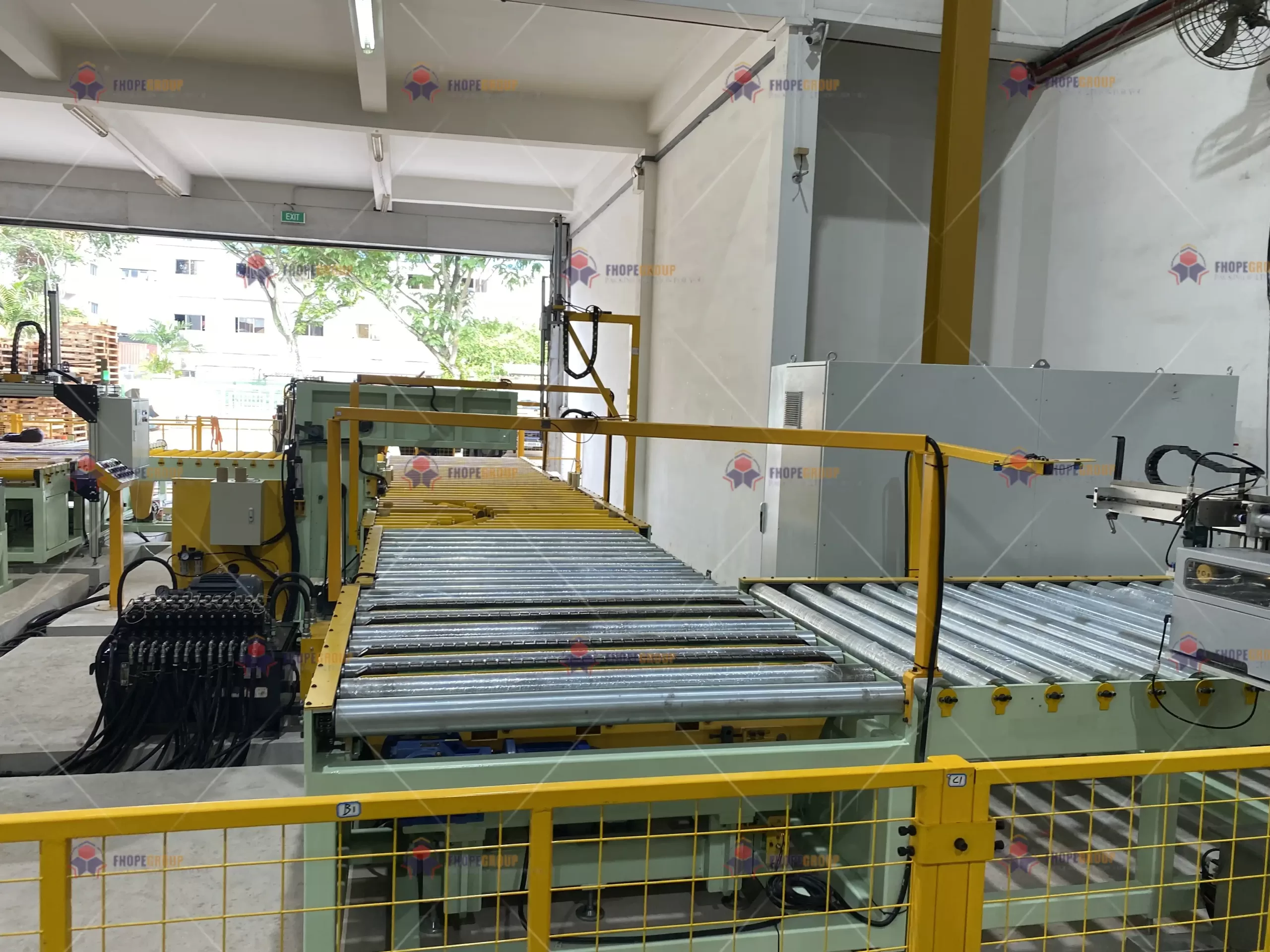
Staying competitive means constantly looking for better ways to operate. This is why I started FHOPEPACK – to share practical knowledge. If you are struggling with outdated processes, safety risks, or product damage, you are not alone. Let’s explore how smart automation, especially in steel coil packing, can change your factory’s future.
1. Why is South Korea embracing smart factory initiatives and automation in manufacturing?
In South Korea, manufacturing is a core part of the economy. Factory managers there often feel a strong need to keep up with global trends. They face intense competition. If they do not innovate, they lose market share. This pressure drives them to look for new ways to produce goods.
South Korea is rapidly adopting smart factory initiatives and automation in manufacturing to boost its global competitiveness and address labor challenges. The country aims to integrate advanced technologies like AI, IoT, and robotics into production lines. This helps improve efficiency, increase product quality, and reduce operational costs. It also helps them overcome a shrinking workforce and higher labor expenses.

The move towards smart factories is not just a trend for South Korea; it is a strategic necessity. Many businesses, especially in heavy industries like metal processing, see clear benefits. From my time building and running packing machine factories, I know that even small gains in efficiency add up. South Korean companies understand this. They invest in automation to make their factories more productive and safer. They want to cut down on manual work, which can be slow and dangerous. They also want to make sure their products are perfect.
The Driving Forces Behind South Korea’s Automation Push
Several factors explain why South Korea is a leader in adopting smart factory technology:
- Global Competition: South Korean manufacturers compete on a global scale. To stay ahead, they need to produce high-quality goods faster and at lower costs. Automation provides this edge. It allows for consistent output and reduced human error (competitive advantage).
- Labor Shortages and Costs: Like many developed nations, South Korea faces an aging population and a shrinking pool of skilled labor. Automated systems can fill these gaps. They perform repetitive or dangerous tasks without needing constant human intervention. This lowers overall labor costs and boosts productivity (workforce solutions).
- Government Support: The South Korean government actively promotes smart factory initiatives. They offer incentives, funding, and support programs for companies that invest in automation and digital transformation. This makes it easier for factories to adopt new technologies (policy support).
- Technological Readiness: South Korea has a strong technology infrastructure. It has high internet penetration and a culture of innovation. This makes it easier to implement advanced technologies like IoT sensors, AI-driven analytics, and robotics in factory settings (tech integration).
- Safety and Quality Standards: In industries like metal processing, safety is paramount. Manual handling of heavy materials, such as steel coils, carries high risks. Automation significantly reduces these dangers. It also improves product quality by ensuring precise and consistent operations, minimizing damage (safety improvement).
For a factory manager like Michael, these reasons resonate deeply. He deals with the pressure of productivity, safety, and cost control every day. Seeing how automation solves these issues in South Korea gives him a clear path forward. This is why FHOPEPACK focuses on practical solutions that deliver real results, like the high-performance wrapping machines from Fengding. They are known for reliability and precision. (smart manufacturing adoption, industrial automation trends)
2. How do automated steel coil packing lines solve common production bottlenecks?
Many factories, especially those in metal processing, rely on manual packing at the end of their lines. This manual work often creates a bottleneck. After all the efficient production upstream, the packing slows everything down. This can delay shipments and waste money.
Automated steel coil packing lines solve common production bottlenecks by increasing speed and consistency. They move, wrap, and strap coils much faster than human workers. These systems also operate continuously, reducing downtime and ensuring a steady flow of finished products. This smooths out the end-of-line process and improves overall factory output significantly. It eliminates the slow, labor-intensive steps that often hold back production.
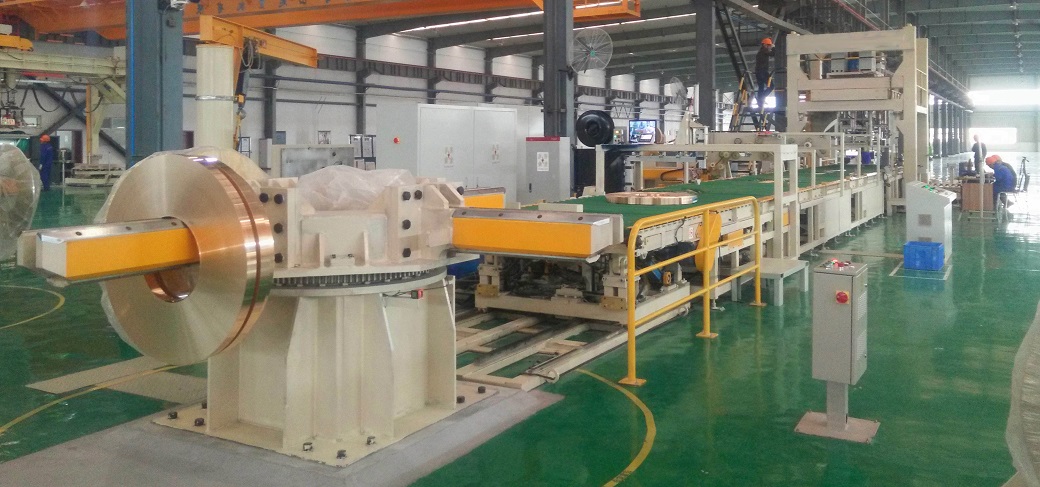
I have seen firsthand how much a bottleneck at the packing stage can hurt a business. When I started my first packing machine factory, I focused on making sure every part of the packing process was as smooth as possible. If coils stack up at the end, it does not matter how fast you produced them. The finished product cannot leave the factory. This means lost time and lost profit. Automated systems ensure that coils are packed quickly and without interruption. They do not get tired, and they do not make mistakes from fatigue. This keeps the whole factory running at its best.
The Impact of Automation on Packing Efficiency
Automated packing lines transform how factories handle finished products. Here are key areas where they provide solutions:
- Increased Throughput:
- Manual packing speed is limited by human capability.
- Automated lines can process multiple coils per minute, far exceeding manual output.
- This directly increases the number of packed coils ready for shipment.
- Example: A coil that took 5 minutes to manually wrap can be done in under 1 minute automatically.
- Consistent Quality:
- Human packing can vary in tightness and coverage.
- Automated machines apply film and straps with uniform tension and overlap.
- This ensures every coil is packed to the same high standard, reducing product damage (consistent packaging quality).
- Reduced Labor Dependence:
- Fewer workers are needed for the packing process.
- This frees up employees for more skilled tasks or addresses labor shortages.
- It also lowers labor costs and the risks associated with manual handling (labor optimization).
- Optimized Space Usage:
- Automated lines often have a smaller footprint for the same output compared to large manual packing areas.
- They can be designed to fit specific factory layouts, making better use of available space (floor space efficiency).
- Seamless Integration:
- Modern automated lines can connect with existing production management systems.
- This allows for real-time data tracking and better overall process control.
- For Michael, this means seeing exactly how many coils are packed and where they are in the process (system integration).
Consider a manager like Michael, facing slow manual processes and high labor costs. Investing in an automated coil packing machine, like those from Fengding, directly addresses these problems. Fengding’s machines are known for their robust design and ability to handle heavy loads, making them ideal for the demanding environment Michael describes. This investment leads to a measurable return by removing the bottleneck at the end of the production line. (production efficiency, automated packaging solutions)
3. What are the key safety benefits of investing in advanced packing automation?
Manual handling of heavy steel coils is incredibly dangerous. Workers face risks of crushed limbs, back injuries, and other serious accidents. These incidents lead to high insurance costs, lost workdays, and employee turnover. Many factory managers worry constantly about their team’s safety.
Investing in advanced packing automation offers significant safety benefits by greatly reducing human interaction with heavy and potentially hazardous materials. Automated systems perform tasks like lifting, turning, and wrapping coils without direct human contact. This eliminates the risk of crushing injuries, strains, and falls. It creates a much safer working environment for employees. This protection helps reduce workplace accidents, lowers insurance premiums, and improves overall worker well-being.
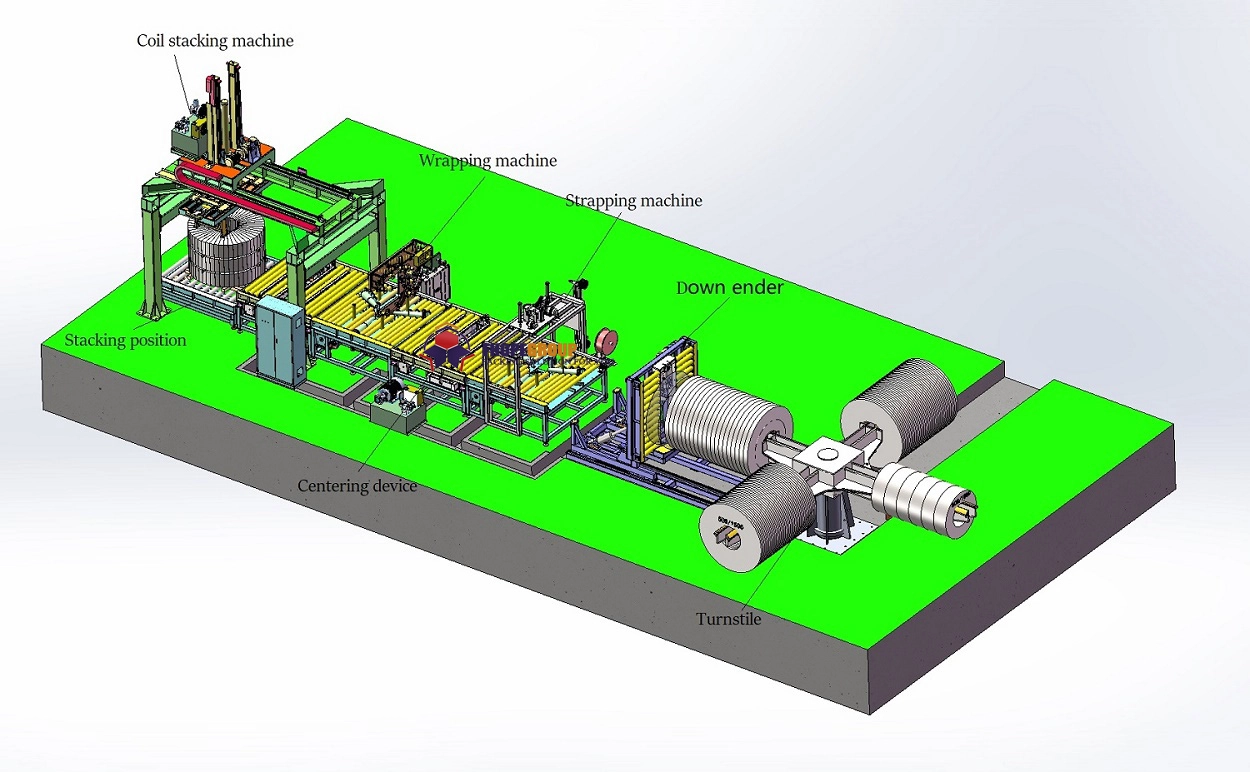
Safety has always been a top priority for me. When I was running my own factory, I always thought about the well-being of my employees. There is no machine more valuable than a human life. Manual handling of heavy steel coils is simply too risky. A single accident can cause immense suffering and disrupt the entire factory. Automated systems remove people from the danger zone. They handle the heavy lifting and the repetitive motions. This not only makes the workplace safer but also shows employees that their safety is valued. This can improve morale and reduce staff turnover.
Enhancing Worker Safety Through Automation
Automation fundamentally changes the safety landscape in heavy manufacturing. Here’s how:
- Elimination of Direct Contact with Heavy Loads:
- Automated coil handlers and conveyors move coils.
- Workers do not need to physically lift, push, or reposition heavy items.
- This removes the primary cause of musculoskeletal injuries (reduced manual labor).
- Reduced Risk of Crushing Injuries:
- Coils can weigh thousands of pounds.
- Automated systems ensure predictable and controlled movement.
- Safety sensors and interlocks prevent machines from operating if a person is in a dangerous area (hazard prevention).
- Improved Ergonomics:
- Repetitive tasks, like manually strapping or wrapping, lead to strain injuries.
- Robots and automated wrappers perform these tasks.
- This means fewer repetitive stress injuries for workers (ergonomic improvements).
- Controlled Environment:
- Automated lines operate within defined safety zones.
- Access is restricted to authorized personnel.
- This minimizes exposure to moving parts and other hazards (controlled access zones).
- Lower Accident Rates and Costs:
- Fewer accidents mean lower workers’ compensation claims.
- It also means less downtime due to injury investigations.
- Overall insurance costs decrease, and factory productivity increases (cost savings from safety).
For Michael, who faces high injury risks and insurance costs, automation is a clear solution. He needs equipment that prioritizes worker safety without sacrificing efficiency. Companies like Fengding and Wuxi Buhui offer robust safety features in their packing lines. Their designs include protective barriers, emergency stops, and advanced sensing technologies. This ensures that safety is built into the system, not an afterthought. This commitment to safety protects employees and also strengthens the factory’s bottom line by avoiding costly accidents. (workplace safety, industrial accident prevention)
4. How can FHOPEPACK’s expertise ensure a reliable and damage-free packing process?
Many factory managers have had bad experiences with equipment suppliers. Some companies only care about making a sale, and their after-sales service is poor. This leads to distrust. Managers want a partner who truly understands their problems and offers reliable solutions. They need expertise they can count on.
FHOPEPACK’s deep expertise ensures a reliable and damage-free packing process because I, Randal Liu, built my knowledge from the ground up in the packing machine industry. My experience running a successful packing machine factory means I understand real-world production challenges. We provide solutions that minimize product damage, prevent costly downtime, and offer strong after-sales support. We focus on durable equipment and precise application, ensuring your steel coils are always protected. This approach builds trust and delivers consistent results.
When I reflect on my journey, from an employee on the factory floor to owning my own successful packing machine factory, I realize the value of practical knowledge. I know what it means to face production bottlenecks and worry about machine reliability. I also know how frustrating it is when a supplier only wants to sell a machine and then disappears. That is why FHOPEPACK is different. My goal is to share this understanding. We focus on providing equipment and insights that truly solve problems. We want to be a partner who helps you grow, just as I helped many of my clients succeed. We pay attention to details like proper coil handling and packaging material application. This stops damage before it happens.
FHOPEPACK’s Approach to Reliable and Damage-Free Packing
Our strategy combines hands-on experience with advanced engineering to deliver superior packing solutions:
- Understanding Specific Needs:
- We do not offer one-size-fits-all solutions.
- I work to understand your unique coil types, production volume, and factory layout.
- This ensures the proposed packing line is a perfect fit for your operation (customized solutions).
- Robust Equipment Design:
- We recommend machines built for endurance and heavy industrial use.
- Equipment from partners like Fengding is known for its sturdy construction and long lifespan.
- This minimizes breakdowns and maximizes uptime (durable machinery).
- Precision Packing Technology:
- Our lines use advanced controls for consistent film tension and strapping force.
- This prevents damage like crushed coil edges or loose wrapping that can lead to rust.
- The aim is to protect the product fully during storage and transit (precise packaging).
- Comprehensive After-Sales Support:
- We believe in long-term partnerships.
- This means providing expert installation, training, and ongoing maintenance support.
- Our team is available to help quickly, reducing downtime when issues arise (reliable service).
- Proven Industry Expertise:
- My background in running a packing machine factory gives FHOPEPACK a unique perspective.
- We offer practical advice on optimizing processes and troubleshooting common issues.
- This expertise is invaluable for managers seeking a knowledgeable partner (expert guidance).
For Michael Chen, who has faced product damage and supplier trust issues, FHOPEPACK offers a solution built on reliability and a deep understanding of the industry. We understand that a damaged coil is not just a lost sale; it is a damaged reputation. By selecting the right steel coil packing line, Michael can protect his products, delight his customers, and secure his factory’s profitability. This is not just about buying a machine; it is about investing in a partnership that supports continuous improvement and growth. (product protection, supply chain reliability)
My Insights!
From my journey in the packing machine industry, I have seen factories transform through smart investments. Automation is not just about replacing human hands; it is about elevating your entire operation. It is about moving from daily firefighting to strategic planning. For Michael and many others, embracing automation, especially in critical areas like steel coil packing, is the clearest path to sustained success. The insights I share come from years of practical, hands-on experience, turning challenges into opportunities. I believe in giving back to the industry that allowed me to achieve financial independence, helping others master their packing processes just as I mastered mine.
The Future of Packing: Beyond Just Machines
My experience has taught me that simply buying a machine is rarely the full solution. The real value comes from a deeper understanding of the entire workflow. When I think about what makes a factory truly smart and efficient, I look at the big picture.
- Integrated Solutions: A smart factory needs more than just a packing machine. It needs a whole system that talks to each other. This includes upstream production, material handling, quality control, and even logistics. I’ve often advised clients to look at how their new packing line fits into their existing operations. For example, if your coils come off the line too hot, you need a cooling station before packing. If they are irregular, you need specialized handling. It is about creating a smooth, connected flow (system integration, workflow optimization).
- Data-Driven Decisions: The beauty of automation is the data it generates. Each packing cycle, each coil, can provide valuable information. How much film was used? What was the cycle time? Were there any errors? This data is gold for factory managers. It helps them spot inefficiencies, predict maintenance needs, and continuously improve. I always tell my clients to not just collect data but to use it. This leads to better decisions and clearer ROI (data analytics, performance metrics).
- Long-Term Partnership: The relationship with your supplier should not end after the sale. It is a partnership. I have built my business on trust and continued support. When my clients face new challenges, they know they can come to me for advice. This is crucial for managing unexpected issues or planning future expansions. Whether it is an upgrade or a new problem, having a knowledgeable partner like FHOPEPACK, or knowing reliable brands like Fengding, makes a huge difference (customer relationship, after-sales support).
- Focus on ROI and Value: Every investment in automation must show a clear return. This means looking beyond just the machine cost. Consider the savings from reduced labor, fewer product damages, increased throughput, and improved safety. These are all measurable benefits that contribute to the bottom line. I always help clients calculate their ROI so they can make informed decisions. For Michael, this means clear numbers on how automation will boost his profits (investment return, value proposition).
- Adaptability and Future-Proofing: The manufacturing world changes fast. The equipment you buy today should be able to adapt to tomorrow’s needs. This means looking for modular designs, flexible programming, and scalability. My expertise helps clients choose systems that can grow with their business. This prevents costly replacements down the line and ensures long-term operational efficiency (future-ready solutions).
My philosophy is simple: empower factories with knowledge and reliable solutions. By understanding the whole picture and focusing on measurable benefits, any factory, like Michael’s, can achieve smart automation and unlock its full potential.
Conclusion
Smart automation in steel coil packing is crucial for growth, especially in dynamic markets like South Korea. FHOPEPACK provides expert solutions, from reliable equipment to practical insights, helping factories achieve efficiency and safety with our steel coil packing line.


