Automatic vs Semi-Automatic Steel Coil Packing System — Key Differences?
Are you a factory manager, perhaps like Michael Chen, always under pressure to boost output, cut costs, and keep operations safe? Do you find your current steel coil and wire packing process slow, manual, and risky? Many in the metal processing industry face these exact struggles. Downtime, worker injury, and damaged products are not just minor issues; they hit your bottom line hard. You are looking for durable equipment that can handle tough factory conditions and a partner who truly understands your pain points. (factory manager challenges, steel coil packing, operational efficiency)
The main difference between automatic and semi-automatic steel coil packing systems lies in their level of human intervention, speed, and overall integration into a production line. Automatic systems handle the entire packing process with minimal human input, offering high speed, consistent quality, and enhanced safety, while semi-automatic systems require operators for specific tasks like loading or starting the cycle, balancing automation with operator control and often representing a lower initial investment.
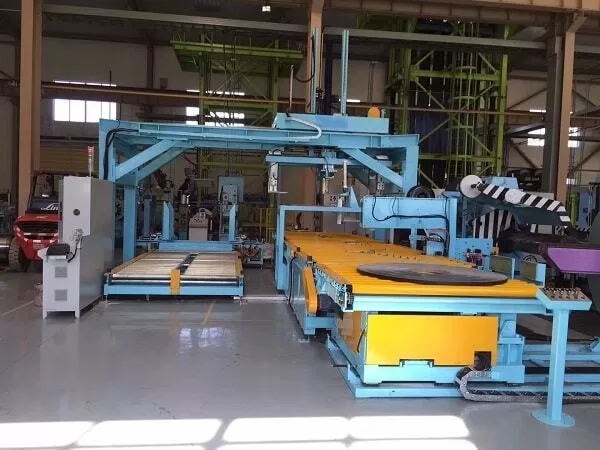
Understanding these core distinctions is crucial. It helps you decide which system best fits your factory’s unique demands, budget, and long-term goals. Let’s dig deeper into each area. We can look at how they impact your daily operations, safety records, and ultimately, your factory’s profitability.
1. What are the operational differences between automatic and semi-automatic steel coil packing systems?
Do you spend too much time on packing, slowing down your entire production? Many factory managers I talk to feel this pressure. The choice between automatic and semi-automatic systems often comes down to how much you want to automate your workflow. This impacts everything from speed to how many people you need on the line. (packing workflow, production speed, labor allocation)
Automatic steel coil packing systems offer a hands-off, continuous operation where machines handle every step, from feeding to wrapping and strapping, achieving high throughput and consistent results with minimal human oversight. In contrast, semi-automatic systems require operator interaction for tasks like positioning the coil, feeding the material, or initiating cycles, making them more flexible but less autonomous and generally slower than fully automated lines.

When I first started my packing machine factory, I saw many plants struggling with their end-of-line processes. They were trying to push high volumes, but their packing lines just couldn’t keep up. This created huge bottlenecks. The operational differences are very clear. Automatic systems are built for speed and volume. They can handle a constant flow of coils without breaks. Think of a system designed to run 24/7. Components like automatic coil conveyors, wrapping machines, and strapping devices all work together. They do this in a synchronized way. This means less waiting time between steps and a much faster overall packing cycle. For example, a fully automatic line can often pack dozens of coils per hour. This is much faster than any semi-automatic setup.
Semi-automatic systems, on the other hand, often involve an operator at each key stage. An operator might load the coil onto the wrapper. Then they might start the wrapping cycle. They might also manually position the strapping machine. This means the speed depends heavily on the operator’s skill and how quickly they work. While this offers more control for unique or varied packing needs, it also means lower overall throughput. It creates more variability in packing times. From my experience helping clients, these systems are common for factories with lower production volumes. They are also good for businesses that handle many different coil sizes or materials, where some manual adjustment is helpful. The best coil packing solution for continuous production often involves full automation. This is what reputable suppliers like Fengding often provide.
Key Operational Distinctions
| Feature | Automatic System | Semi-Automatic System |
|---|---|---|
| Human Intervention | Minimal, oversight and monitoring only | Required for loading, positioning, cycle initiation |
| Speed | High, continuous, consistent cycle times | Moderate, dependent on operator speed and efficiency |
| Throughput | Very high, ideal for large production volumes | Moderate, suitable for varied or lower volumes |
| Consistency | High, machine-controlled, precise | Moderate, can vary with operator input |
| Integration | Fully integrated with upstream/downstream processes | Often standalone units, less integrated |
| Flexibility | Less flexible for sudden changes in coil size/type | More flexible for varied coil dimensions |
An automatic system makes sense if you are producing hundreds of steel coils daily. It keeps your entire factory moving smoothly. If your output is smaller, or if you have many custom orders, a semi-automatic system gives you that hands-on flexibility. This helps ensure each coil is packed exactly how you need it. Many clients, like Michael, tell me they initially try to save money with semi-automatic options. But they quickly find the manual bottlenecks become too costly in the long run. They often choose to upgrade to a fully automatic coil packaging line. (automatic packing speed, semi-automatic flexibility, steel coil production)
2. How do automatic and semi-automatic systems impact safety and labor costs in a factory?
Are your workers at risk handling heavy steel coils? Are your labor costs for packing eating into your profits? These are common worries for factory managers. I have seen firsthand the risks involved in manual packing. Choosing the right packing system can dramatically improve safety and significantly reduce long-term labor expenses. (worker safety, labor cost reduction, heavy coil handling)
Automatic steel coil packing systems vastly enhance factory safety by minimizing direct human interaction with heavy, moving coils, thereby reducing the risk of injuries and associated compensation costs. They also lead to substantial labor cost savings by performing tasks that would otherwise require multiple operators, allowing staff to be redeployed to more strategic roles. Semi-automatic systems, while reducing some manual labor, still require operator presence and interaction, thus offering moderate safety improvements and more modest labor cost reductions compared to fully automated solutions.

When I was running my own factory, safety was always a top priority. Moving heavy steel coils or wire coils presents serious hazards. This includes crush injuries, strains, and cuts. These can lead to high insurance costs and staff turnover. I remember one incident where a worker almost got injured trying to manually adjust a large coil during wrapping. That experience truly highlighted the need for safer, more automated solutions. An automatic system completely removes workers from these dangerous zones. Machines do the heavy lifting, turning, and wrapping. This protects your employees. It also lowers the chances of workplace accidents. This directly translates to lower insurance premiums and a healthier, more secure workforce.
From a labor cost perspective, the benefits are equally clear. An automatic coil packing line can often replace several workers. These workers might be involved in manual handling, strapping, or wrapping. While the initial investment is higher, the long-term savings on wages, benefits, and training are substantial. This allows you to reallocate your skilled employees to more complex tasks, tasks that truly add value to your production. Consider a scenario where an automatic system frees up three to five workers per shift. Over a year, this can amount to hundreds of thousands of dollars in savings. This makes the return on investment (ROI) very compelling. Companies like Wuxi Buhui also offer robust machines that focus on safety features. They ensure worker protection.
Semi-automatic systems do offer some improvements over purely manual processes. They can, for example, have powered coil rotation or automatic strap tensioning. This reduces physical strain. However, operators are still actively involved in the process. They manually load coils, cut materials, or guide strapping. This means there is still a risk of injury. The need for operator presence also means labor costs remain a significant factor. While you might need fewer people than a fully manual setup, you will still need more staff than with a fully automated line. Michael, from Mexico, once told me his biggest challenge was balancing cost-cutting with worker well-being. He was looking for solutions that did both. This made him consider an automatic coil packaging line.
Impact on Safety and Labor
| Aspect | Automatic System | Semi-Automatic System |
|---|---|---|
| Worker Safety | High; minimal human contact with coils, reduced injury risk | Moderate; some manual interaction, reduced but present risk |
| Labor Needs | Low; often 1-2 operators for oversight | Moderate; 2-4 operators for tasks and oversight |
| Cost Savings | High; significant reduction in wages and benefits | Moderate; some reduction but ongoing personnel costs |
| Workplace Risk | Very low; automation handles hazardous tasks | Moderate; still involves human interaction with machinery |
Choosing an automatic system is a strategic move. It not only keeps your people safe but also optimizes your operational budget. This allows your factory to be more competitive. It’s an investment in both your human capital and your financial health. (automated packing safety, labor cost efficiency, industrial automation benefits)
3. Which type of steel coil packing system offers better product protection and ROI for specific production needs?
Are your steel coils getting damaged during internal transport or packing? Do you worry about customer complaints and profit loss? Every factory manager wants to protect their product and see a clear return on their equipment investment. The choice between automatic and semi-automatic systems directly impacts both product quality and your financial gains. (product damage reduction, ROI of packing equipment, steel coil quality)
Automatic steel coil packing systems generally provide superior product protection through consistent, precise, and repeatable wrapping and strapping, minimizing damage from handling and ensuring uniform package integrity. They also offer a higher long-term Return on Investment (ROI) for high-volume operations due to reduced labor costs, material savings, and fewer product rejections. Semi-automatic systems offer adequate product protection for lower volumes with skilled operators, and a quicker, albeit smaller, ROI for businesses with limited capital or specific, less demanding packing needs.

Product damage during packing and internal transfers is a silent killer of profits. I’ve heard countless stories from clients about scratched coil edges or deformed packaging. These lead to customer complaints and costly rework. An automatic packing system excels here. It provides a level of consistency that human operators simply cannot match. Machines apply wrapping materials with precise tension. They position strapping perfectly. They ensure every coil is packed to the exact same standard. This eliminates human error. It greatly reduces the risk of damage. For high-value products like stainless steel coils or specific metal wires, this consistency is priceless. It ensures your products reach your customers in perfect condition. Fengding’s automatic wrapping machines are known for their precision and ability to protect vulnerable coil surfaces.
When we talk about ROI, an automatic system’s case is strongest for high-volume producers. The initial capital outlay is higher. However, the savings accumulate quickly. These savings come from:
- Reduced labor costs: As discussed, fewer operators mean lower wages and benefits.
- Material efficiency: Machines optimize wrapping material use, reducing waste.
- Fewer product rejections: Consistent packing means less damage and fewer returns.
- Increased throughput: Faster packing leads to more units shipped, boosting revenue.
- Improved safety: Fewer accidents reduce insurance and downtime.
Michael’s factory, for instance, deals with significant steel coil volumes. For him, an automatic steel coil strapping line or wire coil packing solution offers a faster payback period. It provides much larger long-term gains. He seeks an ROI that is clear and measurable.
Semi-automatic systems offer a different ROI profile. Their lower upfront cost makes them attractive to smaller businesses or those with lower production volumes. The product protection can be good. This depends on the skill and care of the operators. However, human variability means less consistent protection compared to automated lines. The ROI comes from:
- Lower initial investment: Easier to finance for smaller budgets.
- Cost savings over manual methods: Still an improvement in labor and speed compared to fully manual packing.
- Flexibility for varied tasks: Operators can adapt to different packing requirements more easily.
While the cost savings per unit packed are smaller than with an automatic system, the quicker initial setup can mean a faster break-even point for businesses with limited capital. My goal is always to help clients choose the system that aligns with their production needs and financial strategy. Both Fengding and Wuxi Buhui offer solutions for various scales.
Product Protection & ROI Comparison
| Feature | Automatic System | Semi-Automatic System |
|---|---|---|
| Packing Consistency | High; uniform tension and material application | Moderate; dependent on operator skill |
| Damage Prevention | Excellent; minimal human contact, precise handling | Good; less manual handling than fully manual |
| Material Waste | Low; optimized usage, precise cutting | Moderate; potential for human error in material handling |
| Initial Investment | High | Moderate to Low |
| Long-term ROI | High; significant savings on labor, material, and damage | Moderate; quicker initial payback, smaller overall savings |
| Best for | High-volume, consistent product lines | Lower-volume, varied product lines, budget constraints |
Ultimately, for a factory like Michael’s, focused on scale and efficiency, the investment in an automatic system yields better product protection and a more substantial, sustainable ROI. For smaller operations, a semi-automatic system can provide a strong foundation. (automatic packing ROI, semi-automatic cost efficiency, steel coil packaging solutions)
4. What are the key considerations for maintenance, reliability, and integration for both packing solutions?
Are you worried about equipment downtime disrupting your production? Do you need a system that integrates smoothly with your existing lines? These are vital questions for any factory manager. The reliability and ease of maintenance of your packing system can make or break your operational efficiency. (packing machine maintenance, system reliability, integration challenges)
Automatic steel coil packing systems, while complex, are designed for high reliability with proper preventive maintenance schedules, offering seamless integration into existing production lines for continuous flow. Their maintenance typically requires specialized technicians but fewer frequent interventions for minor issues due to robust construction. Semi-automatic systems are generally simpler to maintain, often requiring less specialized knowledge for repairs, but their reliability can be more sensitive to operator handling and they may integrate less fluidly into a fully automated factory workflow.
From my own journey, running a factory and then building packing machines, I’ve learned that a machine is only as good as its uptime. A reliable machine prevents bottlenecks. It stops unexpected costs. An automatic coil packing line is a sophisticated piece of engineering. It has many moving parts and advanced controls. This means that while it’s built for continuous operation, it absolutely requires a strong preventive maintenance plan. Regular checks, lubrication, and sensor calibration are crucial. This ensures it performs at its peak. When issues do arise, they often require skilled technicians to diagnose and fix. However, because these systems are designed for heavy industrial use, they are built with durable components. This often means fewer surprise breakdowns if maintained correctly. Fengding, for example, prioritizes robust design. They offer strong after-sales support. This includes training for your maintenance team.
Integration is another key aspect. A fully automatic system is usually designed to link directly with your upstream production lines (like slitting lines or wire drawing machines) and your downstream logistics (like warehousing). This creates a smooth, continuous material flow. It removes manual transfer points. This makes your whole factory more efficient. It is like building a perfect bridge between different parts of your operation. This is especially important for Michael, who oversees the entire process from raw material to finished product. He needs solutions that speak the same language as his existing machinery.
Semi-automatic systems, being simpler, often have less complex maintenance needs. Many repairs can be handled by in-house maintenance staff with general mechanical and electrical skills. This can be a benefit for factories without specialized technicians. The components are often more straightforward. This makes troubleshooting easier. However, their reliability can sometimes be more affected by how operators handle them. Consistent operation depends on proper training and adherence to procedures. If operators are not well-trained, it can lead to more frequent small issues. This can cause minor downtimes.
Integration for semi-automatic systems is typically less complex. They often function as standalone units that take coils from a staging area and then output them to another staging area. This offers flexibility. But it means you will still have manual transfer points. This might be a forklift moving coils to the packing station. Or it might be a crane moving them away. This can introduce slight delays and safety risks at these interfaces. Wuxi Buhui also offers reliable semi-automatic machines. They are easy to use and maintain. This is good for factories needing simpler solutions.
Maintenance, Reliability & Integration
| Aspect | Automatic System | Semi-Automatic System |
|---|---|---|
| Maintenance | Preventive, specialized technicians, fewer frequent minor issues | Simpler, general technicians, potentially more minor issues with operator handling |
| Reliability | High with proper maintenance, robust industrial design | Good; can be affected by operator consistency and training |
| Integration | Seamless, designed for full line automation | Modular, often standalone, requires manual interfaces |
| Downtime Risks | Low with scheduled maintenance, higher impact if major fault | Moderate; more frequent minor stoppages, lower impact per event |
| Support Needs | Critical; strong vendor support for parts, software, training | Less critical; easier to source generic parts, less complex troubleshooting |
Choosing the right system involves weighing the complexity of maintenance against the benefits of seamless integration and high reliability. My experience shows that investing in robust machines and good maintenance practices for automatic systems pays off significantly in the long run. It ensures consistent production flow. It also avoids costly disruptions. (automatic system reliability, semi-automatic maintenance, production line integration)
Conclusion
Choosing between automatic and semi-automatic systems depends on your production volume, safety goals, and budget. Automatic systems offer high efficiency, enhanced safety, and strong ROI for large-scale operations. Semi-automatic options provide flexibility and lower initial cost for varied needs. Both improve greatly over manual methods. We have many options for a steel coil packaging line solution.


