Affordable Steel Coil Packing Line Solutions for Turkey’s Rolling Mills?
As a packaging engineer with over 15 years of experience, I’ve seen firsthand how Turkish rolling mills struggle to balance cost and efficiency. Many mill operators tell me they want automated packaging solutions but worry about the investment. They ask: "Can we really afford a proper steel coil packing line that meets our production needs?"
The truth is that affordable automation exists when you choose the right configuration and supplier partnership. Turkish mills can achieve 40-60% cost savings compared to European solutions while maintaining quality standards. The key is selecting equipment that matches your specific production volume and space constraints. Through my 200+ projects worldwide, I’ve helped mills implement solutions that pay for themselves within 12-18 months while doubling packaging throughput. (affordable steel coil packing line solutions)
Many Turkish rolling mills face similar challenges: tight budgets, limited floor space, and pressure to increase exports with better packaging quality. The good news is that Turkey’s growing position in the European steel market makes this the perfect time to invest in proper packaging automation. Let me show you how affordable solutions can transform your operations.
1. What Defines an "Affordable" Steel Coil Packing Line for Turkish Mills?
When Turkish mill managers ask about affordability, they’re not just looking at the initial price tag. True affordability means considering the total cost of ownership over 3-5 years. This includes maintenance, energy consumption, labor costs, and potential production losses from downtime.
An affordable steel coil packing line balances reasonable initial investment with long-term operational efficiency and reliability. For Turkish mills, this typically means semi-automated or modular automated systems that cost 30-50% less than fully European-made solutions while delivering 80-90% of the performance. The sweet spot for most Turkish mills is equipment that handles 30-100 tons daily with minimal operator intervention. (steel coil wrapping line solution)
Many mills make the mistake of comparing only equipment prices. But the real savings come from reduced labor, faster throughput, and better packaging quality that prevents customer claims. I’ve seen Turkish mills recover their entire investment within 18 months through these operational improvements.
💰 Breaking Down the True Cost Components
Let’s examine what really makes a packing line "affordable" for Turkish market conditions:
| 📊 Initial Investment Breakdown: | Component | Budget Option | Mid-Range | Premium Option |
|---|---|---|---|---|
| Feeding System | Manual coil car (~$15K) | Motorized coil car (~$35K) | Automated feeding conveyor (~$65K) | |
| Wrapping Station | Semi-auto wrapper (~$45K) | Auto wrapper with positioning (~$75K) | Fully integrated wrapper (~$120K) | |
| Strapping System | 2-head semi-auto (~$25K) | 4-head auto strapper (~$45K) | Robotic strapping cell (~$85K) | |
| Discharge System | Manual transfer (~$10K) | Powered rollers (~$30K) | Automated discharge conveyor (~$55K) | |
| Total Range | ~$95,000 | ~$185,000 | ~$325,000 |
🔄 Operational Cost Comparison (Monthly):
- Labor: Manual line (6 operators) vs. Semi-auto (3 operators) vs. Full-auto (1 operator)
- Maintenance: Local service availability reduces downtime costs by 40-60%
- Material Waste: Proper tension control saves 15-25% on wrapping film
- Energy Consumption: Turkish electricity rates make efficiency crucial
✅ ROI Calculation Example:
A typical Turkish mill processing 50 tons daily:
- Labor savings: 4 operators × $1,200/month = $4,800 monthly savings
- Throughput increase: 8→14 coils/hour = 40% capacity utilization improvement
- Quality improvement: Reduced claims save $3,000-$5,000 monthly
- Payback period: 14-18 months for a $185,000 semi-automated line
The most affordable solutions for Turkey often come from suppliers who understand local conditions. Chinese manufacturers like Fengding offer excellent value, while European brands provide premium performance at higher costs. The key is matching your budget to operational requirements without over-investing in unnecessary features. (coil packaging production line)
2. How to Choose the Right Configuration for Your Turkish Mill’s Production Volume?
Selecting the wrong packaging line configuration is the most common mistake I see in Turkish rolling mills. Many operators choose equipment that’s either under-powered for their growth plans or over-specified for their actual needs. Both scenarios waste money and reduce efficiency.
The optimal steel coil packing line configuration depends entirely on your daily production volume, coil specifications, and available workforce. For Turkish mills, I typically recommend these configurations: manual/semi-auto for 10-30 tons daily, semi-automated for 30-80 tons, and fully automated for 80+ tons. The key is choosing equipment that can grow with your business without massive reinvestment. (end-of-line coil packing system)
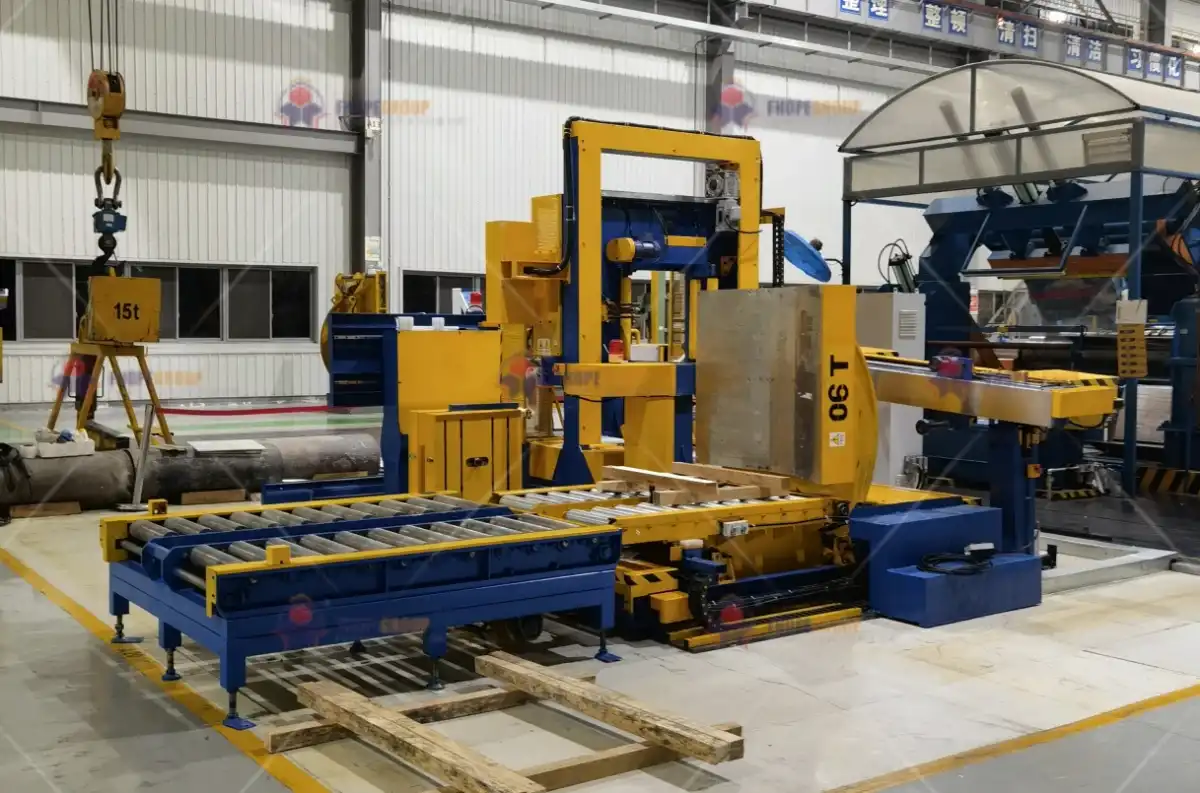
I recently worked with a Turkish mill in Izmir that was packaging 35 tons daily but planned to expand to 60 tons within two years. They initially wanted a basic manual line to save costs, but this would have bottlenecked their growth. Instead, we installed a semi-automated system that could handle their current volume efficiently while having upgrade paths for future automation.
📊 Capacity Matching Analysis
Here’s how to match your production needs with the right equipment configuration:
🏭 Daily Production-Based Recommendations:
| Daily Volume | Recommended Configuration | Key Equipment | Labor Required | Estimated Cost |
|---|---|---|---|---|
| 10-30 tons | Manual/Semi-Auto | Manual coil car, semi-wrapper, manual strapping | 4-6 operators | $90,000-$140,000 |
| 30-80 tons | Semi-Automated | Powered coil car, auto wrapper, auto strapper | 2-3 operators | $150,000-$240,000 |
| 80-150 tons | Fully Automated | Auto feeding, integrated wrapper, robotic strapping | 1 operator | $280,000-$450,000 |
| 150+ tons | High-Speed Automated | Continuous flow system, multiple stations | 1-2 operators | $500,000+ |
⚙️ Technical Specification Guidelines:
For Turkish mills, these specifications typically work best:
- Coil Weight Range: 3-25 tons (covers most Turkish production)
- Coil Width: 800-2,000mm
- Coil Diameter: 800-1,800mm
- Packaging Speed: 4-12 coils/hour depending on automation
- Film Usage: 6-12 layers for export quality
🔧 Upgrade Path Planning:
Start with a solid foundation that allows incremental automation:
- Phase 1: Basic semi-automated line with manual feeding
- Phase 2: Add automated feeding and positioning
- Phase 3: Integrate robotic strapping and discharge
- Phase 4: Full line automation with MES connectivity
The most cost-effective approach for Turkish mills is often a modular system that can be upgraded as production increases. This avoids the massive capital outlay of full automation while providing a clear path to increased efficiency. I always recommend leaving space and planning electrical requirements for future upgrades during initial installation. (integrated steel coil handling line)
3. What Are the Key Components in a Cost-Effective Turkish Packing Line?
Understanding the core components of a steel coil packing line helps Turkish mill managers make informed decisions about where to invest and where to save. Not every component needs premium specifications – the art is knowing which elements drive reliability and which can be more basic.
A cost-effective Turkish packing line consists of four essential systems: feeding, wrapping, strapping, and discharge, with the level of automation tailored to your budget and production needs. The feeding system typically represents 20-25% of total cost, wrapping 35-40%, strapping 20-25%, and discharge 10-15%. Strategic allocation of these percentages can optimize both performance and affordability. (turnkey coil packing line)
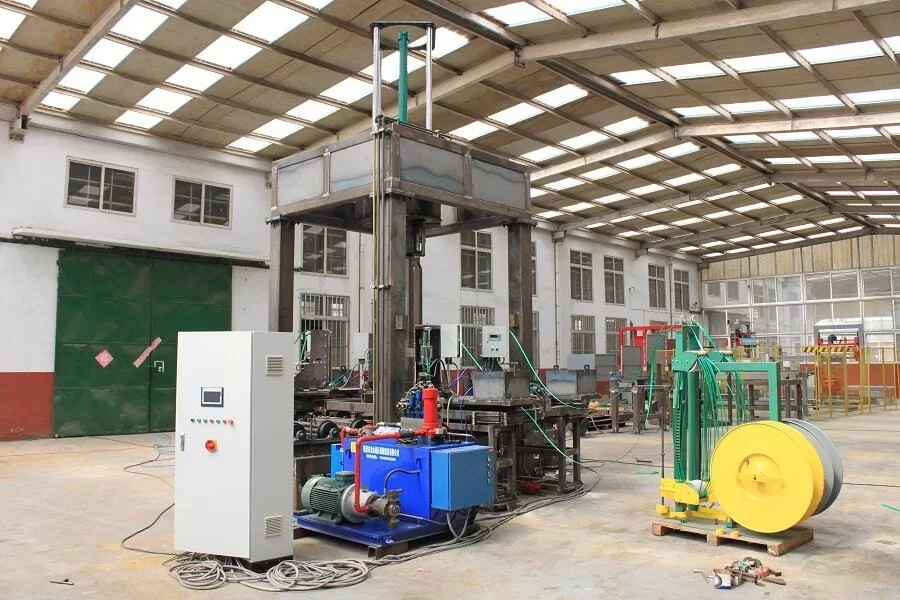
In my projects across Turkish mills from Istanbul to Izmir, I’ve found that investing in a reliable wrapping station pays the highest dividends. Meanwhile, discharge systems can often start basic and be upgraded later. The strapping system should match your customer requirements – domestic customers may need less sophisticated strapping than export-focused mills.
⚙️ Core Equipment Function Analysis
Let’s break down each component and its cost-performance considerations:
🔄 Feeding System Options:
- Manual Coil Car (~$15K): Basic but reliable, requires operator
- Motorized Coil Car (~$35K): Reduces labor, improves positioning accuracy
- Automated Conveyor System (~$65K+): Highest efficiency, integrates with upstream
🎯 Wrapping Station Choices:
- Semi-Automatic Wrapper (~$45K): Operator loads film, machine wraps
- Automatic Wrapper (~$75K): Auto film loading, programmable patterns
- Integrated Wrapper (~$120K+): Full automation with quality monitoring
📦 Strapping System Selection:
- Manual Strapping (~$8K/station): Lowest cost, highest labor
- Semi-Auto Strapping (~$25K/head): Operator positions, machine straps
- Automatic Strapping (~$45K/head): Sensors detect coil, auto positioning
- Robotic Strapping (~$85K+): Maximum flexibility and speed
🚀 Discharge System Variations:
- Manual Transfer (~$10K): Simple rollers, manual pushing
- Powered Rollers (~$30K): Motorized transfer to next station
- Automated Conveyor (~$55K+): Integrated discharge to storage
💡 Turkish Market Specific Recommendations:
Based on my experience with Turkish mills, here are the smart choices:
- Feeding: Start with motorized coil car – 60% cost savings vs full automation
- Wrapping: Invest in automatic wrapper – this is your quality control point
- Strapping: 4-head automatic system balances cost and performance
- Discharge: Powered rollers provide good automation at reasonable cost
The most successful Turkish mills I’ve worked with prioritize reliability in the wrapping station while keeping other systems functional but simpler. This approach typically delivers 85-90% of full automation benefits at 60-70% of the cost. Remember that local service support is crucial – choose equipment with available spare parts and technical support in Turkey. (coil wrapping and strapping line)
4. How Can Turkish Mills Maximize ROI on Their Packing Line Investment?
Return on investment drives every equipment purchase decision in Turkish rolling mills. With typically tighter capital budgets than European counterparts, Turkish managers need clear, quantifiable ROI calculations to justify packaging line investments to ownership.
Turkish mills can maximize ROI by focusing on three key areas: labor reduction, throughput increase, and quality improvement, while selecting equipment that matches their specific production profile. The typical payback period for well-chosen packing lines in Turkey ranges from 14-24 months, with ongoing annual savings of 25-40% compared to manual packaging operations. (automatic coil packaging system)

I recently calculated ROI for a Bursa-based mill that was hesitant about automation. By focusing not just on labor savings but also on reduced claim rates and increased production capacity, we demonstrated a 17-month payback. Within six months of installation, they were handling 40% more volume with half the labor and zero packaging-related customer claims.
💵 Comprehensive ROI Calculation Framework
Here’s a detailed framework I use to help Turkish mills calculate their potential returns:
📈 Direct Cost Savings Analysis:
| Cost Category | Manual Line | Semi-Auto Line | Full Auto Line |
|---|---|---|---|
| Labor Cost (Monthly) | $7,200 (6 operators) | $3,600 (3 operators) | $1,200 (1 operator) |
| Material Waste | 12-15% film waste | 8-10% film waste | 5-7% film waste |
| Maintenance | $800/month | $1,200/month | $1,800/month |
| Energy Consumption | $600/month | $900/month | $1,500/month |
| Total Monthly Op Cost | ~$8,600 | ~$5,700 | ~$4,500 |
🚀 Productivity & Quality Benefits:
- Throughput Increase: Manual (4-6 coils/hr) → Semi-auto (8-10 coils/hr) → Full auto (12-15 coils/hr)
- Quality Improvement: Reduced claims from 3% to 0.5% of shipments
- Space Utilization: Better layout can free up 20-30% floor space
- Safety: Reduced accidents save insurance costs and downtime
📊 ROI Calculation Example:
For a Turkish mill processing 60 tons daily:
- Investment: $220,000 for semi-automated line
- Labor Savings: $3,600 monthly × 12 = $43,200 annually
- Material Savings: $1,400 monthly × 12 = $16,800 annually
- Claim Reduction: $2,500 monthly × 12 = $30,000 annually
- Throughput Benefit: 25% capacity increase = $55,000 additional revenue
- Total Annual Benefit: $145,000
- Simple Payback: 18 months
🔧 ROI Optimization Strategies for Turkish Conditions:
- Phased Implementation – Start with core automation, add features later
- Local Sourcing – Turkish-made components can reduce costs 15-25%
- Energy Efficiency – Choose motors and drives suited to Turkish electricity rates
- Maintenance Planning – Preventive maintenance contracts avoid costly downtime
- Operator Training – Well-trained staff maximize equipment utilization
The highest ROI I’ve seen in Turkish mills comes from balanced automation – not the cheapest option, not the most advanced, but the right level for their specific production volume and workforce situation. Mills that track their packaging metrics before and after installation consistently discover additional benefits they hadn’t initially quantified. (steel coil stretch wrapping line)
5. What Layout Designs Work Best in Typical Turkish Mill Facilities?
Space constraints and existing building layouts significantly impact the cost and efficiency of packaging line installations in Turkish rolling mills. Unlike greenfield projects, most Turkish mills need to retrofit automation into existing facilities with limited space and fixed infrastructure.
The most effective layout designs for Turkish mills are U-shaped configurations for limited spaces, straight-line layouts for new facilities, and L-shaped designs when integrating with existing production flow. The optimal choice depends on available space, material flow from upstream processes, and future expansion plans. Proper layout planning can reduce material handling by 30-50% and improve overall line efficiency by 15-25%. (coil packing line configuration)
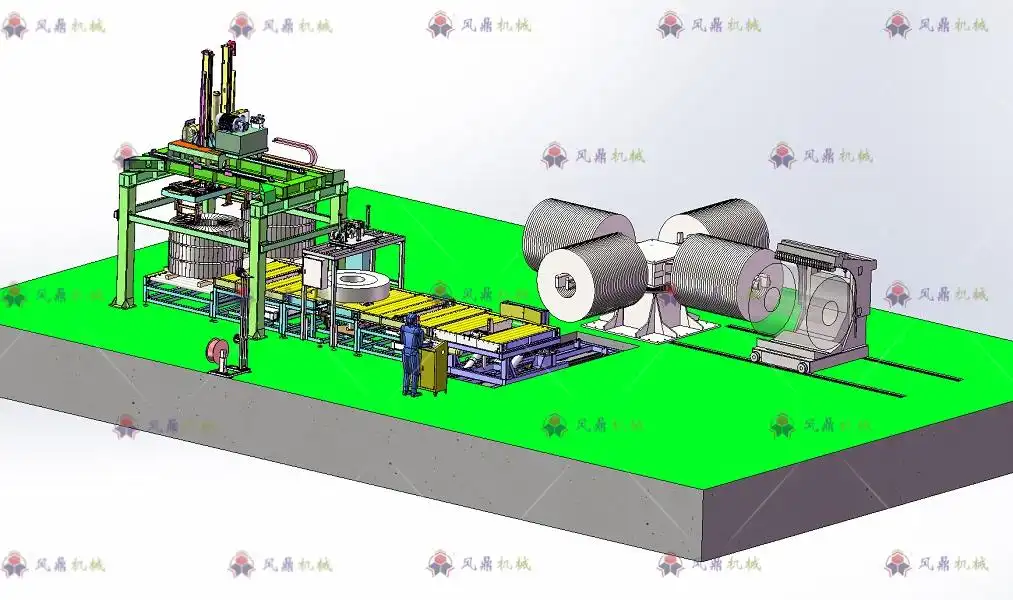
I recently redesigned the packaging area for a mill in Gebze that was struggling with congestion and inefficient material movement. By switching from their ad-hoc equipment placement to a deliberate U-shaped layout, we reduced walking distance for operators by 60% and decreased coil handling time by 35%. The project required minimal structural changes but delivered dramatic efficiency improvements.
🏗️ Layout Configuration Comparison
Here are the most practical layout options for Turkish mill conditions:
📐 Straight-Line Layout:
- Best for: New facilities or major renovations
- Space Required: 25-35 meters length × 8-12 meters width
- Material Flow: Linear from receiving to shipping
- Advantages: Simple material flow, easy expansion
- Disadvantages: Requires longer building space
- Typical Cost: $$$
🔄 U-Shaped Layout:
- Best for: Space-constrained existing facilities
- Space Required: 15-20 meters length × 12-18 meters width
- Material Flow: Compact, operator-efficient design
- Advantages: Minimal floor space, reduced operator movement
- Disadvantages: More complex material handling
- Typical Cost: $$
📏 L-Shaped Layout:
- Best for: Integrating with existing production lines
- Space Required: 20-25 meters × 15-20 meters
- Material Flow: Adapts to building constraints
- Advantages: Flexible for irregular spaces
- Disadvantages: Potential bottlenecks at corner points
- Typical Cost: $$
🎯 Layout Selection Guidelines for Turkish Mills:
Consider these factors when choosing your layout:
- Building Dimensions: Turkish mills often have width limitations
- Column Spacing: Existing structural columns impact equipment placement
- Crane Coverage: Ensure full coverage of packaging area
- Future Expansion: Leave access points for additional equipment
- Safety Regulations: Turkish workplace safety requirements
✅ Space Optimization Checklist:
- [ ] Measure actual available space (not just building dimensions)
- [ ] Map crane coverage and lifting capacity
- [ ] Identify utility access points (power, air, drainage)
- [ ] Plan for raw material and finished goods staging
- [ ] Ensure compliance with Turkish safety spacing requirements
- [ ] Verify truck access for loading/unloading
- [ ] Plan maintenance access around equipment
- [ ] Consider future automation upgrade space needs
The most successful layout projects I’ve completed in Turkey involved detailed site surveys before design began. Small details like column locations, overhead crane limits, and floor load capacity significantly impact layout feasibility. Turkish mills should prioritize layouts that work with their existing infrastructure rather than ideal theoretical designs. (industrial coil packaging line)
Conclusion
Implementing the right steel coil packing line requires balancing cost, performance, and Turkish market conditions to achieve optimal ROI and operational efficiency.


